

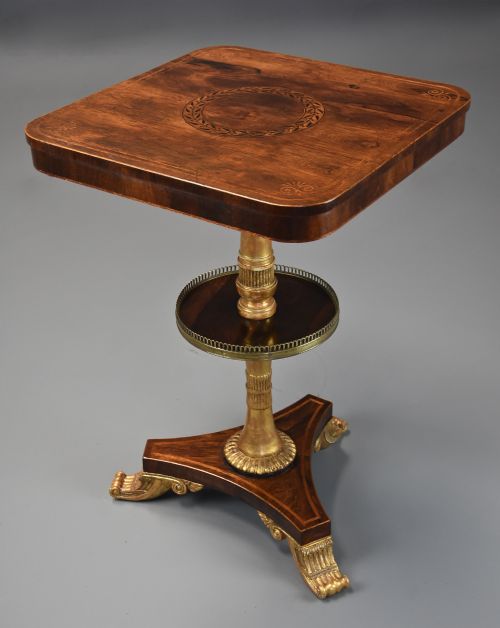


Marquetry Lamp Stand
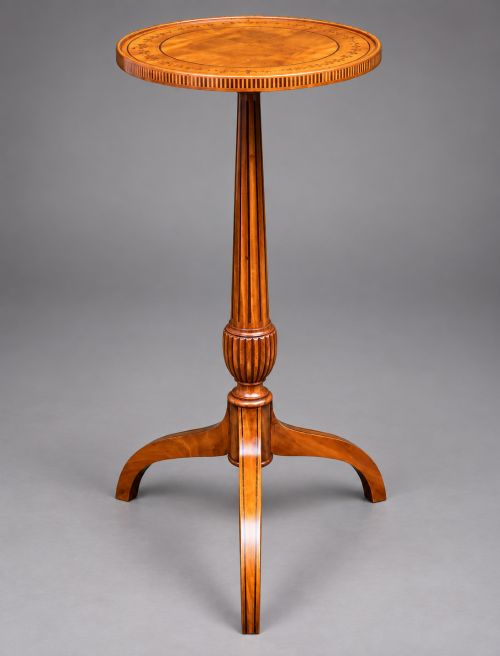
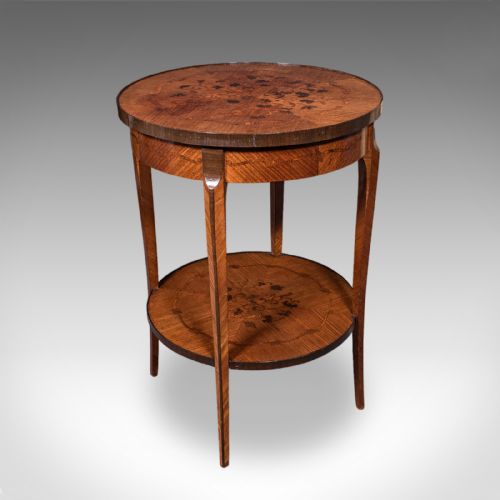
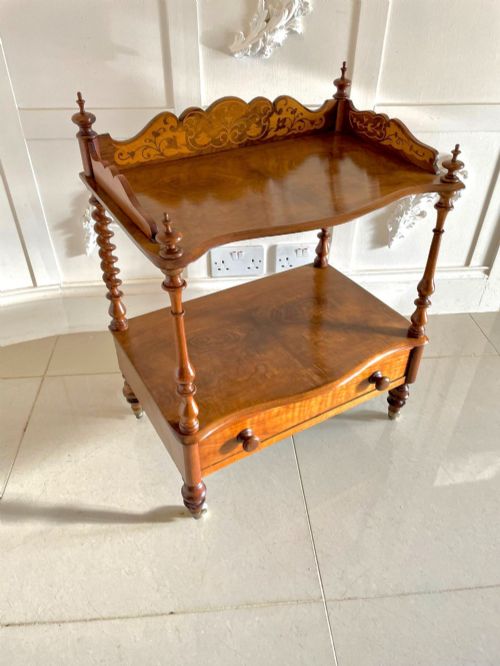
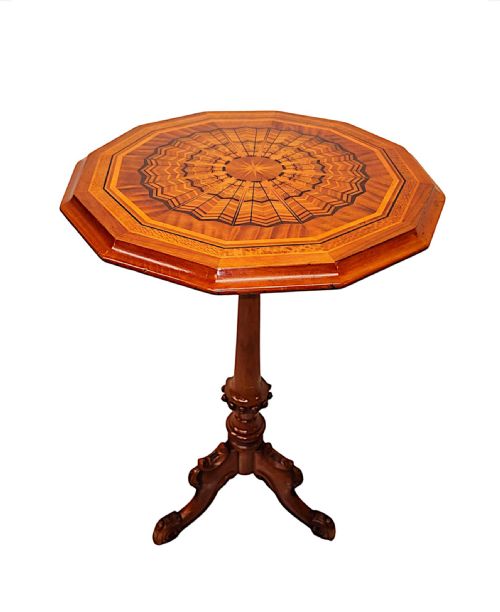
These marquetry lamp stand pieces bring detailed wood veneers and decorative designs into a room, serving practical surfaces for lighting.
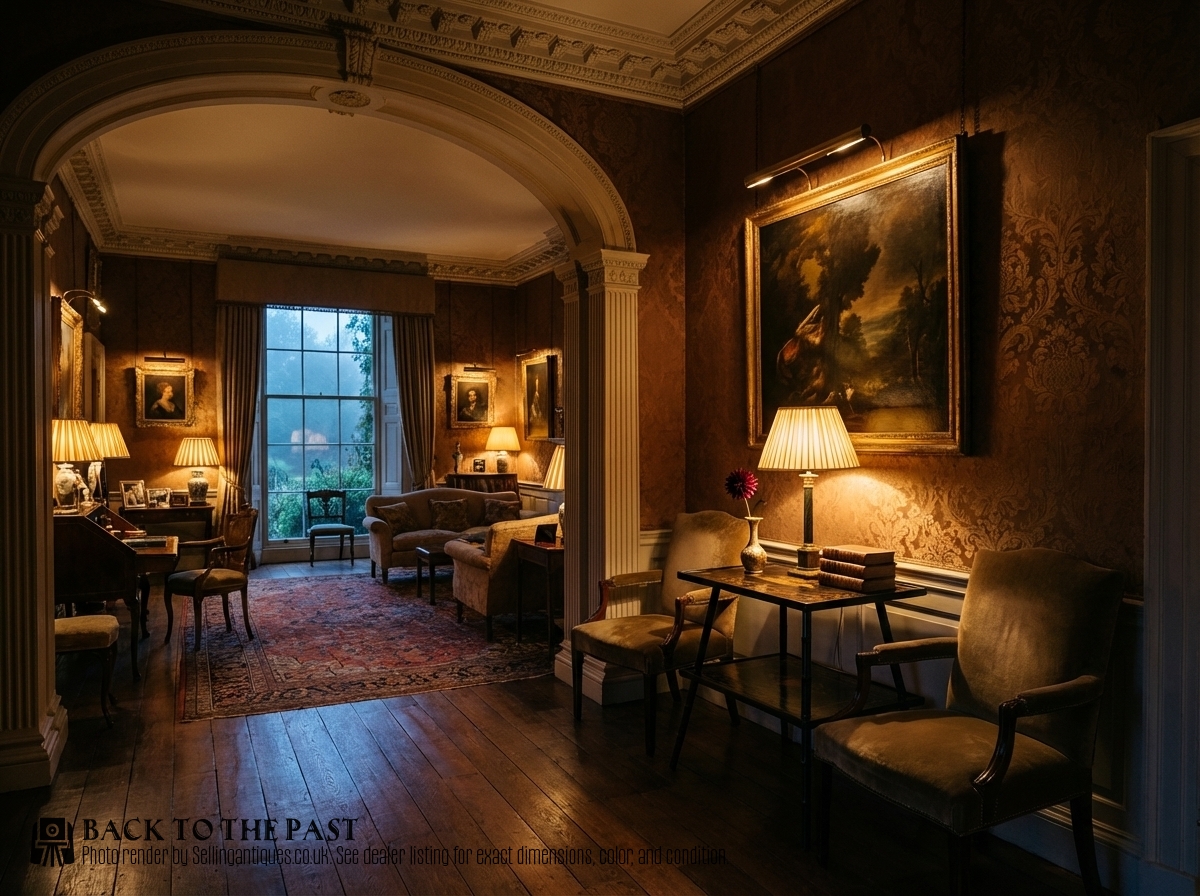
Marquetry Lamp Stand
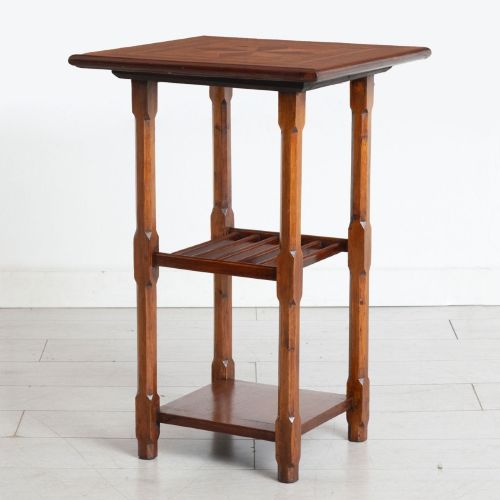
A marquetry lamp stand combines decorative wood veneers with a stable surface designed to hold lighting or display items. When you explore this selection, you encounter occasional tables, side tables, and corner tables adapted for this purpose.
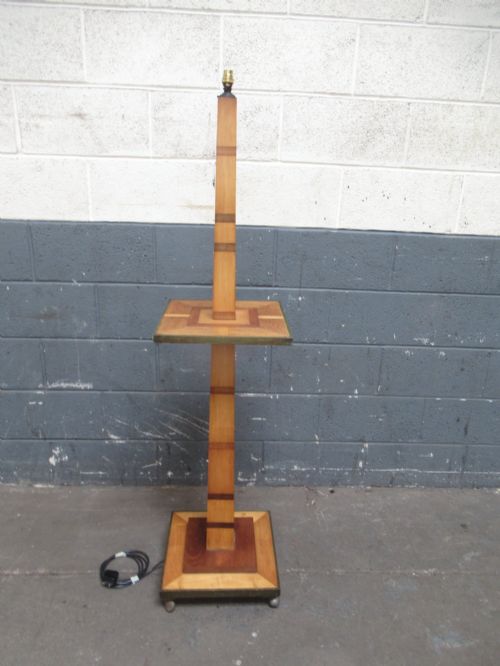
The pieces span several periods, with Edwardian and Victorian examples appearing frequently alongside 19th-century designs and Art Deco forms. Makers often utilised standard table shapes, transforming them through surface decoration rather than altering the core furniture architecture.
Origin influences appearance, as French and English workshops produced distinct interpretations of these small tables. French pieces frequently display Louis Revival styling or intricate floral patterns, while English examples often follow Sheraton Revival or Victorian conventions.
Materials and construction
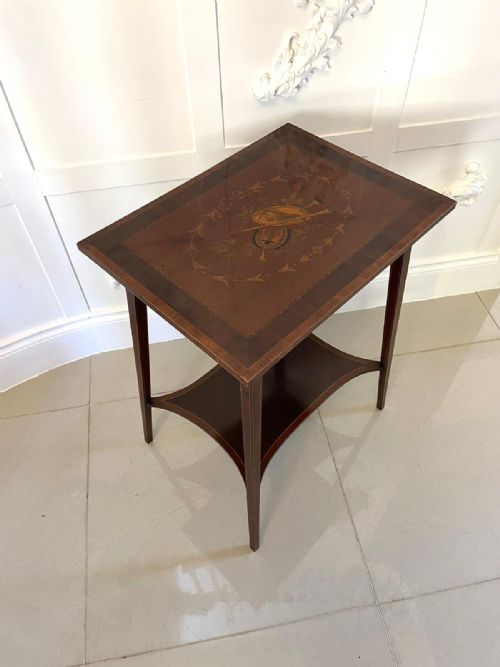
Craftsmen built these stands using a foundation timber such as mahogany, walnut, or oak, applying contrasting veneers across the top and sides. Woods like satinwood, boxwood, and rosewood provided the varied tones required for complex pictorial or geometric patterns.
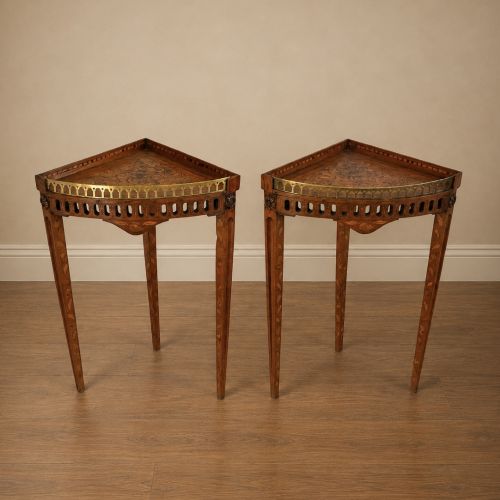
Marquetry involves cutting thin pieces of wood to form intricate designs, which are then assembled and glued to the carcase of the table. Additional detailing often includes brass galleries, bone inlays, or ormolu mounts depending on the period and regional style.
The listings span multiple decades from the 1830s through to the 1930s, incorporating Victorian, Edwardian, and Art Deco styles.
Factors of quality
The precision of the veneer work dictates the refinement of a marquetry lamp stand, separating simple geometric borders from elaborate pictorial compositions. Tighter joints between individual wood pieces and sharper contrast between the grain patterns indicate higher workshop standards.
The choice of secondary timbers and structural stability also mark the distinction between standard production and exceptional examples. Better pieces maintain integrity in their pillar supports, tripod bases, or two-tier framing without excessive movement in the wood.
Gillows·George Bullock·Anton Seuffer
The Marquetry Lamp Stand Glossary
- Marquetry
- The practice of applying decorative wood veneers to a structural carcase to form pictures or ornamental patterns. This technique defines the visual character of the surface decoration.
- Occasional table
- A small, movable table designed for specific minor uses such as holding a lamp or book. These pieces frequently double as display stands.
- Satinwood
- A durable, lustrous timber native to India and Sri Lanka with a yellowish sheen. It served as a favoured veneer for contrasting details in Edwardian and Sheraton Revival pieces.
- Gallery
- A raised decorative rim, often made of pierced brass, fitted around the edge of a table top. This feature prevents items from sliding off the surface.
Marquetry Lamp Stand: Frequently Asked Questions
What is a marquetry lamp stand?
A marquetry lamp stand is a small decorative table featuring intricate wood veneer patterns designed to hold a lamp or display object.
These pieces typically take the form of occasional, side, or wine tables originating from the 19th and early 20th centuries.
How were these stands used?
Historically, these tables provided a movable surface for lighting devices, candles, or decorative ornaments in principal rooms.
Their compact size allowed users to position them beside seating areas or in corners where larger furniture would not fit.
How do I identify the period?
Dating relies on combining the timber choices, underlying furniture style, and the nature of the veneer work.
Victorian and Edwardian pieces often incorporate mahogany or walnut with floral marquetry, whereas Art Deco examples favour geometric simplicity.
How do I care for wood veneer?
Protecting marquetry surfaces involves keeping them away from direct sunlight and maintaining stable room humidity.
Gentle cleaning with a soft cloth prevents dust accumulation without risking the delicate glued veneer sections.