


Classical Marquetry Table
A classical marquetry table brings together disciplined architectural geometry and intricate timber picture-making for a room that values historic character.
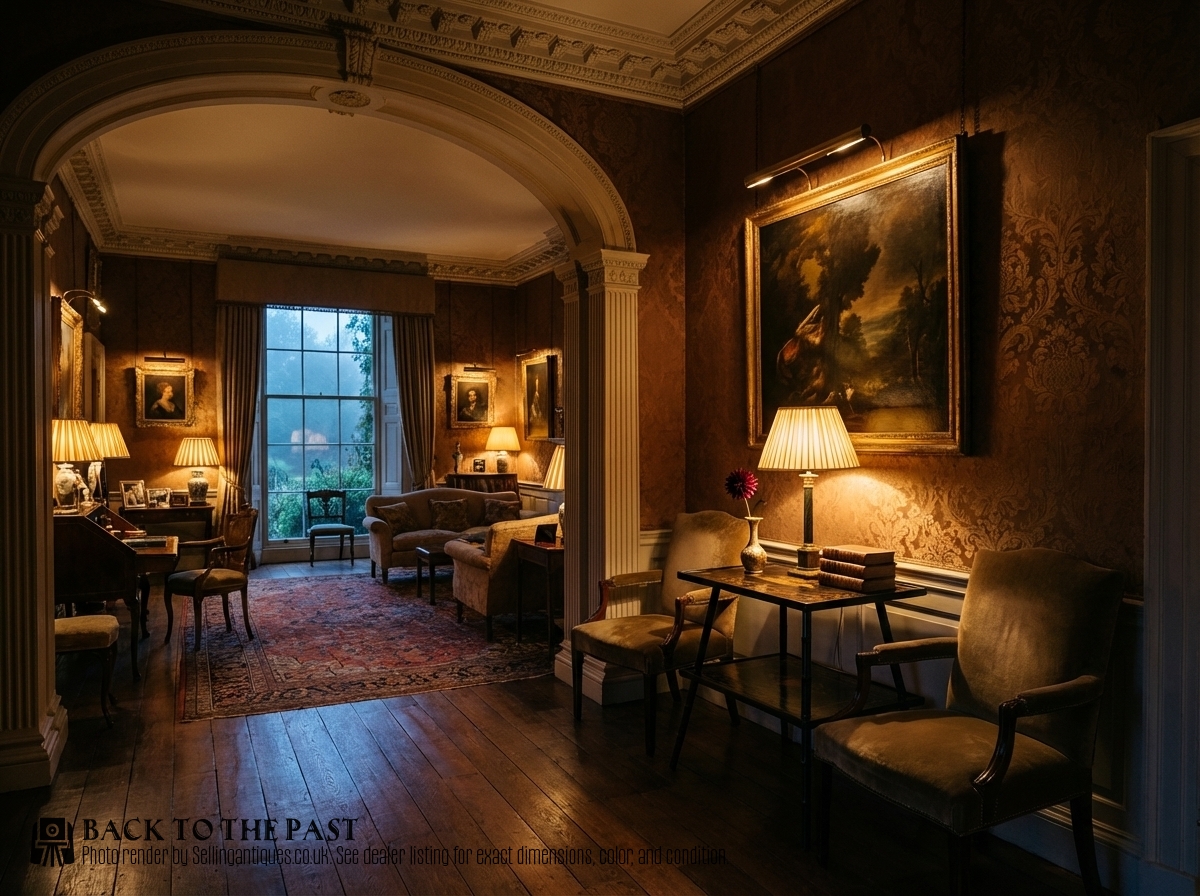
Classical Marquetry Table
A classical marquetry table unites structural timber forms with elaborate wood-inlaid decorative motifs. These pieces span from the late eighteenth century through the nineteenth and into the early twentieth century.
The most common formats met here include grand centre tables, occasional tables, card tables, and occasional side cabinets. They draw directly upon Regency, Victorian, and Neo-Classical Revival traditions.
Makers working in the Sheraton and Louis XVI styles produced these pieces to function as focal points in reception rooms and parlours. Their surfaces display meticulously fitted veneers that picture urns, foliage, and classical urns.
Materials and Construction Techniques
Carpenters laid contrasting fine timbers - principally satinwood, mahogany, walnut, and amboyna - over sturdy underlying carcases of native timber. Boxwood and ebonised wood often provide crisp linear contrast to the broader field of veneer.
Marquetry artisans cut fine sheets of coloured wood by hand, assembling intricate pictorial panels before pressing them into the surface of the table top. Ormolu mounts and brass stringing frequently frame these complex geometric and floral designs.
Materials recorded across these tables include satinwood, mahogany, amboyna, walnut, and ebonised wood accented with boxwood and brass.
Distinguishing Fine Workmanship
Quality rests in the precision of the veneer cuts and the tightness of the joints where different timber grains meet. The finest examples maintain absolute flushness across the marquetry panel without noticeable shrinkage gaps in the individual wood slivers.
Makers of distinction, such as Edwards & Roberts or Pietro Ferrario, balanced robust structural carcases with delicate, harmonious surface ornament. Lesser pieces rely on stamped repetitive patterns rather than the nuanced tonal shading achieved by scorching and engraving individual veneer pieces.
Edwards and Roberts·Pietro Ferrario·Holland and Son
The Classical Marquetry Table Glossary
- Marquetry
- The art of applying small pieces of veneer to a structural carcase to form decorative pictorial designs. It differs from parquetry by forming organic and figurative pictures rather than repeating geometric patterns.
- Satinwood
- A lustrous, hard timber native to Ceylon and India with a golden yellow sheen. Cabinet makers prized it for its reflective qualities which brightened light-filled drawing rooms.
- Ormolu
- Gilded bronze used for mounts, feet, and gallery rails on high-status nineteenth-century furniture. The technique requires an amalgam of mercury and gold applied to a cast bronze base.
- Demi-lune
- A half-moon shape characteristic of side and console tables designed to stand flush against a wall. This form gained immense popularity during the neo-classical revival periods.
Classical Marquetry Table: Frequently Asked Questions
What is a classical marquetry table used for?
These tables served primarily as centrepieces in formal reception rooms, drawing rooms, and libraries where guests gathered. Their decorated tops were intended to be viewed from all angles, displaying the owner's taste and refinement.
Today, they function well as standalone display surfaces for lamps, books, or decorative objects. Their sturdy timber construction remains entirely practical for daily use in a modern interior.
How do I identify a neo-classical style?
Neo-classical design draws direct inspiration from the art and architecture of ancient Greece and Rome. Look for strict symmetry, straight tapered legs, urn motifs, and restrained laurel wreaths.
This aesthetic arose in reaction to the heavy curves of the preceding Rococo period. It values proportion, clarity, and classical architectural orders above extravagant surface relief.
How should I care for a mahogany or satinwood table?
Keep these historic timber surfaces away from direct sunlight and strong heat sources to prevent the natural veneers from drying and lifting. Regular dusting with a soft, dry cloth maintains the polish without chemical buildup.
Apply a traditional beeswax polish sparingly only when the wood appears dry. Avoid placing damp items directly onto the polished timber top.
What distinguishes Victorian marquetry from earlier periods?
Victorian interpretations often embraced eclectic revivals, combining Sheraton lightness with heavier proportions and darker woods like walnut and amboyna. The mechanical precision of nineteenth-century workshops also allowed for finer, more complex stringing.
Earlier eighteenth-century pieces typically relied on hand-sawn native timbers with a more restrained, architectural application of floral and urn motifs.