
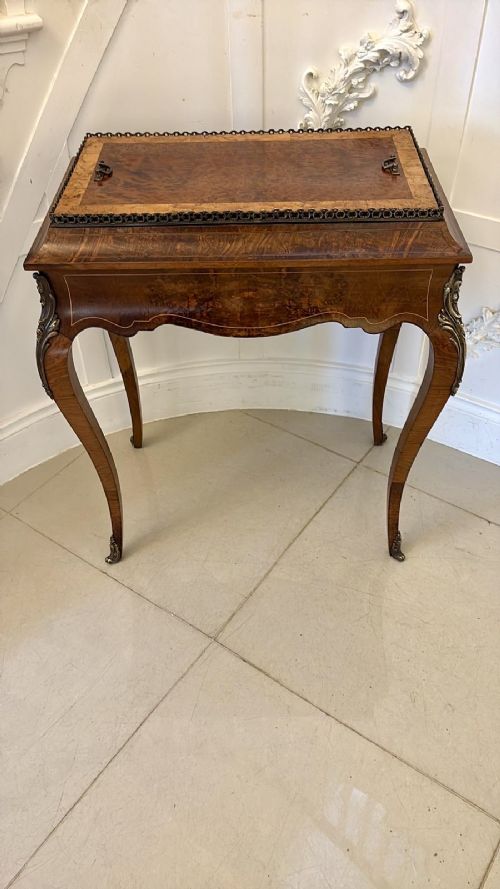


Marquetry Jardiniere Table
Marquetry jardiniere tables unite fine furniture and indoor planting, offering a decorative surface paired with a plant holder.
Marquetry Jardiniere Table
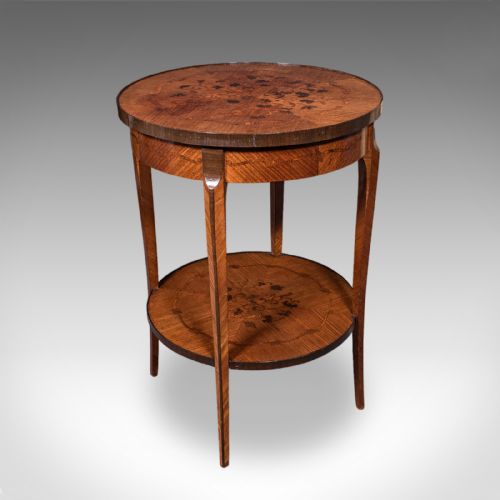
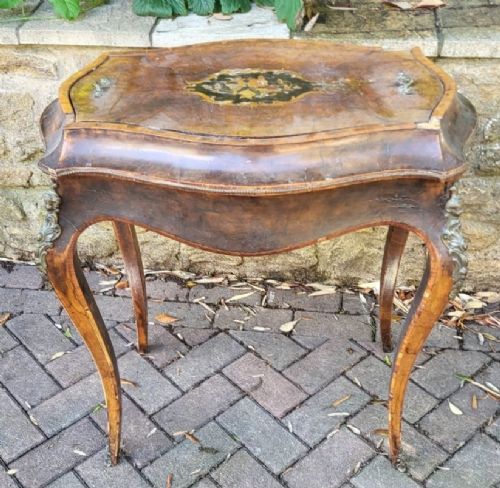
A marquetry jardiniere table combines an occasional or side table with an integrated plant container, designed to bring greenery into nineteenth-century drawing rooms. The pieces appearing here span the Victorian and Edwardian eras, drawing heavily on French Louis XV revival and Napoleon III design vocabularies.
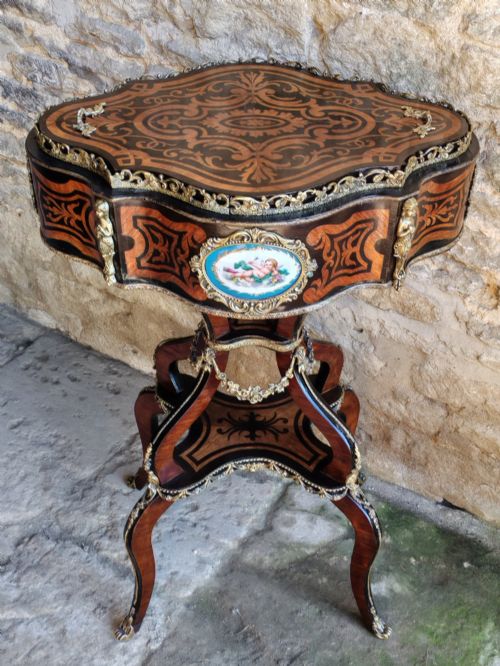
Most examples function as dual-purpose furnishings featuring a removable or lidded metal insert to protect the timber structure from moisture. Makers constructed these tables in forms ranging from two-tier occasional stands to freestanding planter tables with gilt metal mounts.
Origins cluster predominantly around nineteenth-century French workshops alongside Victorian British production. These tables served as status symbols in period parlours, displaying exotic plants alongside porcelain plaques and decorative veneers.
Materials and Construction
Cabinet makers utilised exotic hardwoods such as kingwood, burr walnut, rosewood, and tulipwood as the primary chassis for these tables. Detailed floral and geometric marquetry patterns feature contrasting veneers set into the timber surface.
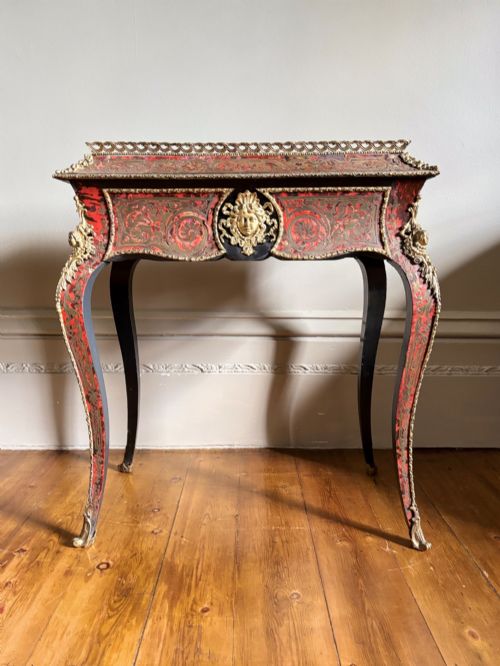
Mounts and liners incorporate cast ormolu, gilt metal, and brass to frame the botanical displays and protect the edges. Ebonised wood and satinwood also appear alongside porcelain plaques set directly into the tables.
Victorian makers occasionally fitted these tables with multi-purpose lids, transforming a botanical planter into a wine cooler or cellarette in seconds.
Assessing Quality
The precision and complexity of the marquetry inlay dictate the baseline standard of the piece, with multi-wood floral motifs requiring significant skill. The depth and crispness of the cast ormolu mounts further separate standard production from finer creations.
Timber selection plays a major role, as richly figured burr walnut and matched kingwood veneers indicate superior workshop origins. The retention of the original metal liner or insert contributes heavily to the integrity of the piece.
The Marquetry Jardiniere Table Glossary
- Marquetry
- The art of applying pieces of veneer to a structure to form decorative patterns. Craftsmen cut various coloured woods to fit together precisely.
- Jardiniere
- An ornamental pot or stand for holding plants or flowers. In table form, it is integrated directly into the furniture design.
- Ormolu
- Gilded bronze applications used for mounts and feet on nineteenth-century furniture. The technique involves coating bronze with a mercury and gold amalgam.
- Kingwood
- A dense, heavily grained Brazilian timber favored in French cabinet making. Its dark violet-brown tones feature striking lighter streaks.
- Boulle
- A form of marquetry consisting of tortoiseshell and brass inlay. Named after French cabinet maker André-Charles Boulle.
Marquetry Jardiniere Table: Frequently Asked Questions
What is a jardiniere table?
A jardiniere table is a piece of nineteenth-century furniture that combines a display surface with a built-in metal container for plants. They were placed in formal reception rooms to incorporate living greenery into interior decoration.
These tables often feature lift-off lids or removable liners to allow safe watering of plants without damaging the surrounding wood veneer.
How do I care for the wood?
Protect the polished timber surfaces from direct sunlight and moisture to prevent the veneer from lifting. Use the original metal liner inside the well when holding plants to prevent water damage to the marquetry.
Apply a traditional wax polish periodically to maintain the sheen of the walnut or kingwood. Avoid placing the table near heat sources that could dry out the historic timbers.
Were these tables made in France?
Many surviving examples originate from nineteenth-century French workshops following Louis XV revival or Napoleon III styles. British makers also produced similar pieces during the Victorian and Edwardian periods.
French pieces frequently incorporate heavier ormolu mounts and intricate kingwood marquetry. British variations often utilise burr walnut and mahogany.
Can I still use it for plants?
Yes, provided the metal insert remains watertight and structurally sound. Many owners place potted plants directly inside the removable liner.
If the liner shows corrosion or leaks, potted plants can be kept in separate plastic containers before placing them into the jardiniere well.