

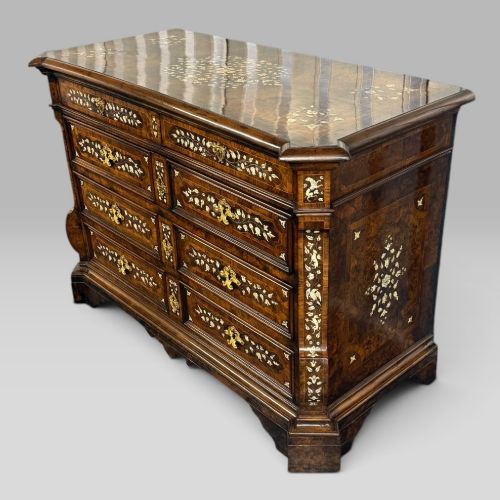
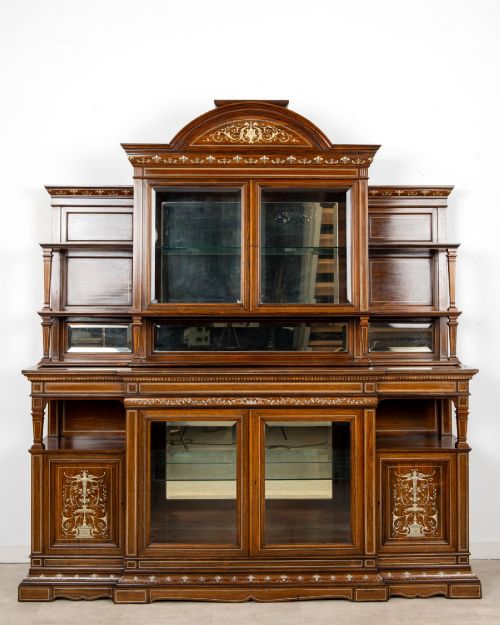
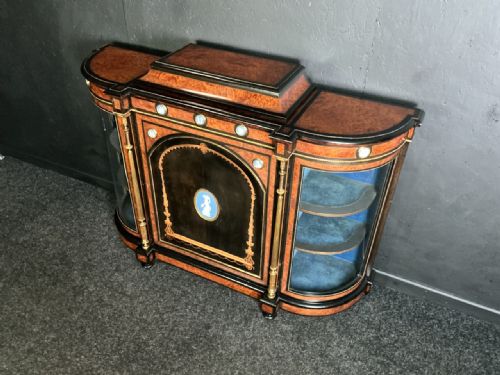
Marquetry Inlaid Credenza
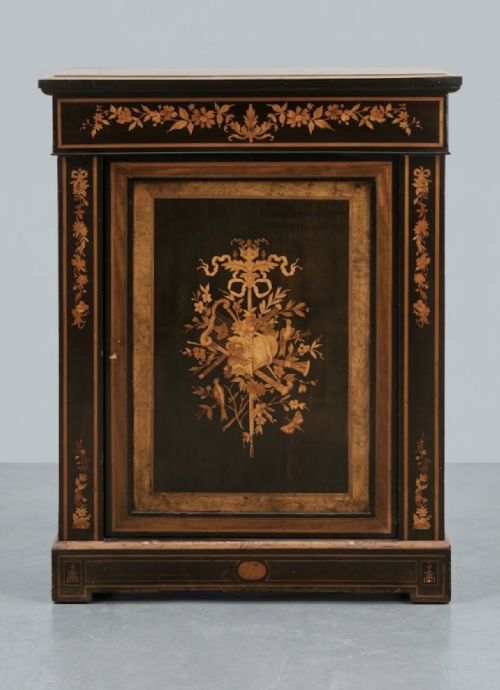
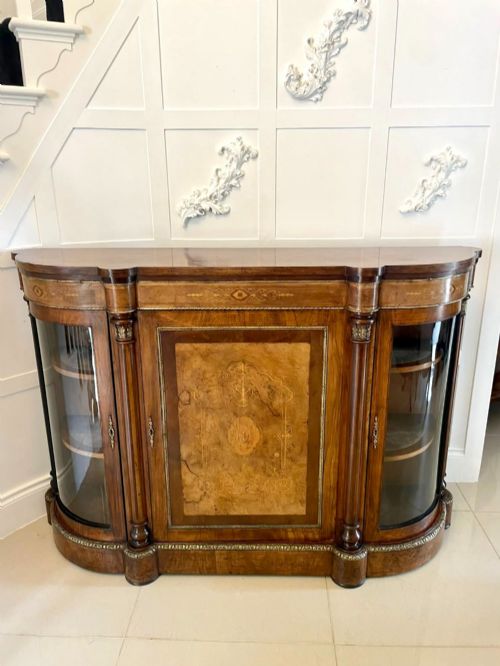
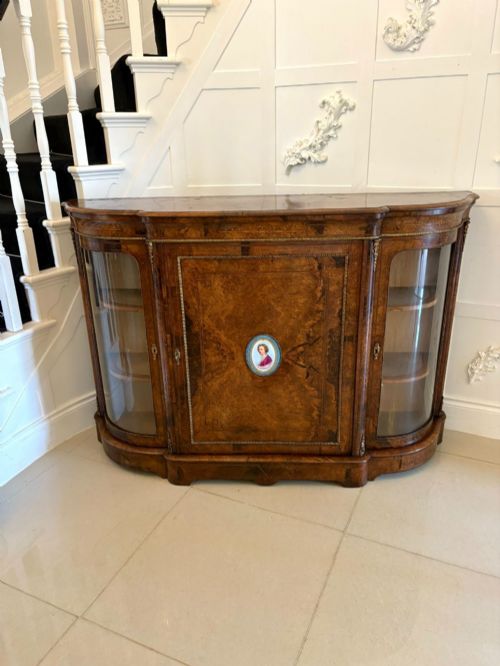
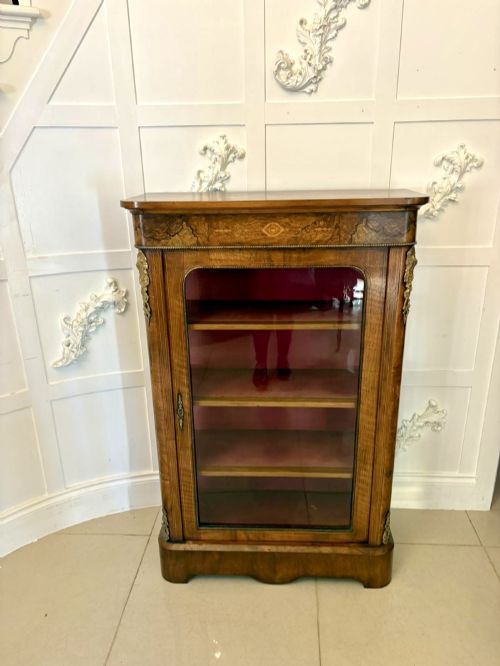
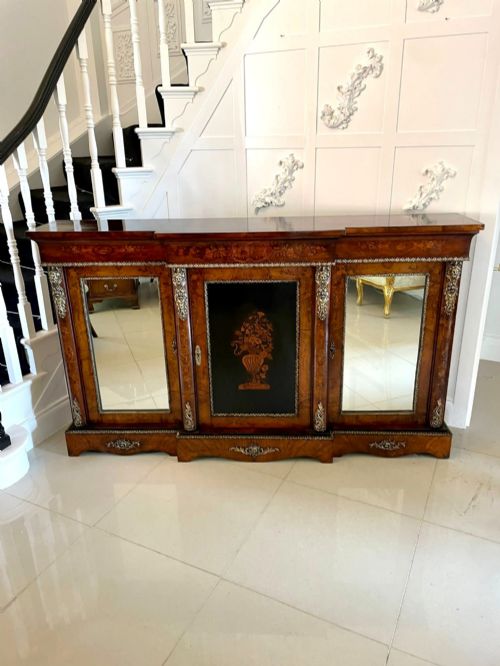
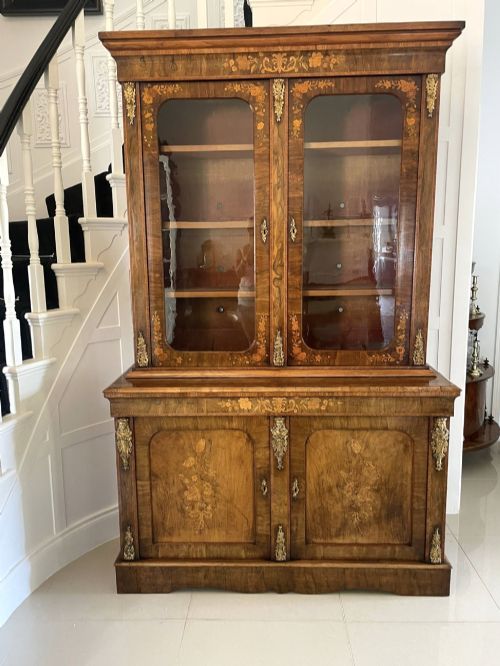
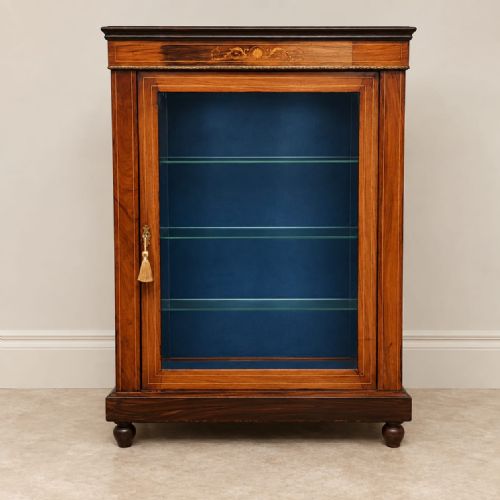
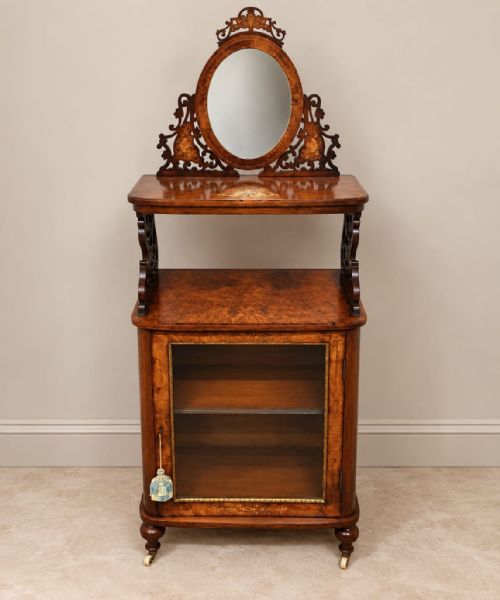
A marquetry inlaid credenza brings exceptional timber grain and precise floral or geometric veneers into a principal room.
Marquetry Inlaid Credenza
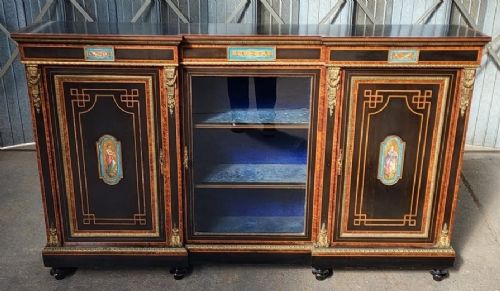
A marquetry inlaid credenza is a low, freestanding display and storage cabinet developed during the Victorian era for formal reception rooms. The pieces encountered most frequently on this page date from the nineteenth century and combine substantial proportions with glazed central or flanking doors.
Makers utilised rich timbers such as burr walnut, rosewood, and mahogany as a canvas for intricate floral panels and classical motifs. These cabinets served primarily to display porcelain and decorative objects while housing books or linens within enclosed lower compartments.
Materials and construction methods
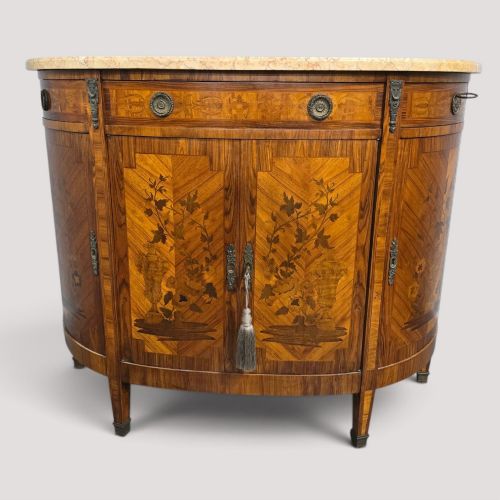
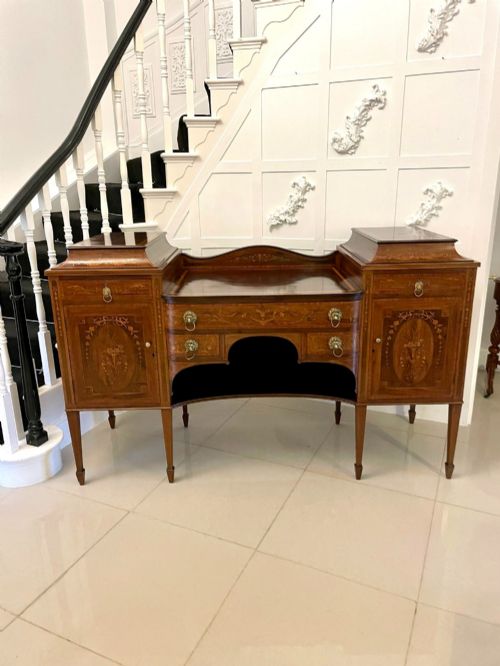
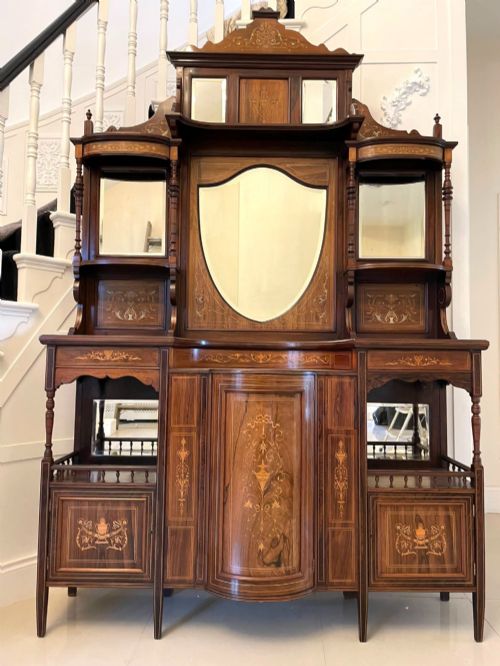
Cabinetmakers built carcases from solid pine or oak before applying fine veneers of burr walnut, satinwood, or mahogany to the exterior surfaces. Contrasting timbers and metal foils were then hand-cut and fitted into recessed channels to form elaborate floral and scrollwork marquetry patterns.
Gilt bronze or ormolu mounts reinforced structural corners and framed door panels, while cast brass accents and glazed central sections completed the composition. The integration of marble tops appeared on select examples to provide a durable and luxurious upper surface.
Some Victorian credenzas hid sheet music behind curved glass doors while holding family portraits on top.
Indicators of craftsmanship
Quality rests upon the precision of the veneer work and the depth of the timber grain selected for the primary surfaces. Superior examples display tightly curled burr walnut and seamlessly fitted marquetry panels that retain sharp edges without lifting or excessive filler.
The architectural presence is elevated by heavy cast ormolu mounts, well-proportioned serpentine fronts, and original glazed doors framed by disciplined timber mouldings rather than simplified flat planes.
Hewetsons London·Collinson and Lock·Lamb of Manchester·Maison Gagneau·Gillows·Edwards and Roberts
The Marquetry Inlaid Credenza Glossary
- Marquetry
- The decorative technique of applying thin veneers of wood, brass, or tortoiseshell to a structural carcase to form pictorial or geometric patterns.
- Ormolu
- Gilded bronze mounts and decorative trimmings applied to the corners, feet, and door frames of high-status nineteenth-century furniture.
- Burr Walnut
- Timber harvested from walnut tree growths, prized for its highly twisted, organic grain patterns utilised on primary cabinet facades.
- Pier Cabinet
- A narrow display cabinet designed specifically to fit the wall space between windows during the Victorian period.
- Credenza
- A low sideboard or cabinet featuring cupboards or glazed doors, originating in Italy and revived extensively during the nineteenth century.
Marquetry Inlaid Credenza: Frequently Asked Questions
What is a marquetry inlaid credenza used for?
These low cabinets were traditionally placed against a drawing room wall to display porcelain collections and host lamps or decorative objects on the upper surface. The enclosed cupboards below provided concealed storage for books, sheet music, or fine table linens.
Today, they function well in dining rooms or living spaces as statement storage pieces that anchor a room's decorative scheme while offering practical display capability behind glass doors.
How do I identify a Victorian credenza?
Victorian examples typically feature substantial carcases veneered in burr walnut or rosewood, often accented with extensive floral marquetry and gilt ormolu mounts. Look for serpentine or breakfront shapes and glazed side doors designed to showcase decorative objects.
Many pieces from this period incorporate porcelain plaques inset into the wood framework, a distinct aesthetic favoured by mid-nineteenth-century cabinetmakers.
Are these cabinets difficult to maintain?
Routine care requires keeping the timber away from direct sunlight and extreme humidity fluctuations to prevent the delicate veneer from drying or lifting. Regular dusting with a soft, dry cloth preserves the polished surface without the need for heavy chemical polishes.
Waxing the wood surfaces occasionally helps nourish the burr walnut and maintains the subtle sheen characteristic of nineteenth-century French polish finishes.
How do I distinguish between periods?
Earlier nineteenth-century pieces often lean towards French revival styles with bold serpentine curves, heavy ormolu mounts, and elaborate tortoiseshell boullework. Later nineteenth-century iterations, including Sheraton Revival designs, tend to utilise lighter satinwood timbers with restrained stringing and neoclassical motifs.
Examining the secondary timbers inside the drawers and the construction of the cabinet backboards helps confirm whether a piece belongs to the mid-Victorian era or a later revival period.