
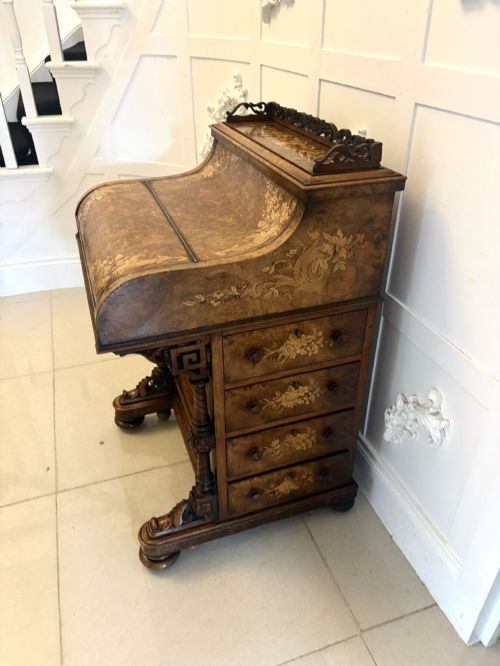
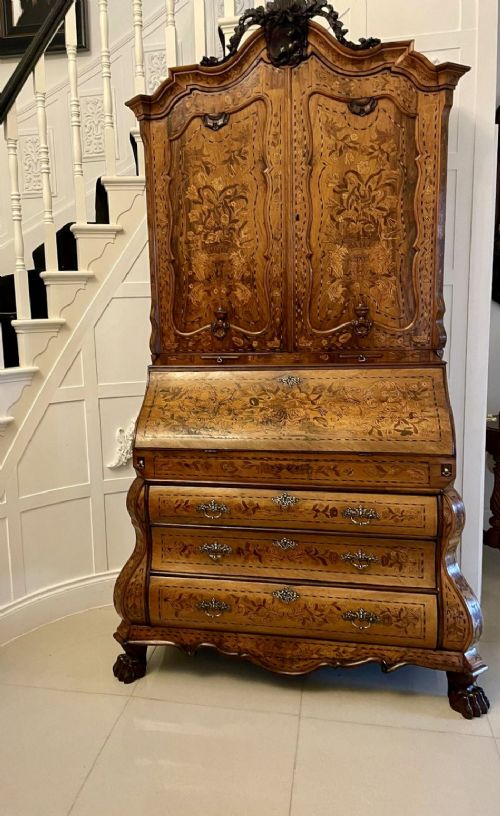
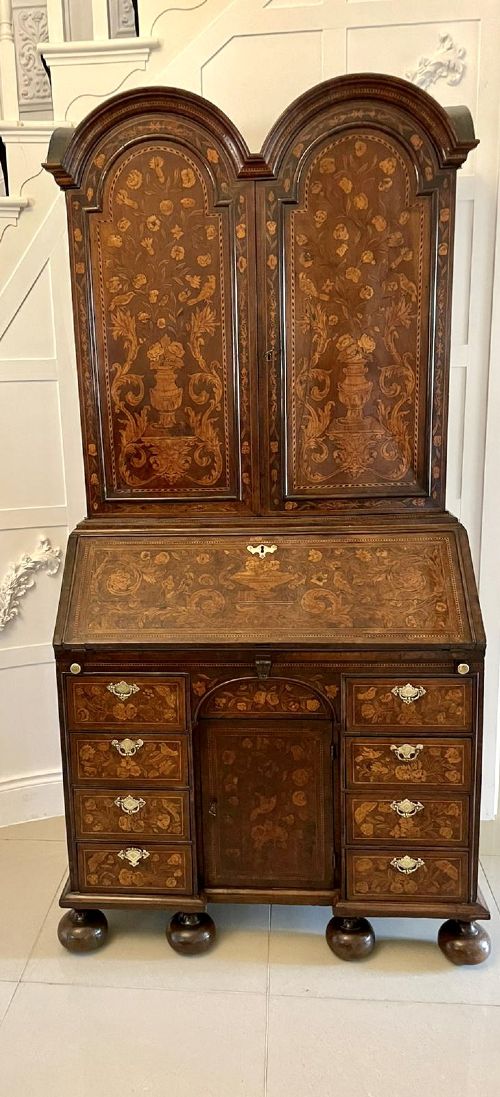
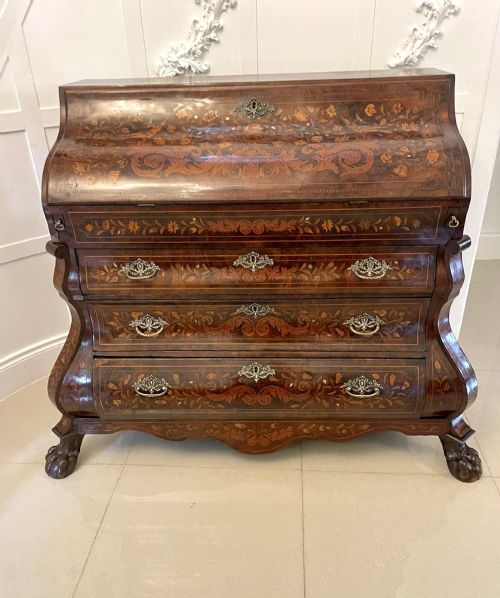

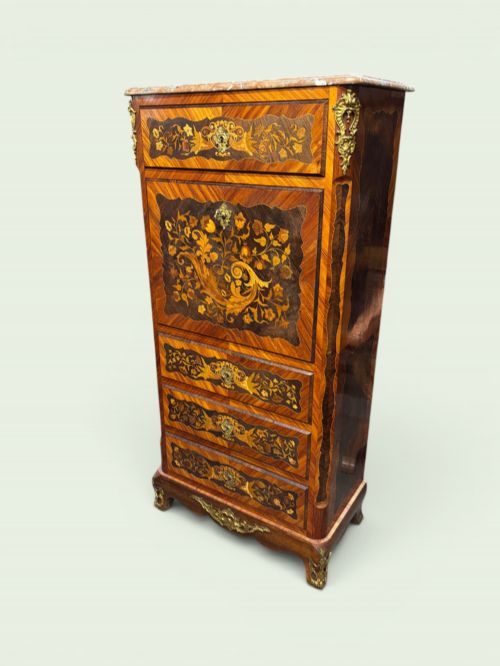
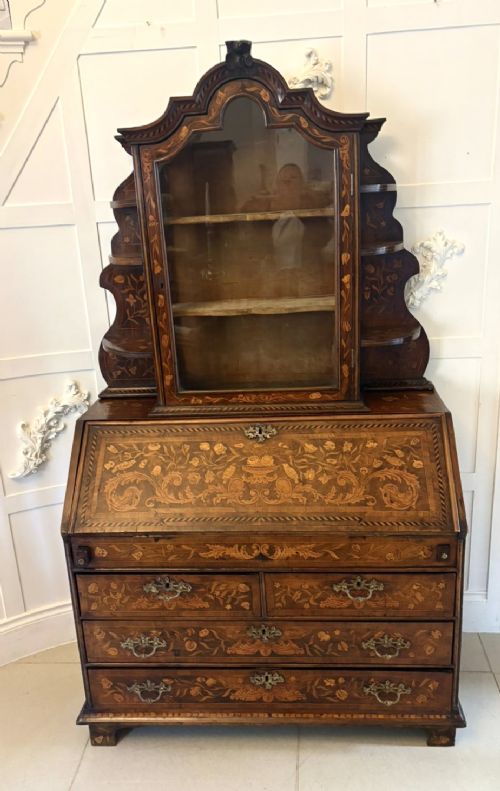


Marquetry Floral Desk Cabinet
A marquetry floral desk cabinet brings together fitted writing spaces and intricate wood-inlaid botanical patterns from centuries past.
Marquetry Floral Desk Cabinet
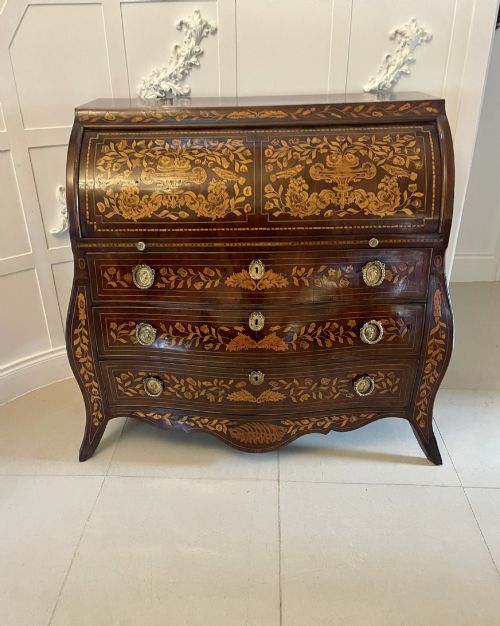
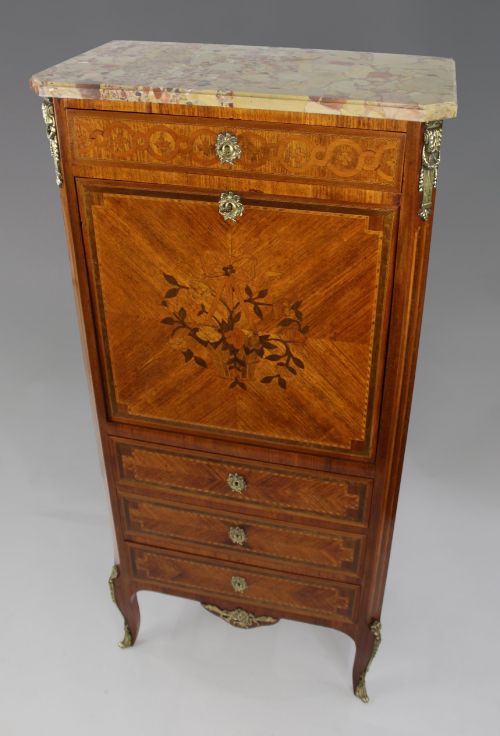
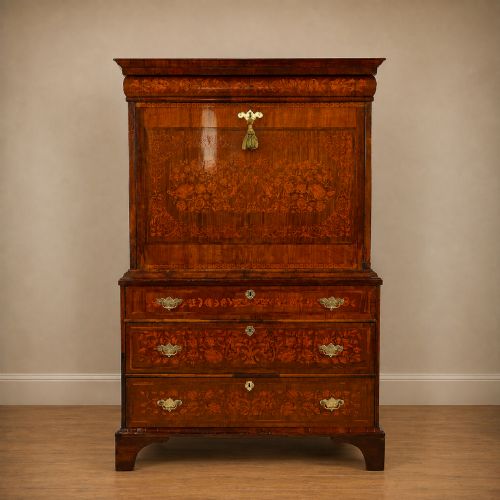
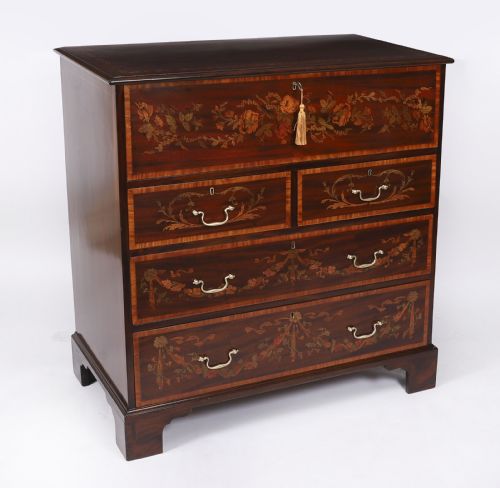
A marquetry floral desk cabinet takes several forms across the selection, ranging from bureau bookcases and cylinder desks to tall escritoires and secretaire cabinets. These pieces serve as functional writing furniture featuring concealed compartments, drop fronts or sloping lids designed for correspondence.
The material evidence points predominantly to eighteenth and nineteenth century origins, with Dutch and French workshops producing many of the surviving examples. Buyers frequently encounter Dutch Baroque and Rococo styles alongside Louis XV revivals, often executed in walnut or mahogany.
Bureau bookcases combine a lower writing desk with upper shelving enclosed by doors, while secretaire cabinets utilise a drop front to reveal internal drawers and pigeonholes. Each variation demonstrates the integration of storage and writing surfaces characteristic of the period.
Materials and Technique
Cabinetmakers construct the carcases of these pieces using foundational timbers such as walnut, mahogany, fruitwood, and rosewood, often applying burr walnut or exotic veneers to primary surfaces. These woods provide a stable ground for the detailed decorative work.
The defining technique involves marquetry, where contrasting thin veneers of various woods are meticulously cut and fitted together to form elaborate floral arrangements and foliage motifs. Artisans frequently accent these compositions with brass hardware, marble tops, or ormolu mounts depending on the regional style.
Makers achieve three-dimensional depth in the floral designs by using heat-searing techniques on individual wood pieces to shade petals and leaves before gluing them onto the carcase. This meticulous assembly requires high levels of joinery skill to ensure the veneers remain stable over centuries.
Listings span the eighteenth and nineteenth centuries, featuring Dutch Baroque, Rococo, and French revival styles executed in walnut, mahogany, and rosewood.
Evaluating Execution
Quality in a marquetry floral desk cabinet rests upon the precision of the veneer cutting and the natural tonal variation of the woods used for the floral motifs. Superior examples display crisp botanical outlines without excessive filler, maintaining tight joints between each contrasting piece of timber.
The complexity and depth of the internal fittings also distinguish finer items, particularly where secret drawers, polished pigeonholes, and fitted compartments retain their original mechanisms. Carcase construction, including the choice of secondary woods and the integrity of the dovetail joints in the drawers, marks the distinction between workshop levels.
The harmony between the architectural form of the cabinet and the rhythm of the floral marquetry dictates overall visual success. Pieces where the inlay flows naturally across the fall front or bureau doors without awkward interruptions represent the upper tier of period production.
The Marquetry Floral Desk Cabinet Glossary
- Marquetry
- A decorative technique where small pieces of veneer are assembled to form pictorial patterns on a carcase. Unlike inlay, which involves sinking designs into a solid surface, marquetry covers the entire structural ground.
- Secretaire
- A piece of furniture containing a writing drawer or a fold-down flap that conceals fitted interior compartments. This form evolved to keep correspondence secure and organised.
- Bombe
- A bulging or swelling contour found on the front and sides of eighteenth-century case furniture. This curvaceous profile demands advanced woodworking techniques to shape both the timber and the applied veneer.
- Escritoire
- A tall writing cabinet, often featuring a fall-front writing surface that opens to reveal internal drawers and pigeonholes. The term derives from the French word for writing.
- Ormolu
- Gilded bronze mounts applied to the corners, feet, or keyholes of fine furniture. Makers utilise these metal ornaments to highlight the contours of French revival pieces.
Marquetry Floral Desk Cabinet: Frequently Asked Questions
What is a marquetry floral desk cabinet?
A marquetry floral desk cabinet is a piece of antique storage and writing furniture decorated with detailed wood-inlaid botanical designs. These items combine enclosed shelving or drawers with a dedicated writing surface.
Craftsmen built these cabinets primarily during the eighteenth and nineteenth centuries in continental workshops, utilising contrasting veneers to create lasting floral imagery.
How do bureau bookcases differ from secretaire cabinets?
Bureau bookcases combine a lower writing desk with an upper glazed or panelled bookcase section. They usually feature a sloping fall front that opens to create a flat writing area.
Secretaire cabinets typically utilise a vertical drop-front panel that conceals internal compartments while maintaining a more compact profile against a wall.
What woods appear in these cabinets?
Cabinetmakers relied on sturdy foundational timbers like walnut, mahogany, and fruitwood for the main carcase and structural elements. Burr walnut and rosewood frequently serve as surface veneers.
Various lighter and darker woods provide the contrasting tones necessary to render the individual petals and leaves within the floral marquetry scenes.
How do I date an antique marquetry cabinet?
Dating relies on examining the structural joinery, secondary woods inside the drawers, and the prevailing decorative style of the carcase. Eighteenth-century models often feature bombe shaping or bureau bookcase configurations.
Nineteenth-century pieces frequently adopt French Louis XV or Louis XVI revival aesthetics, incorporating distinct hardware, marble tops, or machine-sawn elements.
How should I care for antique marquetry wood?
Protect antique marquetry by placing the cabinet away from direct sunlight and maintaining stable indoor humidity levels. Sudden environmental shifts cause old veneers to lift or crack.
Apply specialised furniture wax sparingly and buff gently with a soft cloth to preserve the natural lustre of the timber without building up heavy residues.