

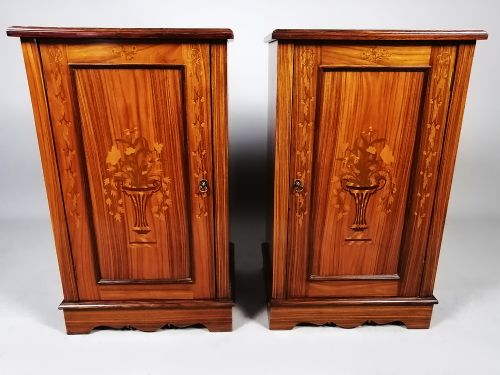
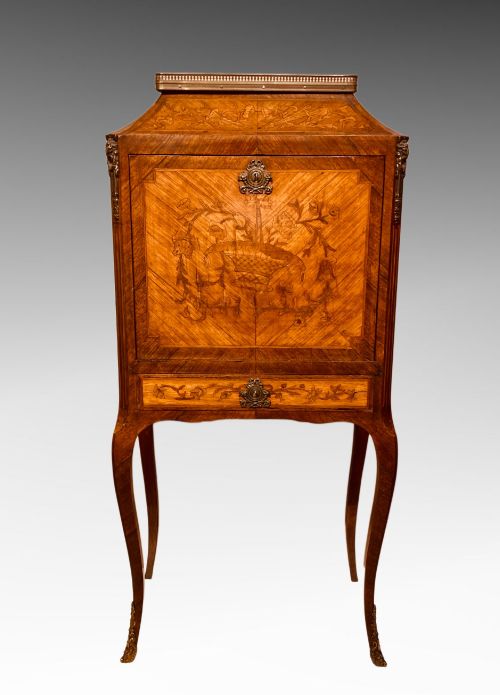
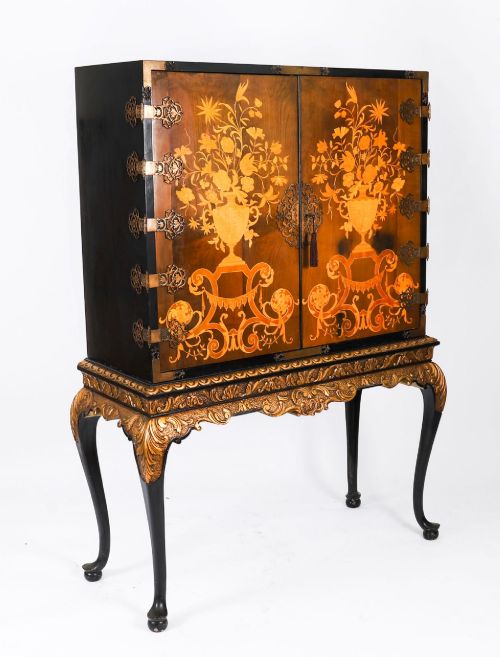
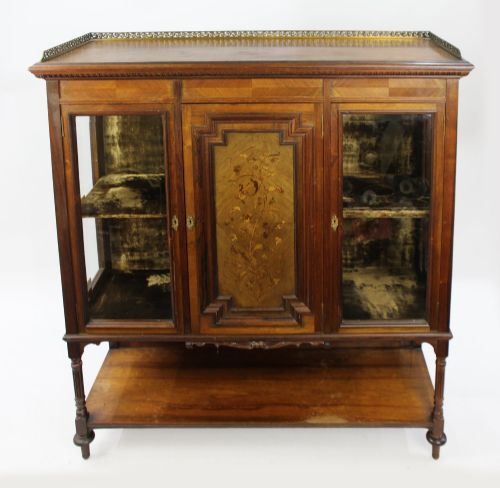

Marquetry Floral Cabinets
Marquetry floral cabinets bring together complex timber veneer pictures and functional storage across centuries of European cabinet-making.
Marquetry Floral Cabinets
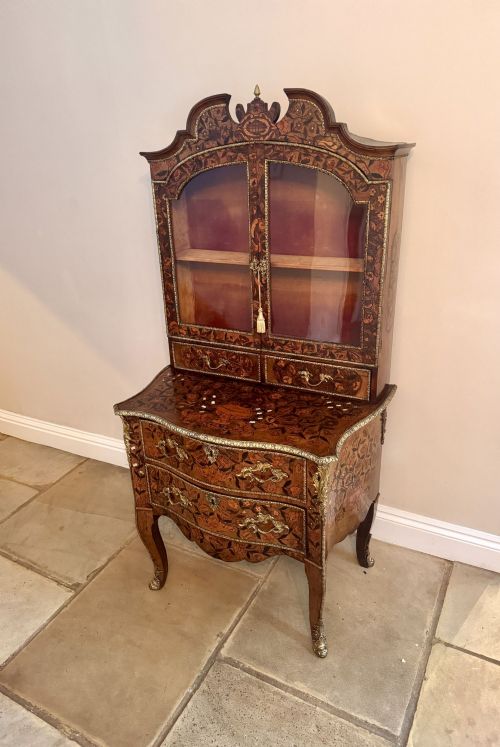
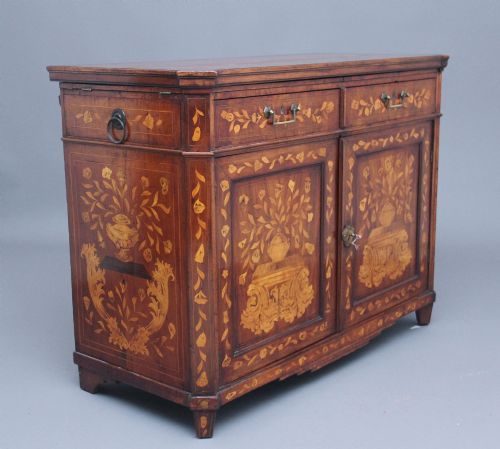
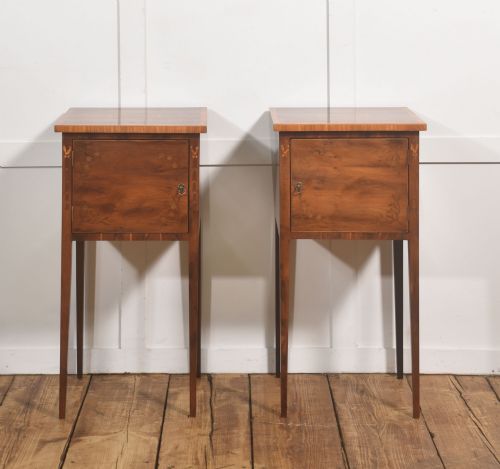
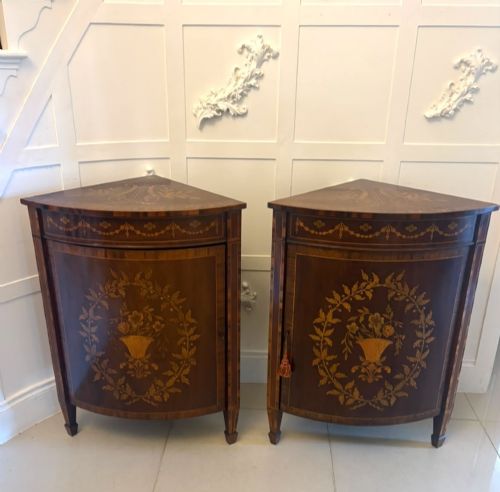
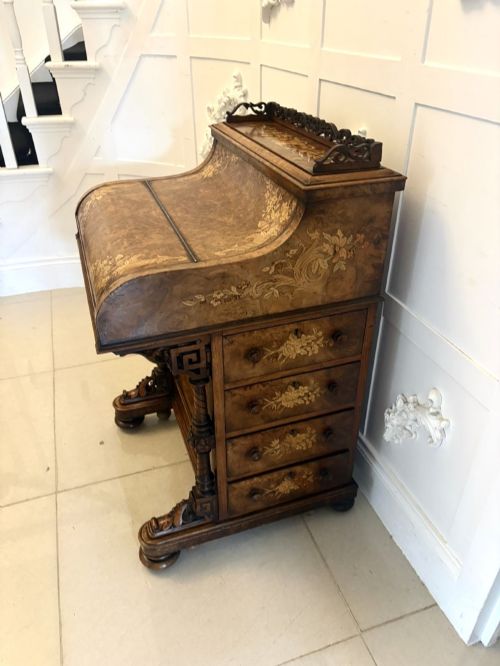
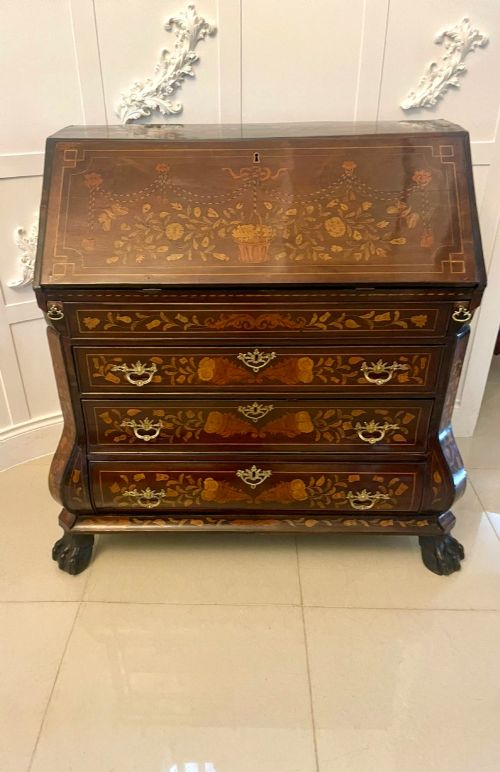
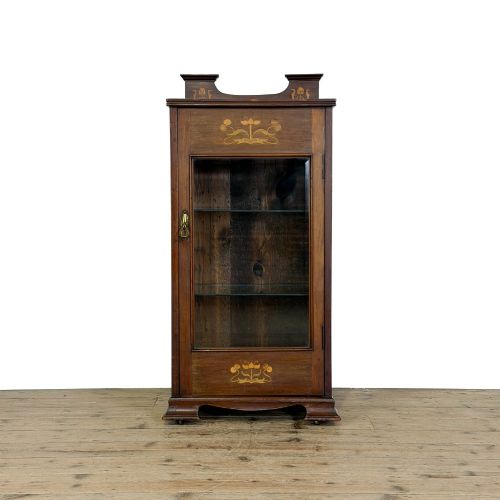
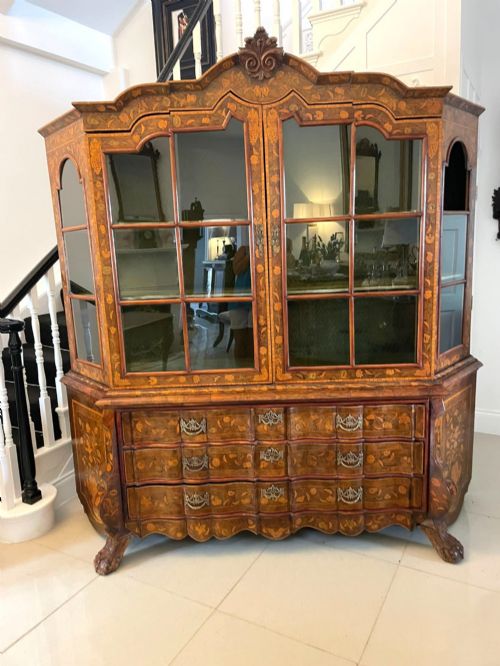
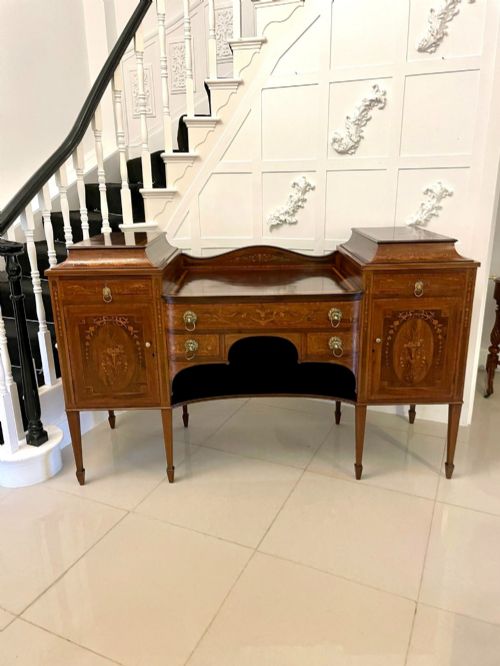
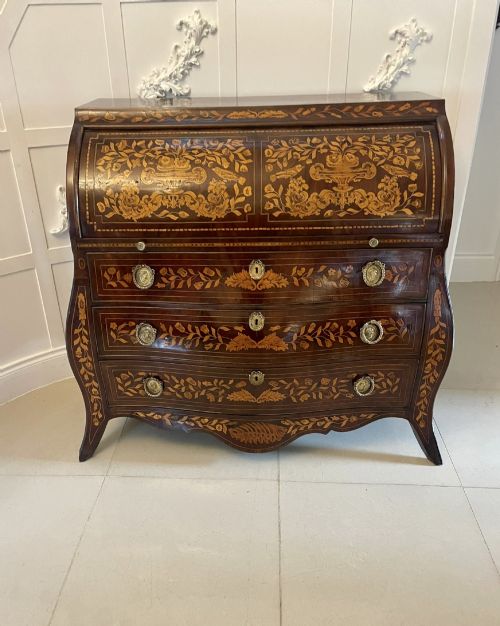
Marquetry floral cabinets encompass a broad group of case furniture decorated with elaborate floral wood veneers, spanning display cabinets, bureau bookcases, side cabinets, and bedside tables. When searching for marquetry floral cabinets, buyers encounter works originating from eighteenth-century Dutch workshops through to Victorian and Edwardian iterations.
The domestic forms include display cabinets with glass doors, tall bureau bookcases with sloping desks, and compact bedside tables or corner cabinets designed for specific rooms. Walnut, burr walnut, rosewood, and mahogany provide the structural timber bodies upon which the floral designs sit.
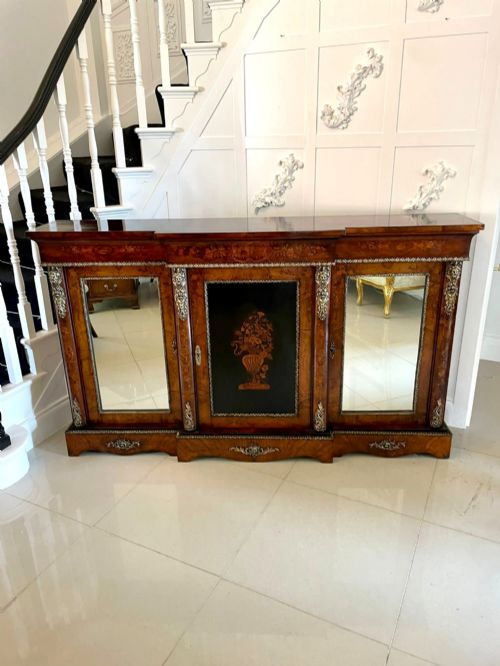
Stylistic influences range from Dutch Baroque and Rococo to French Louis designs and English Victorian interpretations. Eighteenth-century pieces frequently display bombe shapes or architectural bureau bookcase fronts, while nineteenth-century examples tend toward rosewood or burr walnut credenzas and side cabinets.
Materials and construction
Cabinet makers construct the primary carcase using native or imported hardwoods such as mahogany, walnut, or oak, applying contrasting fruitwood and exotic veneers over the surface. The floral patterns utilise precise hand-cut veneers assembled like jigsaw puzzles before gluing down to the solid timber ground.
Details receive further definition through engraving directly into the wood veneer and shading individual pieces by scorching them in hot sand. Brass mounts, glass panels, and marble tops integrate into the finished case furniture depending on the period and regional style.
Marquetry Floral Cabinets Retail Price Guide 2026
Typical asking prices for marquetry floral cabinets among the pieces listed under this phrase on Sellingantiques today, from the lower quarter to the upper quarter. They describe what is for sale here now, not the wider market.
Materials documented across the pieces include burr walnut, rosewood, mahogany, fruitwood, brass, marble, and glass.
Judging quality
Quality rests upon the precision of the veneer cutting and the natural variation of timber tones used to create depth in the floral motifs. Master craftsmen select burl and figured woods that catch the light, whereas lesser pieces rely on simple stained veneers with minimal tonal contrast.
Structural integrity of the carcase and the retention of original brass hardware, glass, and internal fittings dictate the standing of a piece. Finer examples maintain crisp engraving within the floral inlay and smooth movement across drawers, bureau flaps, and cabinet doors.
Hewetsons London
The Marquetry Floral Cabinets Glossary
- Marquetry
- The art of forming decorative patterns by fitting together thin slices of wood veneer onto a structural carcase. This technique allows intricate pictorial designs of flowers and foliage to cover flat and curved surfaces.
- Veneer
- A thin layer of choice wood applied to a backing timber to provide a decorative exterior surface. Cabinet makers select figured timbers like burr walnut for their dramatic grain patterns.
- Bombe
- A swelling or outward curving profile found on the front and sides of eighteenth-century case furniture. This undulating form requires advanced woodworking skill to match the veneer smoothly around convex curves.
- Bureau bookcase
- A combination piece featuring a sloping writing flap above drawers or cupboards, surmounted by a set of upper shelving enclosed by doors. These large storage items often showcase elaborate floral marquetry across the fall front.
- Credenza
- A low sideboard or cabinet developed during the nineteenth century, frequently fitted with glass-fronted side cupboards and central doors. Victorian makers decorated these with floral inlays and ormolu mounts.
Marquetry Floral Cabinets: Frequently Asked Questions
How do I clean marquetry surfaces?
Dust surfaces regularly with a soft, dry cloth to prevent dirt accumulation within the veneer joints. Avoid using liquid polishes or harsh chemical cleaners that can degrade old timber finishes.
Apply a traditional beeswax sparingly when the wood appears dry, buffing gently with a clean cloth to maintain a natural lustre. Keep cabinets away from direct sunlight and radiators to prevent timber shrinkage and veneer lifting.
Are these cabinets suitable for everyday use?
Most pieces function well for general storage and display in modern interiors, provided they receive gentle treatment. Bureau flaps and drawers should be opened carefully to protect antique hinges and runners.
Display cabinets and side cabinets house books, glassware, or collections effectively while adding historical character to a room. Placing heavy items on antique shelves requires consideration of the internal wooden supports.
How do I distinguish eighteenth-century pieces?
Eighteenth-century examples often feature heavy walnut or mahogany carcases with hand-cut floral marquetry showing natural wood shading and engraved details. Forms like bombe bureaus and double dome bookcases are characteristic of this earlier period.
Construction methods on older pieces include hand-cut dovetails, irregular secondary timbers, and aged patination across the polish. Examining the interior reveals the handmade nature of the internal shelving and drawer linings.
What is the difference between Dutch and English styles?
Dutch floral marquetry tends to cover entire surfaces with dense bouquets of flowers, birds, and urns executed in contrasting fruitwoods. These pieces often appear on bulbous bureau bookcases or serpentine wall tables. <div></div> English and French interpretations from the nineteenth century generally apply marquetry more selectively within reserves on rosewood or mahogany grounds. Credenzas, side cabinets, and bedside tables from the Victorian era display refined neoclassical or floral panels framed by satinwood stringing.