


Marquetry Desk Clock
A marquetry desk clock brings together fine cabinetmaking and precision timekeeping, offering a handsome focal point for any mantel or surface.
Marquetry Desk Clock
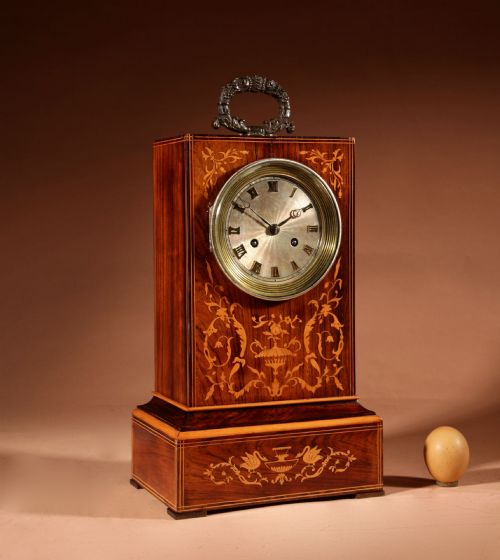
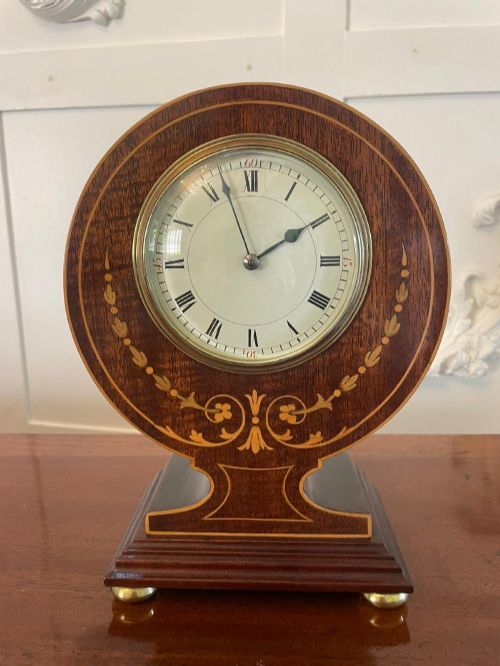
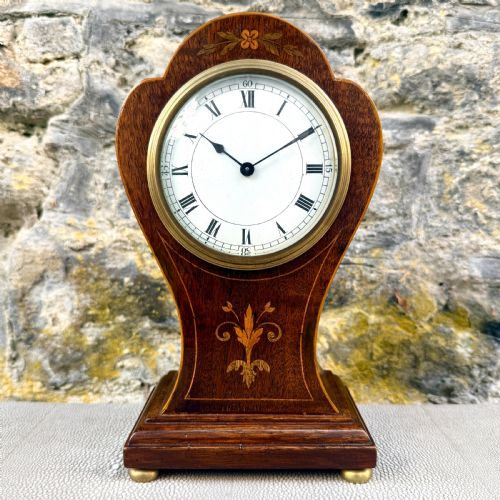
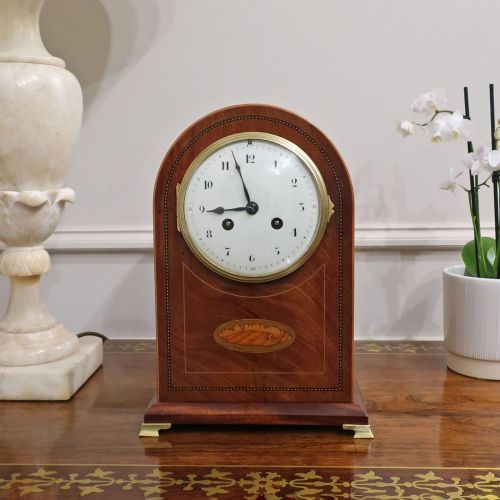
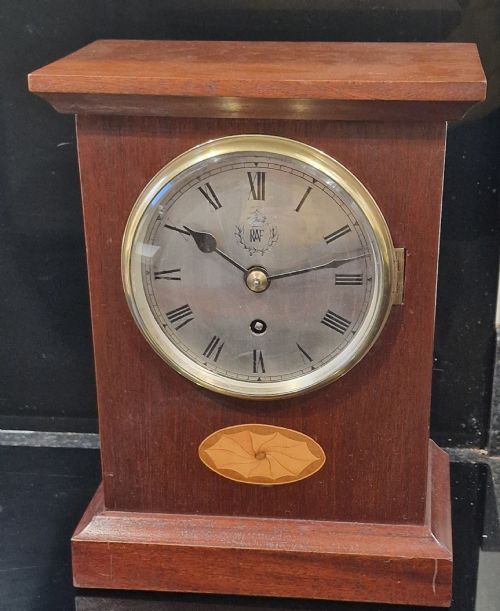
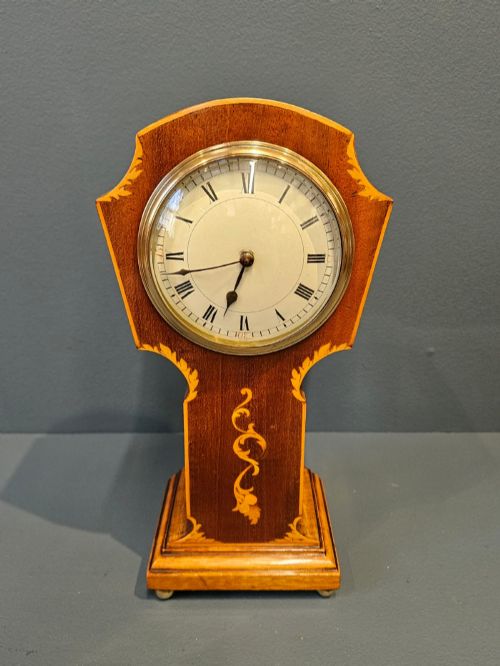
A marquetry desk clock is a timepiece housed in a wooden case decorated with detailed wood veneers, designed primarily for placement on mantelpieces, desks, and tables. These objects combine the practical utility of a clock with the decorative artistry of period cabinetmaking.
The selections available range from Edwardian inlaid mahogany mantel clocks to 19th century French Boulle examples featuring tortoiseshell and brass work. Buyers regularly encounter pieces spanning the Victorian era, Edwardian period, and early 20th century.
Makers and origins vary from British workshops producing Arts and Crafts designs to French makers crafting portico and bracket clocks. The common thread among them is the integration of detailed woodwork and dial work.
Materials and construction
Makers constructed the cases using hardwoods such as mahogany, rosewood, and satinwood, often applying decorative veneers in intricate patterns. Brass, ormolu, and glass frequently appear as mounts, bezels, and protective dial covers.
Techniques involve precision joinery alongside specialised inlay work, where contrasting timbers or materials like tortoiseshell are fitted into the primary wood surface. Enamel is commonly utilised for the clock dials, carrying painted numerals.
Listings feature woods such as mahogany, rosewood, and satinwood, paired with brass and enamel across Victorian and Edwardian periods.
Distinctions in quality
Quality rests heavily on the crispness and complexity of the wood inlay or Boulle work, alongside the structural integrity of the timber case. Superior examples display tightly fitted veneers and well-preserved surface finishes.
The caliber of the movement inside, whether an 8-day mechanism or a fusee movement, distinguishes standard production from finer horological work. Signatures from recorded makers also elevate the standing of a piece.
W. Burton·Henry Marc·Malecot of Paris
The Marquetry Desk Clock Glossary
- Marquetry
- The art of applying decorative pieces of veneer to a structure to form intricate patterns or pictures. It differs from plain inlay by covering the entire surface.
- Fusee
- A conical pulley used in clock movements to ensure even power delivery as the mainspring unwinds. This mechanism improves timekeeping accuracy over the duration of the wind.
- Boulle
- A style of marquetry utilising tortoiseshell and brass, popularised in France. It creates a striking contrast of dark tortoiseshell and gleaming metal.
- Ormolu
- Gilded bronze used for decorative mounts and feet on furniture and clocks. The technique involves applying a gold amalgam to bronze.
- Portico Clock
- A clock housed within a architectural frame supported by columns. They are typically French in origin and finished in polished wood or veneer.
Marquetry Desk Clock: Frequently Asked Questions
How do I wind an 8 day desk clock?
An 8 day movement requires winding approximately once a week using a matching key inserted into the dial holes. Care must be taken not to overwind the mainspring.
Turn the key gently until firm resistance is felt. This maintains steady tension for accurate timekeeping.
Where should I place a marquetry clock?
These clocks suit stable surfaces away from direct sunlight and sudden temperature changes. Mantelpieces, sideboards, and sturdy desks provide ideal display locations.
Keeping the clock away from damp or overly dry spots protects the delicate wood veneers and internal metals.
How do I identify an Edwardian marquetry clock?
Edwardian examples often feature light mahogany cases with delicate floral or geometric inlay work. The overall aesthetic leans toward refined proportions and polished wooden surfaces.
Many incorporate classic white enamel dials with dark numerals, reflecting early 20th century tastes.
What is the difference between a French and English mantel clock?
French mantel clocks from the period frequently utilise Boulle work, portico frames, or ornate ormolu mounts. They often highlight decorative flair alongside timekeeping.
English pieces, such as those from the Edwardian or Arts and Crafts eras, tend to focus on honest woodwork, clean joinery, and functional reliability.