





Marquetry Corner Unit
These marquetry corner unit pieces fit neatly into awkward spaces while displaying precious objects on tiered shelves or behind glazed doors.

Marquetry Corner Unit
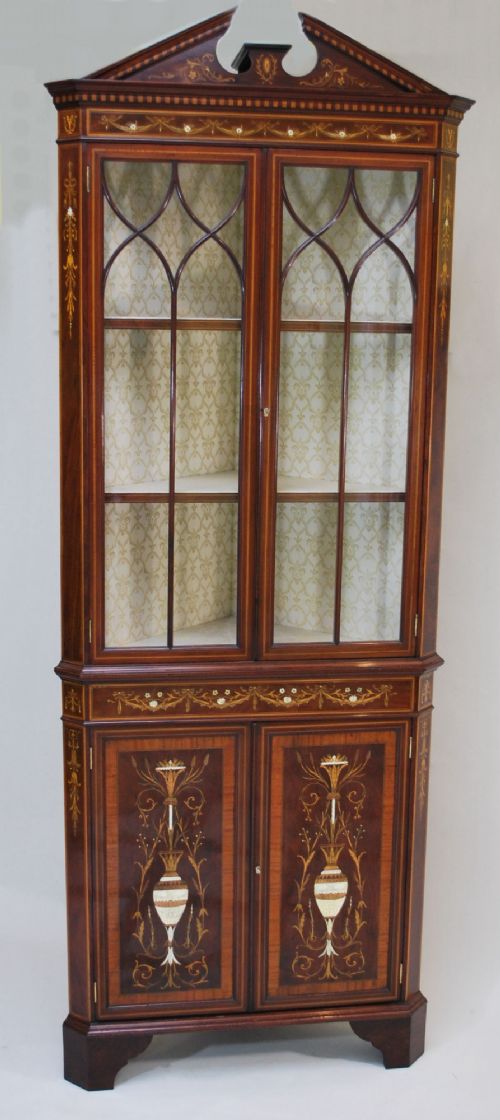
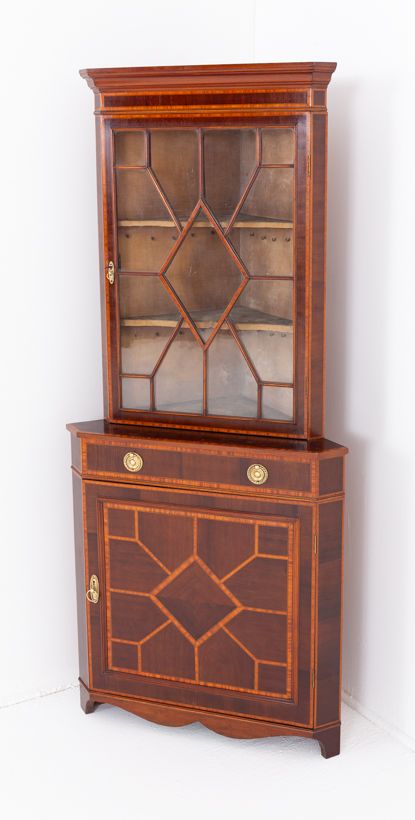
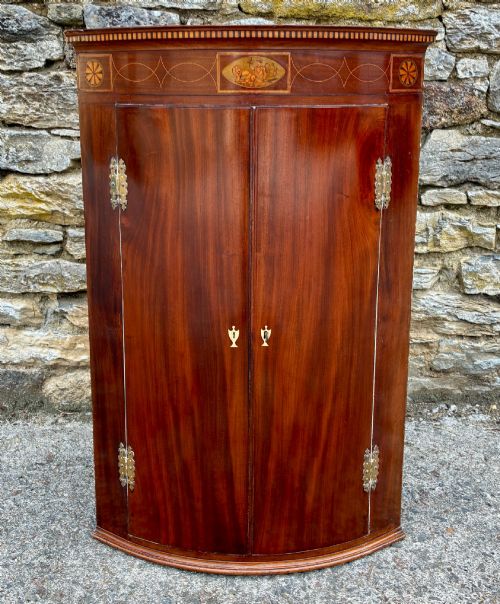
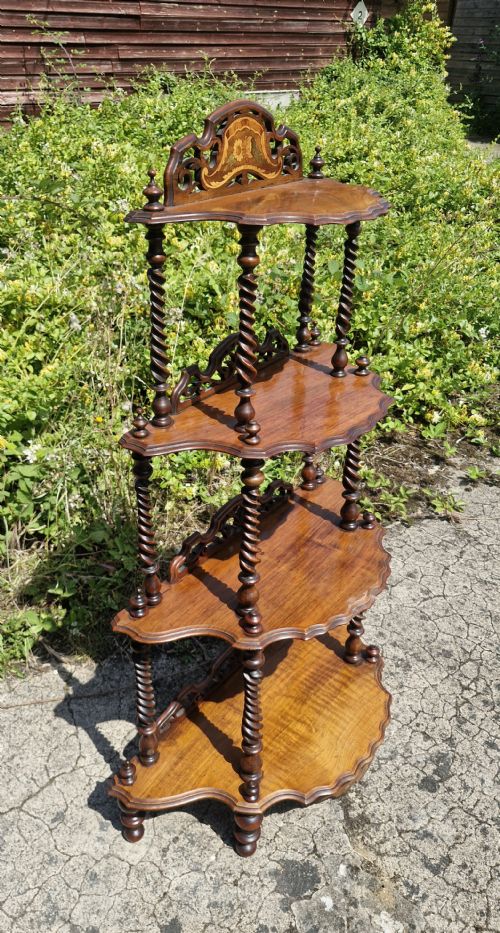
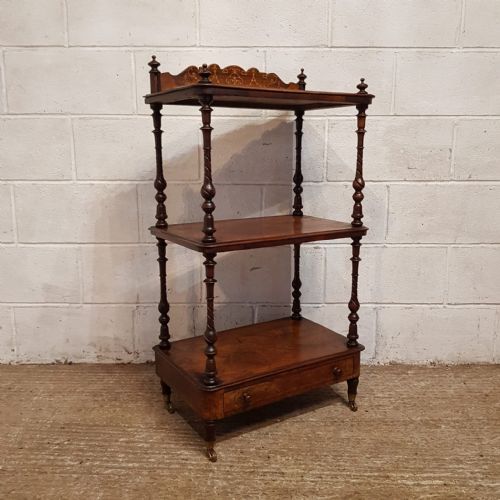
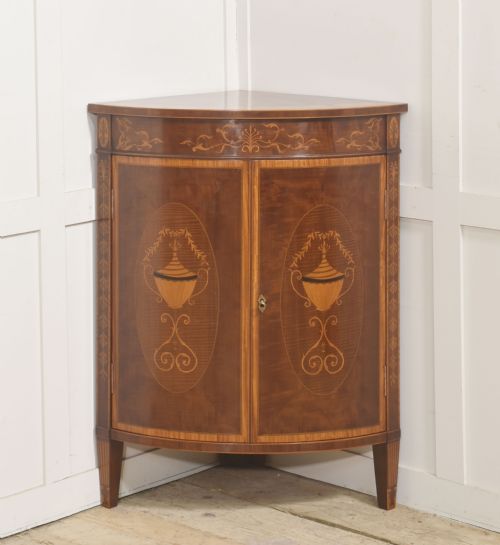
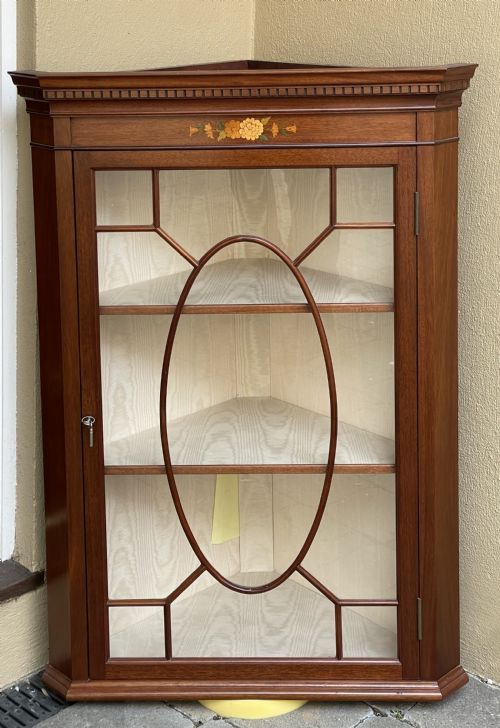
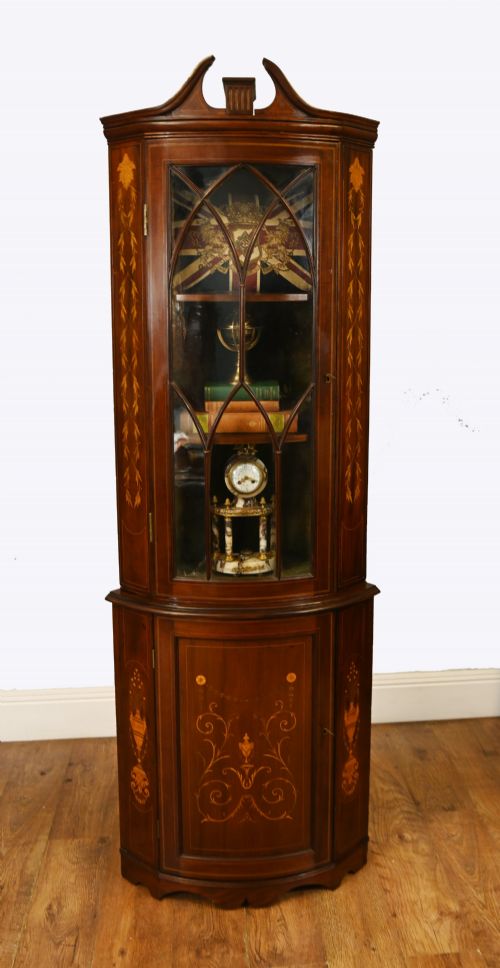
A marquetry corner unit is designed to utilise empty angles in a room, taking the form of hanging cupboards, bow fronted display cabinets, or multi-tiered standing whatnots.
The pieces appearing here span from the eighteenth century through the Victorian and Edwardian eras up to the mid-twentieth century, with Edwardian and late nineteenth-century examples dominating the selection.
Makers utilised various timber carcases including mahogany, walnut, oak, and rosewood, fitted with glass doors, brass hardware, and mirror panels.
Materials and construction
Cabinet makers constructed solid carcases from timbers such as mahogany, walnut, and oak, applying contrasting veneers and decorative inlays including satinwood and floral marquetry.
Glazed doors, mirrored backs, and brass fittings were integrated into display cabinets and standing corner cupboards to showcase porcelain and decorative items.
Tiered whatnots utilised slender upright supports to connect multiple open corner shelves.
Marquetry Corner Unit Retail Price Guide 2026
Typical asking prices for marquetry corner unit among the pieces listed under this phrase on Sellingantiques today, from the lower quarter to the upper quarter. They describe what is for sale here now, not the wider market.
Listings feature woods including mahogany, walnut, oak, and rosewood, alongside satinwood inlay and mirror glass.
Assessing quality and execution
The fineness of the marquetry and the precision of the satinwood inlay work distinguish superior examples from plain utility pieces.
Standing double height cabinets and serpentine fronted designs demonstrate more ambitious joinery and heavier proportions than simple wall-mounted cupboards.
The selection of primary timber, whether figured walnut, dense mahogany, or rich rosewood, dictates the visual depth of the finished piece.
Edwards And Roberts
The Marquetry Corner Unit Glossary
- Marquetry inlay
- Decorative patterns formed by fitting contrasting veneers into a prepared wooden surface. This technique creates detailed floral or geometric pictures across the door panels and friezes.
- Whatnot
- An open shelving unit designed for displaying ornaments and books. Victorian and Edwardian examples often feature multiple tiers supported by turned columns.
- Bow front
- A convex curved cabinet front that projects outward. This shape softens the angular geometry typical of corner furniture.
- Serpentine front
- A cabinet front featuring a central convex curve flanked by two concave curves. It requires advanced woodworking skill to execute properly.
- Sheraton Revival
- A late nineteenth and early twentieth-century style reviving the classical neoclassical designs of George Sheraton. These pieces often incorporate delicate satinwood inlay on mahogany.
Marquetry Corner Unit: Frequently Asked Questions
How do I choose the right corner unit?
Consider whether you need enclosed storage behind cupboard doors or open display space for ornaments.
Measure the height and wall depth of your room angle to ensure the cabinet proportion suits the space.
Are these cabinets difficult to install?
Wall-mounted corner cupboards require secure fixings into solid masonry or wall studs to bear the weight of the timber.
Floor-standing corner units and whatnots simply require placement in a room angle, though taller double-height pieces benefit from wall attachment for stability.
How do I care for inlaid wood surfaces?
Keep wooden furniture away from direct sunlight and radiators to prevent the delicate marquetry veneers from drying and lifting.
Apply a traditional beeswax polish occasionally and buff gently with a soft cloth to maintain the lustre of the walnut and mahogany.