

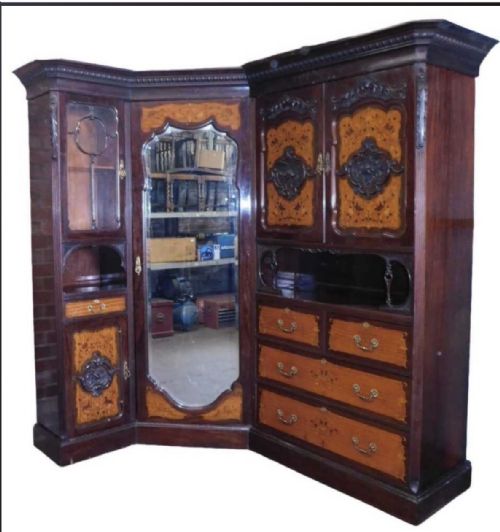
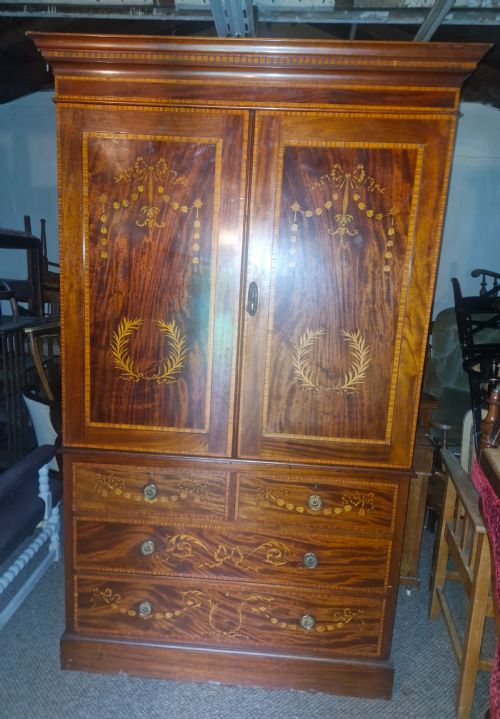


Marquetry Clothes Armoire
These marquetry clothes armoire pieces bring grand scale and intricate patterned timber to the bedroom, offering substantial storage wrapped in decorative craft.
Marquetry Clothes Armoire
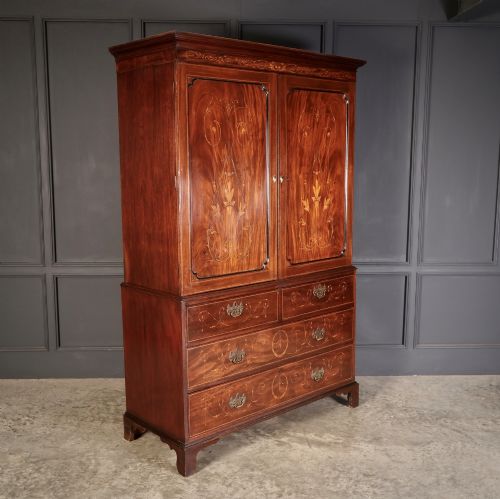
When you search for a marquetry clothes armoire, you encounter grand storage furniture spanning the Georgian, Victorian, and Edwardian eras. These large pieces served as the primary wardrobes and linen presses for bedrooms before fitted closets existed.
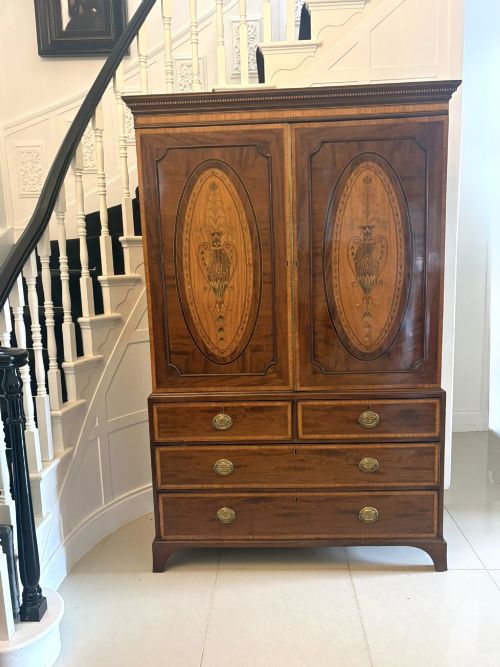
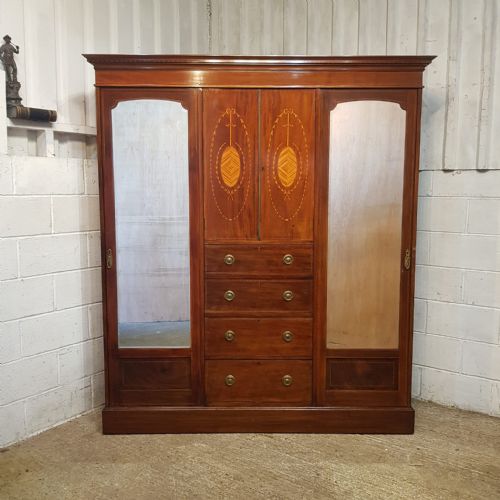
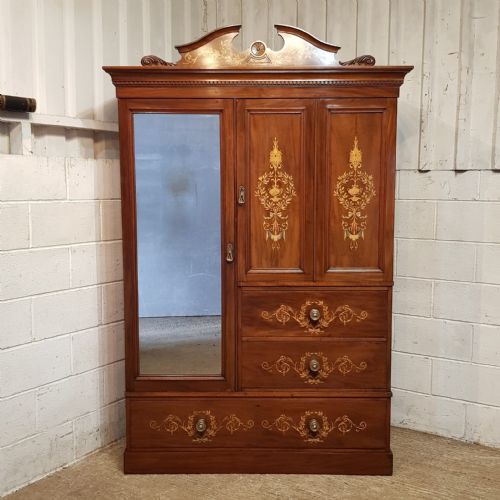
The versions you meet most frequently on this page are mahogany or satinwood carcasses dating from the nineteenth and early twentieth centuries. They appear as single units, triple wardrobes, compactums, and linen presses featuring fitted internal trays and hanging space.
Makers drew on Georgian, Sheraton Revival, and Edwardian Neo-Classical styles to shape these imposing items. Surviving examples demonstrate how cabinetmakers adapted classical proportions to domestic chamber storage over successive decades.
Materials and construction
Cabinetmakers built these armoires using solid timbers and robust veneers of mahogany, walnut, rosewood, and ash. They applied contrasting decorative woods such as satinwood, boxwood, and brass to form the characteristic floral and geometric marquetry patterns across the large door panels.
The structural carcass houses substantial panelled doors, often framing sliding linen trays or deep hanging sections in the upper and lower tiers. Joinery relied on traditional framing methods to support the heavy timber doors and decorative inlay work.
Marquetry Clothes Armoire Retail Price Guide 2026
Typical asking prices for marquetry clothes armoire among the pieces listed under this phrase on Sellingantiques today, from the lower quarter to the upper quarter. They describe what is for sale here now, not the wider market.
Some nineteenth-century gentlemen required separate compartments for walking canes and top hats inside their wardrobes.
Assessing quality and finish
The distinction between ordinary and superior pieces rests in the depth of timber selection and the precision of the marquetry cutting. Finer examples display highly figured grains and meticulous inlay work that integrates seamlessly into the primary surface.
Structural complexity also defines the upper range, particularly in breakfront designs, fitted compactum interiors, and matching bedroom suites. The integrity of the internal drawers, original brass hardware, and the crispness of carved details elevate certain pieces above standard utility wardrobes.
Druce & Co.·Edwards & Roberts
The Marquetry Clothes Armoire Glossary
- Marquetry
- Decorative veneer work forming pictures or patterns by fitting together small pieces of various woods, metals, or other materials. It covers large surfaces like wardrobe doors with elaborate floral or geometric designs.
- Compactum
- A large wardrobe containing a combination of hanging space, sliding trays, and drawers within a single fitted unit. This multifunctional piece maximises storage efficiency in period bedrooms.
- Linen Press
- A tall piece of furniture featuring upper doors enclosing sliding trays for folded textiles, placed above a base of wider drawers. Georgian and Victorian houses relied heavily on these for household linen organisation.
- Breakfront
- A piece of furniture where the central section projects forward from the flanking wings. This architectural arrangement creates depth and visual rhythm on large triple wardrobes.
- Satinwood
- A hard, durable yellowish timber prized for its smooth sheen and used extensively for inlay and veneering. It contrasts strongly against darker woods like mahogany.
Marquetry Clothes Armoire: Frequently Asked Questions
What is a clothes armoire?
A clothes armoire is a tall standing cupboard designed for hanging garments and storing folded attire.
Historically, these grand pieces provided essential bedroom storage before built-in closets became standard in modern architecture.
How do I date an armoire?
Dating relies on observing the prevailing timber choices, construction techniques, and stylistic revival periods. Georgian, Victorian, and Edwardian pieces each carry distinct architectural proportions and decorative vocabularies.
Examining the interior timber linings and backboards further helps confirm the manufacturing era.
Where should I place an armoire?
These substantial pieces require a bedroom or dressing room with adequate wall space and high ceilings to accommodate their imposing stature.
Keep them away from direct sunlight and strong heat sources to protect the delicate veneers and natural timber finishes.
How do I maintain marquetry?
Maintenance involves dusting regularly with a soft, dry cloth and applying traditional beeswax sparingly to nourish the timber. Avoid liquid cleaners and excessive moisture, which can loosen fragile veneer inlay.
Maintaining a stable room temperature prevents the wood from expanding and contracting.