


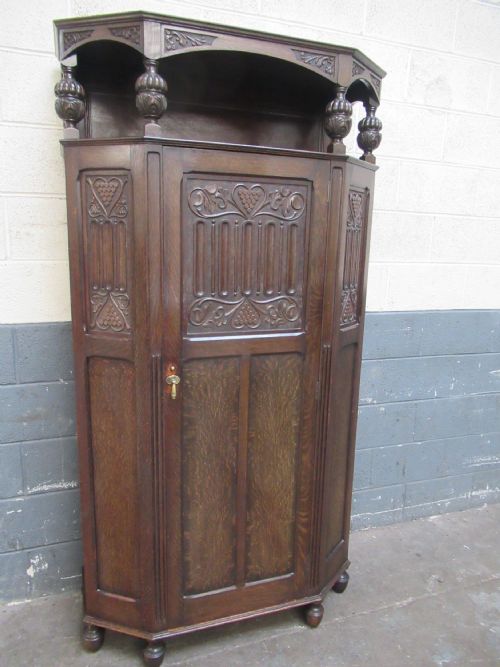


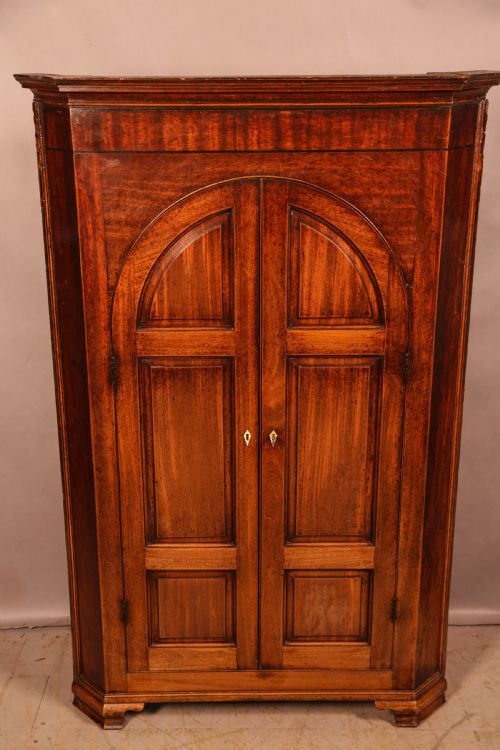


Corner Armoire Cabinet
These corner armoire cabinet pieces bring architectural presence and practical storage to awkward spaces using rich timbers and painted finishes.
Corner Armoire Cabinet
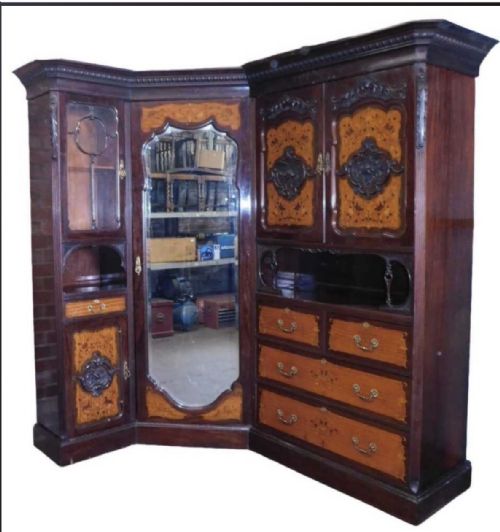
A corner armoire cabinet provides fitted storage designed to occupy room corners efficiently, taking forms such as corner cupboards, display cabinets, and compactum wardrobes. These pieces emerge across the Georgian, Victorian, and nineteenth-century periods, alongside specific regional designs.
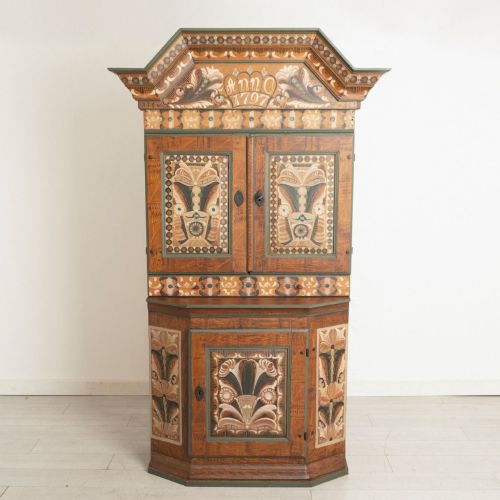
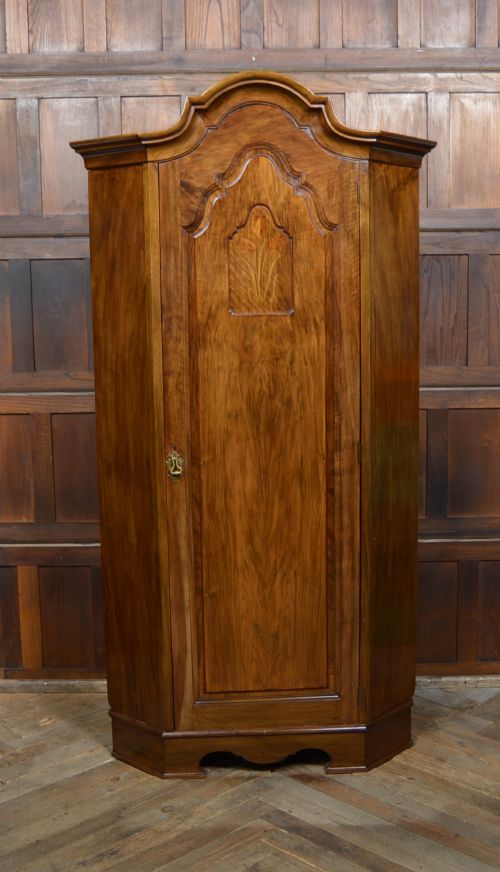
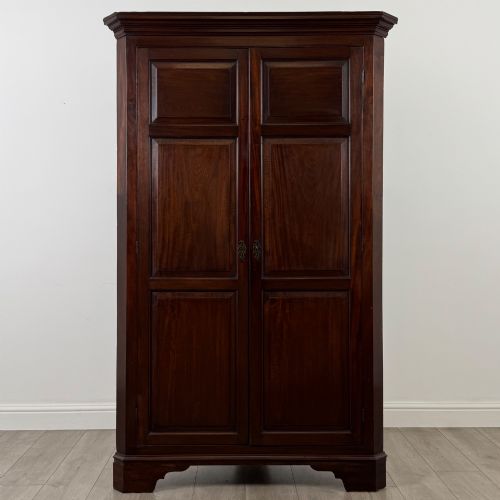
The versions most frequently met on this page include Georgian mahogany bowfront cupboards and nineteenth-century Scandinavian hand-painted pine pieces. Buyers encounter both two-part fitted units and free-standing floor-standing examples in oak and mahogany.
Regional European influences shape many offerings, spanning Gustavian kitchen cabinets to Scandinavian Baroque and rustic farmhouse styles. These variations ensure buyers find both refined British cabinet-making and folk-art painted finishes.
How they were made
Cabinet-makers constructed these units primarily using solid timbers like mahogany, oak, and pine, occasionally incorporating satinwood for fine inlay work. Carpenters joined structural panels to withstand the unusual angles required for corner placement.
Surface treatments range from clear polished mahogany to hand-painted finishes in Scandinavian folk traditions. Iron and brass hardware, including hinges and escutcheons, secure the doors and complete the construction.
Corner Armoire Cabinet Retail Price Guide 2026
Typical asking prices for corner armoire cabinet among the pieces listed under this phrase on Sellingantiques today, from the lower quarter to the upper quarter. They describe what is for sale here now, not the wider market.
What varies in quality
The sophistication of the timber selection and timber preparation dictates the upper tier of these pieces, particularly in figured mahogany and quarter-sawn oak. Superior examples display restrained, fine detailing rather than heavy ornamentation.
The Corner Armoire Cabinet Glossary
- Bowfront
- A convex, outwardly curved front profile seen on several Georgian mahogany cupboards. This shape softens the room's geometry.
- Compactum
- A fitted wardrobe designed to provide maximum storage compartments within a compact footprint. These often include internal drawers and hanging space.
- Gustavian
- The Swedish neoclassical style characterised by restrained symmetry and pale painted finishes. It developed during the late eighteenth century.
- Inlay
- A decorative technique where contrasting timbers such as satinwood are inserted into recesses in the primary wood. This creates subtle surface patterns.
Corner Armoire Cabinet: Frequently Asked Questions
Where should I place a corner armoire cabinet?
These cabinets fit neatly into unused room junctions, transforming empty angles into functional focal points. They work well in dining rooms for display or in bedrooms for supplementary wardrobe space.
Measuring the wall depth on both sides of the corner ensures the cabinet sits flush without obstructing doorways or architectural mouldings.
How do I care for antique pine and mahogany?
Maintaining these timbers involves dusting with a soft, dry cloth and avoiding direct sunlight that fades polished surfaces. Painted Scandinavian pieces require particular care to protect the historic pigment.
Applying microcrystalline wax periodically preserves the wood and painted finishes without building up heavy chemical residue over time.
Are these cabinets difficult to install?
Most floor-standing models require simple positioning against the walls, though taller two-part cupboards benefit from secure wall anchoring for stability. Professional delivery teams often handle assembly if the cornice and base separate.
Ensuring the floor is level prevents the doors from binding and keeps the cabinet frame square.