



Large Storage Compactum
A large storage compactum brings serious wardrobe architecture into a bedroom, offering fitted hanging space, linen drawers and cupboards behind grand panelled doors.
Large Storage Compactum
When you search for a large storage compactum, you encounter substantial furniture pieces designed to hold an extensive quantity of garments and linens in one consolidated footprint. These grand items serve as commanding centrepieces in larger bedrooms, combining multiple storage functions into a single architectural unit.
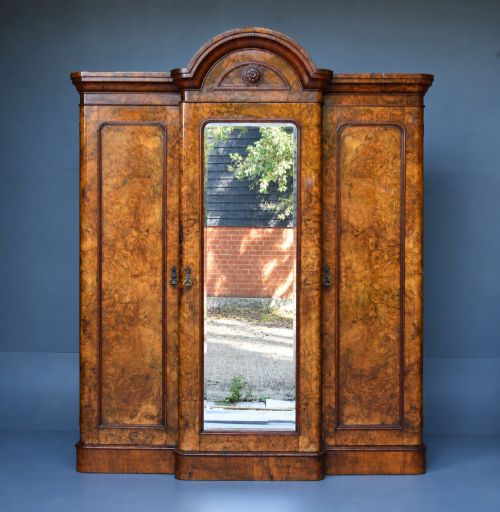
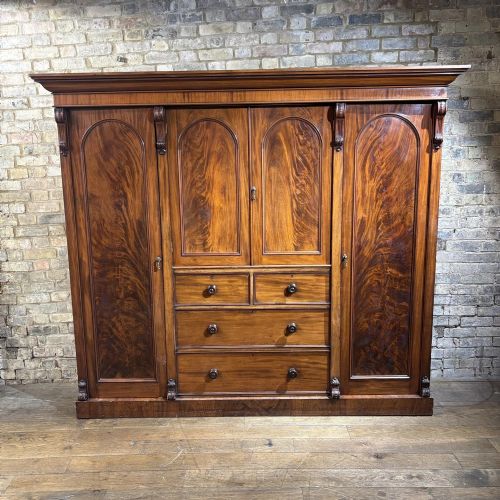
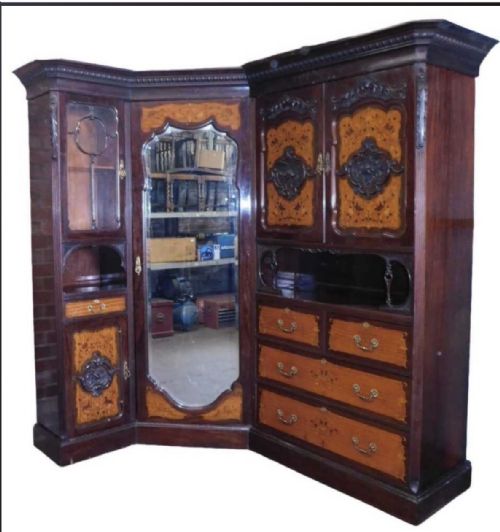
The versions you meet most frequently on this page belong to the Victorian and Edwardian periods, typically taking the form of breakfront wardrobes, linen presses or combination wardrobes. They span diverse stylistic expressions from austere Georgian mahogany to ornate Victorian burr walnut and Arts and Crafts oak.
How they were made
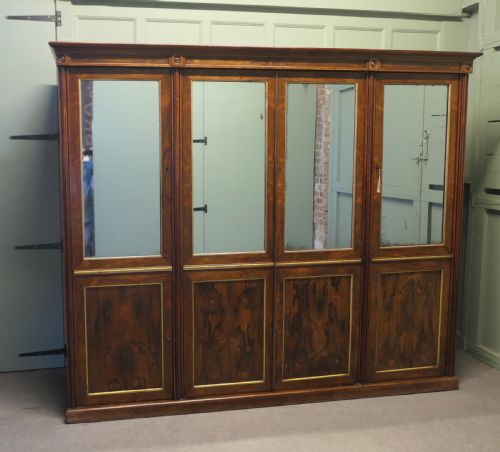
Cabinet makers utilised dense timbers such as mahogany, rosewood and oak as the structural foundation, often applying flame mahogany veneer or burr walnut to create striking, figured grain patterns across the primary surfaces. Satinwood and maple frequently appeared as contrasting inlay details, adding linear framing to the main doors and drawer fronts.
Functional metalwork played an essential role in their construction, with brass handles, hinges and locking escutcheons securing the heavy doors and drawers. Glass panels occasionally featured in door designs, while secondary timbers like pine formed the internal carcass and drawer linings.
Large Storage Compactum Retail Price Guide 2026
Typical asking prices for large storage compactum among the pieces listed under this phrase on Sellingantiques today, from the lower quarter to the upper quarter. They describe what is for sale here now, not the wider market.
Mahogany and its figured veneers appear most frequently across these large wardrobes, accompanied by rosewood, burr walnut, satinwood, oak and pine.
What varies in quality
The distinction between standard examples and the finest pieces lies in the choice of timber veneer and the precision of the decorative inlay. Master workshops selected exceptionally figured burr walnut or flame mahogany and matched the grain symmetrical across large expanses of door panels.
Structural complexity also defines the upper tier of pieces, where breakfront configurations, integrated linen presses and combination sentry box designs required advanced carpentry. Finer examples display meticulous attention to internal fittings, dovetail joints on drawers and substantial brass hardware that withstands decades of daily use.
Maple & Co
The Large Storage Compactum Glossary
- Compactum
- A multi-functional wardrobe designed to house various types of clothing, linen and accessories within a single combined unit. These pieces typically divide their internal space between hanging sections, linen slides and multiple drawers.
- Breakfront
- A cabinet design where the central section projects forward from the flanking wings, creating a pronounced architectural facade. This layout adds depth and visual rhythm to large wardrobes.
- Linen Press
- A tall storage piece featuring upper cupboard doors enclosing sliding trays for folded textiles, positioned above a base chest of drawers. They evolved into general clothes storage over time.
- Burr Walnut
- Timber harvested from the gnarled growths on walnut trees, yielding highly ornamental swirling grain patterns. Cabinet makers used veneers of this wood on prominent surfaces of high-status furniture.
- Satinwood
- A durable, hard timber from tropical trees with a lustrous yellowish-gold sheen. Craftsmen employed it extensively for stringing and decorative inlay work on dark mahogany surfaces.
Large Storage Compactum: Frequently Asked Questions
What is a large storage compactum used for?
These substantial pieces serve as comprehensive bedroom storage units, designed to hold full wardrobes of hanging garments alongside folded linens and accessories. Their internal layouts incorporate hanging rails, sliding trays and drawer stacks to organise diverse items behind closed doors.
By consolidating several storage functions into one footprint, they eliminate the need for separate wardrobes and chests of drawers in a bedroom.
How do I date a large storage compactum?
Dating relies on identifying the prevailing stylistic cues, timber choices and construction techniques associated with specific eras like the Victorian or Edwardian periods. Heavily figured burr walnut and Gothic revival details point firmly to the nineteenth century, while lighter mahogany frames often indicate Edwardian production.
Examining internal secondary timbers, such as pine carcass elements or hand-cut dovetails, provides further physical evidence of the manufacturing period.
Will a large storage compactum fit in my room?
Because these pieces were built on a grand scale, checking ceiling heights and floor space dimensions is essential before installation. Many examples feature breakfront designs and substantial cornices that add significant presence to a room.
Most large wardrobes are constructed in modular sections, allowing them to be dismantled for transport and reassembled inside the intended room.
How do I care for antique wood furniture?
Maintaining these pieces involves keeping them away from direct heat sources and dramatic humidity fluctuations to prevent timber splitting and veneer lifting. Regular dusting with a soft, dry cloth preserves the polished finish without chemical buildup.
Applying traditional beeswax occasionally helps nourish the timber and maintain the natural lustre of mahogany, walnut or rosewood surfaces.