
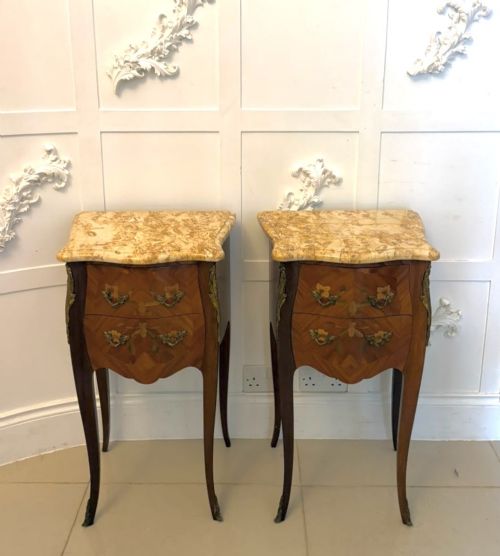
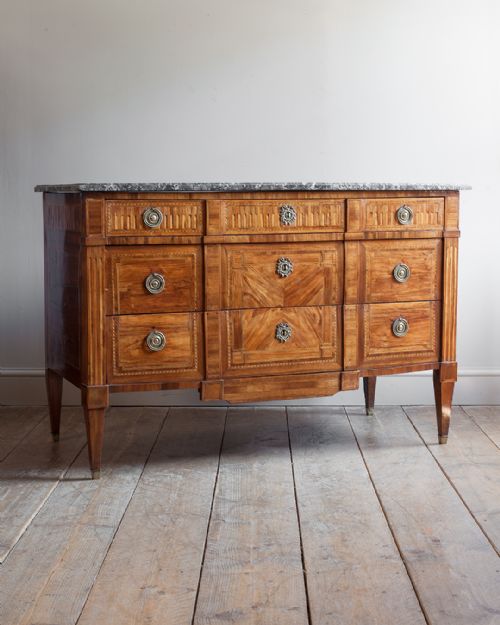
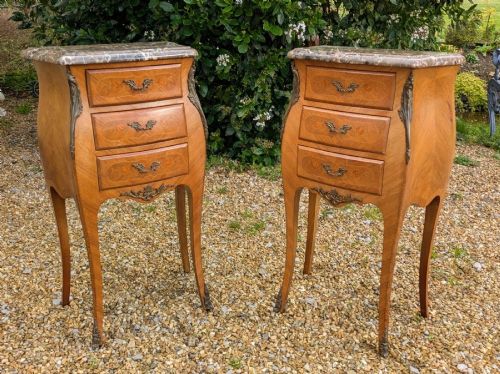
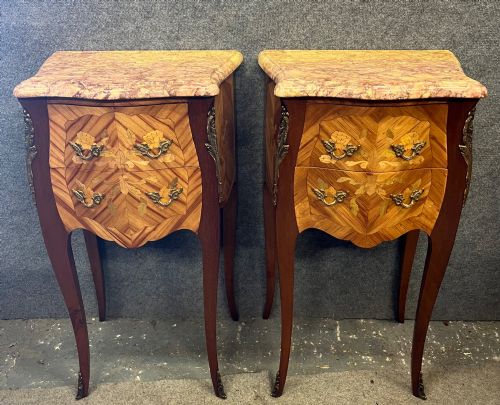
Marquetry Chest with Marble
A marquetry chest with marble marries the precision of fine wood inlay with the cool, heavy permanence of stone.
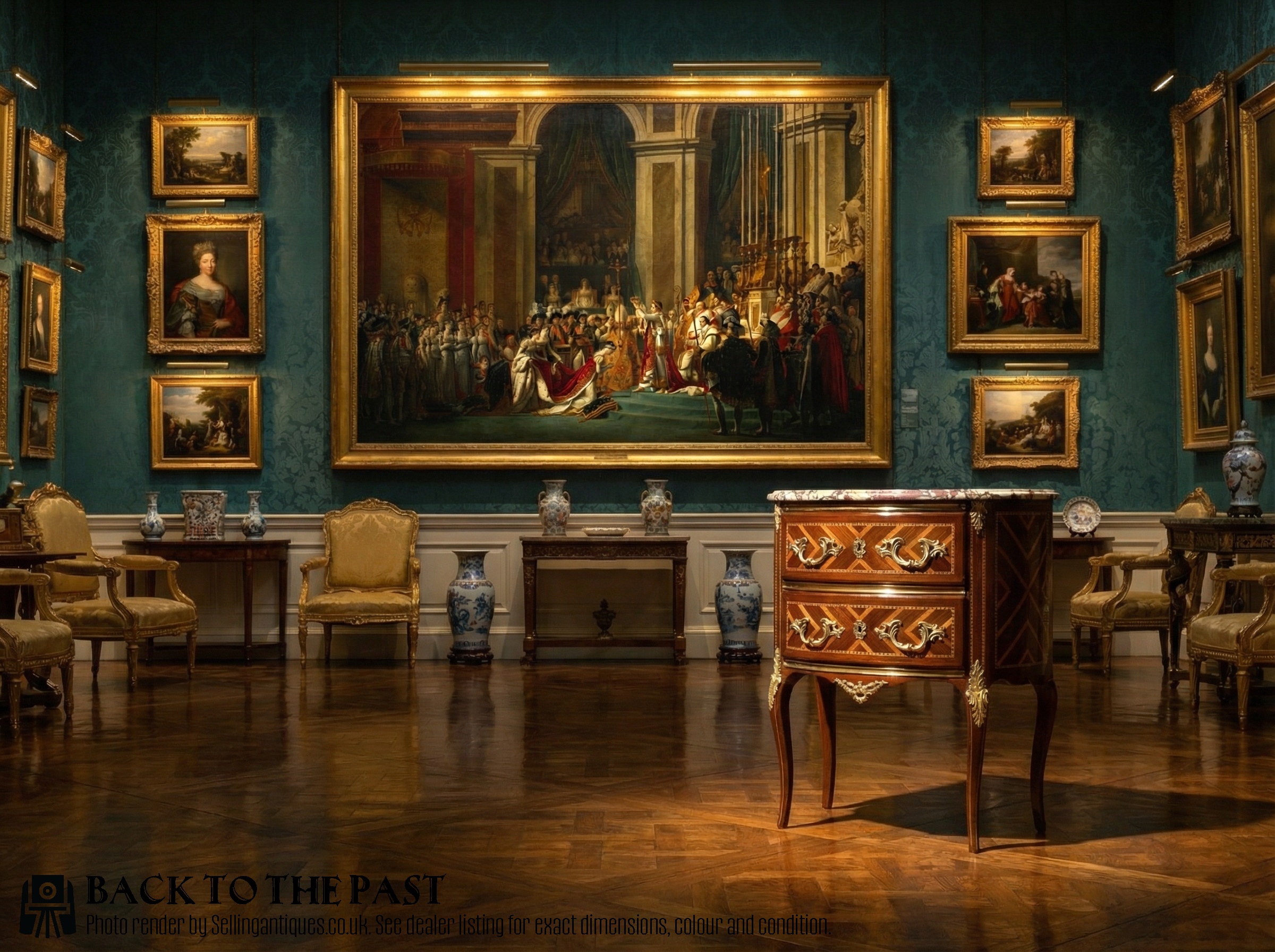
Marquetry Chest with Marble
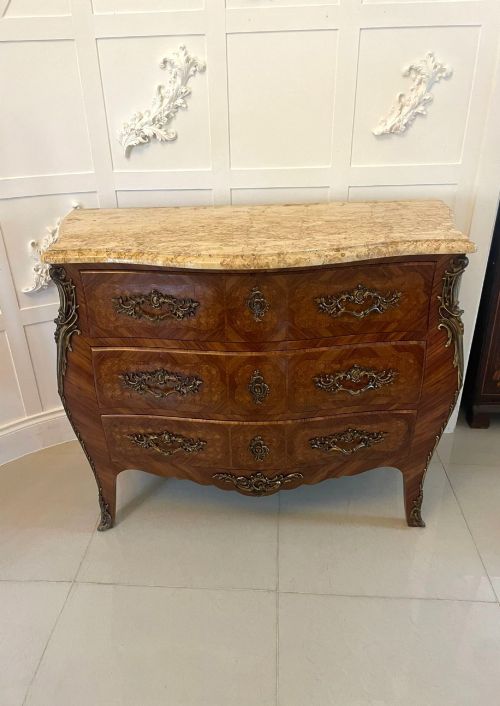
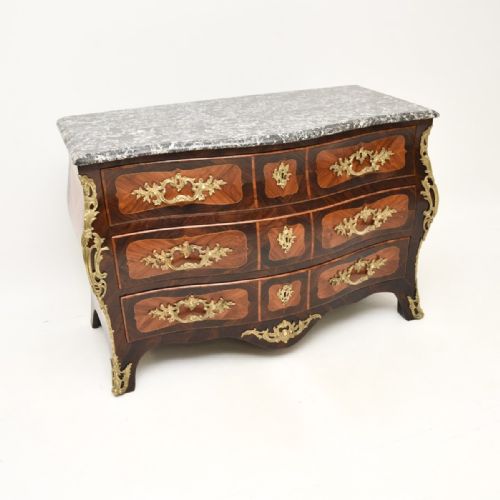
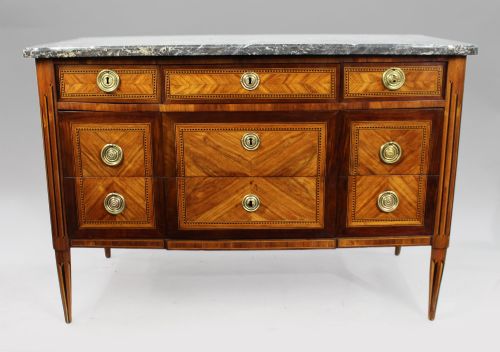
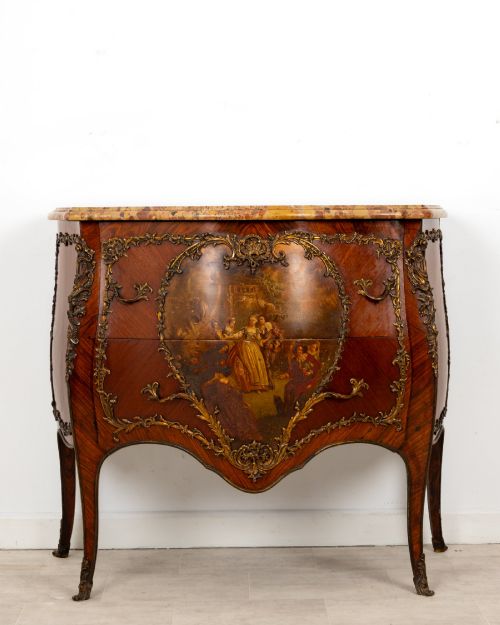
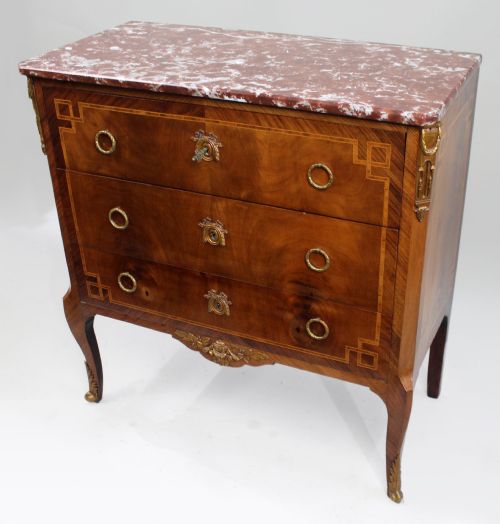
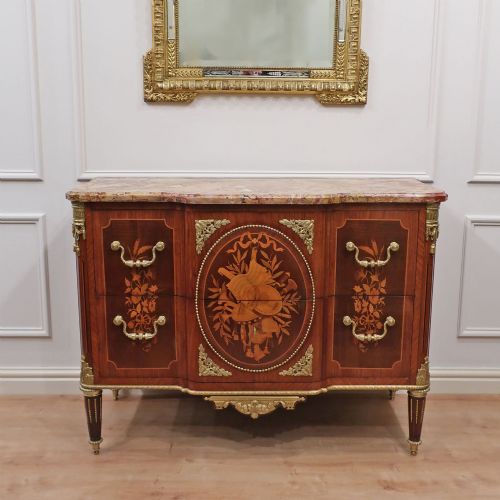
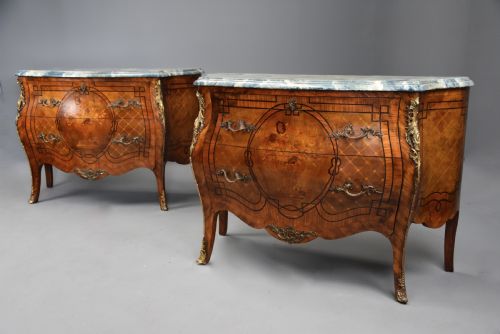
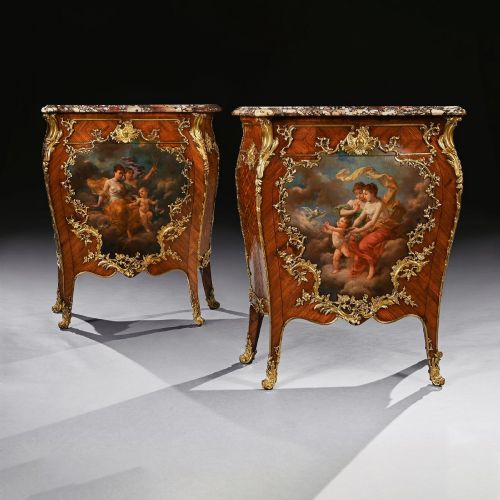
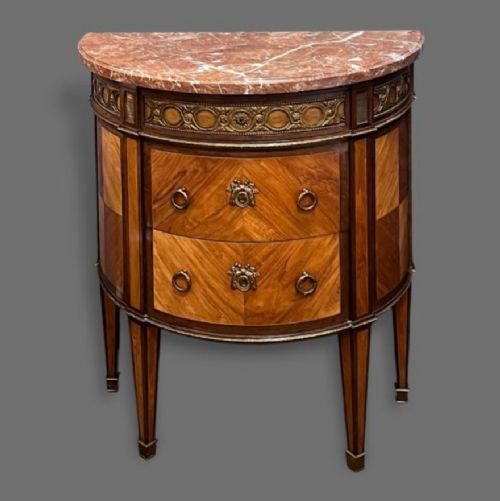
A marquetry chest with marble brings together decorative wood veneers and a substantial stone slab top. These pieces appear most frequently in French Louis XV and Louis XVI styles, alongside revival pieces from the early twentieth century.
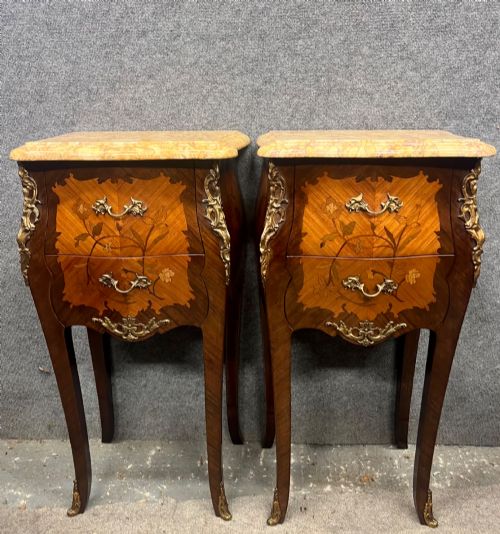
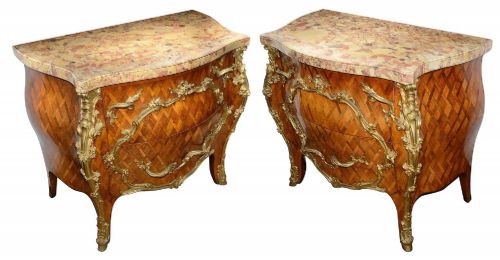
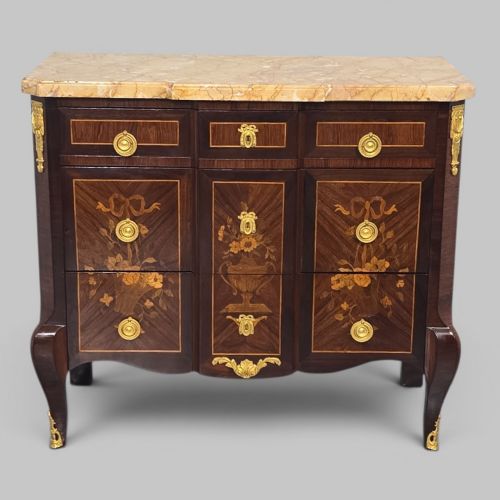
The primary forms include commodes with serpentine or demi-lune fronts, tall chests, and pairs of bedside tables. Woods such as walnut, kingwood, rosewood, and tulipwood create intricate floral and geometric patterns across the drawer fronts and sides.
Originating largely from French workshops, these items serve as both functional storage and decorative centrepieces. The integration of a heavy marble top defines the silhouette and provides a durable surface distinct from standard timber furniture.
Materials and construction methods
Craftsmen built the carcase from solid timber before applying fine veneers of walnut, kingwood, rosewood, and tulipwood to the exterior surfaces. Marquetry cutters sliced thin sheets of wood to assemble complex floral and geometric pictures by hand.
Ormolu and gilt bronze mounts were cast and chased to protect vulnerable corners and frame the decorative panels. Heavy marble slabs, including breccia, rouge, and sienna varieties, were shaped to fit precisely onto the wooden tops of each commode or chest.
Every marble top sits loose on its wooden frame, relying entirely on gravity and its own formidable weight to stay put.
Factors that separate top examples
The complexity and precision of the wood inlay distinguish finer examples from simpler production. Subtle shading in the veneers, achieved by scorching the wood edges in hot sand, indicates superior workmanship.
The quality of the cast bronze or ormolu mounts and the selection of the marble top significantly influence the overall character. Heavy, figured marble slabs and crisply chased mounts elevate the execution of the piece.
The Marquetry Chest with Marble Glossary
- Marquetry
- The art of applying decorative pieces of veneer to a structure to form intricate patterns or pictures. This technique defines the visual surface of these chests.
- Ormolu
- A gilded bronze or brass application used for mounts and decorative accents. It provides metallic contrast against the polished wood surfaces.
- Commode
- A low chest of drawers, typically standing on relatively tall legs. This form is the most common vehicle for marble tops and marquetry.
- Breccia
- A type of variegated marble composed of angular fragments cemented together. It appears frequently as the stone top on eighteenth-century examples.
- Demi-lune
- A half-moon shape used for the footprint and front of specific chests. This curved profile requires specialised shaping of both the woodwork and the marble slab.
Marquetry Chest with Marble: Frequently Asked Questions
How do I clean the marble top?
Wipe the marble surface regularly with a soft damp cloth and mild, neutral soap. Avoid abrasive cleaners or acidic substances like vinegar that can etch the polished stone.
Dry the surface thoroughly after cleaning to prevent water spots. Spills should be blotted immediately to protect the natural porosity of the marble.
Are these chests heavy?
These pieces possess considerable weight due to the combination of dense hardwood carcases and thick stone tops. The marble slab alone accounts for a substantial portion of the total mass.
Two people are typically required to lift and manoeuvre a commode safely. Removing the loose marble top prior to transport is standard practice.
How do I identify a revival piece?
Revival pieces from the early twentieth century often utilise machine-sawn veneers and standardised hardware fittings. Examination of the interior construction reveals newer secondary timbers and machine-cut dovetails.
Eighteenth-century examples display hand-cut joinery and subtle irregularities in the marquetry work. The patination of the wood and the wear on the bronze mounts also offer clues to age.
Can I use a bedside table daily?
These tables function well for everyday use provided basic care is observed. The marble surface resists moisture from glasses, but coasters remain sensible precautions.
Drawer mechanisms on older pieces benefit from gentle handling and occasional application of appropriate lubricants to internal runners. Avoid placing excessive weight on the top.