

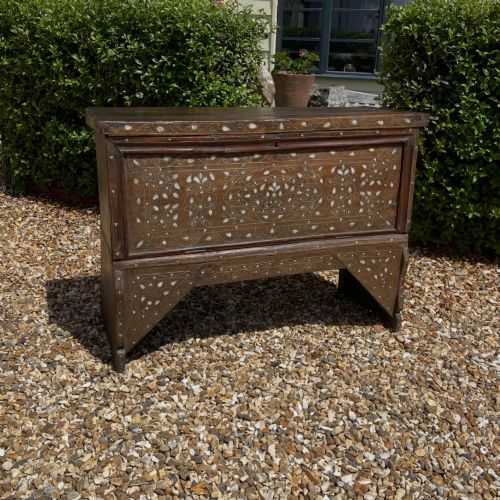


Marquetry Blanket Box
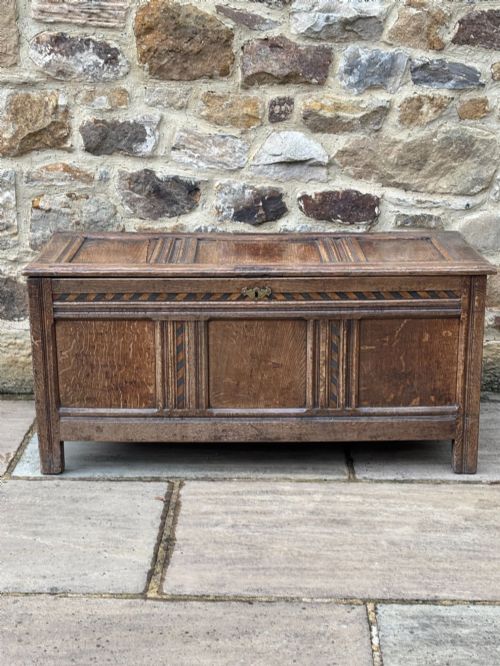
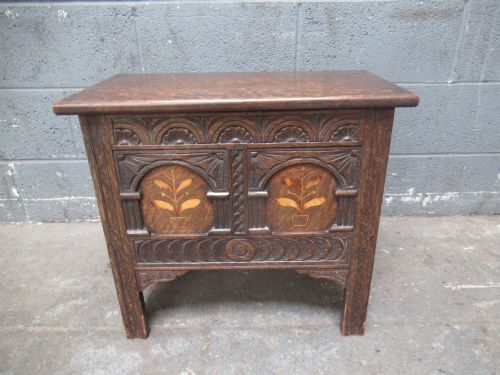
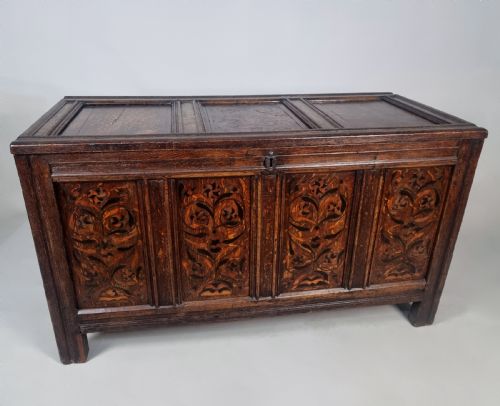
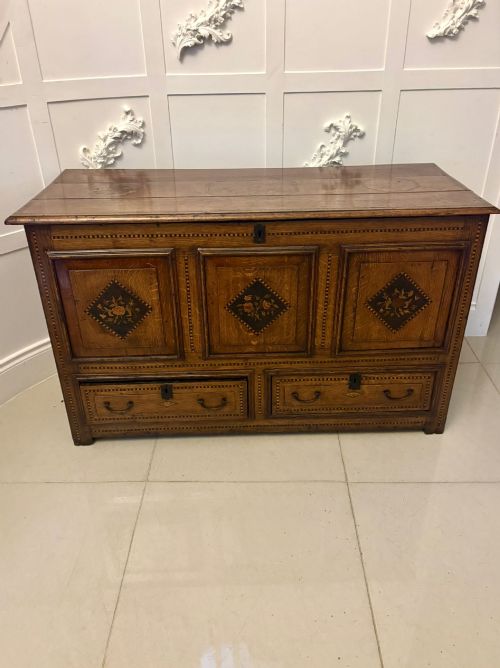
These marquetry blanket box pieces are robust wooden chests carrying intricate patterned wood inlay, designed to hold linen and textiles while anchoring a room.
Marquetry Blanket Box
A marquetry blanket box usually takes the form of a coffer, chest, or mule chest designed for heavy storage. The examples on this page span several centuries, reaching from the sixteenth and seventeenth centuries through the Georgian and Victorian eras up to nineteen hundred.
Buyers encounter regional and stylistic variations including Jacobean, Tudor and Elizabethan, Syrian Ottoman, Welsh vernacular, and English country house aesthetics. Forms range from large arcaded coffers and dome coffers to miniature boxes and fitted tool trunks.
Materials and construction
The primary structural timber across these pieces is oak, alongside walnut and fruitwood, often augmented by decorative wood inlay and marquetry inlay. Metalwork appears in the form of iron and brass fittings.
Surface decoration relies on precise woodworking techniques to integrate contrasting timbers, bone details, and complex patterned veneers into the solid wooden body of the chest.
Marquetry Blanket Box Retail Price Guide 2026
Typical asking prices for marquetry blanket box among the pieces listed under this phrase on Sellingantiques today, from the lower quarter to the upper quarter. They describe what is for sale here now, not the wider market.
Listed items span from the sixteenth century to the twentieth century, incorporating oak, walnut, fruitwood, and iron.
Distinguishing the standard
Quality in these pieces rests upon the precision of the marquetry inlay and the harmony of the timber grain. Finer examples display meticulous control in cutting and fitting diverse woods.
The sophistication of the period style, whether Jacobean arcading or profuse Continental walnut work, dictates the visual depth and execution standard of the piece.
The Marquetry Blanket Box Glossary
- Marquetry inlay
- Decorative patterns formed by fitting small pieces of veneer into a prepared wooden surface. This technique creates pictorial or geometric designs across the front and lid.
- Mule chest
- A storage chest featuring one or more drawers beneath the main compartment. It bridges the transition between a simple coffer and a chest of drawers.
- Coffer
- A heavy wooden chest traditionally used for storing valuables, documents, or clothes. Early versions feature robust joinery and hinged lids.
- Arcaded
- Decorated with a series of arches supported by piers or columns, often carved into the woodwork. This architectural motif appears frequently on seventeenth-century pieces.
- Vernacular
- Objects made by local craftsmen following regional traditions rather than high court styles. Welsh vernacular pieces display distinct local joinery and decorative traits.
Marquetry Blanket Box: Frequently Asked Questions
What is a marquetry blanket box used for?
These chests were originally built to store household textiles, blankets, and garments away from dust and pests. Today they function as living room coffee tables, hallway storage, or bedroom furniture.
Their robust construction allows them to support weight while keeping the interior cavity clear for bulky items.
How do I date an antique oak coffer?
Dating relies on examining the construction methods, tool marks, and hinge types used in the carcase. Joinery techniques changed from pegged mortise and tenon frames in earlier centuries to more refined cabinet work later on.
Stylistic motifs like Jacobean arcading or Elizabethan revival carving also point to specific periods of manufacture.
What is the difference between a coffer and a mule chest?
A standard coffer consists of a single compartment accessed via the lid on top. A mule chest incorporates one or more drawers at the base beneath the main compartment.
This addition allowed access to smaller items without needing to remove objects piled on top of the lid.
How should I care for an antique inlaid box?
Keep the wood conditioned with appropriate wax and away from direct heat sources and strong sunlight. Sudden temperature and humidity shifts can cause the inlaid veneers to lift or crack.
Dust gently with a soft dry cloth rather than using liquid polishes.