


Inlaid Wooden Trunk
An inlaid wooden trunk offers practical storage decorated with contrasting woods and materials.
Inlaid Wooden Trunk
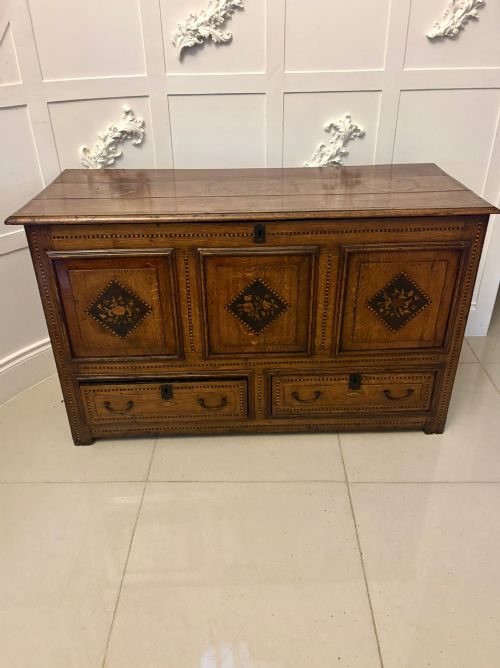
An inlaid wooden trunk is a substantial storage piece used for linen, blankets, and household goods, appearing in forms such as coffers, mule chests, and blanket boxes. These items serve both functional and decorative roles within domestic interiors, often featuring hinged lids and deep compartments. Buyers exploring this selection will frequently encounter seventeenth-century oak examples alongside nineteenth-century imported variants.
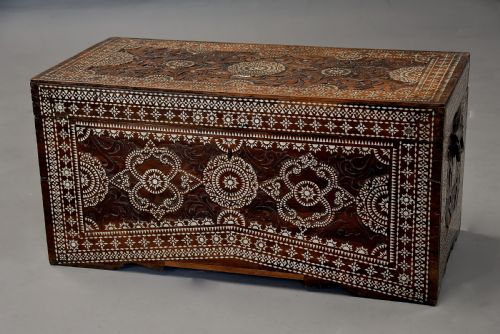
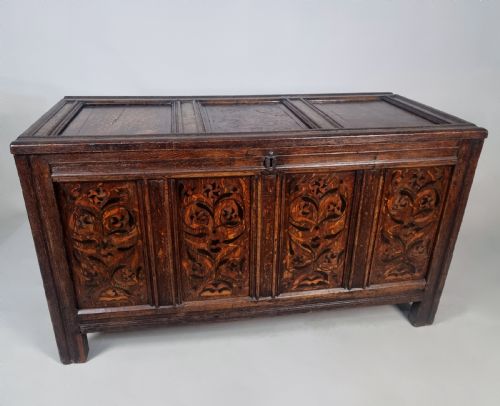
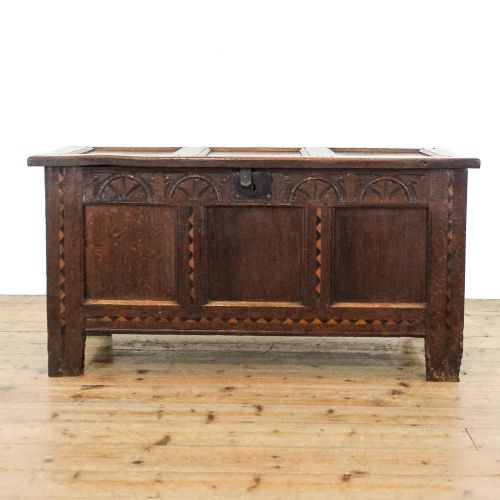
The variety spans centuries, ranging from early English oak joined coffers with marquetry to Middle Eastern and Asian pieces incorporating exotic woods and shell. Regional British examples include Welsh coffer bachs and mule chests fitted with lower drawers, while overseas pieces display distinct decorative traditions. This mix reflects domestic craftsmanship alongside global trade influences from different periods.
Construction types vary from heavy boarded and panelled timber chests to raised boxes on stands and campaign storage pieces. Some variants integrate brass mounts, iron hardware, or internal fittings designed for specific tools and silver. Each form demonstrates how storage containers evolved from simple household boxes into ornate decorative furniture.
How they were made
Carpenters and cabinet makers utilised native and exotic timbers including oak, mahogany, walnut, teak, and satinwood, assembling frames through pegged joints, dovetails, and panels. These foundational woods provided the structural strength required for heavy domestic storage.
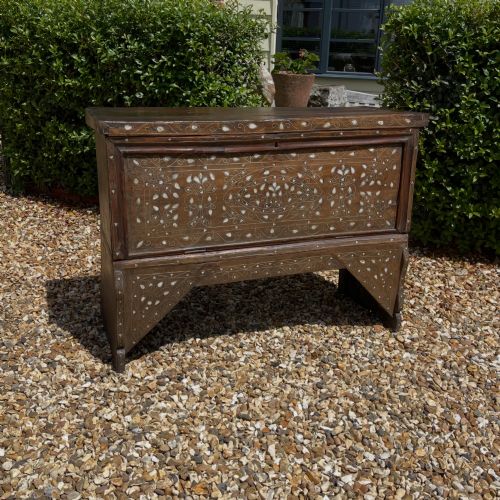
Surface decoration relied on marquetry, parquetry, and contrasting insertions of mother of pearl, ebony, and brass. Artisans cut recesses into the primary wood to inlay these materials, creating geometric, floral, or pictorial patterns across lids and front panels.
Recorded forms range from heavy oak coffers and mule chests to Middle Eastern trunks, campaign boxes, and Ceylonese satinwood chests.
What varies in quality
The standard of an inlaid wooden trunk depends upon the precision of the joinery and the complexity of the surface ornamentation. Superior examples display tight, stable joints and finely cut inlay work that remains flush with the surrounding timber.
The choice of materials and the integrity of the original hardware also define the tier of the piece. Trunks retaining their period brass handles, hinges, and undamaged secondary veneers command greater appreciation from collectors.
The Inlaid Wooden Trunk Glossary
- Cofer
- A large chest used for storing valuables or household goods. These early forms typically feature heavy wooden boards secured with iron or wooden pegs.
- Mule chest
- A traditional storage chest featuring one or more drawers built into the base beneath the main compartment. This form bridges the evolution between simple blanket boxes and modern chest of drawers.
- Marquetry
- The art of applying decorative veneer pieces in wood, shell, or metal to a structural surface. Craftsmen arrange these elements to form elaborate pictorial or geometric designs.
- Coffer bach
- A small Welsh storage chest or box raised on short legs or feet. These miniature furniture pieces were often produced as presentation items or dowry chests.
Inlaid Wooden Trunk: Frequently Asked Questions
What is an inlaid wooden trunk used for?
These chests historically stored household textiles, garments, blankets, and personal valuables safely away from dust and dampness. Their sturdy construction allowed them to double as benches or tables within the home.
Today, they function as living room coffee tables, bedroom blanket boxes, or hallway storage units. Their decorative lids and panel work bring historical character into contemporary interior spaces.
How do I date an antique wooden chest?
Dating relies on examining the construction methods, tool marks, timber species, and style of inlay or carving. Seventeenth-century pieces typically show hand-riven oak, pegged frame-and-panel construction, and simple geometric marquetry.
Later nineteenth-century versions often utilise tropical hardwoods, machine-sawn elements, and more complex exotic veneers. Comparing the hardware, hinges, and lock plates to known period examples provides further chronological context.
What is the difference between a coffer and a trunk?
A coffer generally describes a heavy, box-like chest made of solid timber, often associated with seventeenth-century joinery and domestic storage. These pieces frequently feature carved panels or architectural mouldings.
A trunk often implies a slightly later portable container designed for travel or specific domestic storage tasks, sometimes fitted with side carrying handles. However, historical terminology frequently overlaps between the two descriptions.
How should I care for an antique inlaid trunk?
Keep the wood conditioned by maintaining stable room temperatures and avoiding direct sunlight or placement near heat sources. Excessive dryness can cause old timbers to shrink and veneers or mother of pearl inlay to lift.
Apply traditional beeswax occasionally to nourish the surface polish and protect the grain. Avoid modern chemical sprays or excessive moisture during routine cleaning.