




Maritime Watercolour Artwork
Maritime watercolour artwork captures the movement of coastal vessels and open seas through pigment on paper.
Maritime Watercolour Artwork
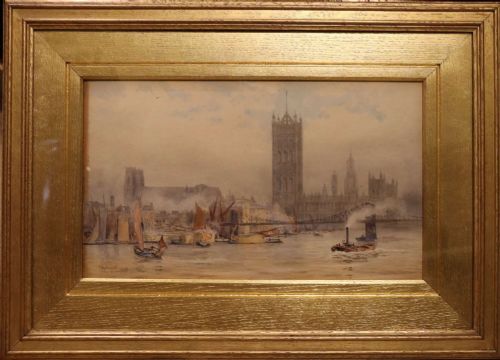
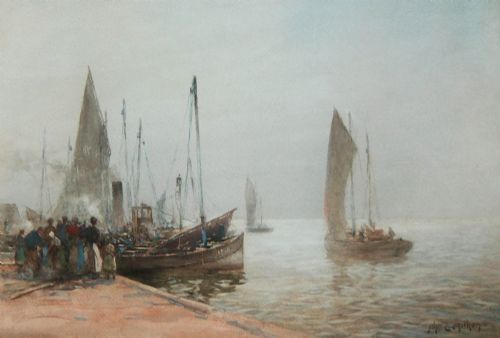
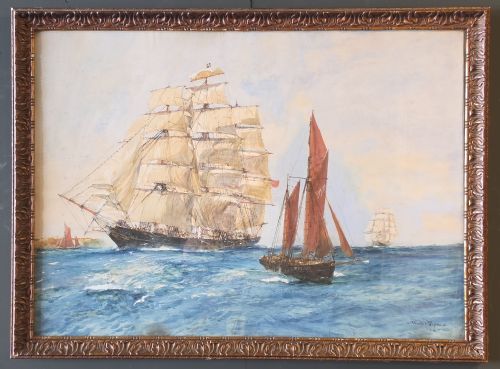
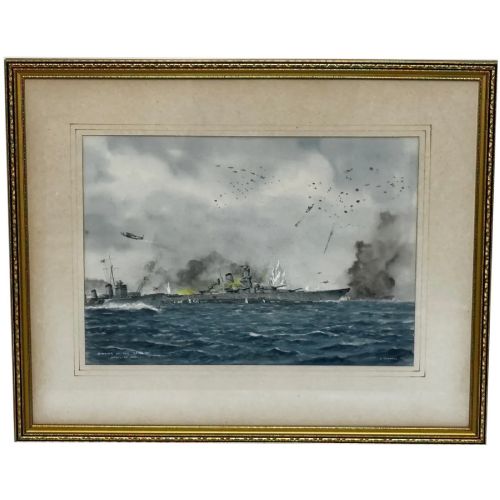
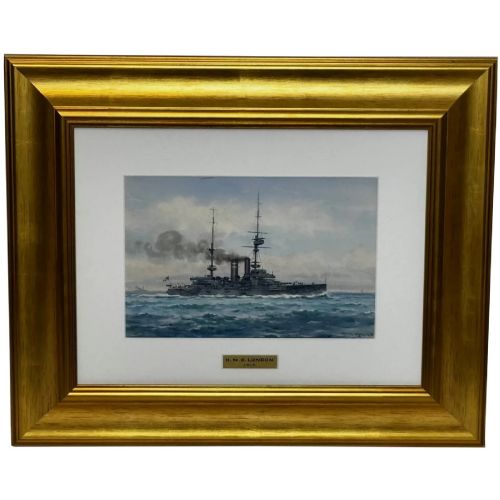
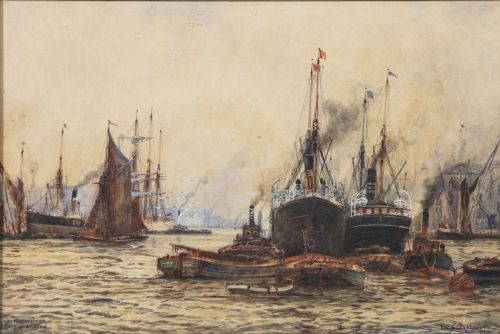
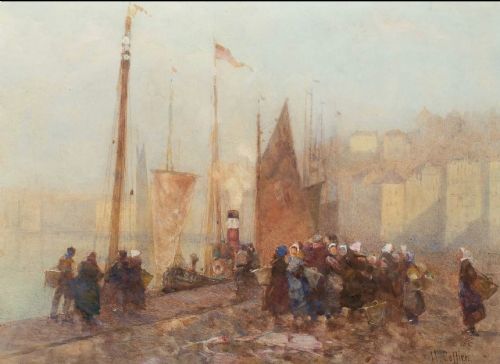
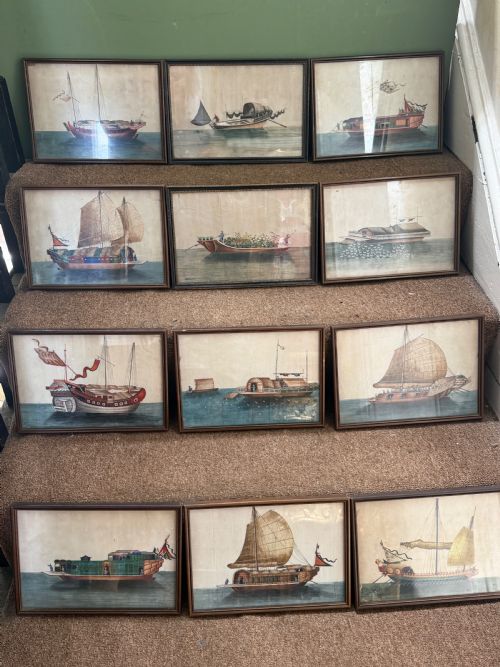
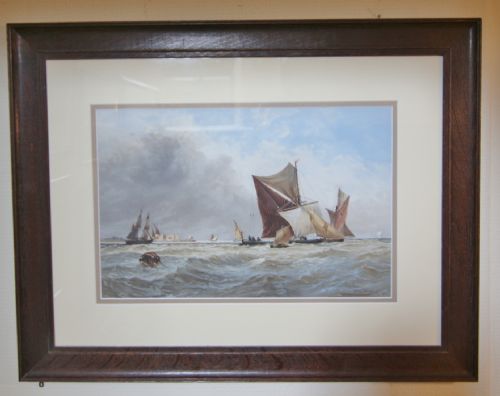
Maritime watercolour artwork encompasses original paintings on paper depicting coastal scenes, harbour views, fishing vessels, and naval ships. These works document maritime history from the Victorian era through to the mid-twentieth century, recording ports and shipping lanes across Britain and beyond.
The most common examples on this page date from the late nineteenth and early twentieth centuries, created during periods of heightened artistic interest in coastal life and marine commerce. These pieces range from detailed depictions of specific named vessels to atmospheric harbour sketches executed on location.
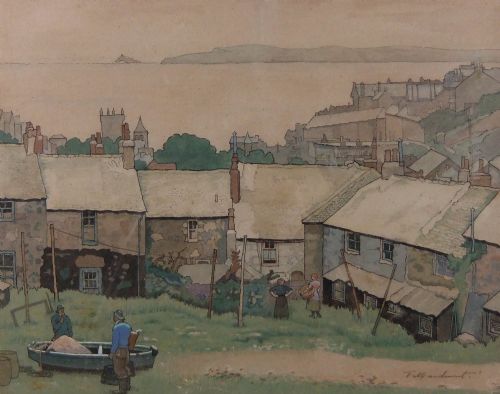
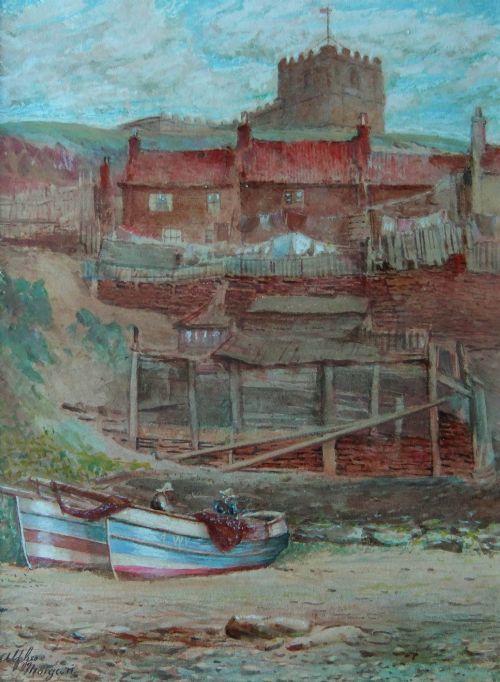
Subjects frequently include Cornish fishing ports, Yorkshire coastal towns, and bustling estuaries, reflecting the domestic appeal of British coastal scenery. Buyers encounter framed paintings and works on paper presented behind glass, often retaining their original gilt wood frames.
Materials and Technique
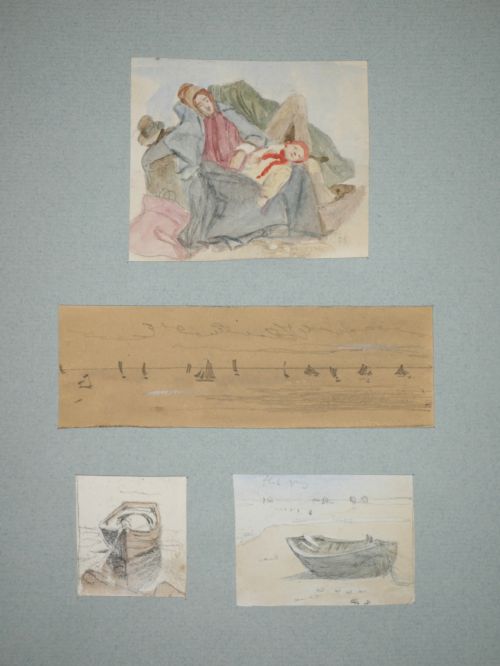
Artists executed these works using watercolour pigment applied to paper, sometimes supplemented with bodycolour or gouache to achieve opaque highlights on sails and cresting waves. Ink was occasionally employed for initial line work or structural definition beneath the wash.
Support materials typically comprise heavy wove paper housed within wooden or gilt frames behind protective glass. The application combines transparent washes for sea and sky with precise brushwork for rigging and architectural details.
Sailors sometimes made sentimental tributes to their warships using watercolour and gouache.
Judging Quality
Quality rests upon the artist's command of light, atmosphere, and the specific movement of water, distinguishing observational mastery from routine topographical illustration. Stronger examples convey the weight of vessels and the expanse of maritime air with economy and confidence.
Condition is defined by the preservation of the paper support and the stability of the pigments against fading from exposure to light. Original framing and clear contemporary provenance further elevate the standing of individual works.
James Orrock·James Smetham·Charles Edward Dixon·Frank Watson Wood·Frank William Scarbrough·Hector Caffieri·Thomas Maidment·Thomas Bush Hardy·George Stanfield Walters·Frank Kelsey·Henry Barlow Carter·William Frederick Settle·Alfred George Morgan·Paul Delvaux·Charles William Adderton·Eric Tufnell·Richard Harry Carter·Vincenzo D’Esposito·William Lee Hankey·Ernest Dade
The Maritime Watercolour Artwork Glossary
- Gouache
- An opaque watercolour paint made from pigment mixed with a water-soluble binder and white filler. It provides heavier coverage than transparent watercolour and appears frequently in marine art for highlights.
- Wove paper
- Paper formed on a fine wire mesh, producing a uniform surface without ribbed lines. This paper stock became standard for watercolours from the late eighteenth century onward.
- Seascape
- A painting or drawing depicting the sea, coastal views, or marine shipping. These works focus on coastal topography and maritime activity.
- Bodycolour
- Watercolour paint rendered opaque by the addition of white pigment. Artists utilised this technique to build dense lights on water and foam.
- Provenance
- The documented history of ownership of a work of art. Clear provenance establishes authenticity and traces the origin of the piece.
Maritime Watercolour Artwork: Frequently Asked Questions
How do I care for maritime watercolour artwork?
Keep watercolours away from direct sunlight to prevent the pigments from fading over time. Maintain stable humidity levels in the room to protect both the paper and its wooden frame.
Ensure the artwork remains sealed behind glass with acid-free backing materials. Consult a professional paper conservator if the paper shows signs of foxing or discolouration.
What periods do these watercolours cover?
The listings span from the Victorian era through the Edwardian period and into the mid-twentieth century. Most examples originate between the late nineteenth century and the nineteen-fifties.
Artists from these decades recorded both traditional sailing vessels and steam or naval ships. Dating is often established through artist signatures, dated inscriptions, or historical vessel records.
How are ships identified in these paintings?
Many marine watercolours depict specific registered vessels, naval ships, or harbour craft noted in the titles or inscriptions. Artists often recorded the names of steamships, luggers, and ironclads actively operating during their lifetimes.
Researching naval architecture or local port registries helps confirm the exact vessels and locations portrayed. Uniforms, flags, and harbour landmarks offer further chronological clues.
Why were watercolours preferred for marine art?
Watercolour allowed artists to capture the transient effects of weather, sea spray, and changing light conditions quickly on location. The medium lent itself to outdoor sketching along quaysides and aboard vessels.
Finished sheets provided a portable format that suited collectors who displayed framed works in domestic interiors. The translucent qualities of watercolour matched the fluid nature of the sea.