





Marble Urn Ornaments
Marble urn ornaments bring classical antiquity into a room through stone vessels mounted in bronze.
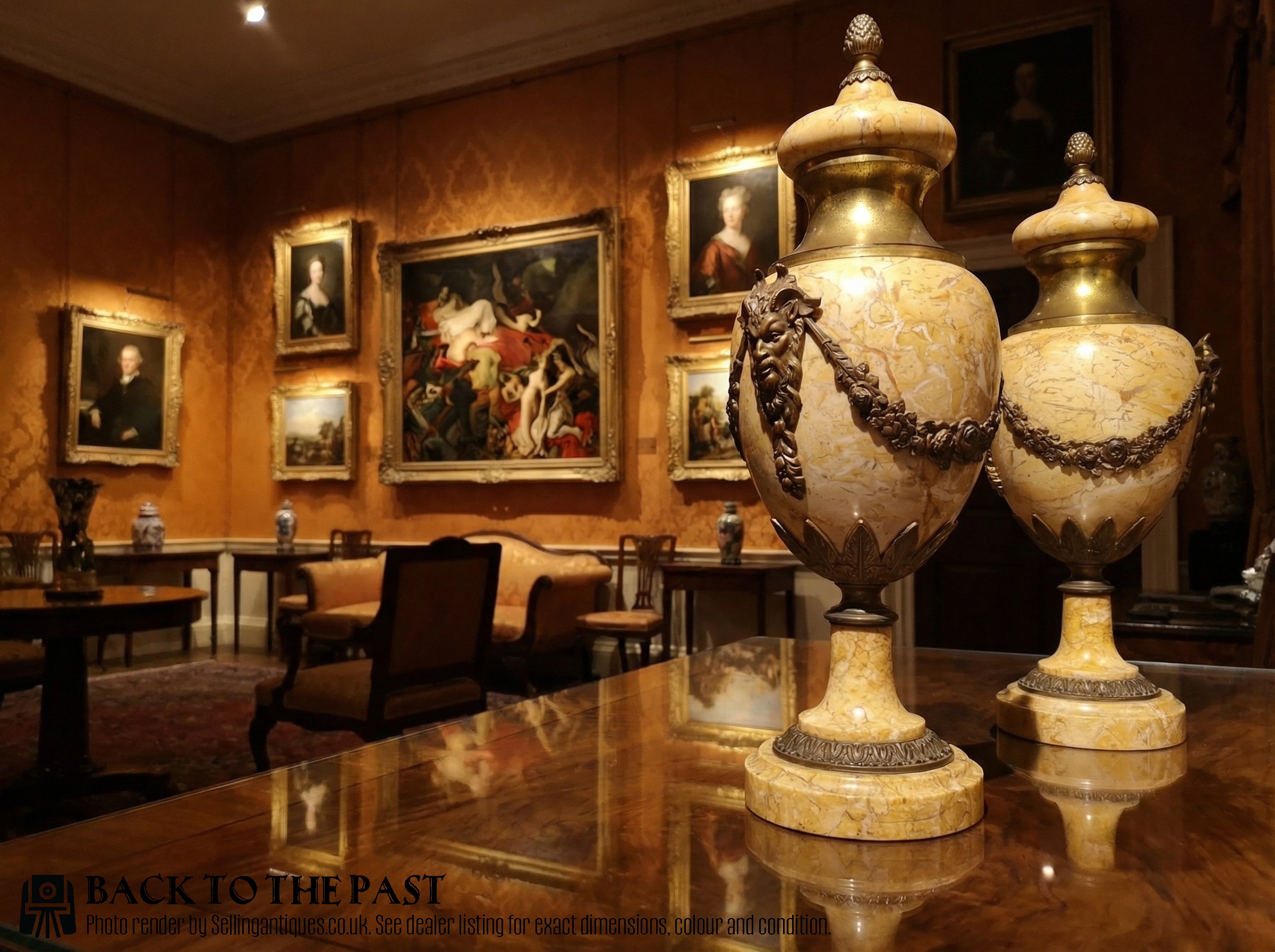
Marble Urn Ornaments
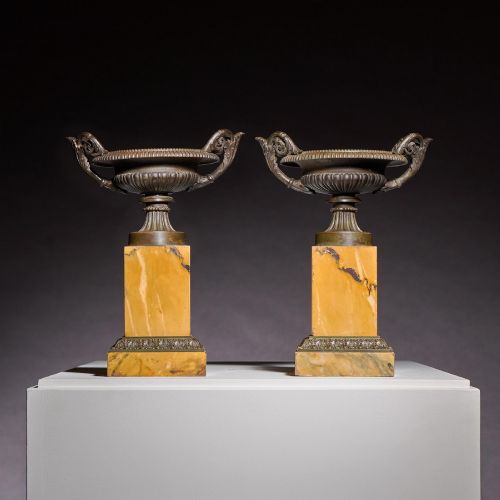
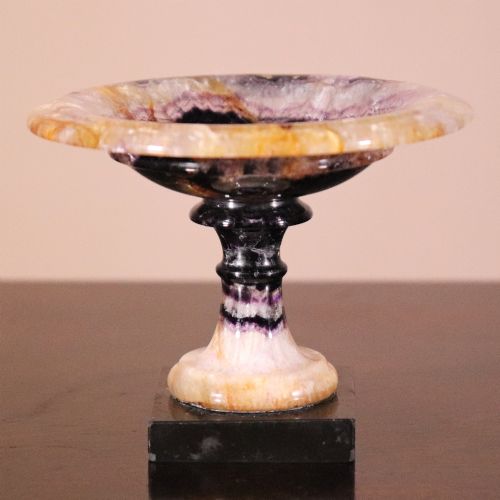
Marble urn ornaments encompass decorative vessels, tazzas, cassolettes, and inkwells shaped from stone and metal during the nineteenth century. The examples found here typically date from the Regency period through to 1900, drawing heavily on French Empire, Louis XVI, and Victorian Neoclassical styles.
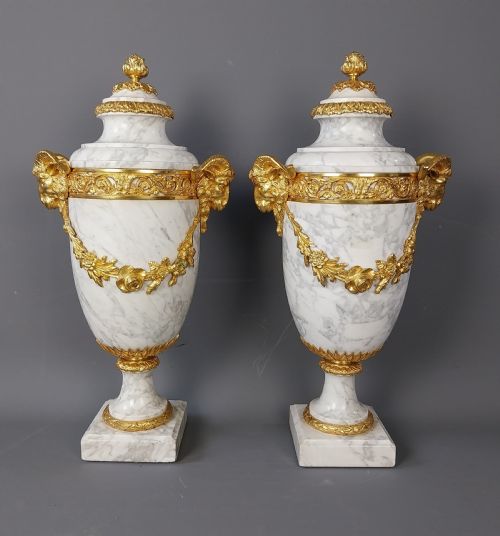
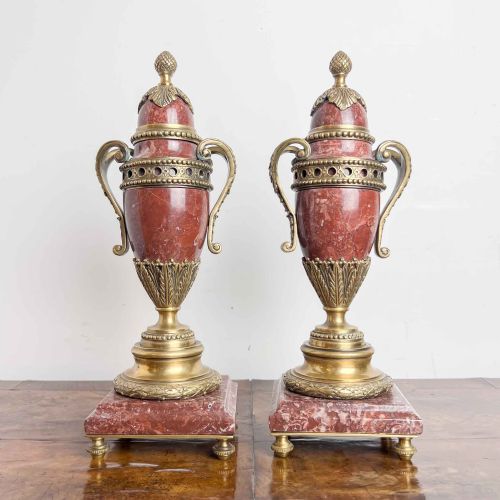
The version most commonly met on this page is the French or English classical revival urn, frequently paired as decorative garnitures for a mantelpiece or console. These objects combine carved mineral bodies with cast bronze or gilt bronze mounts, reflecting the enduring nineteenth-century enthusiasm for Grand Tour souvenirs.
Materials and construction
The construction of these pieces relies on the union of turned stone bodies - using varieties such as Sienna marble, white marble, rouge marble, and blue John fluorite - with cast and chased bronze, ormolu, and gilt bronze elements.
Makers shaped the stone on lathes and combined the sections with threaded brass rods or pinned joints, securing the bronze handles, bases, and lids to the stone cores with precision.
Materials appearing across the inventory include Sienna marble, rouge marble, white marble, blue John fluorite, bronze, ormolu, and gilt bronze.
Judging quality in stone and metal
Quality reveals itself in the geological selection of the stone and the crispness of the bronze casting. Richly figured marble and mineral deposits like blue John display depth and natural variation that lift a piece far beyond standard production work.
The finishing of the gilt bronze mounts, through careful chasing and mercury or electro-gilding, separates the finer studio outputs from simpler decorative items. Well-executed handling of lids, reversible cassolettes, and heavy cast bases indicates superior workshop standards.
Selim Bright
The Marble Urn Ornaments Glossary
- Cassolette
- A decorative vessel with a reversible lid that functions either as an urn or, when flipped, as a tazza or candle holder. These objects were popular in French Neoclassical interiors.
- Ormolu
- Finely chopped gold applied to a copper bronze base through an amalgam process, or later electroplated. It provides a bright, durable golden surface to decorative metal mounts.
- Grand Tour
- A cultural journey undertaken by wealthy young Europeans to view classical antiquities, inspiring the production of souvenir bronzes and marble pieces.
Marble Urn Ornaments: Frequently Asked Questions
What rooms suit marble urn ornaments?
These pieces suit formal reception rooms, libraries, and hallways where classical decor predominates. They sit well on mantelpieces, side tables, or pedestals as focal points.
Because they incorporate stone and metal, pairing them with dark wood furniture or stone fireplaces grounds their visual weight in the interior.
How are Regency pieces told apart from later ones?
Regency items generally display heavier cast bronze components and specific Neoclassical proportions tied to English taste around 1820. Their marble turning often shows tighter, simpler profiles than later ornate French designs.
Later nineteenth-century examples, particularly those from the Second Empire, lean toward busier gilt mounts and more flamboyant marble varieties like rouge griotte.
How should marble urn ornaments be cleaned?
Dusting with a dry, soft microfibre cloth prevents the accumulation of grime in the carved crevices of the stone and bronze. Moisture should be kept away from porous stones and exposed metal surfaces.
Harsh chemical cleaners strip the original patination from bronze and damage polished marble, so professional conservation advice is required for deep cleaning.