
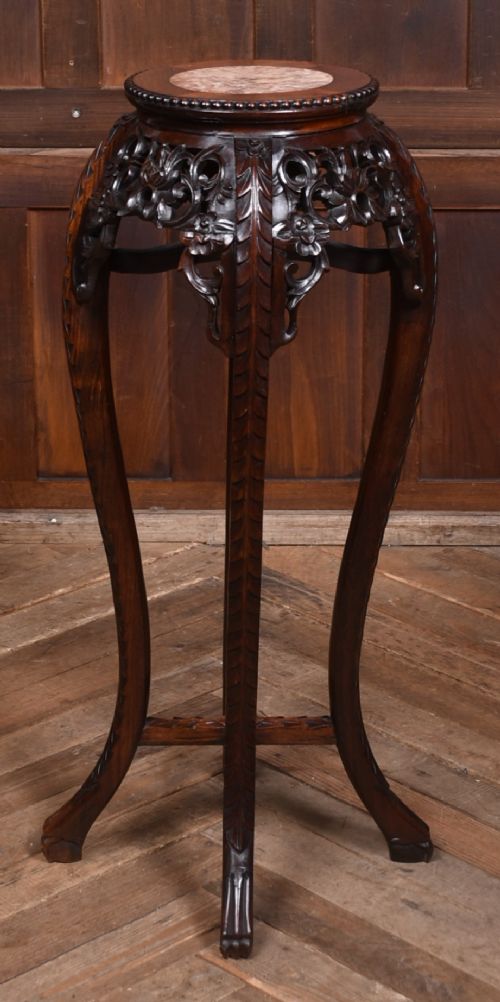

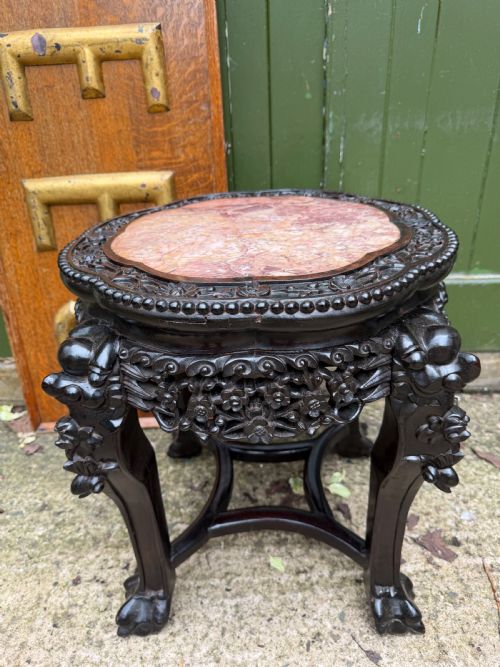


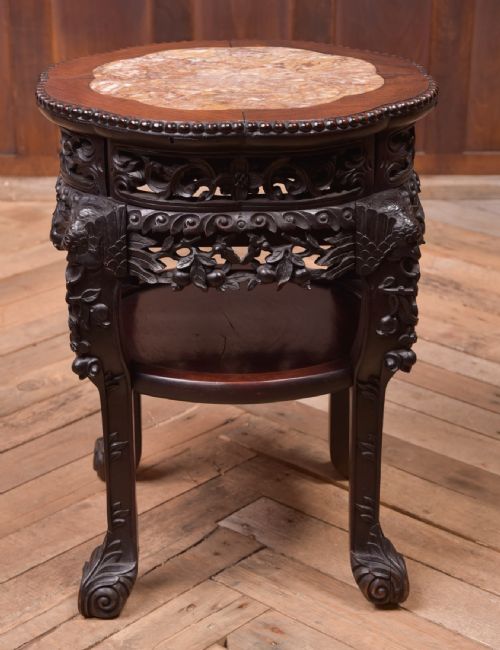
Marble Top Vase Stand
These marble top vase stand pieces are carved hardwood furniture designed to elevate heavy vessels, offering stability and refined display.
Marble Top Vase Stand
A marble top vase stand serves primarily as a sturdy platform for decorative vessels, jardiniere bowls, or urns. When searching this phrase, a buyer encounters low tables and pedestals originating from Chinese export workshops during the nineteenth and early twentieth centuries.
The pieces appearing on this page span the Victorian and Edwardian periods through to the nineteen-thirties, aligning with late Qing dynasty and Republic period aesthetics. Forms range from low occasional tables to tall jardiniere stands, frequently designated for plants or wine lamps.
Hardwood is the universal structural medium across these examples, paired invariably with inset stone tops. The physical evidence shows consistent utilisation of dense timber species configured for interior display.
Materials and construction
Construction relies upon dense Asian hardwoods, specifically identified in several instances as hongmu, which provides the necessary weight and structural rigidity to support heavy stone inserts. Cabinetmakers utilised traditional joinery techniques to assemble frames capable of bearing substantial downward pressure without warping.
Inset variegated rouge marble or neutral stone tops form the central surface of each stand, fitted flush within carved wooden frames. The timber components frequently exhibit intricate relief carving around the apron and legs, reflecting Chinese export styles of the late nineteenth century.
Listings on this page exclusively feature hardwood construction, dominated by nineteenth-century Chinese export examples alongside early twentieth-century pieces.
Distinguishing quality
Quality resides in the crispness of the timber carving and the density of the selected hardwood. Superior examples display deep, undercut relief work that remains sharp and articulate, whereas lesser pieces show shallower, mechanical detailing.
The integration of the inset marble top dictates overall refinement, with finer items possessing stone featuring rich natural veining tightly fitted to the surrounding wooden rebate. Proportion and timber selection ultimately separate standard utilitarian plant supports from exhibition-grade furniture.
The Marble Top Vase Stand Glossary
- Hongmu
- A dense tropical hardwood traditionally utilised in Chinese furniture manufacturing. It is prized for its weight, dark colour, and capacity to hold intricate carved details.
- Jardiniere stand
- A tall or low piece of furniture specifically created to hold a plant container or flower pot. These stands elevate heavy ceramic vessels off the floor.
- Qing Dynasty
- The final imperial dynasty of China, spanning from sixteen forty-four to nineteen twelve. Pieces from the late phase of this period frequently feature on this page.
- Rouge marble
- A type of decorative stone characterised by reddish or variegated pink colouration. It is commonly found inset into the tops of nineteenth-century export tables.
Marble Top Vase Stand: Frequently Asked Questions
What is a marble top vase stand used for?
These stands provide a stable, elevated surface designed to display heavy decorative vessels, urns, or ceramic planters. Their robust construction prevents damage to domestic flooring while showcasing the objects placed upon them.
Historically, they also functioned as small occasional tables or lamp stands within nineteenth-century interiors. Their compact footprint allows them to occupy corners or beside seating without dominating a room.
How do I identify the period of a stand?
Dating relies primarily on the style of the carving, timber density, and the overall form associated with late Qing dynasty production. References to nineteenth-century manufacture often align with Victorian or Edwardian stylistic traits.
Construction methods also offer clues, as hand-carved hongmu examples from the eighteen-eighties and eighteen-nineties exhibit distinct joinery compared to later twentieth-century output.
Are these pieces stable enough for heavy plants?
The dense hardwoods used in these stands provide exceptional structural integrity and weight capacity. They are intentionally engineered to bear the substantial load of large ceramic jardiniere pots filled with soil.
Buyers can safely place heavy decorative items on the inset marble surfaces without risking structural failure, provided the joints remain secure.
How should I clean the marble top?
Maintenance requires only a soft, damp cloth to remove dust and surface debris from the stone and wooden frame. Avoid harsh chemical cleaners that might dull the polished surface of the variegated marble.
Keeping the hardwood nourished with appropriate wax preserves the timber finish and prevents the dry atmosphere of modern homes from affecting the joinery.