
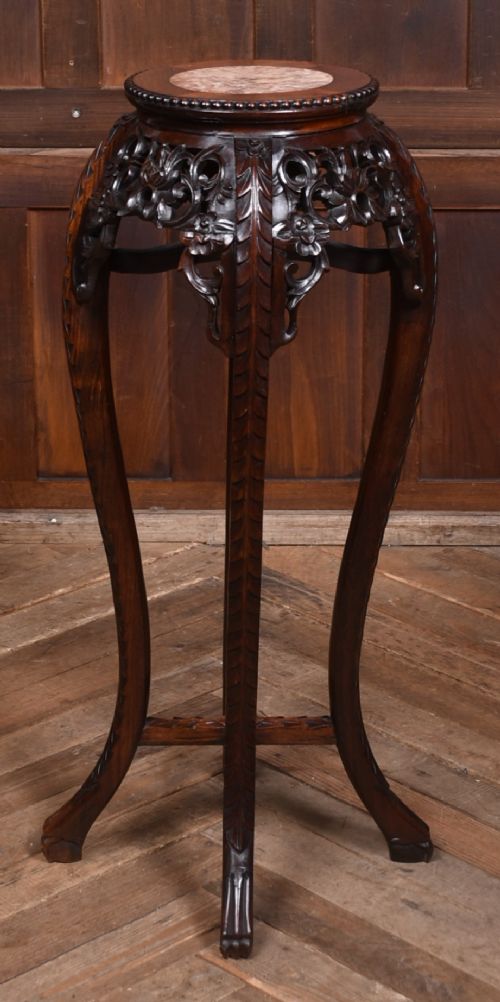


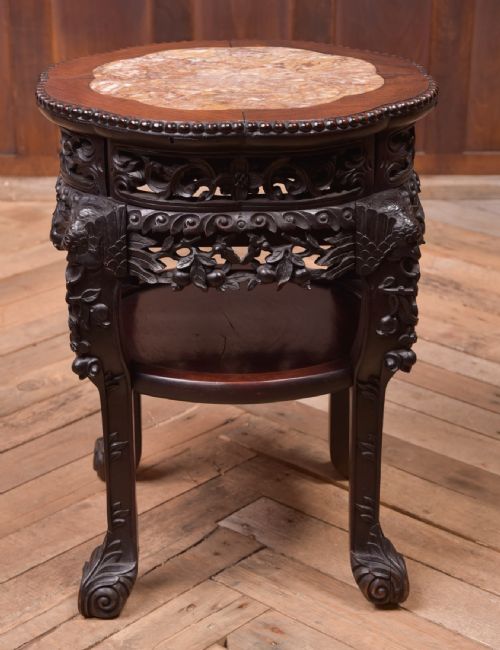
Rosewood Marble Vase Stand
A rosewood marble vase stand holds heavy ceramics aloft with dignity, bringing deep timber and cool stone together for display.
Rosewood Marble Vase Stand
When you search for a rosewood marble vase stand, you encounter sturdy Asian export furniture designed to elevate jardiniere pots, urns and heavy ceramic vessels. These pieces typically appear from the nineteenth century, the Victorian era, and the early twentieth century.
Most examples on this page take the form of plant stands, jardiniere stands or pedestal tables featuring inset stone tops. They range from compact small tables to elaborate carved pedestal supports.
Origins heavily lean towards Chinese export and Qing Dynasty workshops, with styles spanning Late Qing and Republic periods. The core structure combines dense exotic timbers with smooth marble inserts.
How they were made
Maker workshops utilised dense hardwoods, specific regional timber varieties like hongmu, and traditional rosewood stocks. These heavy timbers provided the necessary structural integrity to support massive stone and ceramic weights.
Craftsmen set polished marble discs directly into the wooden frames to create stable, heat-resistant surfaces. Artisans carved intricate decorative motifs around the aprons and legs using traditional joinery without relying on modern fasteners.
Listings feature items built from hardwood, rosewood, and hongmu, paired with marble inserts across the nineteenth and twentieth centuries.
What varies in quality
The standard of carving dictates the upper tier of these pieces, separating plain utility frames from deeply sculpted artistic statements. Crisp undercut details in the wood show the hand of a master carver rather than mechanical production.
The choice of marble insert also defines the grade of the stand, with active natural veining and unblemished polish marking superior examples. Timber selection plays an equal role, where heavier, more intensely figured rosewood or hongmu elevates the standing of the piece.
The Rosewood Marble Vase Stand Glossary
- Hongmu
- A dense, heavy Chinese hardwood often translated as red wood. It forms dark, robust furniture structures.
- Jardiniere
- A large ornamental pot or container for plants or flowers. These stands were specifically built to support them.
- Qing Dynasty
- The last imperial dynasty of China lasting from sixteen forty-four to nineteen twelve. Many pieces on this page derive from its later years.
- Rosewood
- A heavy, rich brown or reddish timber featuring distinct grain patterns. It provides both strength and decorative appeal.
- Plant stand
- A tall, narrow piece of furniture designed to elevate greenery. They double easily as display tables for urns.
Rosewood Marble Vase Stand: Frequently Asked Questions
What is a rosewood marble vase stand used for?
These pieces function primarily to elevate heavy vases, jardiniere bowls, and large decorative urns above floor level. Placing ceramics upon them protects wooden flooring and showcases the artistic profile of the vessel.
They also serve well as small side tables for lamps or wine glasses. Their sturdy construction easily accommodates substantial weight without tipping.
How do I date a rosewood marble vase stand?
Dating relies on examining the timber ageing, the hand-carved joinery methods, and the specific decorative style. Pieces from the nineteenth century often display deeper hand tool marks and heavier, denser rosewood.
Twentieth century examples tend to show slightly lighter construction and different carving depths. Comparing the aesthetic to established Qing Dynasty or Republic period motifs helps narrow the timeframe.
Are all these stands made of solid rosewood?
Makers utilised several dense Asian hardwoods alongside true rosewood, including hongmu and general heavy exotic timbers. These woods were chosen specifically for their immense strength and capacity to hold heavy stone inserts.
Inspecting the grain pattern and weight helps identify the particular hardwood used. Each timber choice contributes differently to the overall colour and structural endurance.
Why do these stands have marble tops?
The stone insert provides a cool, flat, moisture-resistant surface that safely supports wet plant pots or damp ceramic bases. Marble also adds a contrasting textural element of pale grey or white against dark timber.
This combination prevents water rings and heat damage from reaching the wooden frame underneath. The stone is typically dropped directly into a recessed wooden channel.
How should I care for a marble top stand?
Dust the carved wooden frame regularly with a dry cloth and avoid harsh chemical polishes that strip natural timber oils. Keep the furniture away from direct heat sources to prevent wood shrinkage and joint loosening.
Clean the marble insert with a damp cloth and mild soap, drying it immediately to protect the polish. Avoid placing acidic liquids directly onto the stone surface.