


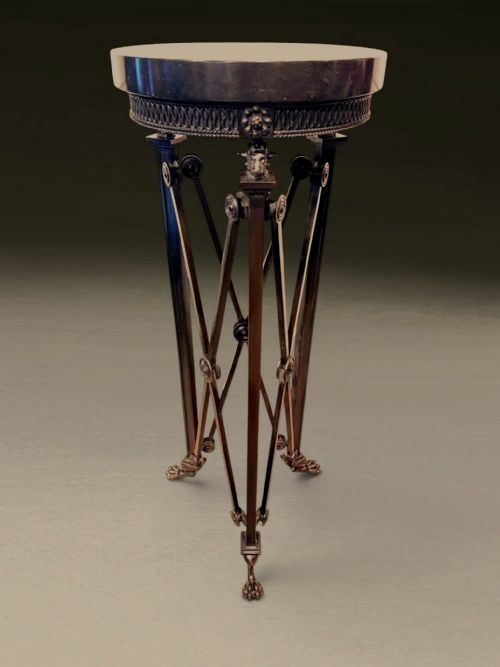

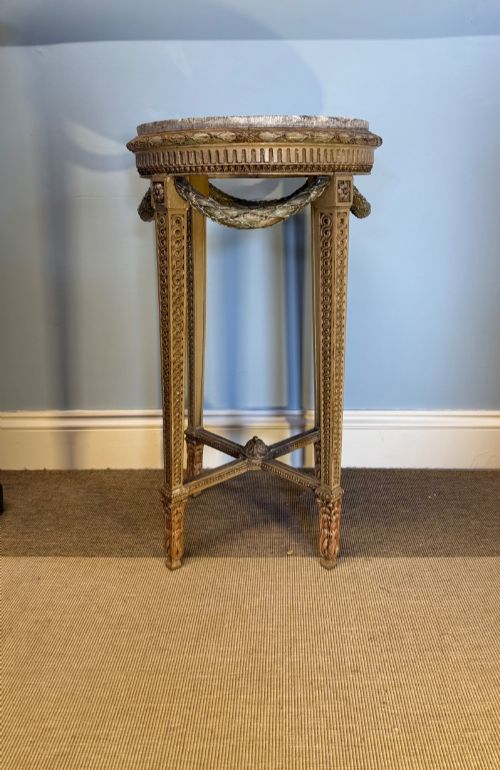
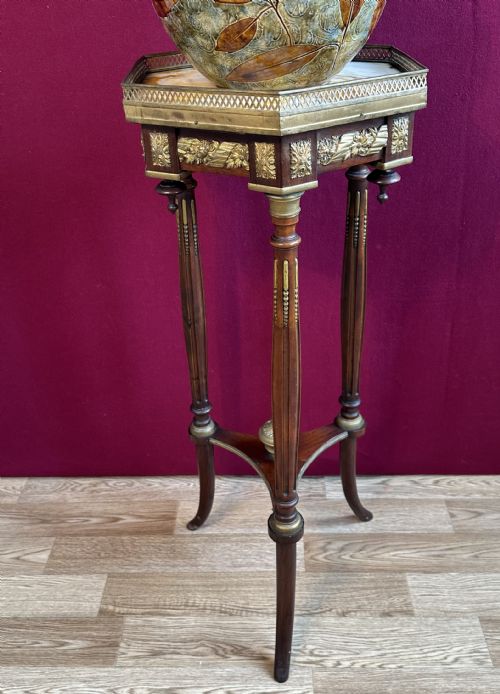


Marble Top Column Pedestals
Marble top column pedestals bring classical architecture and solid stone surfaces into domestic interiors to elevate plants, lamps, and decorative figures.
Marble Top Column Pedestals
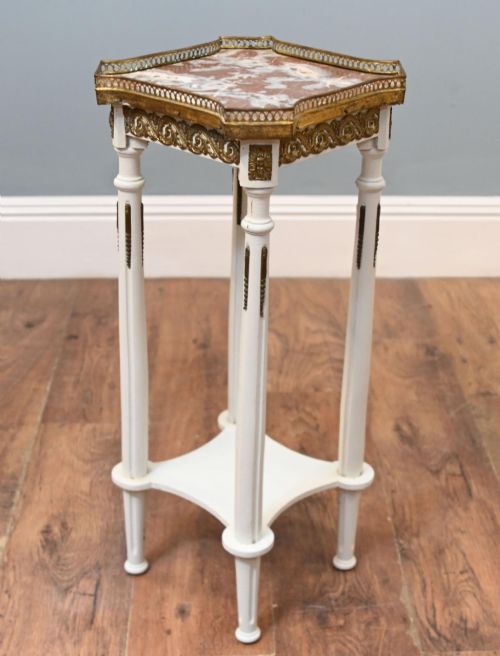
When searching for marble top column pedestals, buyers encounter functional display furniture designed to elevate decorative objects within a room. These pieces function as plant stands, torchere stands, and occasional tables, lifting sculptures and urns to eye level.
The selection on this page draws primarily from nineteenth-century Victorian and Edwardian periods, alongside Regency and French revival designs. Makers constructed these supports as slender columns or cylindrical cupboards to display ornamentation without dominating the floor plan.
How they were made
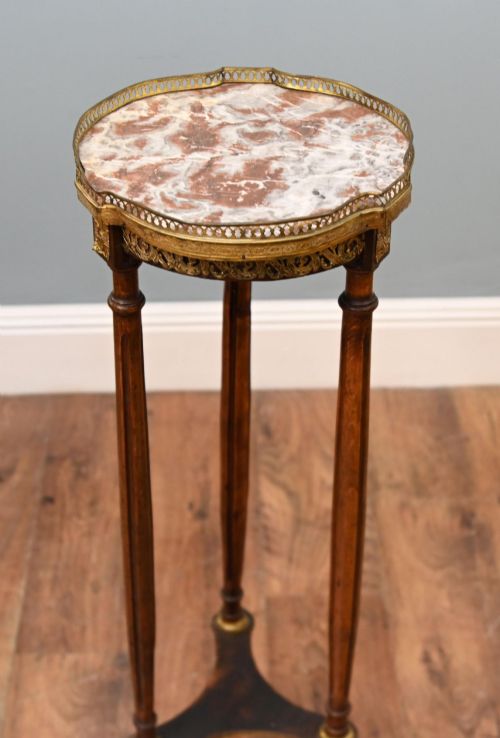
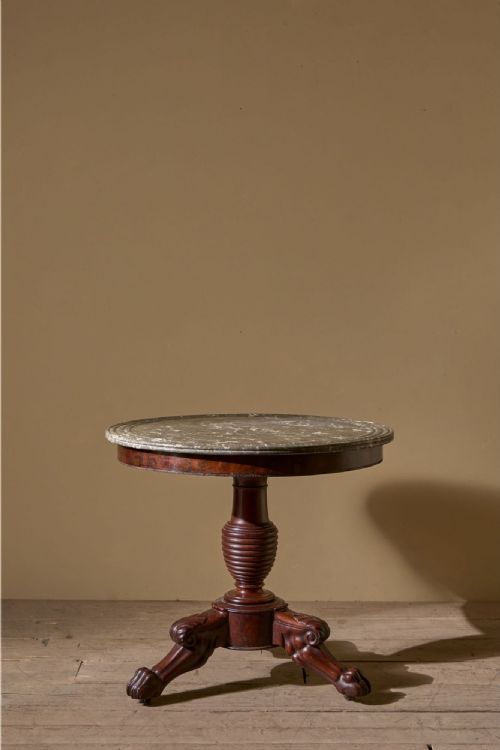
Craftsmen built the structural columns using dense timbers such as mahogany, satinwood, walnut, and kingwood, often mounting heavy stone surfaces to the summits. Marble, onyx, and alabaster slabs form the tabletops, providing a cool, stable platform for heavy planters and lamps.
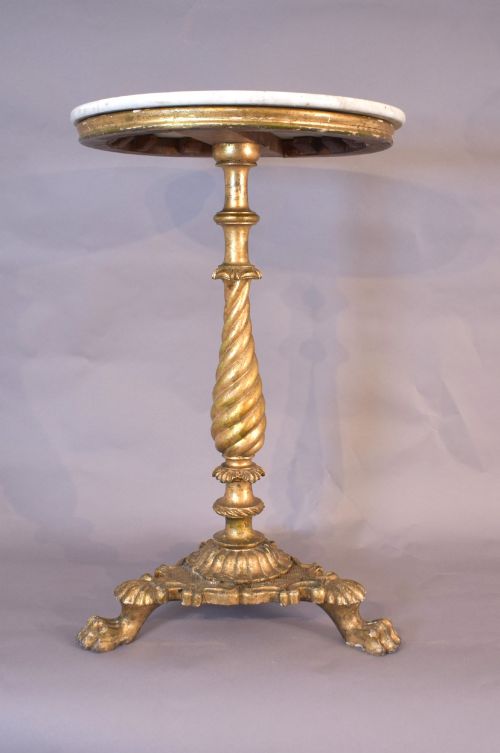
Metal enrichment appears frequently across the construction, utilising cast brass, gilt bronze, and ormolu mounts to accent capitals and bases. Giltwood and painted finishes provide decorative surface treatments on French and English examples from the nineteenth century.
Marble Top Column Pedestals Retail Price Guide 2026
Typical asking prices for marble top column pedestals among the pieces listed under this phrase on Sellingantiques today, from the lower quarter to the upper quarter. They describe what is for sale here now, not the wider market.
Current listings feature nineteenth-century Victorian and Edwardian forms constructed from mahogany, satinwood, and giltwood with stone tops.
What varies in quality
Quality rests in the density and figuring of the stone top, alongside the precision of the timber turning and joinery. Finer examples feature well-matched marble or onyx paired with heavy, crisp brass or ormolu mounts rather than light stamped metal.
The structural integrity of the central column determines the stability under weight, separating robust display furniture from decorative novelties. Carved giltwood and detailed marquetry show the hand of skilled workshops compared to plain turned softwood.
The Marble Top Column Pedestals Glossary
- Pedestal
- A structural support or column designed to elevate a bust, lamp, or plant stand. These pieces lift decorative items off the floor to create focal points in a room.
- Gueridon
- A small French round table used as a stand for candles, flowers, or ornaments. They frequently feature central column supports and stone or wood tops.
- Torchere
- A tall stand designed originally to hold a torch and later adapted for oil lamps or electric lighting. They often take slender column forms with decorative capitals.
- Ormolu
- Gilt bronze mounts applied to furniture to accent corners, capitals, and bases. This technique adds metallic contrast to dark woods and stone tops.
- Jardiniere
- A decorative container or stand intended to hold indoor plants and floral displays. They are commonly elevated on column pedestals with waterproof linings or metal trays.
Marble Top Column Pedestals: Frequently Asked Questions
What were marble top column pedestals used for?
These pieces served primarily to display potted plants, sculptural busts, and heavy table lamps in nineteenth-century interiors. Their elevated height brought decorative items into the direct line of sight.
They also functioned as occasional wine tables or bedside stands when paired with enclosed cupboards. The stone surfaces provided a practical, water-resistant top for damp flower pots.
How do I distinguish French styles from English ones?
French pieces often incorporate gilt bronze, ormolu mounts, and painted finishes reflecting Rococo or Louis XVI revival tastes. Cabinetmakers favored exotic woods like kingwood and walnut for these decorative stands.
English equivalents tend to rely on more austere column forms utilising mahogany, satinwood, or pine. They frequently emphasise classical proportions over elaborate metal ornamentation.
Can these stands support heavy stone planters?
The structural strength depends entirely on the solid timber or iron core hidden beneath the decorative veneer. Well-built nineteenth-century examples are engineered to bear considerable weight from marble or bronze.
Buyers should inspect the central column joint and the base stability before placing exceptionally heavy sculptures on top. Most standard plant pots and lamps present no challenge to their construction.
How do I clean a marble or onyx top?
Stone surfaces require gentle wiping with a damp cloth and mild, pH-neutral soap to preserve the polish. Abrasive cleaners or acidic substances will etch the marble and dull the finish over time.
Wood and gilt columns nearby should be dusted with a dry, soft cloth to protect vulnerable painted or gilded finishes from moisture damage.