

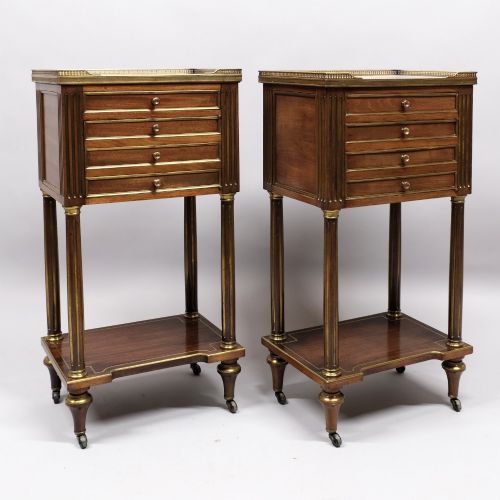
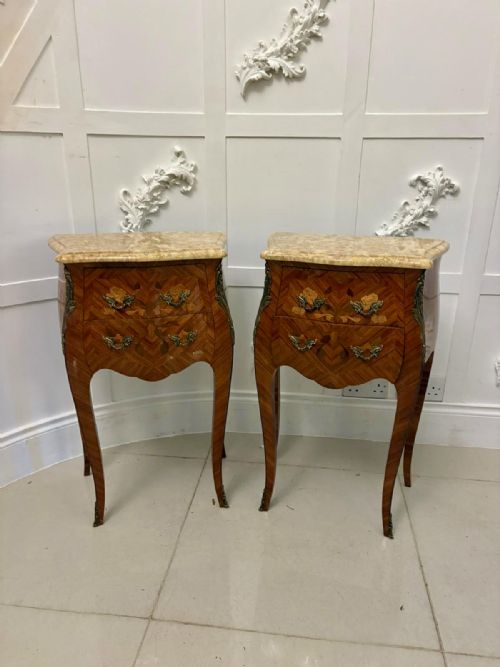


Marble Top Chevet Tables
Marble top chevet tables are compact French bedside cabinets topped with stone, offering a practical surface for a lamp and water jug beside the bed.
Marble Top Chevet Tables
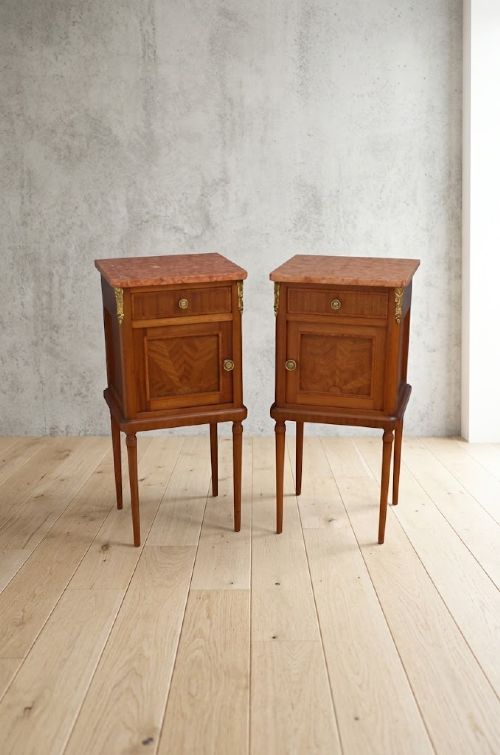
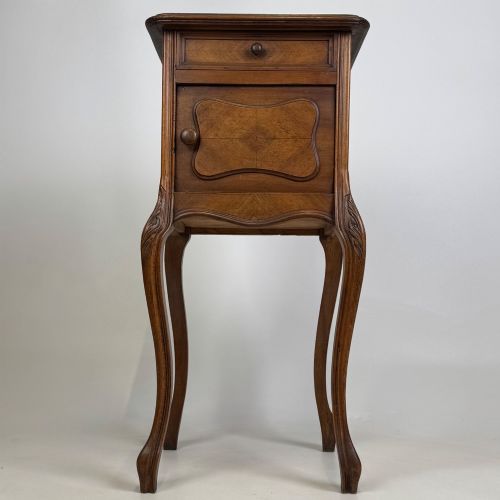
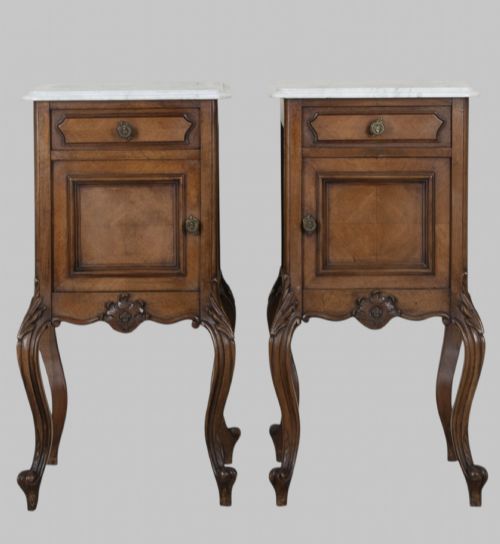
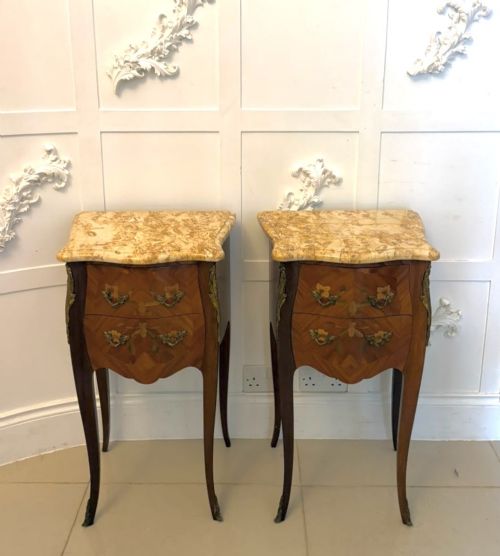
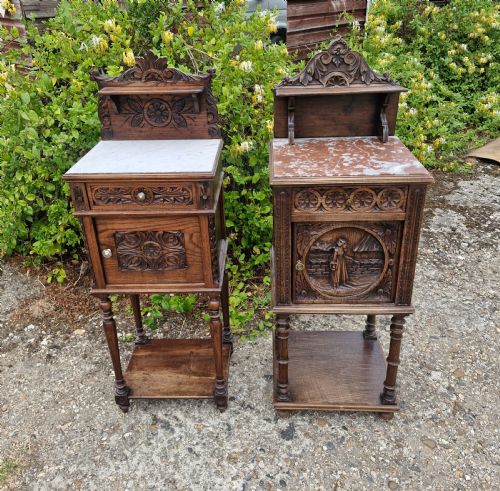
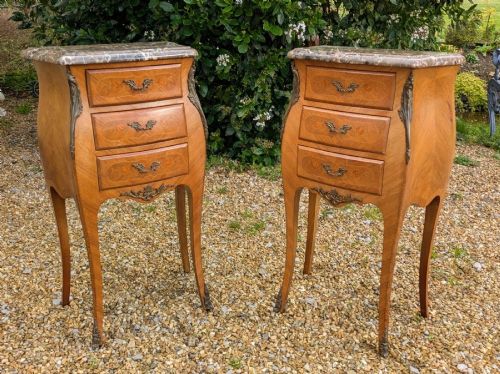
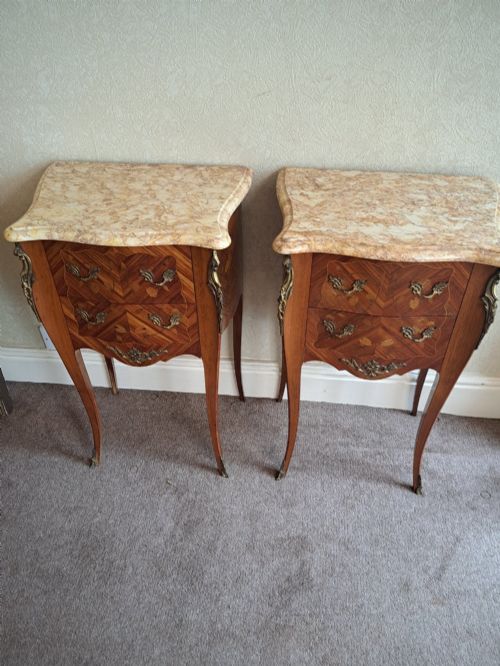
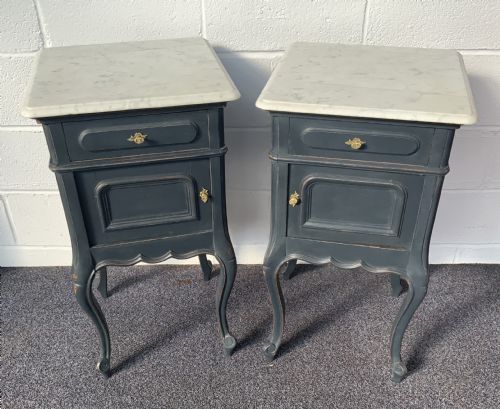
When you search for marble top chevet tables, you encounter low bedside cabinets and side cupboards designed in continental European workshops, most frequently arriving as matched pairs. These pieces combine a fitted stone slab with enclosed storage or open shelving beneath, serving beside a bed or in a drawing room.
The selection on this page draws from the nineteenth and early twentieth centuries, spanning periods from the Victorian era through the Edwardian years up to the nineteen-thirties. Forms range from simple oak or mahogany bedside tables to ornate walnut and kingwood pieces influenced by French design traditions.
Stylistically, Louis XV and Louis XV Revival examples dominate the inventory, accompanied by occasional Empire, Louis XVI and provincial variants. Buyers frequently select these items for their compact proportions and the contrast between polished timber and cool stone.
How they were made
Cabinetmakers constructed the carcass using native and exotic timbers such as walnut, mahogany, oak and kingwood, often applying marquetry or parquetry veneers to the exterior surfaces. Drawers and doors were fitted with brass mounts or ormolu details, while some pieces received painted finishes.
The defining element is the heavy marble top, cut to follow the contour of the timber base and finished with a polished edge. Belgian Sainte-Anne marble and other decorative stones were selected to provide a durable, water-resistant surface atop the wooden cabinet.
Many a Victorian homeowner relied on these marble tops to keep their midnight water jug remarkably cool until morning.
What varies in quality
The distinction between standard examples and superior pieces rests on the precision of the cabinetwork and the selection of materials. Finer items exhibit intricate marquetry patterns, matched veneer grains, and substantial marble slabs with finely profiled edges rather than simple flat cuts.
Proportion and decorative restraint also separate the better examples, where carved wooden motifs and cast ormolu mounts integrate harmoniously with the overall form. Well-executed corner joints and smoothly operating drawers indicate higher workshop standards.
The Marble Top Chevet Tables Glossary
- Chevet
- A small bedside table or cabinet. This term originates from French furniture terminology.
- Marquetry
- Decorative patterns formed by inserting pieces of wood into a veneered surface. Craftsmen used contrasting timbers to create floral or geometric designs.
- Ormolu
- Gilded bronze mounts applied to furniture. This material provides metallic ornamentation on the corners and handles of cabinets.
- Parquetry
- Geometric wood mosaic work used for floors or cabinet surfaces. Artisans arranged small blocks of timber to form repeating patterns.
- Sainte-Anne
- A dark grey or black Belgian limestone with white fossil markings. This stone frequently forms the heavy top slab of nineteenth-century French tables.
Marble Top Chevet Tables: Frequently Asked Questions
What is a chevet table?
A chevet is a small bedside cabinet or table designed to hold personal items next to a bed. These pieces typically feature a cupboard door or drawers beneath a stone surface.
Originating in France, they were built in various regional and revival styles to complement bedroom furnishings.
Are these tables sold in pairs?
Many of the listed cabinets appear in matched pairs, which proves useful for flanking a double bed. Single tables also occur frequently in the inventory for smaller spaces.
Matching pairs share identical wood grains, hardware, and marble characteristics from the same workshop.
What is the purpose of the marble top?
The stone surface provided a practical, heat-resistant and waterproof area for washbowls, water jugs, and lamps. It protected the wooden cabinet from spills and daily wear.
Over time, the stone became a decorative feature in its own right, contrasting with the polished walnut or mahogany base.