
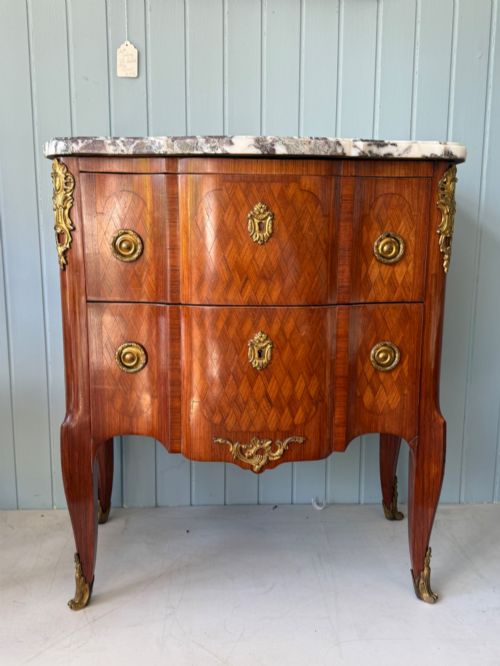
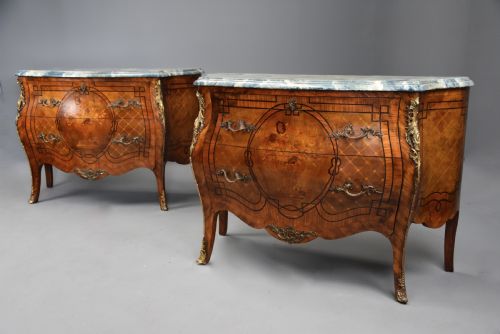
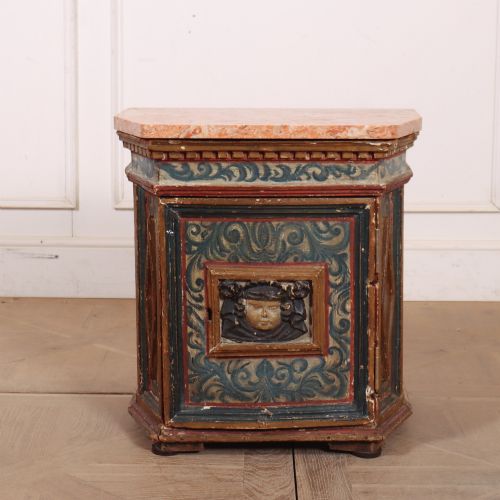
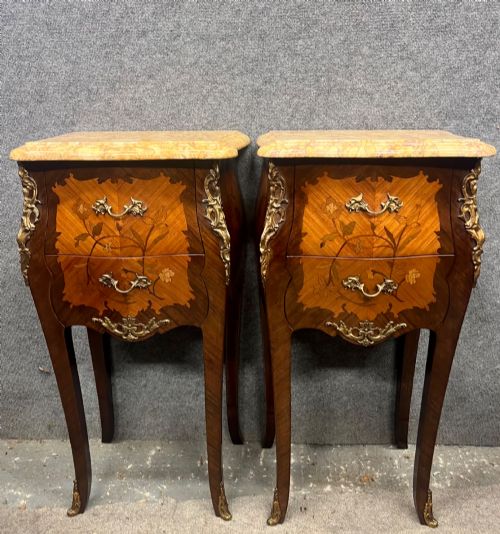
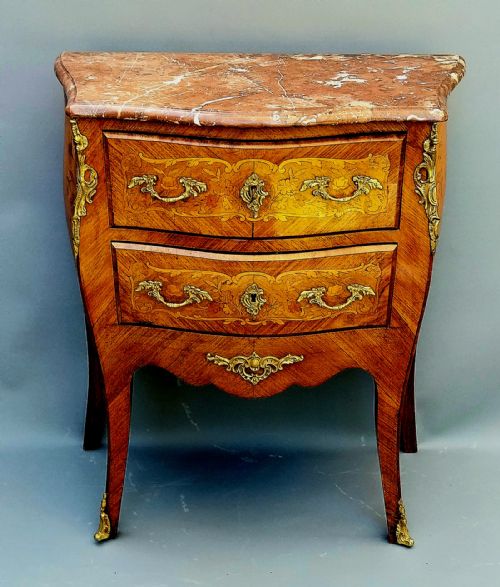


Marble Top Bedside Chests
Marble top bedside chests combine practical bedside storage with the refined surface elegance of stone, originating primarily from continental cabinet-making traditions.

Marble Top Bedside Chests
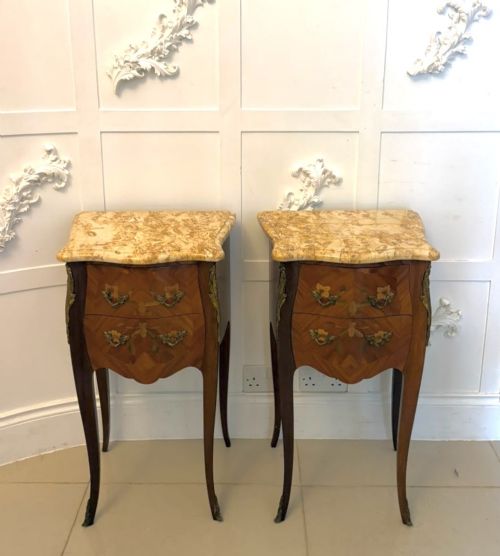
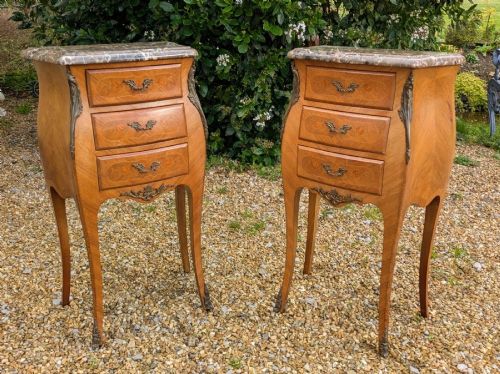
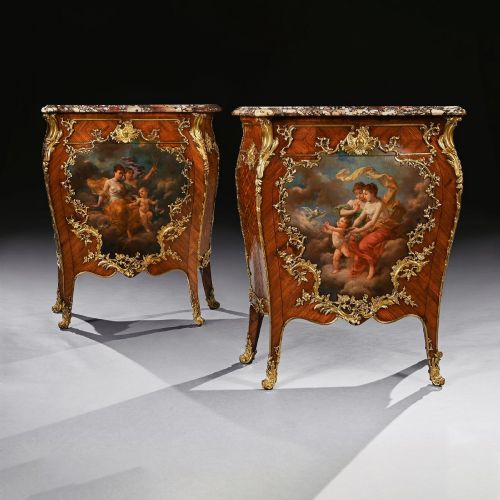
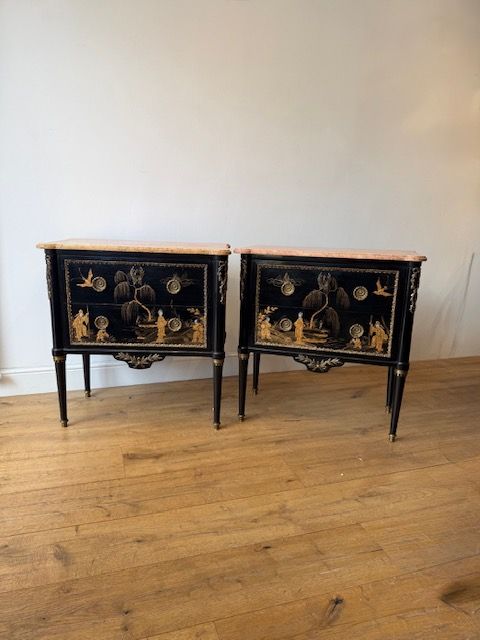
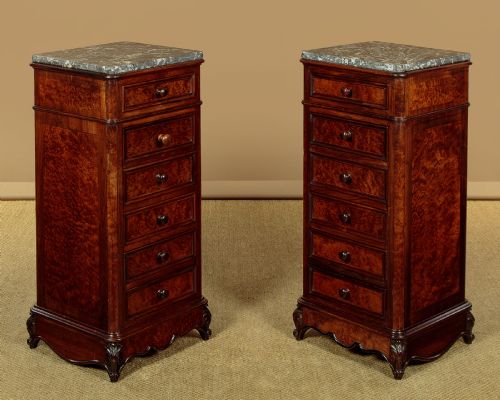
When searching for marble top bedside chests, you encounter a selection of compact storage pieces primarily influenced by French cabinet-making traditions. The versions met most frequently on this page include walnut, mahogany, and kingwood bedside cabinets alongside smaller commodes.
These items originate across the eighteenth, nineteenth, and early twentieth centuries, spanning periods from Louis styles through to later revivals. Makers constructed them as functional bedside tables, nightstands, and small drawer pedestals designed to hold lighting and personal items.
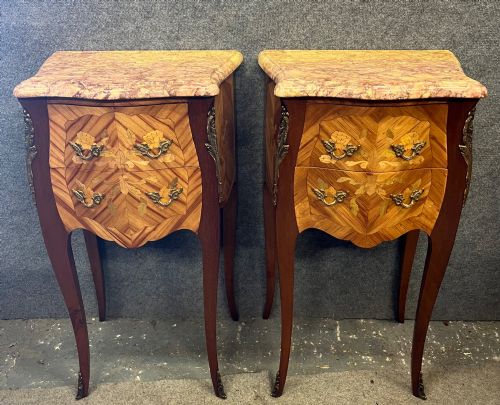
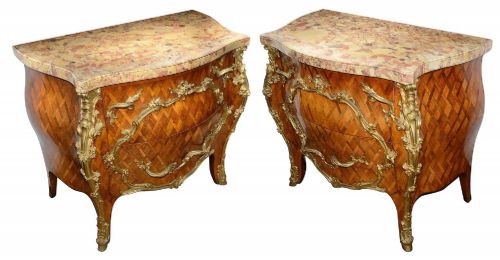
Many examples appear as matched pairs, incorporating marquetry inlay, parquetry veneer, or painted finishes beneath stone surfaces. The form balances utilitarian night storage with decorative presentation appropriate for domestic sleeping quarters.
How They Were Made
Cabinet-makers utilised dense timbers like mahogany, walnut, rosewood, and kingwood as carcase foundations, frequently applying geometric parquetry or floral marquetry veneers. These wooden structures support heavy cut marble slabs fitted precisely to the upper surface.
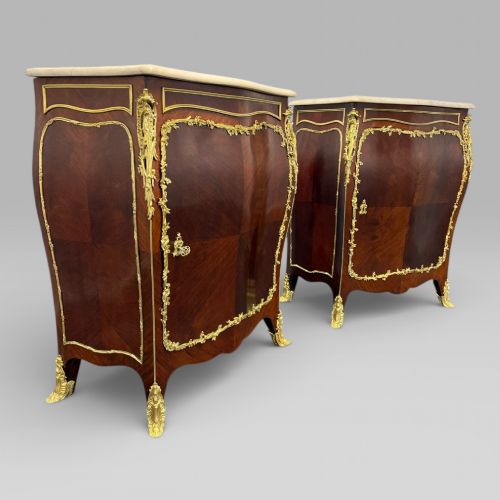
Gilt bronze and ormolu mounts enhance the corners, handles, and apron feet of many pieces, complementing the natural figure of the stone tops. Craftspeople shaped bombé and serpentine profiles through skilled timber bending and veneer cutting techniques.
Some nineteenth-century chests feature clever faux marble painted tops, offering stone elegance without the heavy lifting.
What Varies in Quality
The sophistication of the timber work and the selection of the stone distinguish finer examples from simpler provincial pieces. Superior items display intricate, hand-cut marquetry patterns and finely chased ormolu mounts rather than cast metal approximations.
Proportion and structural restraint also mark out the better pieces, where the weight of the marble slab integrates harmoniously with the curved or straight lines of the walnut or kingwood carcase below.
E. Kahn
The Marble Top Bedside Chests Glossary
- Bombe
- A bulging, outward-curving chest shape popular in French furniture design. This undulating contour requires advanced woodworking skill to veneer successfully.
- Ormolu
- Gilt bronze mounts applied to furniture for decorative accent. The technique involves treating copper alloys with gold amalgam.
- Marquetry
- Inlaid wood veneers forming pictorial or decorative patterns. Artisans assemble contrasting timbers like kingwood and rosewood into delicate motifs.
- Parquetry
- Geometric wood inlay arranged in repetitive patterns such as cubes or chequers. This technique displays the natural grain of walnut or mahogany.
- Commode
- A low chest of drawers, often standing on slender legs. In this context, the term frequently describes decorative bedside cabinets.
Marble Top Bedside Chests: Frequently Asked Questions
What are marble top bedside chests?
These pieces are small storage cabinets or drawer pedestals finished with a fitted stone slab on top. They were designed for domestic bedrooms to hold lighting, water jugs, and nighttime essentials.
Cabinet-makers built them using timber carcases veneered in exotic woods like kingwood or walnut. The stone surface provided a durable, wipe-clean shelf beside the bed.
How do you style marble top bedside chests?
You integrate these compact tables into a bedroom scheme by balancing the ornate wooden grain and stone surface with simple modern or traditional lighting. Their neutral stone tops allow them to sit comfortably alongside various headboards and textiles.
Because many survive as pairs, they frame a bed symmetrically while offering enclosed drawer or cupboard storage for smaller items. Keeping the surface styling minimal highlights the natural figure of the marble.
How do I tell periods apart?
Distinguishing the periods relies on observing the structural forms, wood choices, and decorative mounts. Eighteenth-century examples often show restrained walnut lines, whereas nineteenth-century pieces frequently adopt lavish Louis XV revival curves and rich kingwood marquetry.
Early twentieth-century variations sometimes simplify these classical outlines or introduce painted and gilded finishes. Examining the interior construction and the style of the ormolu mounts clarifies the era of manufacture.
Were these always made in pairs?
Many of these chests were manufactured as matched pairs to flank a bed in formal chamber settings. Cabinet-makers mirrored the marquetry and the marble grain to create visual balance across the room.
Single examples also occur frequently, having served as standalone lamp tables or individual nightstands. Both paired and single formats appear across the nineteenth and twentieth-century listings.