




Marble Figural Group
These marble figural group carvings bring classical presence and sculptural drama into a room.
Marble Figural Group
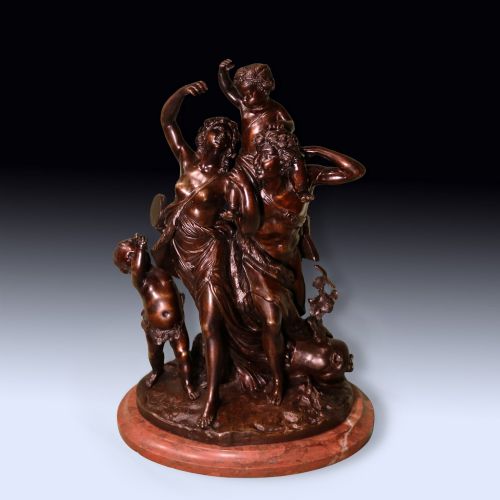
A marble figural group depicts multiple figures carved together or cast in combination with marble plinths, capturing mythological scenes, children at play, dancers, and animals. When you search for marble figural group, you encounter works spanning the nineteenth century through the art deco period, often originating from French and Italian workshops.
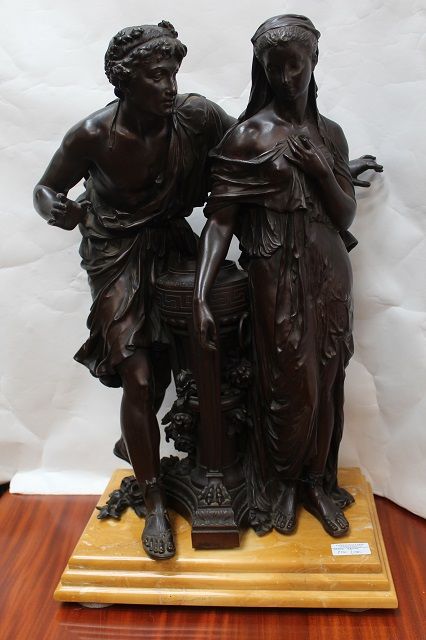
The selection ranges from large nineteenth century classical groupings after earlier masters to sleek art deco dancer compositions mounted on contrasting bases. Many pieces combine carved marble or alabaster with patinated bronze, spelter, or terracotta elements to create varied surface textures.
Materials and construction methods
Sculptors utilised white and tinted marble alongside softer alabaster, carving the stone by hand or pointing up from smaller models. These carved elements were frequently mounted onto heavy marble pedestals or combined with cast bronze and spelter figures.
Foundries produced metal figures using the lost-wax or sand-casting methods, applying chemical patination to achieve deep bronze tones or golden hues. Artisans then secured the metal figures to marble bases using threaded bolts and internal pins.
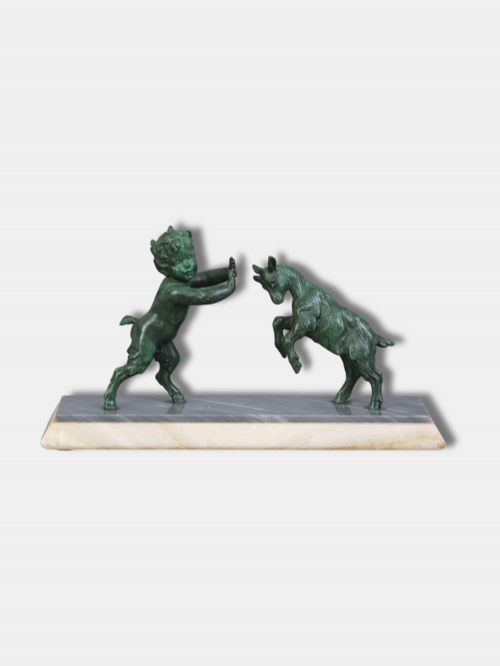
Several groups capture domestic animals at play, including young children wrestling with remarkably patient goats and puppies.
Evaluating sculptural quality
The selection of the marble itself indicates grade, with uniform fine-grained stones and rich contrasting bases commanding greater visual authority than heavily flawed or poorly matched materials.
Emile Carlier·E. Drouot·P. Sega·Carl Kauba·Cipriani·Joseph Gott
The Marble Figural Group Glossary
- Patinated bronze
- Bronze treated with chemical solutions to produce a specific surface colour or aged finish. This technique protects the metal while enhancing the definition of the sculptural form.
- Spelter
- An alloy of zinc and lead cast into figural components and painted or electroplated to resemble bronze. It provides a lighter and more economical alternative to traditional metal casting.
- Alabaster
- A fine-grained translucent stone used for carving delicate figures and decorative groups. Its softness allows for subtle gradations of light beneath the surface.
- Terracotta
- Baked red clay modelled by the sculptor before firing to create a durable matte surface. It records the direct touch of the artist's hand with notable immediacy.
Marble Figural Group: Frequently Asked Questions
How do I clean carved marble?
Dust the surface gently with a soft, dry brush to remove loose particles without scratching the stone. Avoid commercial cleaning liquids and water, which can penetrate porous marble and cause staining.
For stubborn marks, consult a professional conservator rather than attempting chemical treatments at home. Harsh agents strip away the historic surface sheen and damage softer alabaster elements.
How were these figures mounted?
Many nineteenth and twentieth century pieces combine metal figures with heavy marble plinths or bases using threaded metal rods secured from underneath. This construction adds stability to top-heavy compositions.
When handling or moving these objects, support both the upper figural group and the marble base simultaneously to prevent strain on the central fixings.
What is the difference between bronze and spelter?
Bronze is a robust copper alloy that accepts fine chasing and deep patination, maintaining its structural integrity over centuries. Spelter is a softer, zinc-based substitute that feels lighter and often shows a more brittle fracture if damaged.
Examining the underside or discreet edges reveals the paler grey metal beneath a worn spelter finish, whereas bronze displays a warm golden-brown metal underneath.
How do I date art deco groups?
Art deco figural groups typically feature stylised geometric forms, streamlined drapery, and materials like tinted alabaster or spelter mounted on stepped black marble bases. These pieces reflect design trends from the interwar decades around nineteen thirty.
Earlier nineteenth century groups lean towards classical realism, romanticism, or rococo revival themes with intricate detailing and softer, naturalistic postures.