

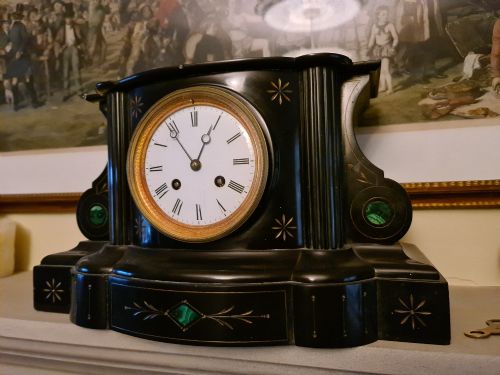


Marble Desk Clock
These marble desk clock pieces are heavy stone timepieces driven by brass movements that sit proudly on tables and mantels.

Marble Desk Clock
A marble desk clock is a sturdy timepiece housed in stone, frequently paired with metal mounts and enamel dials. When you search for this phrase, you encounter heavy works originating mostly from the nineteenth and early twentieth centuries.
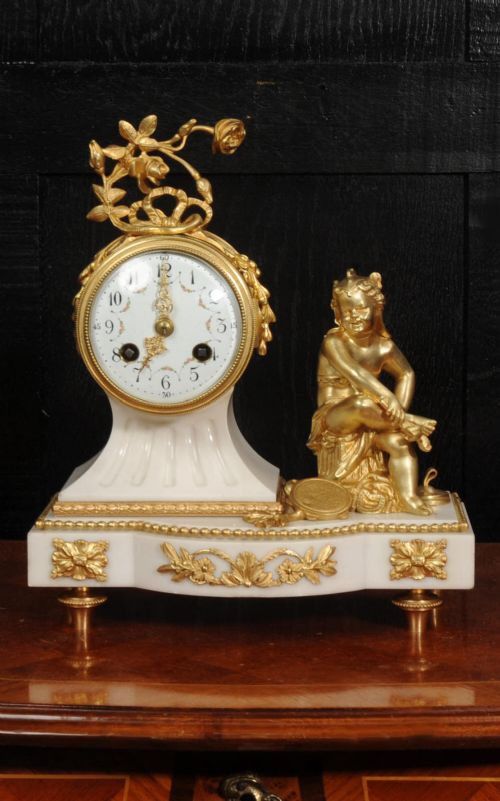
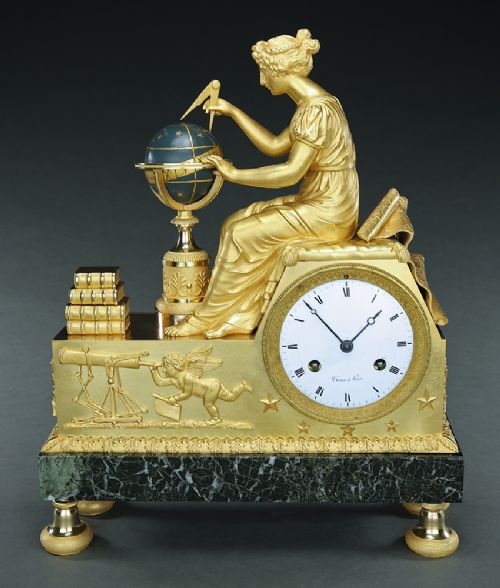
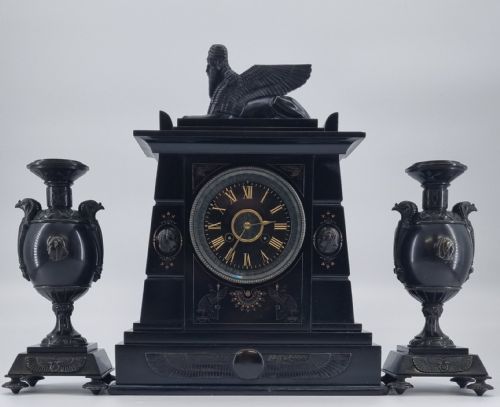
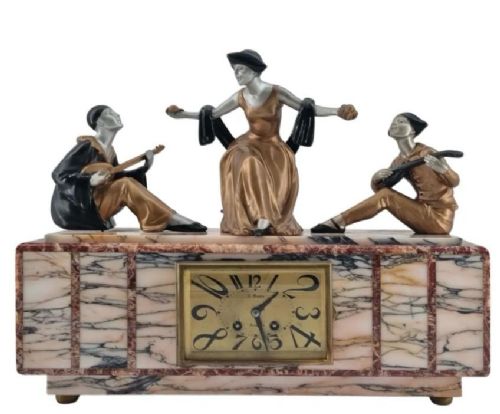
The pieces on this page range from simple Victorian block marble models to elaborate French empire designs and geometric Art Deco creations. Many take the form of mantel clocks or desk timepieces, often accompanied by matching garnitures.
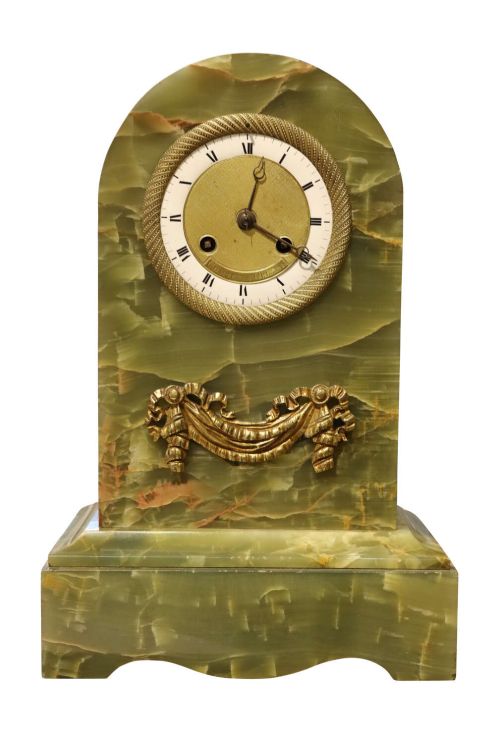
Makers and workshops from periods such as the Victorian era and the 1920s utilised contrasting stones like sienna marble, green onyx, and black slate. These heavy timepieces served both practical timekeeping and decorative roles in period interiors.
Materials and construction methods
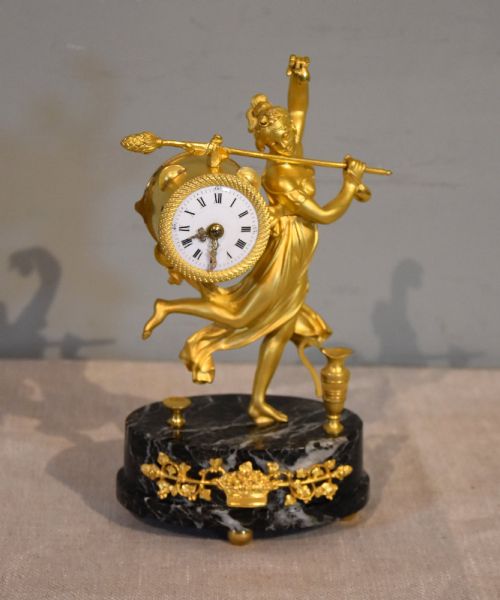
Makers shaped solid blocks of marble, green onyx, and black slate into architectural cases to house mechanical clockwork movements. These stone bodies frequently received cast bronze, ormolu, or gilt mounts, alongside brass bezels and white enamel dials.
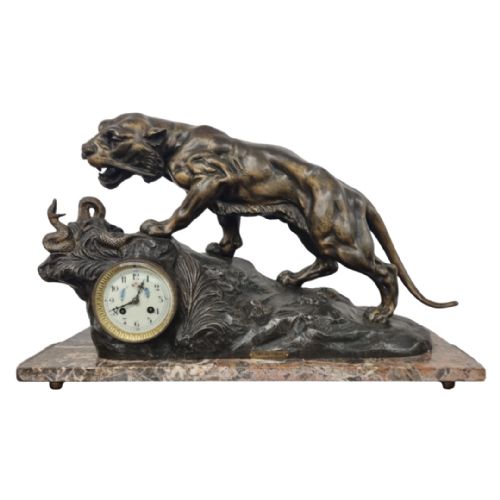
Artisans combined heavy stone cutting with metal casting, mounting figures of animals, mythological subjects, or geometric chrome elements directly onto the marble bases. The movements themselves rely on brass wheels and escapements driven by springs or weights.
Marble Desk Clock Retail Price Guide 2026
Typical asking prices for marble desk clock among the pieces listed under this phrase on Sellingantiques today, from the lower quarter to the upper quarter. They describe what is for sale here now, not the wider market.
Several pieces feature sculpted greyhounds, serpents, and sleeping pierrots keeping watch over the ticking hours.
Factors of quality
Quality rests in the weight and choice of the stone, the crispness of the bronze or ormolu casting, and the reputation of the movement maker. Solid sienna or rouge marble bodies with detailed patinated bronze mounts sit higher in the range than plain slate boxes.
The fineness of the enamel dial painting and the complexity of the movement, such as calendar or astronomical complications, separate standard factory pieces from exceptional signed works. The integrity of the stone casing and the integration of metal mounts dictate the overall success of the piece.
Japy Freres·Louis Goret·Elliott
The Marble Desk Clock Glossary
- Ormolu
- Gilt bronze decoration applied to stone clock cases. This technique involves coating cast bronze in a layer of gold.
- Garniture
- A set of matching decorative objects displayed alongside a clock. These usually comprise side urns or matching candle holders.
- Enamel dial
- A metal face fired with powdered glass to produce a smooth white surface. Numerals are painted onto this vitrified layer.
- Slate
- A fine-grained grey or black stone used heavily for Victorian clock bodies. It mimics heavier marbles when polished.
- Bezel
- The metal ring that holds the glass protecting the clock face. It often swings open to allow hand-setting.
Marble Desk Clock: Frequently Asked Questions
How do I wind my marble desk clock?
Most mechanical models use a key inserted into holes on the enamel dial to tension the internal springs. Turn the key gently until resistance is felt.
Avoid overwinding the movement, as this can damage the internal springs and stop the clock from keeping accurate time.
Where should I place a marble clock?
Due to their considerable weight, these timepieces need a sturdy surface like a heavy wooden desk, sideboard, or mantelpiece. Ensure the support is level so the pendulum or balance wheel beats evenly.
Keep the clock away from direct sunlight and damp walls to protect the stone surface and the metal mounts.
What periods do these clocks cover?
The listings span from the eighteenth century through the Victorian era up to the Art Deco period of the 1920s and 1930s. Styles shift from ornate Louis XVI and French Empire designs to sleek geometric stone and chrome.
Earlier pieces often feature elaborate ormolu mounts and classical figures, while later examples embrace streamlined modernism.