




Marble Column Plinth
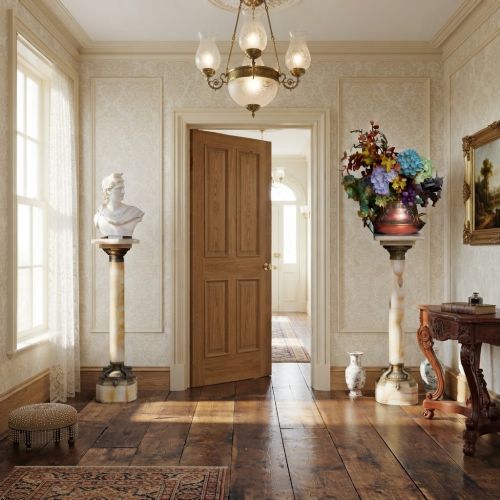
A marble column plinth brings architectural presence to a room, elevating busts, urns and plants upon classical stone.
Marble Column Plinth
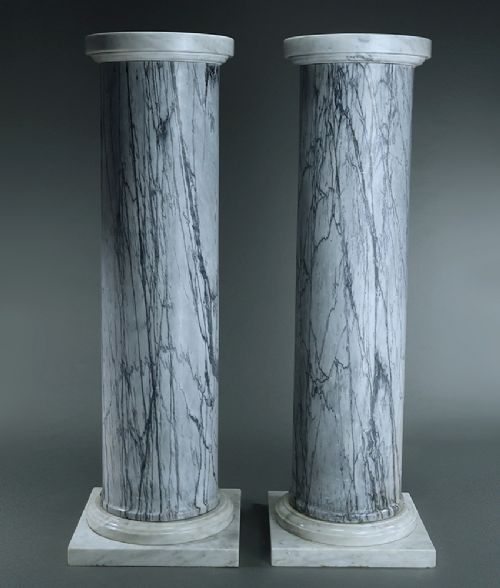
When you search for a marble column plinth, you encounter vertical display supports designed to elevate sculptures, lamps and decorative objects. These architectural pieces take the form of pedestals, torcheres and display stands originating primarily from the nineteenth century.
The selections available here lean heavily into Neoclassical, Classical Revival and Victorian design vocabularies. French influences appear frequently, alongside Grand Tour items and Italian workshop pieces.
You will most commonly meet single columns or matched pairs executed in various natural stones and imitation finishes. Their primary function remains the display of art and horticulture within domestic interiors.
Materials and construction methods
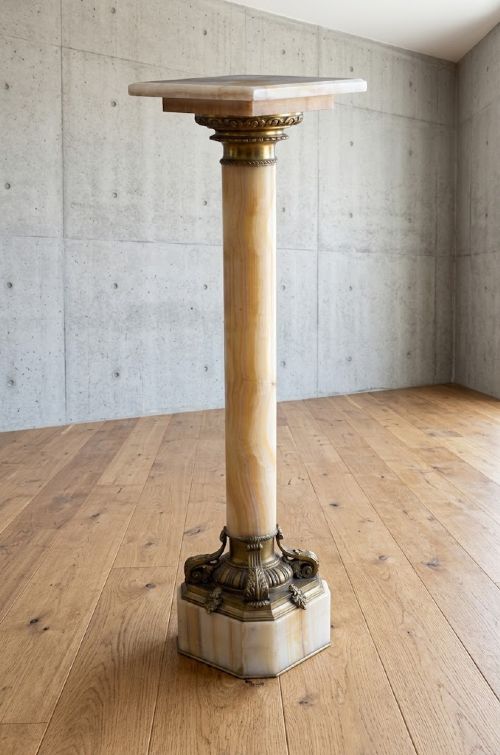
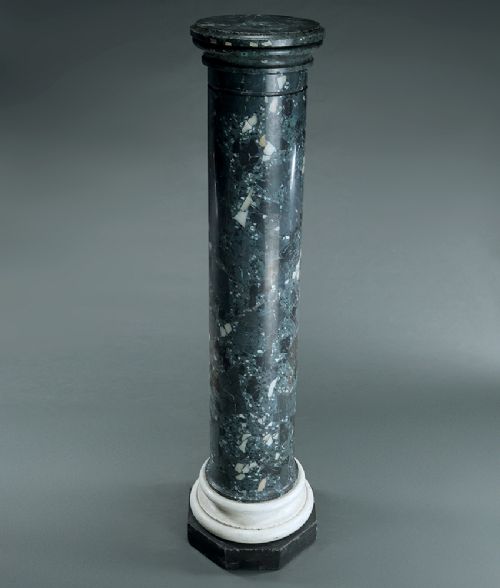
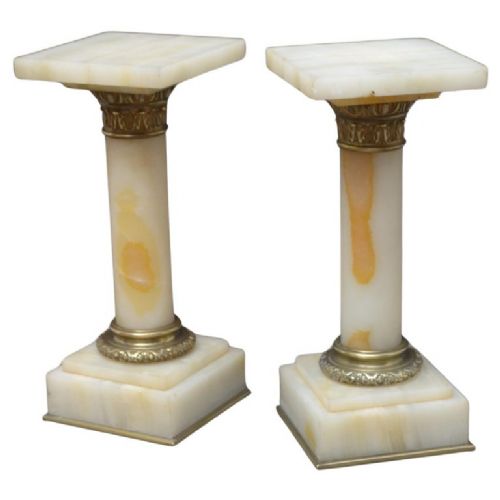
Makers utilised solid natural stones including Carrara, Bardiglio, Verde Antico and honey-coloured onyx, often turning them on lathes to achieve cylindrical shafts. Faux materials such as painted plaster, scagliola and faux marble provided accessible alternatives to solid stone.
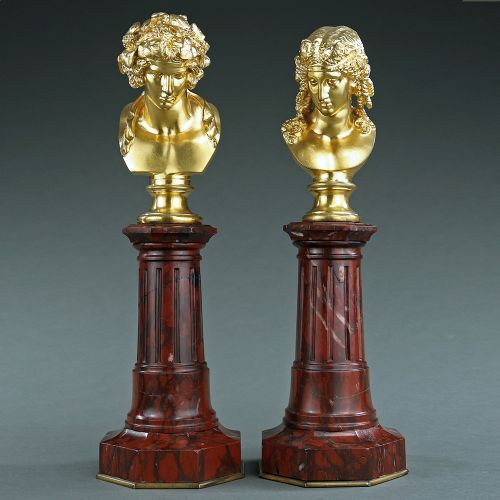
Metal ornamentation frequently complemented the stone components. Gilt bronze and ormolu collars, mounts and bases accented French and Neoclassical designs, fixed securely to the stone or wood cores.
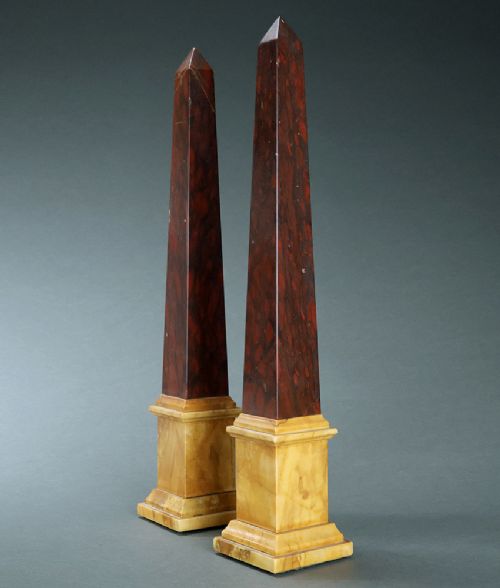
Grand Tour travellers returned with miniature obelisks and columns, proving that Victorian luggage allowances were impressively flexible for heavy stone.
Assessing quality in stone columns
Quality rests upon the selection and figuration of the mineral itself, from deeply variegated green serpentines to uniform statuary whites. The precision of the turning and the crispness of any hand-carved detailing dictate the refinement of the piece.
Metalwork integration also marks the tier of a column. Finely chased ormolu mounts and heavy cast brass collars indicate superior workshops, whereas simpler plaster or painted softwood versions represent utilitarian production.
The Marble Column Plinth Glossary
- Ormolu
- Gilded bronze applied as mounts and collars. This decorative technique characterises many French nineteenth-century pieces.
- Scagliola
- A composite material made from pigmented selenite, glue and plaster, applied to imitate natural marble. Craftsmen polish this mixture to achieve a convincing stone finish.
- Torchere
- A tall stand designed to hold a light or a decorative object. These slender supports often feature circular tops.
- Verde Antico
- A dark green serpentine marble flecked with white calcite veins. Italian and French workshops utilised this stone extensively for classical columns.
Marble Column Plinth: Frequently Asked Questions
How were marble column plinths originally used?
These supports served primarily to elevate sculpture, bronze busts, urns and decorative lamps within grand nineteenth-century interiors. Placing objects at eye level drew attention to fine artistry and created architectural punctuation in large rooms.
In domestic settings, they also functioned as plant stands or torchere supports for lighting. Their sturdy stone construction provided a stable platform for heavy decorative items.
How do I identify a Neoclassical column?
Neoclassical columns draw inspiration from ancient Greek and Roman architecture, displaying clean lines, fluted shafts and classical capitals. They frequently incorporate bronze or ormolu collars and strict geometric proportions.
Unlike ornate Baroque or Rococo designs, these pieces favour symmetry and restrained architectural motifs. The presence of green serpentine or statuary white marble often reinforces this classical style.
What is scagliola?
Scagliola is a composite technique where artisans mix pigmented plaster, glue and spar to mimic the appearance of luxurious natural marbles. This method allowed makers to create complex coloured columns without carving solid stone blocks.
Introduced centuries earlier, the technique experienced a strong revival during the nineteenth century. Scagliola surfaces offer a smooth, cool touch that closely resembles genuine quarried stone.
Can these columns support heavy items?
Most marble and stone columns possess substantial weight and robust internal structures capable of holding heavy urns, marble busts or large bronze sculptures. Solid stone shafts distribute vertical loads effectively down to the base.
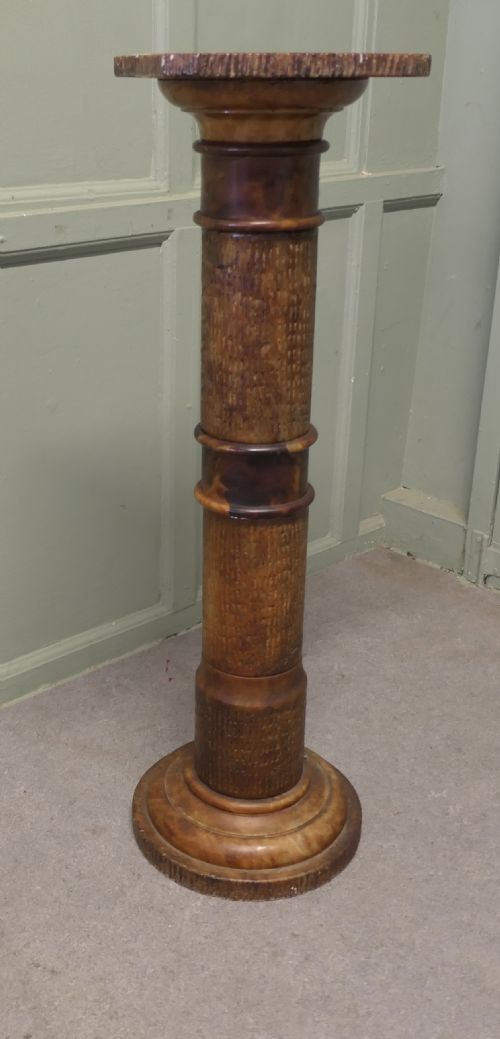
However, lighter alternatives such as painted plaster or hollow wood require more care regarding weight distribution. Buyers should verify the core material if intending to display exceptionally heavy focal pieces.