




Gilt Bronze Torchere
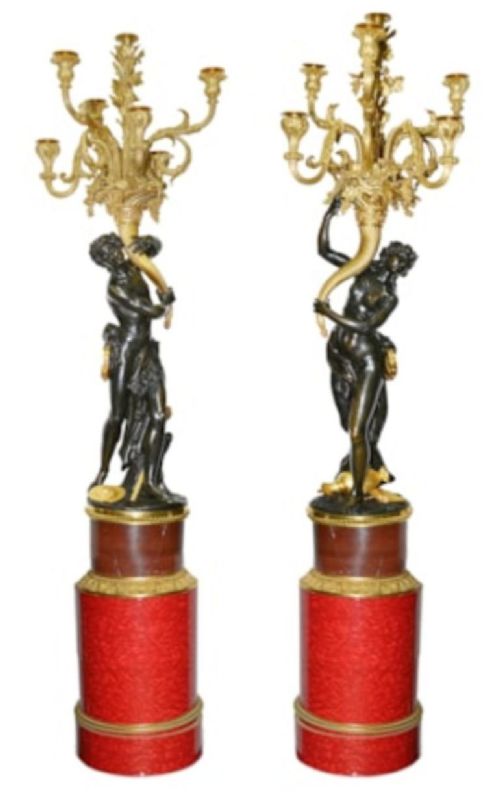
These gilt bronze torchere pieces are sculptural stands and lights that elevate a room with classical French grandeur.
Gilt Bronze Torchere
When you search for a gilt bronze torchere, you are looking at tall stands, columns and figural light fittings designed to hold candles or lamps aloft. These decorative furnishings originate predominantly from nineteenth-century French workshops, spanning styles from Louis XVI and Napoleon III to Neo-Classical and Beaux-Arts.
The version you are most likely to meet on this page is a nineteenth-century French example shaped as a pedestal column or a figural bronze standard. Many incorporate contrasting materials such as marble, onyx or frosted glass alongside the characteristic gilded metal.
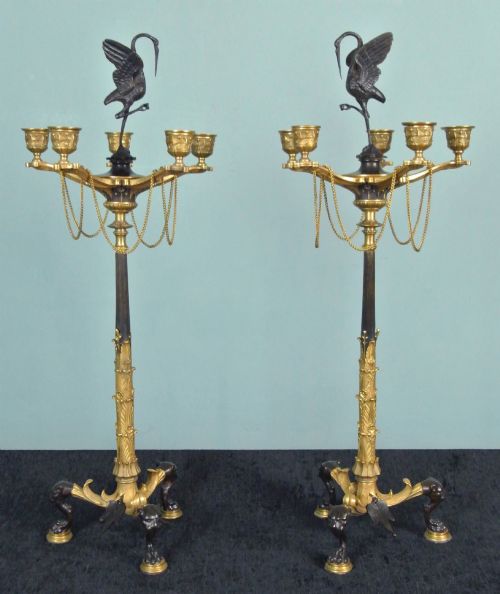
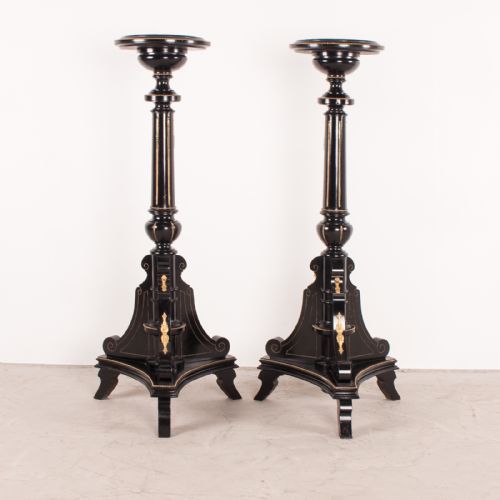
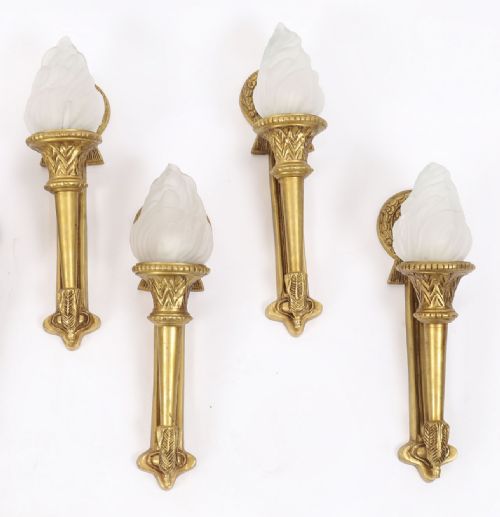
Beyond standalone floor torcheres, the selection encompasses related forms including wall lights, candelabra and pedestal stands. These pieces share a vocabulary of classical ornamentation, employing cast bronze and ormolu to create imposing focal points for a room.
Materials and construction
The primary metalwork relies on bronze and brass cast with intricate detail, then finished with mercury gilding or ormolu to achieve a bright, durable golden sheen. Patinated bronze frequently provides a dark, contrasting tone against the gilded highlights.
Natural stone elements such as marble and onyx form the sturdy columns and bases of many pieces, selected for their rich veining and polished surfaces. Decorative accents occasionally incorporate glass, rock crystal or wood veneers like kingwood and burr elm.
Assembly involved skilled bronze-workers joining separately cast figural and structural components with threaded pins and screws. The integration of stone, metal and glass demanded precise stonemasonry and metal-chasing to ensure flush joints and stable proportions.
Gilt Bronze Torchere Retail Price Guide 2026
Typical asking prices for gilt bronze torchere among the pieces listed under this phrase on Sellingantiques today, from the lower quarter to the upper quarter. They describe what is for sale here now, not the wider market.
An antique French mermaid torch base with a rock crystal column brings mythical charm to nineteenth-century illumination.
Distinctions in quality
The finesse of the metal-chasing separates standard production from exceptional pieces. Artisans who hand-chased the cast bronze after removal from the mould achieved crisp feathering, hair and drapery details that lesser, unchased castings lack.
The depth and durability of the gilding indicate the workshop standard. Heavy mercury gilding retains its warm, deep lustre over centuries, whereas thin electroplating can appear brassy and wears through to the base metal more readily.
The choice and preparation of supplementary materials signal ambition. Solid onyx or marble columns with harmonious natural figuring and substantial bronze mounts reflect a higher cost of production than composite or simpler timber structures.
Barbedienne·François Christophe Armand Toussaint·Coutan
The Gilt Bronze Torchere Glossary
- Gilt bronze
- Metal cast in bronze and coated with a layer of gold. It provides a permanent golden surface that resists tarnishing.
- Ormolu
- Finely chopped leaf gold applied to a copper-alloy metal, commonly used in French furniture and lighting mounts. The term derives from the French for ground gold.
- Torchere
- A tall stand or decorative pillar designed to support a light fixture or candelabrum. Originally intended to hold a torch, the form evolved into a grand interior pedestal.
- Patinated bronze
- Metal treated with chemical solutions to produce a darkened surface finish. This technique highlights the bright details of adjacent gilt mounts.
Gilt Bronze Torchere: Frequently Asked Questions
How were they used originally?
In nineteenth-century drawing rooms and halls, these pieces functioned primarily as elevated light sources or display pedestals for art objects. Placed in corners or flanking doorways, they utilised height to distribute candlelight or lamplight across a space.
Their imposing scale made them statement pieces for wealthy interiors. They demonstrated the owner's taste for classical French design and fine metalwork.
How do I style one at home?
A torchere works best as a standalone vertical element in a room with sufficient ceiling height. Position it in an empty corner, beside a fireplace or flanking a large doorway to draw the eye upward.
Avoid crowding the piece with smaller furniture. Let the combination of bronze, stone and fitted lighting act as a focal point within the interior.
How can I tell the period?
Dating relies on examining the casting techniques, materials and stylistic vocabulary of the piece. Nineteenth-century examples often display the weight, hand-chiselled surface detail and specific patination characteristic of French foundry work from periods like the Second Empire or Louis XVI revival.
Signatures or foundry marks stamped into the bronze can also provide precise attribution. The integration of materials like onyx and specific types of marble aligns with Victorian and late nineteenth-century manufacturing trends.