



Antique Onyx Pedestals
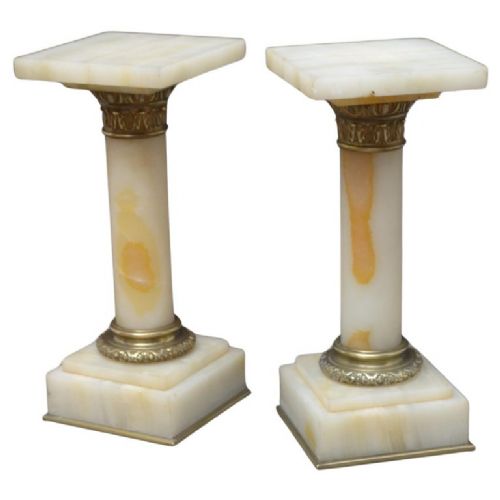
Antique onyx pedestals bring sculptural height and striking stone figure to a room, offering a solid stage for display.
Antique Onyx Pedestals
When you search for antique onyx pedestals, you find vertical display supports designed to elevate sculptures, urns or plants. These columns and torcheres range from nineteenth century neoclassical interpretations to early twentieth century art deco designs.
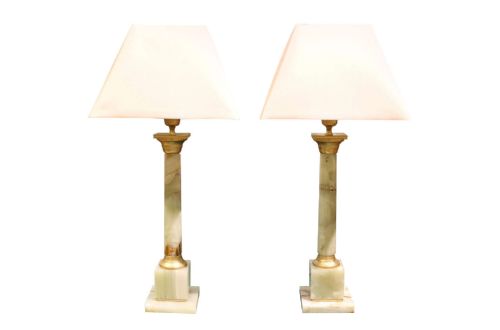
The pieces on this page appear as tall fluted columns, low occasional tables and tiered stands. They serve primarily as architectural accents in a hallway or drawing room.
Nineteenth century examples lean towards French revival and grand tour influences, whilst later pieces show simpler lines and brass or chiseled mounts. The core form remains a vertical shaft supporting a flat top for display.
How they were made
Makers shaped natural onyx and marble into cylindrical shafts, often combining the stone with cast metals. These columns frequently incorporate ormolu collars, gilt bronze mounts and brass details to accent the stone grain.
Foundries and stone-cutters worked the materials by hand, turning columns on lathes and chiselling decorative mounts. Some pieces integrate alabaster or walnut frameworks to support the heavy stone tops.
Antique Onyx Pedestals Retail Price Guide 2026
Typical asking prices for onyx pedestals among the pieces listed under this phrase on Sellingantiques today, from the lower quarter to the upper quarter. They describe what is for sale here now, not the wider market.
Listings feature pieces spanning the nineteenth century through to the nineteen thirties, encompassing neoclassical, louis xvi revival, and art deco styles.
What varies in quality
Quality in these columns rests on the depth of figure within the stone and the crispness of the metalwork. Finely chased ormolu collars and heavy, well-turned marble bases separate finer studio pieces from standard production columns.
The integrity of the stone joints and the weight of the supporting bronze or brass dictate the stability of the piece. Superior examples display seamless joins between the stone drums and precise fitting of the metal mounts.
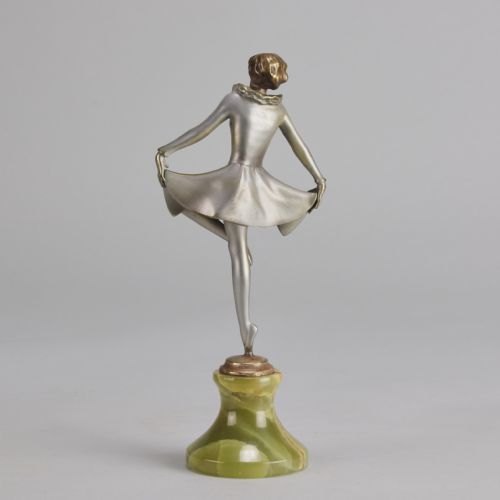
Josef Lorenzl·Ferdinand Preiss
The Antique Onyx Pedestals Glossary
- Ormolu
- Gilded bronze applied to furniture and decorative objects as mounts. It adds metallic contrast to the pale or honeyed tones of the stone.
- Torcherere
- A tall stand or pedestal originally designed to hold a torch or candle. In later periods, it functions as a display column for urns or floral arrangements.
- Neoclassical
- A style drawing on classical antiquity, prevalent in nineteenth century decorative arts. It governs the proportions and architectural detailing of many columns.
- Grand Tour
- A cultural journey undertaken by nineteenth century travellers who collected souvenirs such as small alabaster or marble tazze. These items often informed the design of larger display pieces.
Antique Onyx Pedestals: Frequently Asked Questions
What holds the weight of an antique onyx pedestal?
These columns rely on dense internal cores, often iron or threaded rods running through the stone sections, to bear the downward pressure of the heavy top.
The base blocks must be broad and level enough to distribute this considerable weight safely across floorboards.
How do I clean an antique onyx column?
Dust the stone regularly with a soft, dry cloth to prevent grit from scratching the polished surface. Avoid acidic cleaners or excess water, which can damage the porous stone and corrode metal mounts.
For the ormolu and brass collars, a gentle wipe with a dry microfiber cloth preserves the aged finish without stripping the gilding.
Can I place a heavy bronze on an onyx pedestal?
Onyx columns provide a sturdy platform for heavy sculptures, provided the top surface makes full contact with the base of the object. Check that the column stands firmly on level ground to prevent any tipping hazard.
Heavier bronze figures require wide capital tops to ensure the weight remains centred over the vertical axis of the shaft.
How do I tell a nineteenth century column apart from a later one?
Nineteenth century examples typically exhibit neoclassical or grand tour influences, featuring hand-chiseled ormolu mounts and rich, highly-figured stone. They often rely on heavier bronze components and classical architectural proportions.
Twentieth century pieces, by contrast, tend to incorporate simpler geometric lines, brass framing, or art deco styling associated with the period.