


Marble Candelabra Set
A marble candelabra set brings classical elegance to a room, pairing a striking mantel clock with matching side pieces.
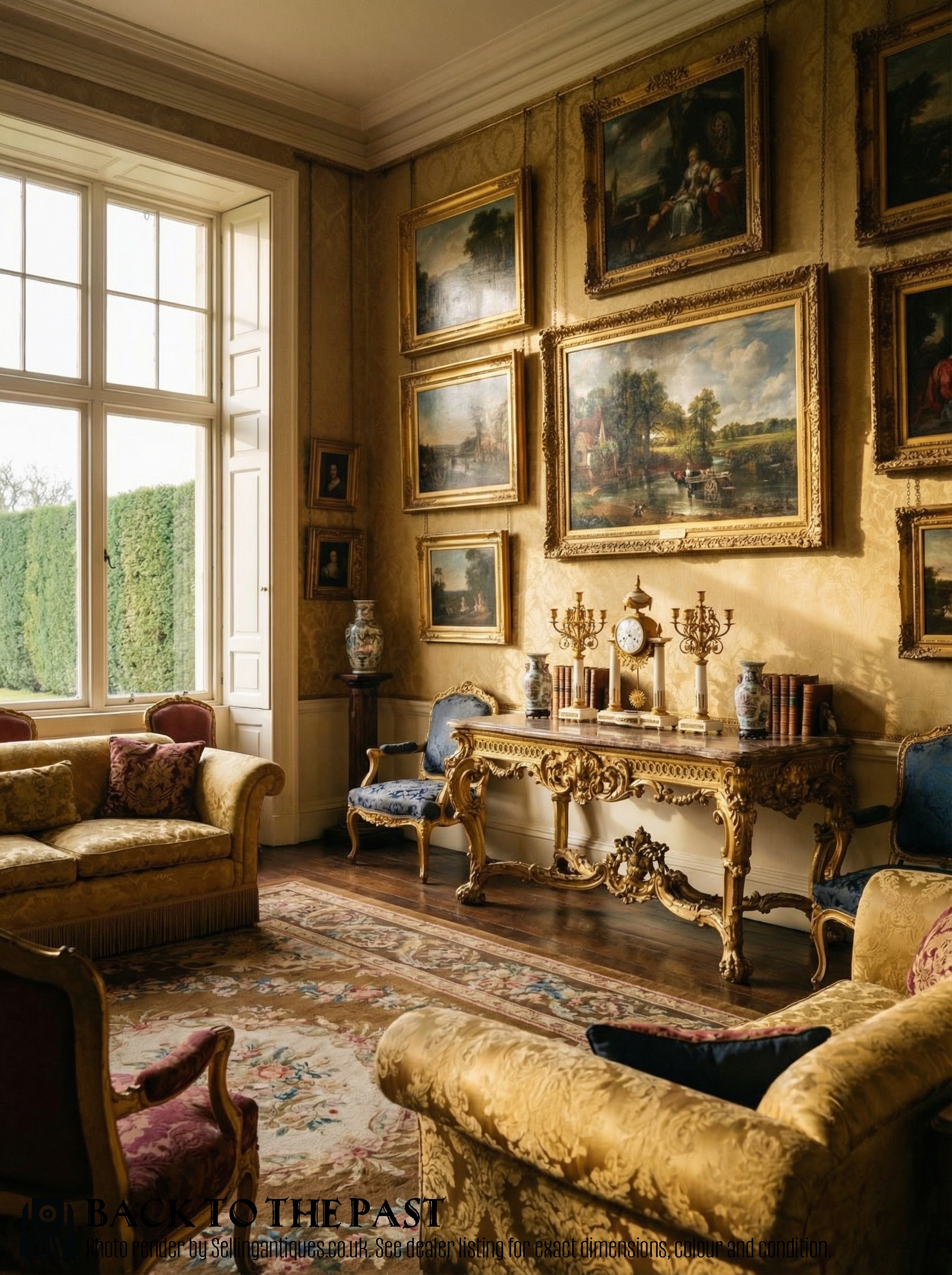
Marble Candelabra Set
A marble candelabra set typically forms part of a clock garniture, featuring a central clock flanked by matching candelabras or urns designed for the mantelpiece. These groupings emerge predominantly from nineteenth-century French workshops following classical decorative traditions.
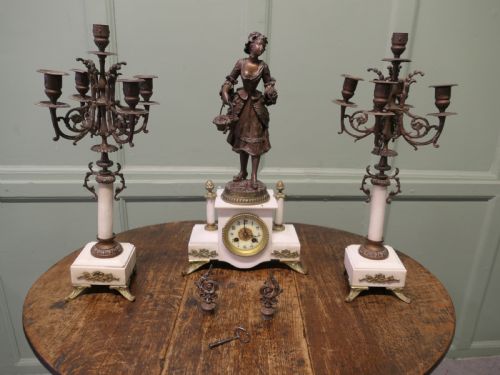
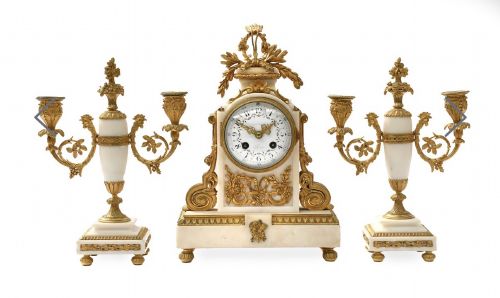
The most common versions encountered on this page combine white or coloured marble bases with cast metal mounts, often styled in the French Louis XVI or Empire taste. Pieces span the Victorian era and adjacent decades, uniting timekeeping with balanced ornamental display.
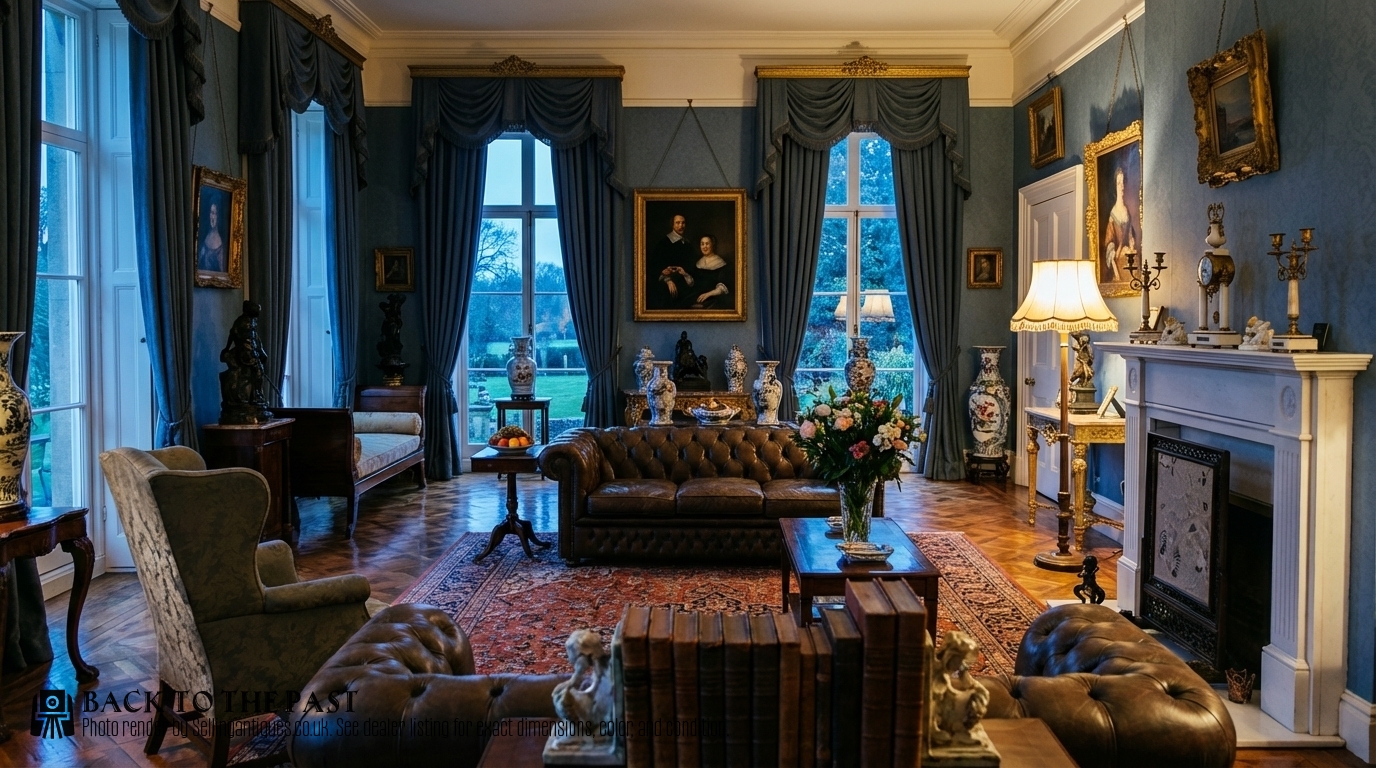
How they were made
Foundry workers shaped the metal components using bronze, brass, or gilt ormolu, applying fire gilding or patination to the surface details. Stonemasons cut and polished the white, black, green onyx, or siena marble bodies to support these heavier metal mounts.
Clockmakers fitted mechanical eight-day movements into the stone or metal housings, sometimes incorporating visible pendulums or striking mechanisms alongside enamel dials.
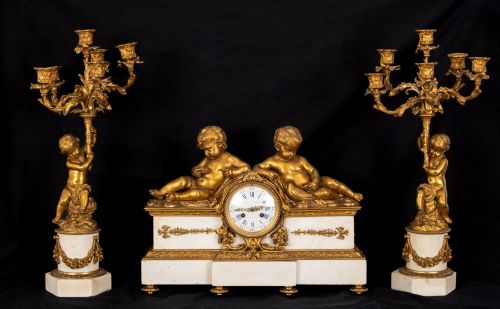
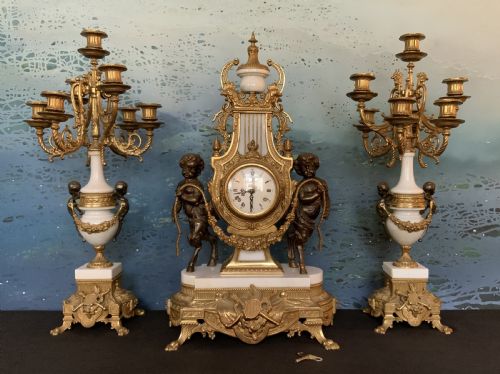
Several pieces on this page include sculptural cherubs alongside visible pendulums and enamel clock dials.
What varies in quality
The crispness of the cast bronze and ormolu decoration dictates much of the visual distinction, separating finely chased foliage and cherubs from softer, repetitive moulding. The selection and finish of the marble itself also matter, particularly where natural veining meets precise geometric cutting.
Movement sophistication adds another layer of distinction, visible in signed clockworks by established makers compared with unmarked standard mechanisms.
H Luppens Paris·AD Mougin Paris·Vincenti
The Marble Candelabra Set Glossary
- Garniture
- A set of decorative objects designed to be displayed together on a mantelpiece, usually comprising a central clock and matching side pieces.
- Ormolu
- Gilt bronze created by applying a mercury and gold amalgam to a bronze base, producing a rich golden finish.
- Clock Movement
- The internal mechanical workings of a clock, typically driven by springs and regulated by a pendulum.
- Siena Marble
- A distinctive yellow-gold Italian marble featuring dark grey or purple veining, frequently utilised in nineteenth-century decorative pieces.
Marble Candelabra Set: Frequently Asked Questions
What is included in a marble candelabra set?
These sets typically comprise a central mantel clock accompanied by a matching pair of candelabras designed to sit on either side.
Together they create a balanced decorative display originating from nineteenth-century interior arrangements.
How do I identify the period of a set?
Dating relies on stylistic clues such as Louis XVI revival motifs, cast metal techniques, and dial signatures.
Nineteenth-century examples frequently exhibit heavy bronze mounts paired with white or siena marble bodies.
Where should I place a clock garniture?
They suit prominent mantelpieces, console tables, or large sideboards where the full three-piece ensemble can be viewed together.
Placement should avoid direct sunlight and rapid temperature changes to protect the metal gilding and marble.
How do these clock movements operate?
Most pieces utilise an eight-day mechanical movement driven by springs that require periodic winding with a key.
Many incorporate striking mechanisms to mark the hours or half-hours.