
Mahogany Wing Back Chair
When you search for a mahogany wing back chair, you meet an assertive seating form designed to shield the sitter from draughts.
Mahogany Wing Back Chair
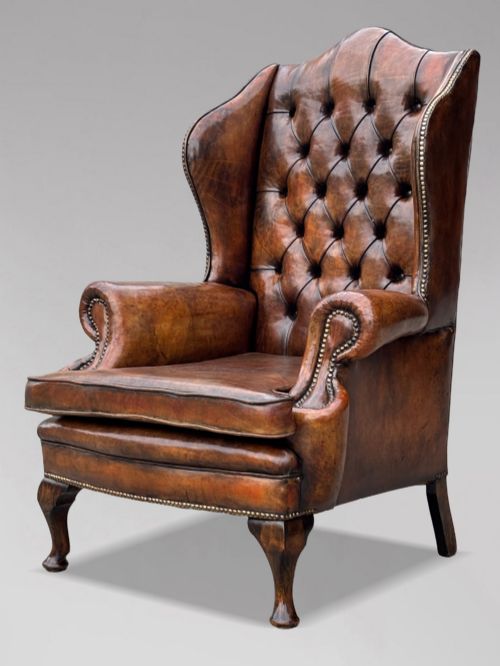
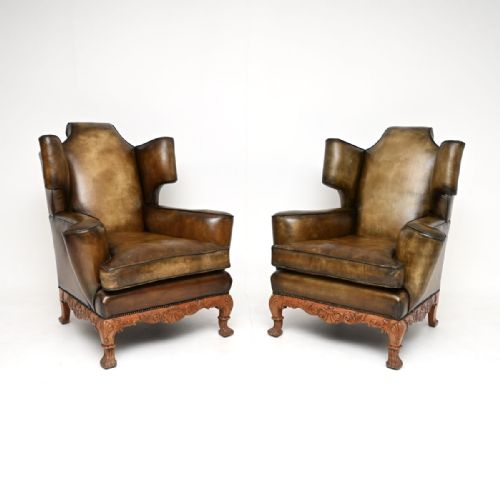
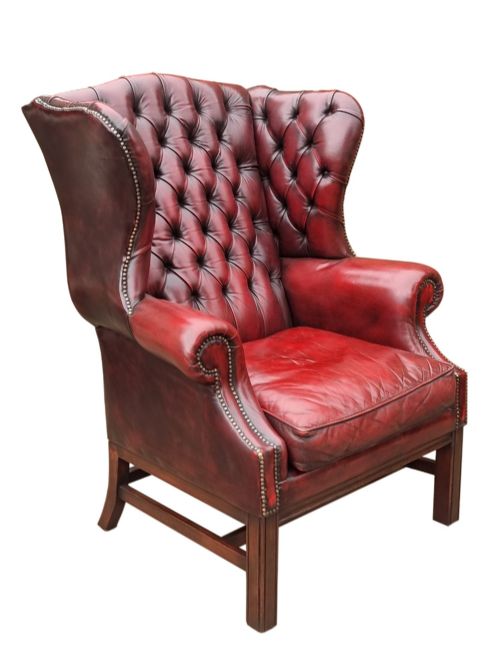
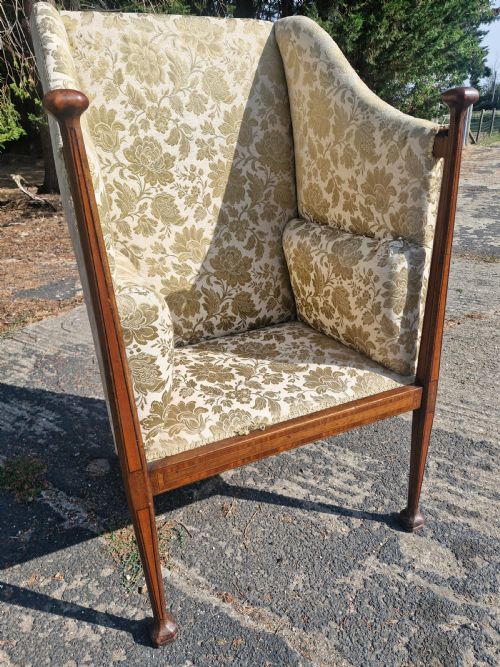
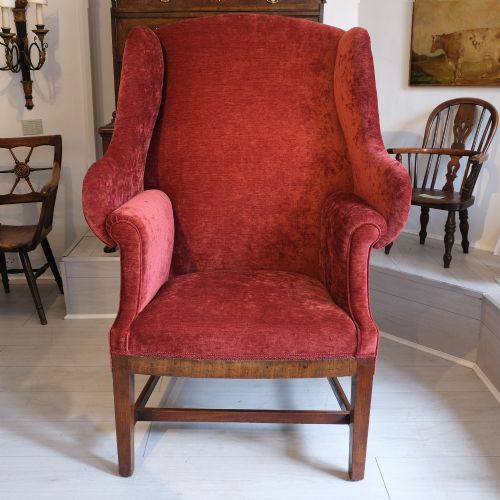
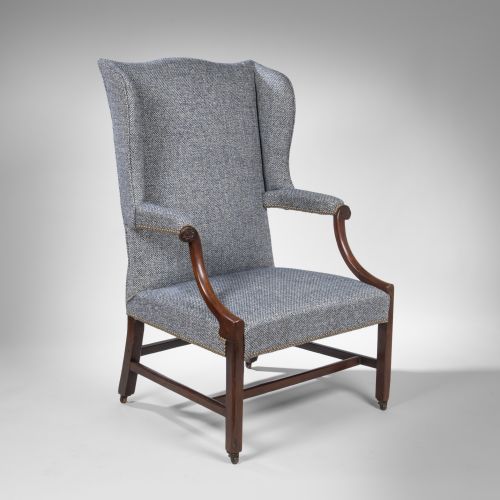
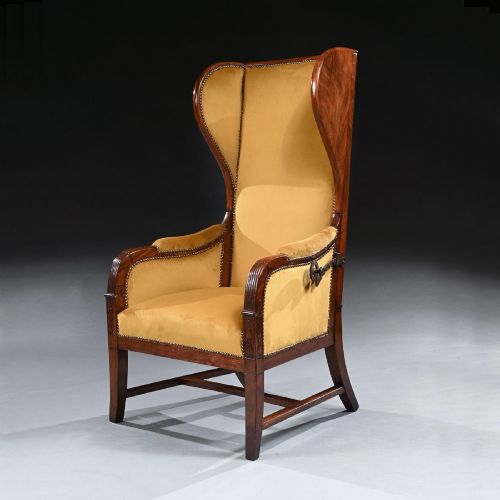
A mahogany wing back chair provides enclosed seating with side panels extending from the back to protect against room chills and heat from a hearth. You encounter substantial examples originating from the eighteenth and nineteenth centuries, alongside revival pieces from the Edwardian era.
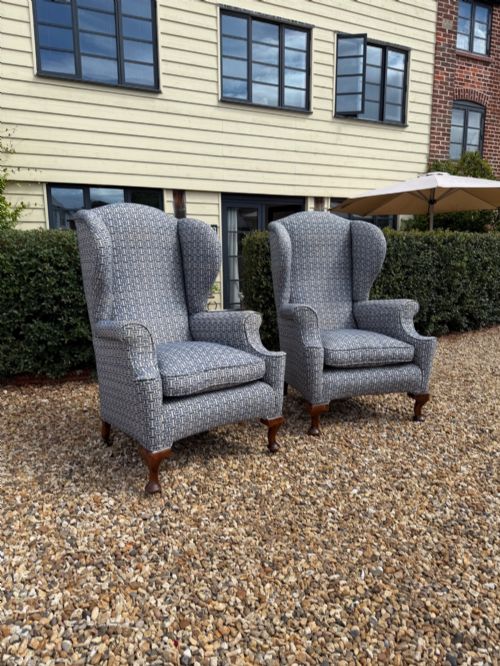
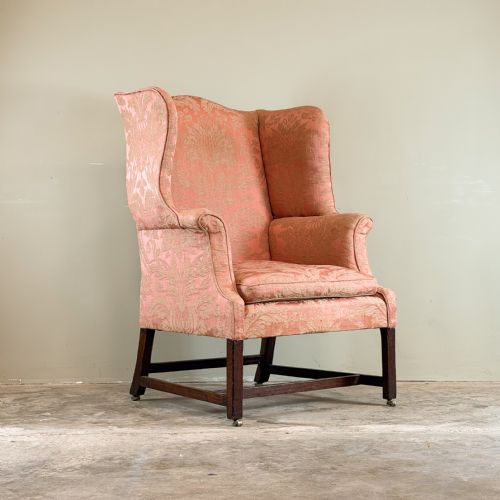
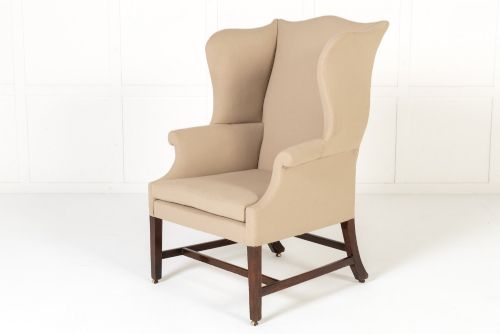
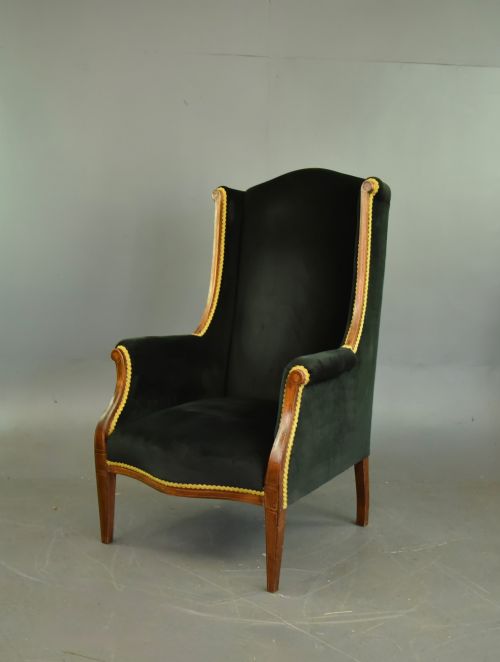
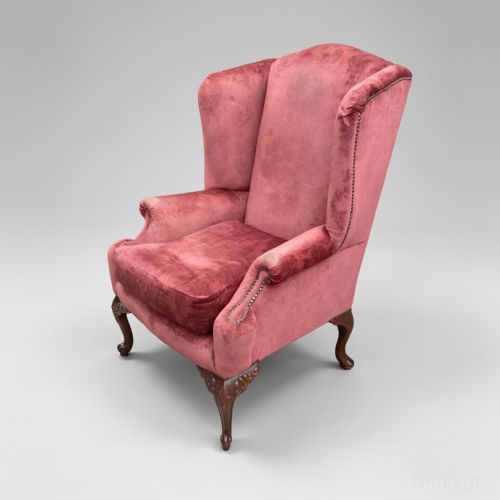
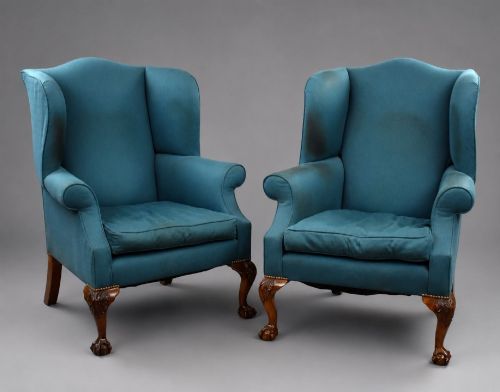
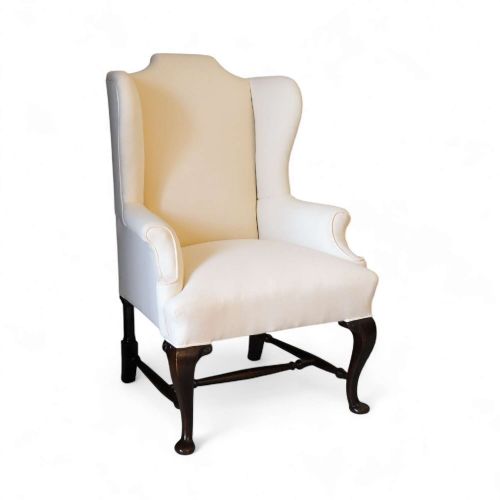
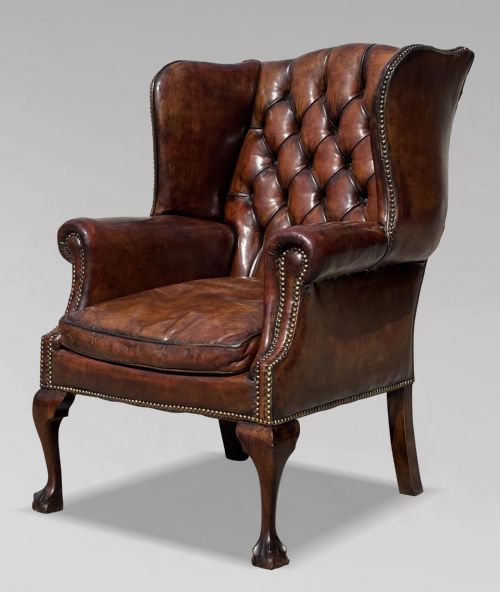
The primary forms range from standard upright library models to barrel back variants and generous proportions associated with Georgian styles. Many pieces feature exposed mahogany frames supported on straight or cabriole legs.
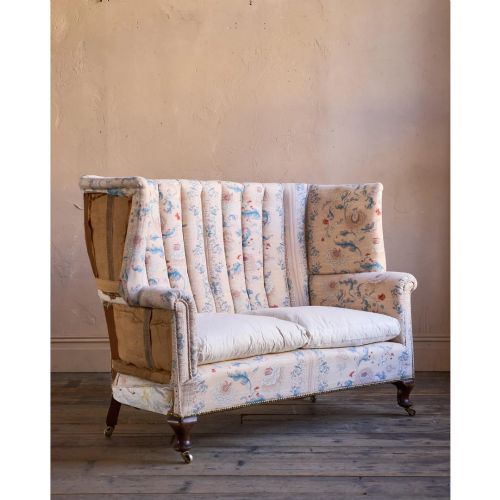
Makers utilised various coverings across these periods, including traditional leather, velvet, damask, and modern calico or cotton upholstery. Survival rates show both original hide and later reupholstered interpretations fulfilling domestic seating roles.
Construction and Materials
Makers constructed the primary structural frameworks using dense tropical hardwood, paired with secondary timbers for internal bracing and seat rails. Cabinetmakers shaped cabriole legs directly from the solid mahogany stock, occasionally incorporating hand-carved details or applied boxwood stringing.
Upholstery methods relied on heavy linen or hessian foundations tensioned across webbed frames before stuffing with horsehair or wool. Brass tacks frequently secured the outer textile edges along the arm facings and wing borders.
Listings feature mahogany wing back chairs spanning from the early eighteenth century through to 1930 revival pieces.
Distinctions in Standard
The integrity of the underlying timber frame dictates durability, with superior examples retaining tight joints and unwarped back uprights. Heavier gauge mahogany yields crisper carved details on the knees and feet compared to softer secondary woods.
Proportion and stance separate standard production from master craftsmanship, evident in the sweeping curve of the upholstered wings and the balanced rake of the back. Original upholstery schemes or sympathetic restorations preserve the intended silhouette of the piece.
Howard And Sons·Whytock And Reid·Sopwith
The Mahogany Wing Back Chair Glossary
- Cabriole leg
- A furniture leg that curves out at the knee and tapers inward to an ankle, often terminating in a ball and claw foot. This form became prominent during the eighteenth century.
- Wing
- The triangular or shaped flap attached to the upper sides of an armchair back. It originally served to deflect cold drafts away from the head and neck.
- Barrel back
- A seating configuration where the upholstered back curves continuously into the arms in a circular sweep. This style creates a snug enclosure for the occupant.
- Hessian
- A coarse woven fabric typically utilised as a foundational sacking material beneath top upholstery layers. It provides tension across the internal frame springs and stuffing.
Mahogany Wing Back Chair: Frequently Asked Questions
What is the purpose of the wings?
The upholstered side panels trap heat around the sitter while blocking cold air currents from open fires and uninsulated rooms.
They also offer a degree of privacy and a surface to rest the head during extended periods of reading or rest.
How do I identify a Georgian period chair?
Authentic pieces from this era display hand-carved mahogany members, pegged joinery, and smaller overall proportions suited to eighteenth-century domestic spaces.
Inspect the internal webbing and frame construction for signs of hand tools and period-appropriate fastener usage.
Are these chairs suitable for daily use?
Most surviving examples possess robust hardwood frames capable of supporting regular sitting when the internal webbing and padding remain sound.
Chairs with antique leather require occasional conditioning, while fabric upholstery benefits from professional cleaning to protect delicate fibres.
What distinguishes Edwardian revival pieces?
Edwardian versions often incorporate lighter framing, subtle string inlay work, and stylistic references to earlier Georgian forms without copying them precisely.
These domestic seats reflect the turn-of-the-century preference for comfortable yet elegant period-styled furniture in suburban drawing rooms.