




Mahogany Window Bench
A mahogany window bench brings architectural symmetry to a light-filled room, offering a low perch tailored for an alcove or hallway.
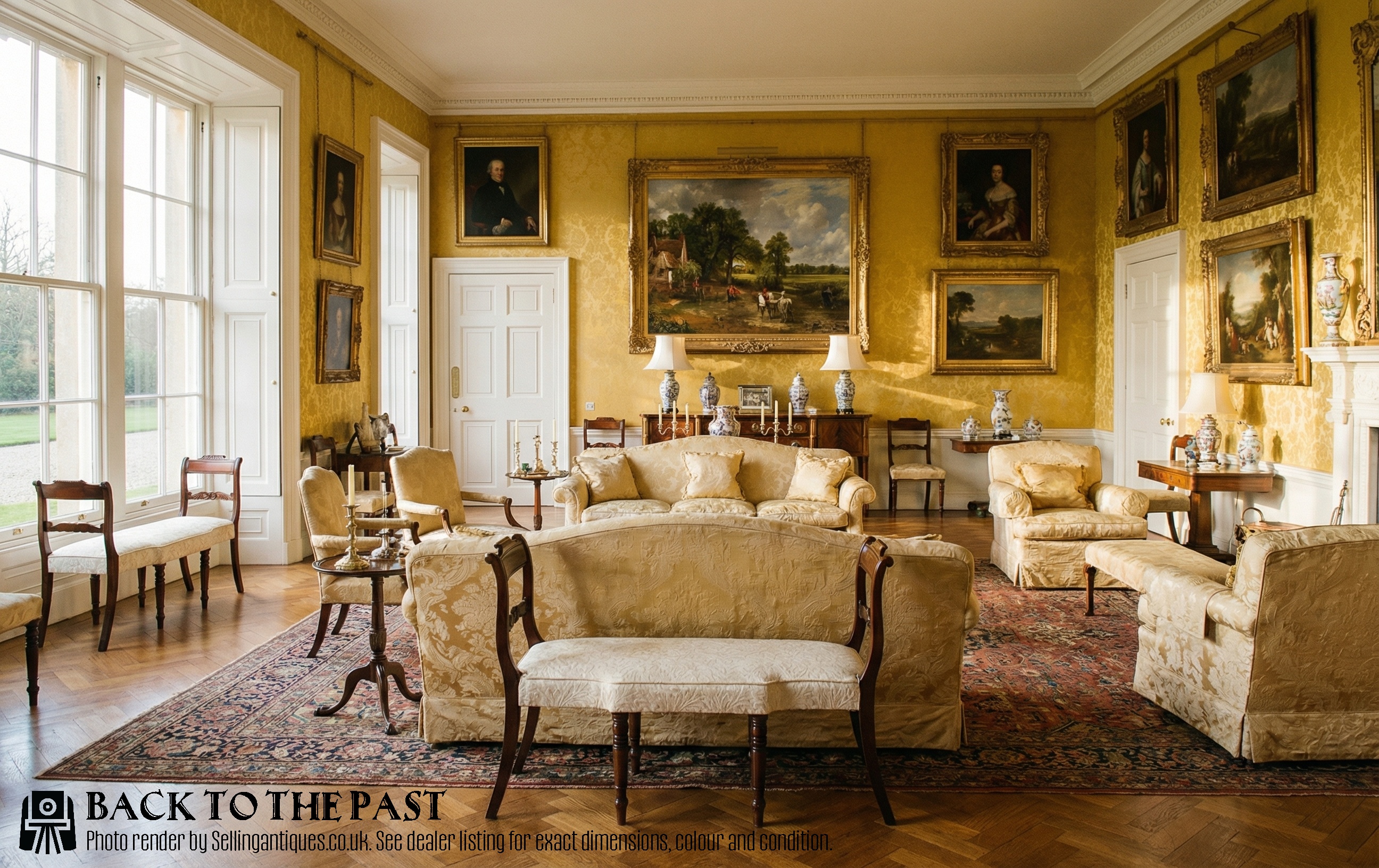
Mahogany Window Bench
A mahogany window bench serves as a dual-purpose seat and corridor piece, frequently appearing across the listings in George III, Regency, and Victorian iterations. These forms bridge the gap between formal settees and low stools, designed originally to sit below sill height without blocking natural light.
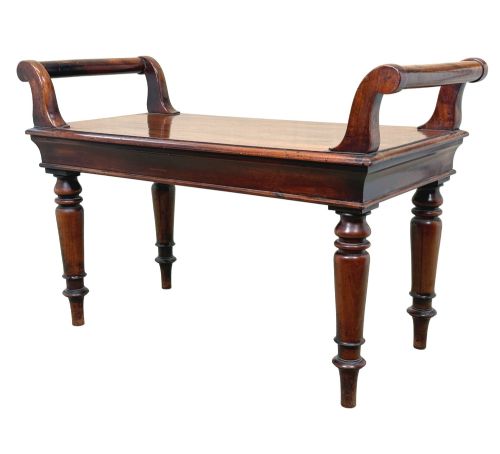
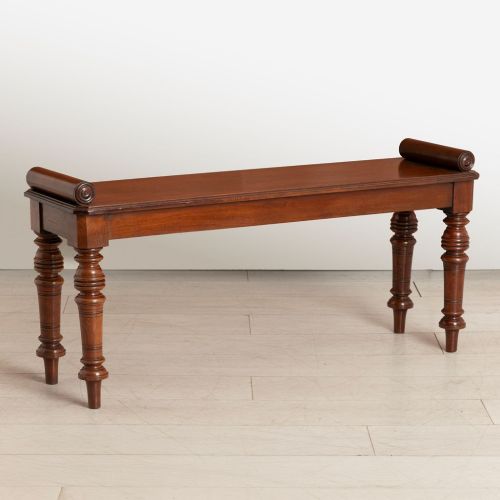
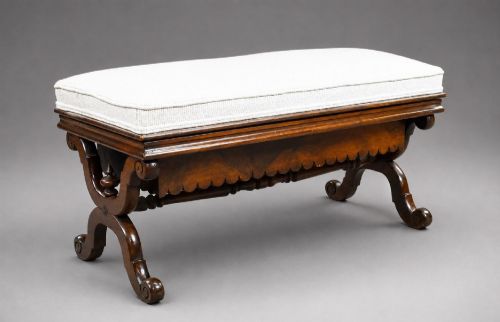
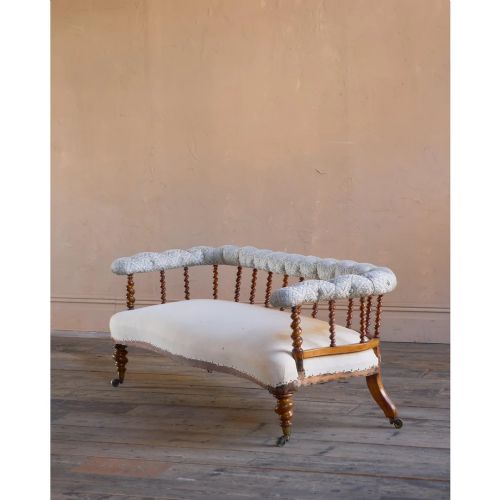
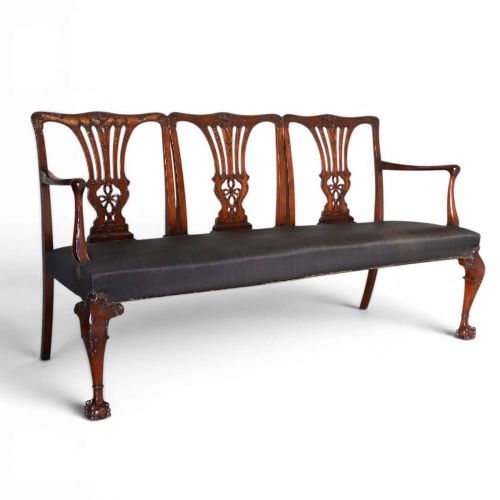
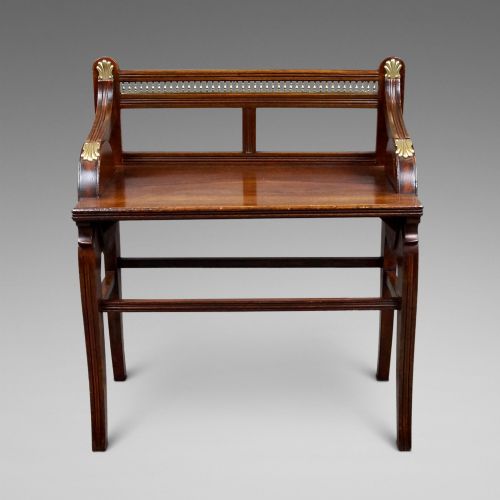
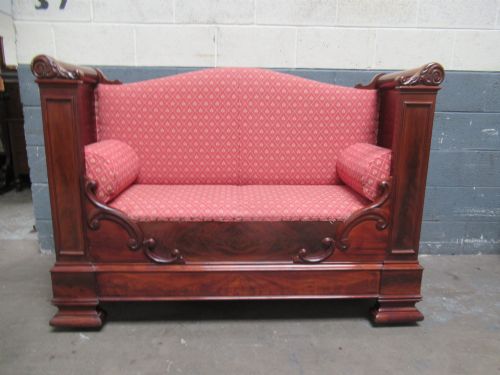
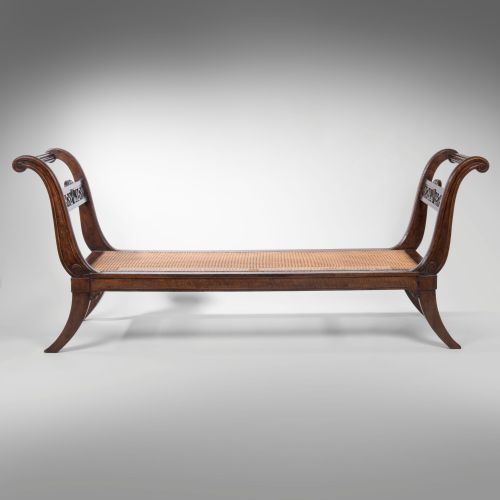
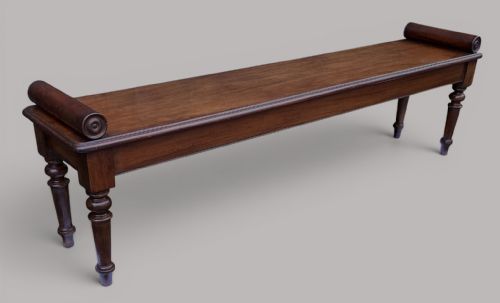
The pieces on this page span the late eighteenth century through the Edwardian era, encompassing straightforward rectangular frames alongside scrolling X-frame supports and bolstered scroll ends. Many examples double as hall benches or long footstools, reflecting the fluid naming conventions of nineteenth-century cabinetmakers.
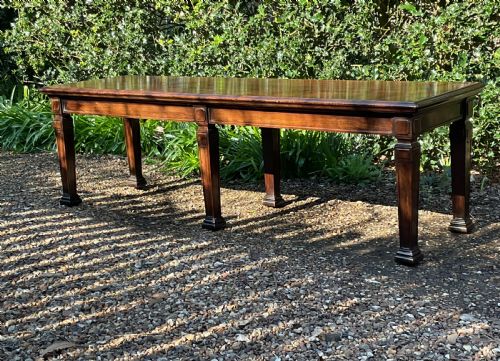
Makers utilised dense native and imported timbers, pairing rectilinear profiles with carved details like tapering square legs or fluted supports. Buyers searching for a mahogany window bench will encounter both backless long stools and upholstered seats featuring scroll arms or chair-back terminals.
Materials and construction
Cabinetmakers relied heavily on solid mahogany for the primary structural frames, often selecting Cuban varieties for dense grain and deep natural colour. Secondary woods provided internal support, while exposed surfaces received careful hand-planing and polishing.
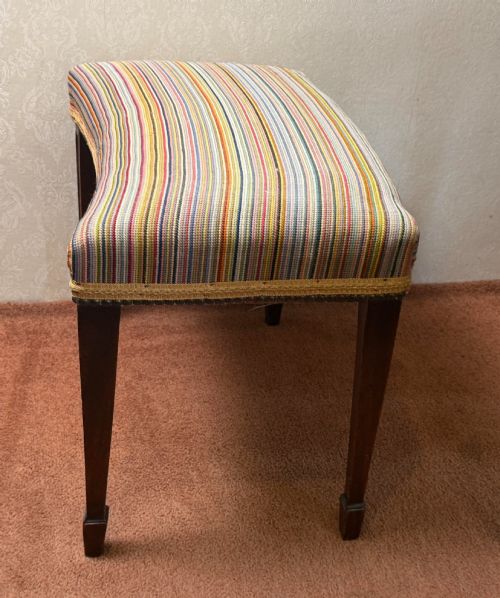
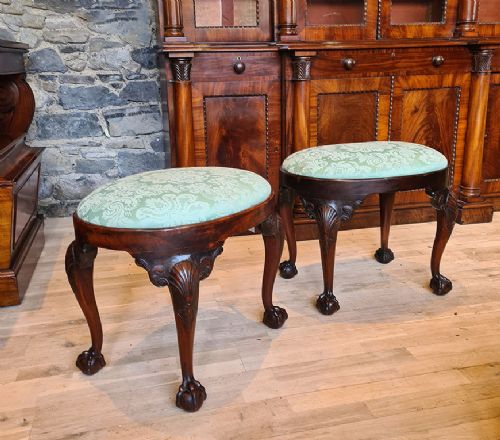
Upholstery methods varied from traditional horsehair stuffing secured with brass studding to cane panels woven directly into the frame. Decorative flourishes included satinwood stringing, bone inlay, and carved scroll ends shaped from solid blocks rather than applied mouldings.
Listings feature mahogany frames paired with cane, leather, velvet, and patterned textile upholstery across multiple nineteenth-century periods.
Distinctions in craftsmanship
Quality rests in the architectural drawing of the frame and the integrity of the timber joints. Superior pieces exhibit crisp hand-carved details, well-proportioned legs, and symmetrical turnings that remain tight through centuries of use.
Subtle differences in timber selection and upholstery execution divide standard workshop output from exceptional commissions. Refined examples display continuous grain patterns across visible sections and hand-stitched upholstery underframes that retain correct tension.
C. Hindley & Sons·Jas Shoolbred·Hallett & Sons
The Mahogany Window Bench Glossary
- X-frame
- A structural support formed by intersecting diagonal members resembling the letter X. This classical shape appears frequently on Regency window seats to distribute weight evenly.
- Satinwood
- A pale, lustrous exotic timber utilised for contrasting inlay and stringing bands on late eighteenth and Edwardian pieces. It provides a sharp visual counterpoint to dark mahogany frames.
- Scroll end
- A raised terminal on a bench or daybed that curves outward in a tight spiral. This feature defines many nineteenth-century hall benches and window seats.
- Kilim
- A flat-woven wool textile occasionally employed as period upholstery on nineteenth-century footstools and benches. These geometric covers introduce rich texture to traditional seating frames.
Mahogany Window Bench: Frequently Asked Questions
Where should I place a window bench?
These low seats suit natural light channels such as wide corridor recesses, bay windows, or the foot of a master bed. Their modest height ensures they remain below standard sill levels.
Positioning them against a blank wall or beneath a tall window creates a balanced vignette without disrupting room circulation.
How do I identify a Regency window seat?
Regency examples typically display classical restraint through fluted legs, sabre supports, or bold X-frame architecture. Timber choice leans toward dark, heavy mahogany with minimal carving.
Proportions remain elongated and low, reflecting the neoclassical taste of the early nineteenth century.
Did these benches originally have backs?
Many traditional window benches are backless stools designed to permit views through both sides of a low sill. Other variations incorporate single or double scroll ends rather than full chair backs.
Edwardian and Victorian versions occasionally introduced open pierced splat backs or upholstered end panels.
Can I use these benches for daily seating?
Solid mahogany frames provide robust structural integrity suitable for regular sitting in hallways or living spaces. Traditional webbing and stuffing offer firm, supportive perches.
Preservation depends on maintaining stable indoor humidity to protect historic joints and upholstery fabrics.