




Mahogany Weather Glass
Mahogany weather glass designs range from Georgian stick barometers to Victorian banjo forms, housed in rich timber cases built to record atmospheric pressure with precision.
Mahogany Weather Glass
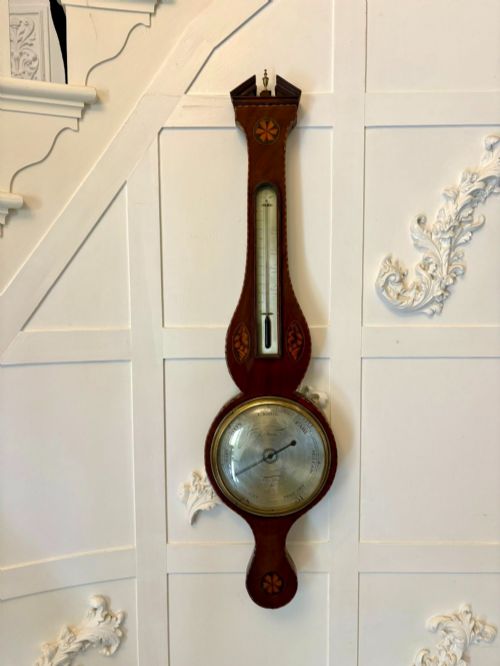
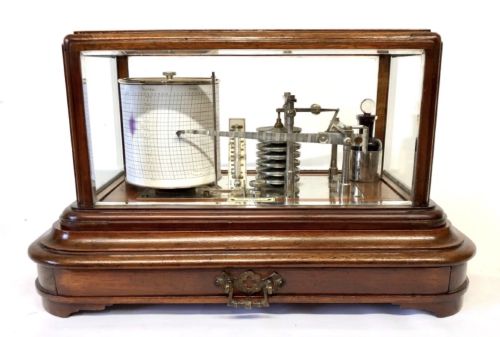
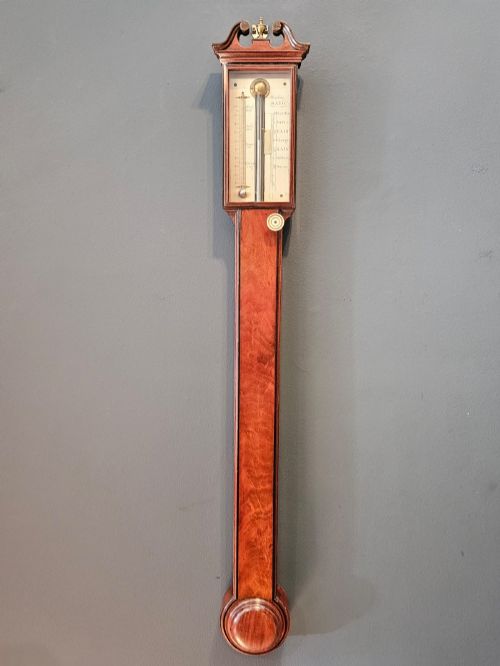
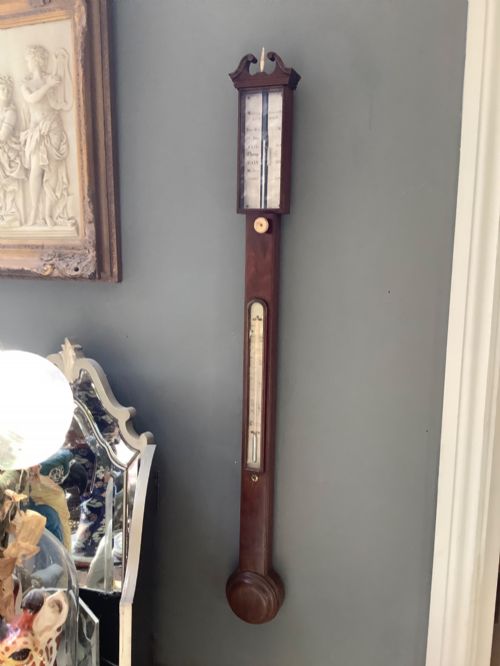
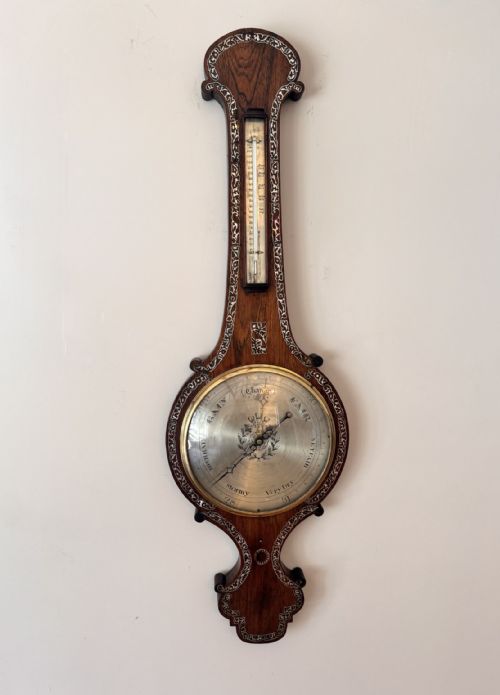
A mahogany weather glass is a scientific instrument designed to measure atmospheric pressure, housed within a timber enclosure. Buyers searching for a mahogany weather glass will encounter stick barometers, wheel or banjo barometers, and mechanical barographs spanning the Georgian, Regency, and Victorian periods.
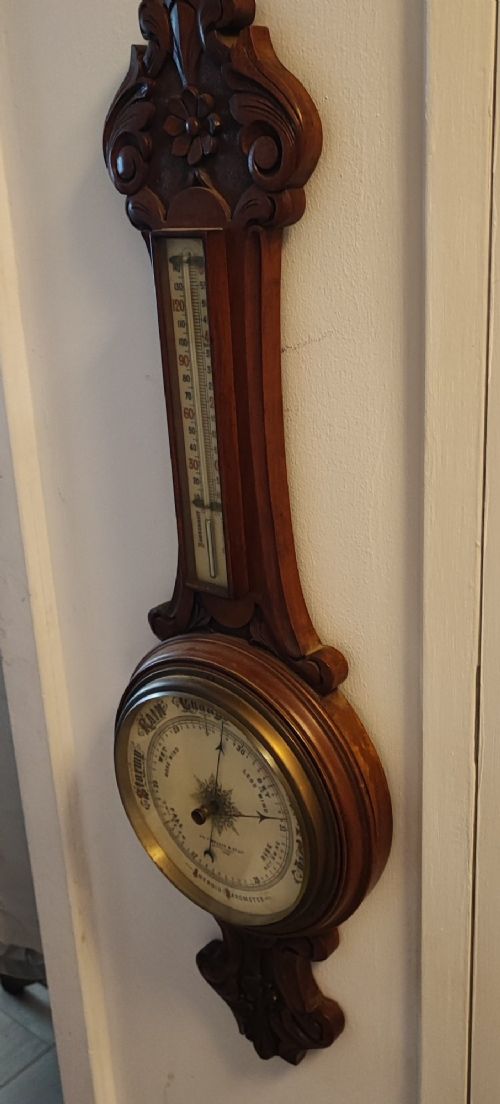
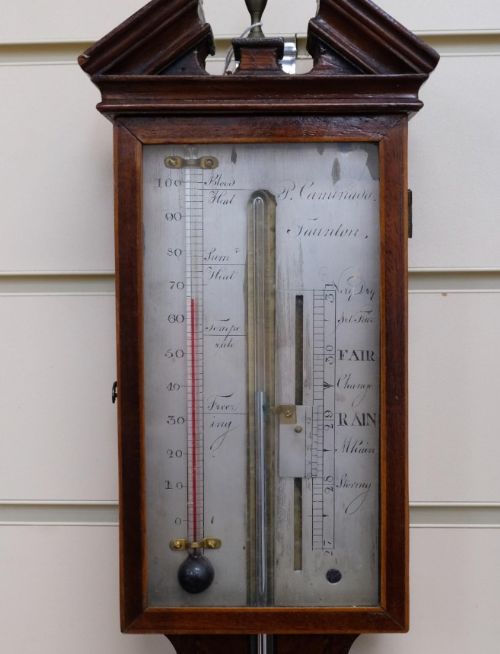
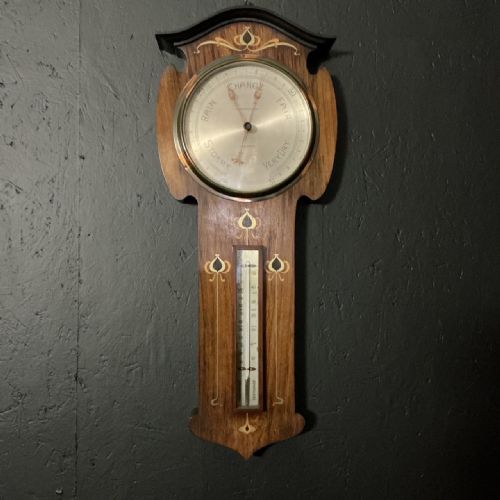
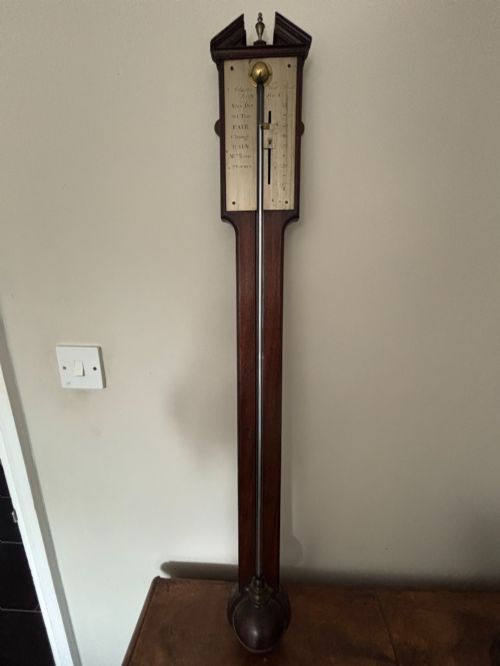
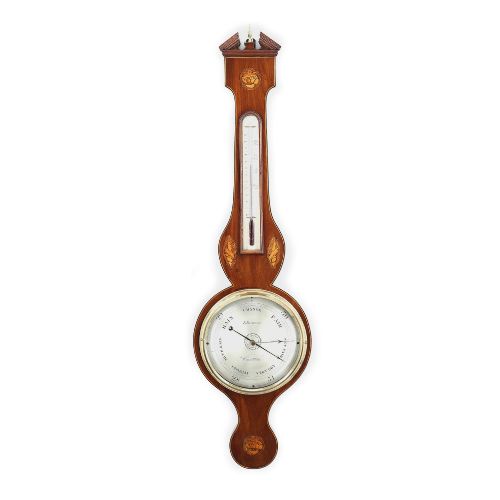
Stick barometers represent the earlier architectural style, featuring long, slender wooden trunks designed to display an exposed mercury tube. Wheel and banjo barometers present a broader dial face beneath a hygrometer or thermometer, often ornamented with shell inlay or stringing.
Barographs enclose clockwork revolving drum mechanisms within five-glass mahogany cases, emerging predominantly in the later nineteenth and early twentieth centuries. Most examples on this page date from the Georgian era through to the late Victorian period.
Materials and construction techniques
Makers utilised dense, figured mahogany for the carcass, frequently accentuating the grain with satinwood stringing, shell marquetry, or mother-of-pearl inlay. The timber was seasoned and shaped to form protective trunk housings and onion-top pediments.
Dials were typically constructed from silvered brass or metal, engraved with barometric scales and maker details, then protected behind circular glass plates. Internal mechanics combined mercury-filled glass tubes, steel needles, and brass pivots to register atmospheric changes.
Mahogany Weather Glass Retail Price Guide 2026
Typical asking prices for mahogany weather glass among the pieces listed under this phrase on Sellingantiques today, from the lower quarter to the upper quarter. They describe what is for sale here now, not the wider market.
Listings feature mahogany weather glass examples spanning the Georgian, Regency, and Victorian periods, incorporating both stick and wheel configurations.
Assessing quality in construction and signature
Quality rests upon the crispness of the cabinetwork, the refinement of the marquetry or stringing, and the legibility of the engraved silvered metal dial. Finer instruments exhibit well-proportioned architectural mouldings and sound, untouched mahogany patination.
The presence of an engraved signature from a known instrument maker elevates an example above uncredited workshop production. Preserved internal mechanisms and original mercury tubes further separate standard instruments from those requiring restoration.
P Caminada Taunton·George Adams London·B Besozzi Weymouth·Negretti And Zambra London·Ganthony Of London·JB Bergna Newcastle·Prada Of High Wycombe·Molton Of Norwich·Luisetti Of London·Giana Shrewsbury·Bate Of London·Jenkins Of Old Swindon·Harrods Of London·Ronchetti Of Holborn·Short And Mason Limited·Charles Baker·WE Pain Of Cambridge
The Mahogany Weather Glass Glossary
- Stick barometer
- A vertical instrument utilising an exposed glass tube filled with mercury to measure atmospheric pressure. These represent the more traditional form found in Georgian interiors.
- Banjo barometer
- A wall instrument featuring a bulbous lower section and a tapering upper trunk resembling the stringed instrument. They frequently incorporate hygrometers, thermometers, and spirit levels.
- Barograph
- A self-recording aneroid barometer that charts atmospheric pressure over a weekly period onto paper using a clockwork drum. They are typically housed in glazed wooden cases.
- Silvered metal
- A brass or copper plate treated with a silver solution to create a matte, reflective surface for engraved markings. This material provides high contrast for legible scale readings.
- Sympiesometer
- A portable differential barometer containing oil and gas rather than mercury to register pressure changes. Charles Baker produced notable examples of this type.
Mahogany Weather Glass: Frequently Asked Questions
How do I read a stick barometer?
Observe the height of the mercury column inside the glass tube against the engraved brass scale to determine current atmospheric pressure. Rising levels typically indicate fair weather, while falling columns suggest approaching rain or wind.
Use the manual vernier pointer, adjusted via an external knob, to mark the existing pressure level so changes remain visible over subsequent hours.
Where should I hang a wall barometer?
Select an interior wall away from direct sunlight, central heating radiators, and draughty doorways to ensure accurate mechanical readings. Stable ambient temperatures prevent unnecessary expansion of the timber case and internal components.
Secure the instrument firmly to a structural wall plug or stud, as mahogany barometers possess considerable weight from their internal mercury tubes or mechanical movements.
Are mercury barometers safe to own?
Enclosed mercury barometers present minimal risk during normal domestic use because the liquid metal remains sealed within heavy glass tubing. Exercise caution only if relocating or repairing the instrument, keeping it upright to prevent the mercury from shifting violently.
Professional transport is recommended for antique mercury instruments to avoid fracturing the delicate internal glass column.
How do I date a mahogany barometer?
Examine the architectural style of the case, such as the flat top of a Georgian stick barometer or the scroll pediment of a Regency banjo model. Inlay techniques, dial typography, and signature formats provide further clues to the decade of manufacture.
Makers often signed directly onto the silvered brass dial plate, allowing comparison against historical trade directories.