
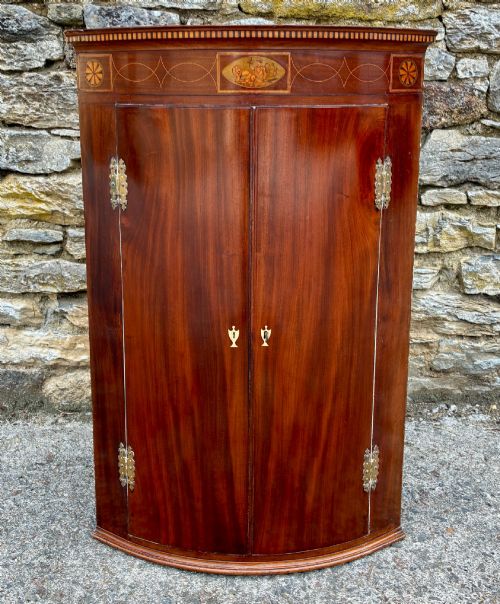
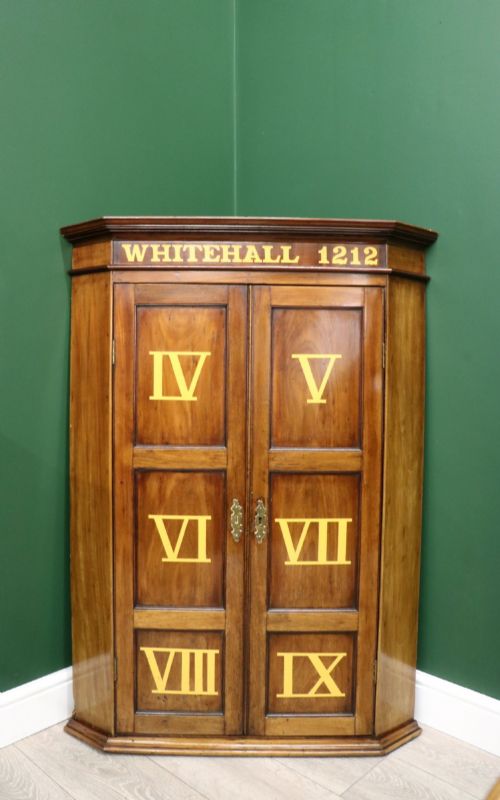


Mahogany Wall Mounted Cupboard
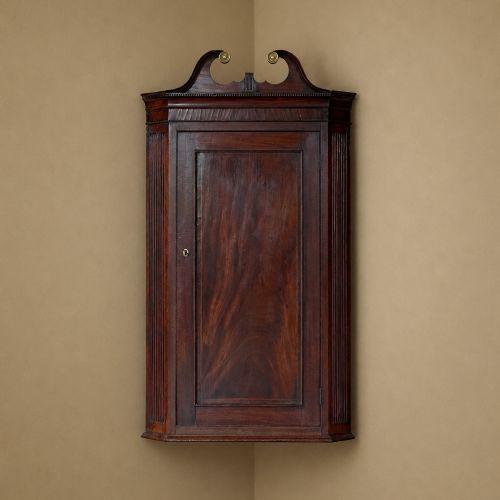
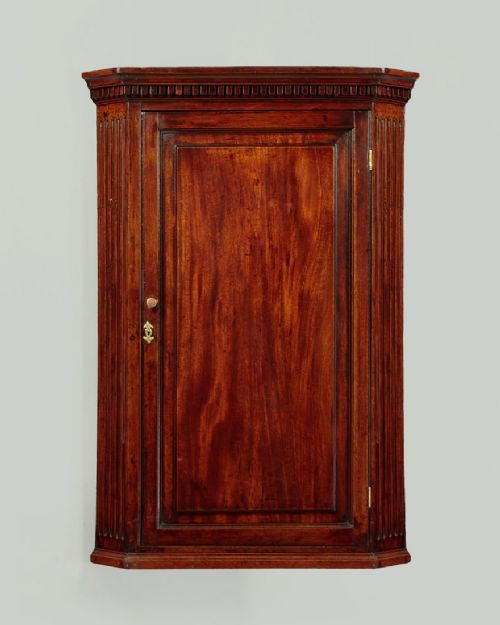
A mahogany wall mounted cupboard offers practical storage and handsome timber character, fitting neatly into unused room angles.
Mahogany Wall Mounted Cupboard
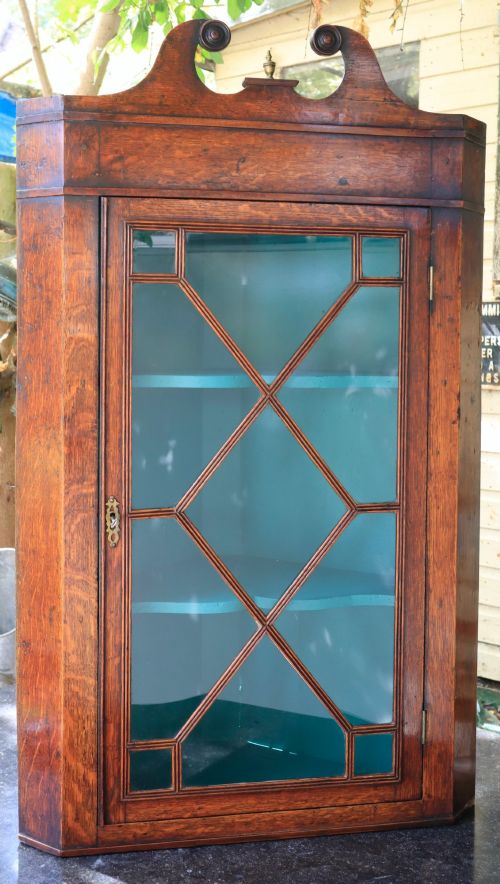
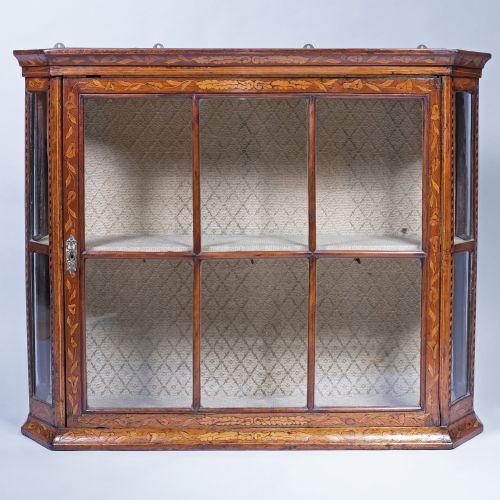
When you search for a mahogany wall mounted cupboard, you encounter a variety of hanging corner cabinets, display units, and wall shelves designed to utilise room space efficiently. These pieces mount securely to the wall, lifting storage off the floor while displaying prized possessions or concealing household items.
The versions you are most likely to meet on this page span the Georgian, Victorian, and Edwardian eras, with George III corner cupboards appearing frequently. Many feature bow fronts, glazed doors, or tambour fronts, reflecting centuries of domestic utility and cabinetmaking skill.
How they were made
Cabinetmakers constructed these cupboards primarily using solid and veneered mahogany, often pairing the rich timber with secondary woods such as oak. Flame mahogany veneers and intricate marquetry or satinwood inlay frequently decorate the exterior surfaces, adding visual depth and contrast.
Functional details rely on traditional hardware, including brass hinges, key escutcheons, and working locks with keys. Glazed doors incorporate timber framing to showcase interior shelves, while specialist forms like tambour fronts demonstrate precise wooden slat construction.
Listings here feature mahogany, oak, and satinwood constructions, incorporating brass hardware, glass panels, and marquetry inlay across Georgian and Edwardian periods.
What varies in quality
The grade of timber selection largely dictates the visual merit of each piece, with striking flame mahogany figures and crisp inlay separating superior examples from plain ones. Cabinetmaking flourishes such as broken arch pediments, dentil moulding, and refined glazing bars further distinguish ambitious workshop output from standard domestic furniture.
Structural integrity and the preservation of original brass hardware, locking mechanisms, and glass influence the overall desirability of the cabinet. Pieces that retain their historic finish and proportional harmony demonstrate the enduring competence of the original maker.
The Mahogany Wall Mounted Cupboard Glossary
- Bow front
- A convex, curved front profile that projects outward, commonly seen on Georgian corner cupboards to soften room angles.
- Tambour
- A flexible shutter door constructed from narrow vertical strips of wood glued to a canvas backing, allowing sliding access in confined spaces.
- Pediment
- The decorative architectural crown positioned above the main body of the cabinet, sometimes featuring a broken arch design.
- Escutcheon
- A protective plate surrounding the keyhole, typically cast in brass to prevent wear on the surrounding timber.
- Marquetry
- Decorative woodwork where pieces of contrasting veneer are fitted into a wooden panel to form intricate patterns or pictures.
Mahogany Wall Mounted Cupboard: Frequently Asked Questions
How do I hang a heavy mahogany wall cupboard?
Hanging a wall cabinet safely requires locating solid masonry or adequate timber studs behind your wall plaster. Utilising heavy-duty brackets and internal fixing points ensures the weight of the mahogany timber and its contents distributes securely.
Because many older pieces lack modern hanging hardware, consulting a professional installer or fitting a sturdy internal batten protects both the wall and the antique structure.
How were these corner cupboards used historically?
These wall-mounted cabinets originally served to store dining china, glassware, or small valuables in domestic parlours and dining rooms. Positioning them in room corners maximised floor space while keeping everyday items within easy reach.
Glazed variants allowed owners to display fine porcelain, whereas solid panel or locking doors kept private contents securely hidden from guests.
How do I tell a Georgian piece from an Edwardian copy?
Georgian and George III cupboards typically exhibit hand-cut dovetails, older secondary woods like oak, and characteristic timber patination developed over centuries. Construction methods feel heavier and joinery details reflect eighteenth-century workshop practices.
Edwardian pieces, including Sheraton Revival items, often display lighter interior timbers, machine-cut elements, and distinct veneer styles influenced by later revivalist movements.
How should I care for mahogany furniture at home?
Maintain your mahogany cupboard by placing it away from direct sunlight and sudden temperature shifts, which can dry out the timber and crack veneers. Dust the surfaces regularly with a soft, dry cloth to prevent grime accumulation.
Occasional application of appropriate furniture wax helps nourish the wood grain and preserves the historic sheen without creating a heavy buildup.