
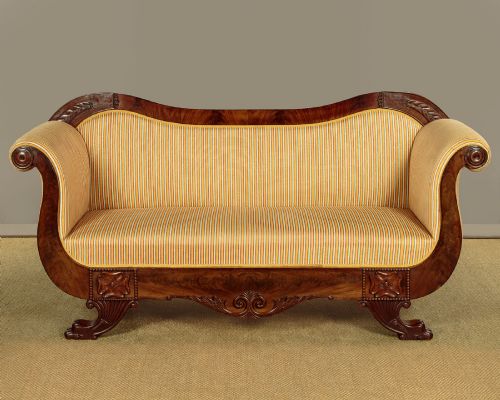
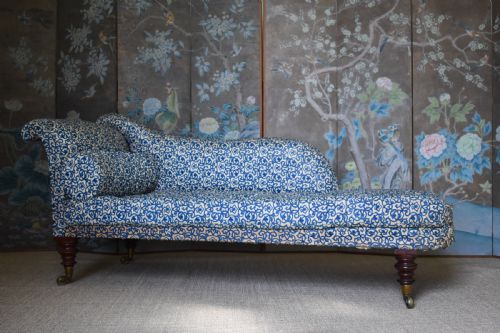


Mahogany Upholstered Daybed
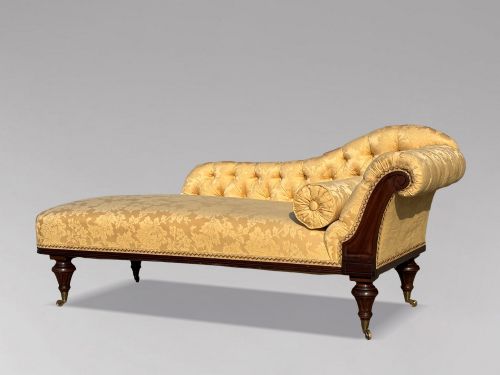
A mahogany upholstered daybed offers a place to recline in style, drawing on decades of nineteenth-century design.
Mahogany Upholstered Daybed
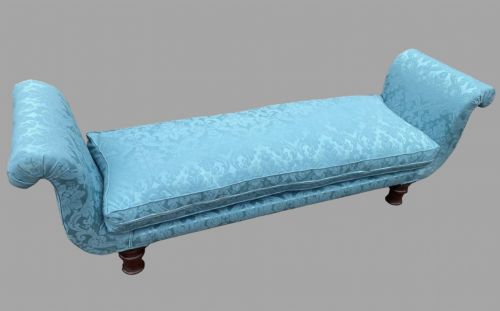
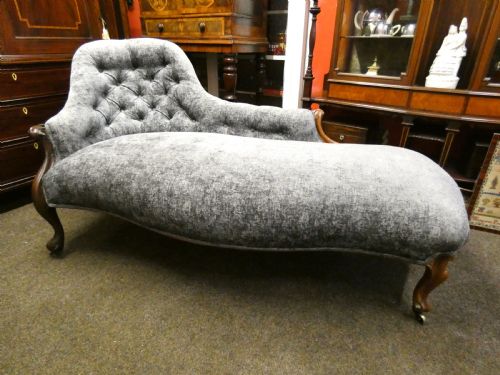
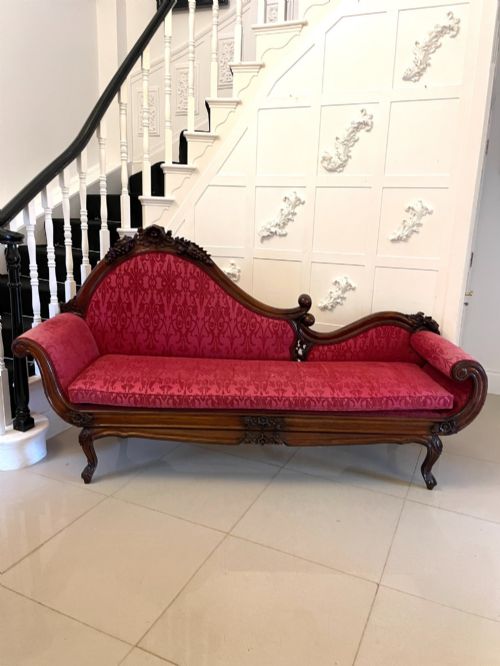
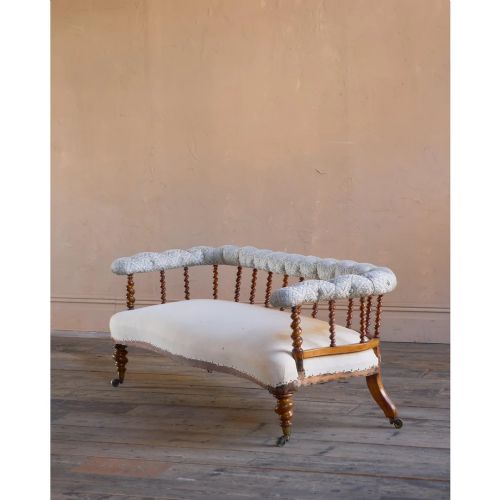
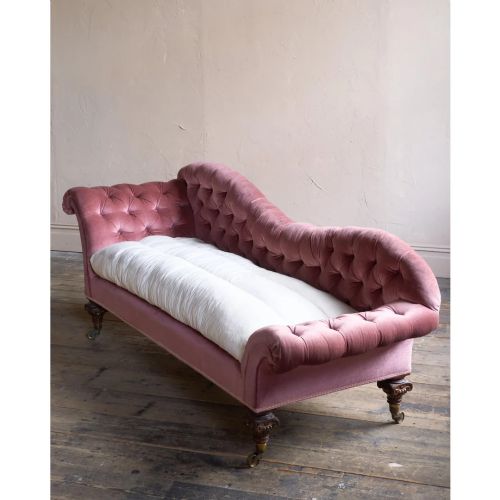
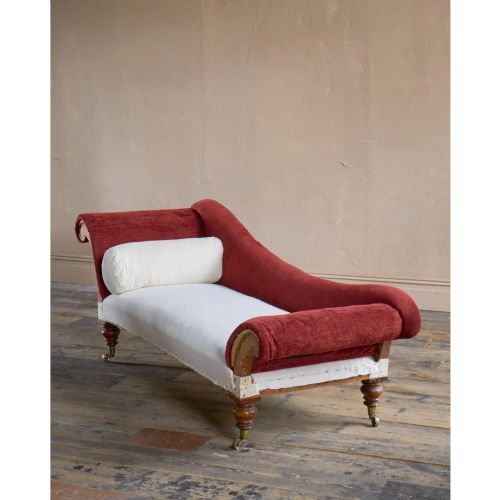
When you search for a mahogany upholstered daybed, you encounter a range of nineteenth-century seating forms including chaise longues, scroll end sofas, and double-ended settees. These pieces combine rich timber frames with soft upholstered surfaces designed for reclining or sitting in comfort.
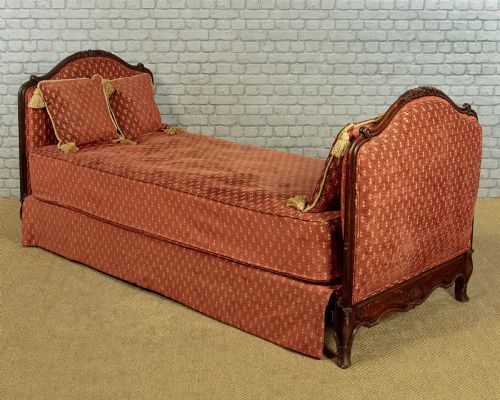
The version you are most likely to meet on this page dates from the Victorian or Regency periods, often featuring carved woodwork, scroll arms, or column details. They originate from British and French workshops, reflecting the stylistic shifts of the eighteen-hundreds.
Object types stretch from simple day beds to elaborate salon sofas and French lit bateau designs. Each variation provides a distinct silhouette suited to period interiors and contemporary spaces alike.
How they were made
Cabinet makers utilised solid mahogany and mahogany veneers to build sturdy structural frames, shaping the wood into curves, scroll ends, and carved supports. Brass fittings such as castors appear on legs to ease movement across heavy carpets.
Upholstery relies on traditional stuffing materials covered in fabrics like velvet, damask, calico, and textured textiles. Buttoning and hand-tack methods secure the upholstery tightly to the wooden carcasses, finished with decorative trim.
Some nineteenth-century daybeds include hidden compartments for storing spare bolsters.
What varies in quality
The refinement of the timber carving and the symmetry of the scroll ends set the baseline for a piece's execution. Superior examples display crisp detail in foliage or classical motifs carved directly into the mahogany.
Construction integrity distinguishes workshop output, seen in the rigidity of the frame joints and the proportion of the upholstered seating deck. Pieces associated with prominent nineteenth-century makers demonstrate heavier timber gauges and more balanced upholstery profiles.
C. Hindley & Sons·Holland and Sons·Howard & Sons·Jas Shoolbred·Gillows
The Mahogany Upholstered Daybed Glossary
- Chaise Longue
- A long chair for reclining, typically featuring an upholstered backrest and a single raised end. This form dominates nineteenth-century seating variations.
- Lit Bateau
- A boat bed design with symmetrical or differing scrolled ends rising from a wooden frame. French examples frequently employ this classic architectural silhouette.
- Scroll End
- A wooden terminal shaped into a tight spiral or curve, terminating the arms or ends of sofas and daybeds. Regency models often showcase pronounced scrollwork.
- Damask
- A reversible figured fabric woven on a jacquard loom, frequently utilised for formal nineteenth-century upholstery. It provides subtle pattern through contrasting matte and lustrous threads.
- Calico
- A plain-woven cotton fabric used historically as an interior lining or as a base layer beneath top upholstery. It offers a clean, neutral foundation for antique seating.
Mahogany Upholstered Daybed: Frequently Asked Questions
How do I identify a Regency daybed?
Regency pieces often display classical influences such as scroll ends, sabre legs, and precise mahogany grain work. They date broadly from the early nineteenth century.
Look for clean architectural lines and minimal heavy carving compared to later Victorian iterations.
What is the difference between a chaise longue and a settee?
A chaise longue is designed for reclining with one primary raised end and a partial backrest. Settees and sofas provide symmetrical seating across a longer span.
Both forms share similar mahogany framing and upholstery treatments during the nineteenth century.
Can I use an antique daybed daily?
These pieces function well in daily living spaces provided the internal frame remains structurally sound. Many benefit from modern reupholstery while retaining their antique wooden chassis.
Placement away from direct heat sources helps preserve the stability of the mahogany timber.
How do I distinguish French styles from British ones?
French designs like the lit bateau tend to feature sweeping, symmetrical curves and softer provincial woods alongside mahogany. British pieces often emphasise denser mahogany frames with crisp architectural mouldings.
Upholstery choices also reflect regional textile preferences of the period.