




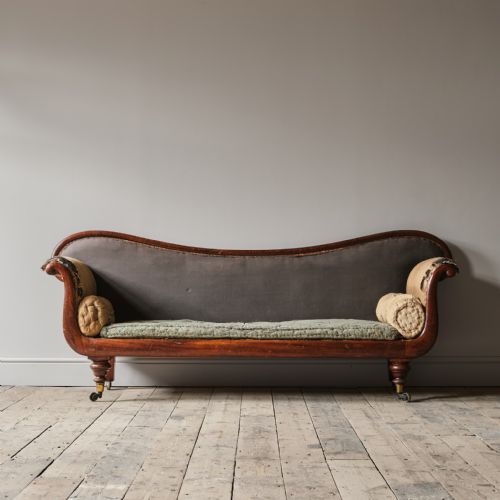
Regency Scroll Arm Settee
A regency scroll arm settee brings architectural grace to a principal room, offering sweeping scroll ends and deep seating carved from fine timbers.
Regency Scroll Arm Settee
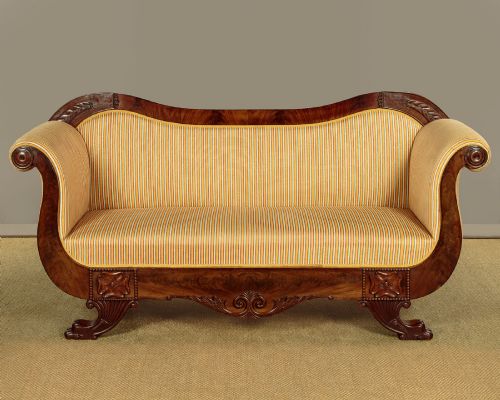
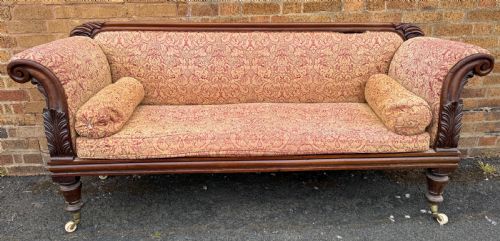
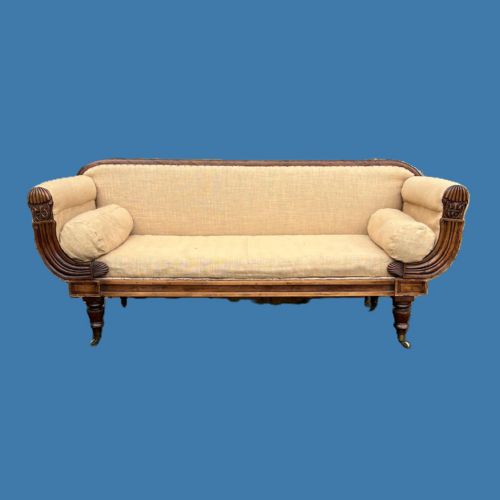
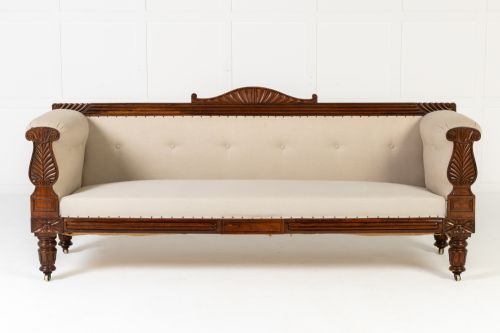
A regency scroll arm settee is a substantial seating form designed for formal interiors, typically appearing in mahogany, rosewood, and simulated rosewood. These pieces date principally from the nineteenth century, encompassing the Regency, William IV, and early Victorian periods.
The most common examples on this page are double-ended sofas and scroll-end couches featuring show frames and generous proportions. They span country house scales down to library designs, incorporating lyre shapes and campaign construction.
Construction and Materials
Timbers such as solid mahogany and rosewood form the structural framework, often complemented by simulated rosewood finishes and ebonised details. Brass is utilised for castors and campaign mounts.
Upholstery relies on traditional stuffing supported by hessian and fabric, housed within intricately carved wooden show frames with scroll ends.
Materials recorded across the current inventory include solid mahogany, rosewood, simulated rosewood, ebony, brass, and hessian.
Distinctions in Quality
The sophistication of the timber grain and the depth of the frame carving separate standard examples from exceptional pieces. Rosewood and figured mahogany demand superior cabinetmaking skill.
Proportion and structural integrity define the standing of a piece, particularly in large country house settees where the symmetry of the double scroll ends requires precise joinery.
The Regency Scroll Arm Settee Glossary
- Scroll end
- A sweeping, outward-curving wooden or upholstered terminal on a sofa arm. This characteristic shape defines much of nineteenth-century seating design.
- Show frame
- The exposed wooden framework of a upholstered piece that displays the carved ornament and timber grain. It allows the cabinetmaker's skill to remain visible.
- Double-ended sofa
- A seating form featuring matching scroll ends at both extremities rather than a raised back and single arm. This balanced layout permits reclining from either direction.
- Simulated rosewood
- Painted or stained timber mimicking the dark grain and rich tones of genuine rosewood. Artisans used this technique on secondary woods during the period.
Regency Scroll Arm Settee: Frequently Asked Questions
What is a regency scroll arm settee?
A regency scroll arm settee is a nineteenth-century seating form characterised by prominent scroll ends and solid timber frames. These pieces were built for principal rooms in grand houses.
They combine architectural lines with comfortable upholstered seating, often utilising mahogany, rosewood, and decorative carved details.
How do I date a scroll end sofa?
Dating relies on timber choice, carved motifs, and framing styles that transition from Regency elegance to heavier William IV and early Victorian proportions. Genuine pieces show nineteenth-century construction methods.
Secondary woods, hand-cut screws, and traditional upholstery foundations help confirm the period of manufacture.
Where should I place a settee?
These large settees suit principal reception rooms, libraries, or wide hallways where their length and finished backs can be appreciated. Double-ended versions work well floating in open spaces.
Ensure adequate floor space to allow the scroll ends and show frames to remain unobstructed by other furniture.
Are these settees comfortable for daily use?
Many of these pieces offer deep seating and solid support through traditional sprung or stuffed upholstery. Modern restoration often updates internal webbing while retaining the original frame.
Double-ended designs allow users to recline comfortably against either scroll arm.