
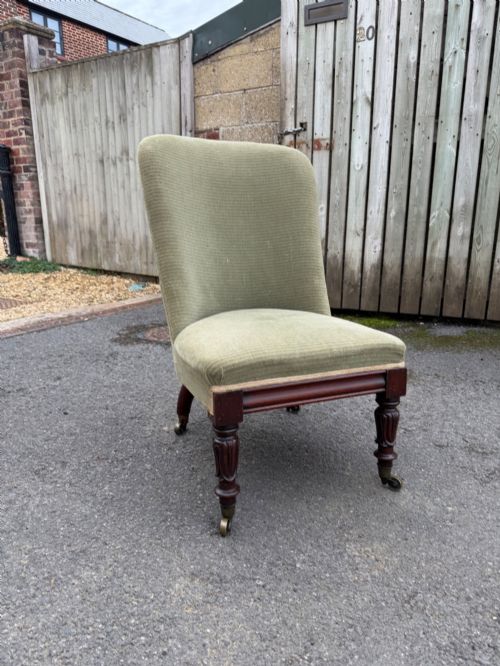
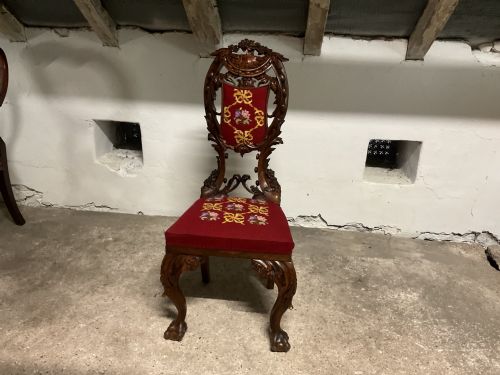
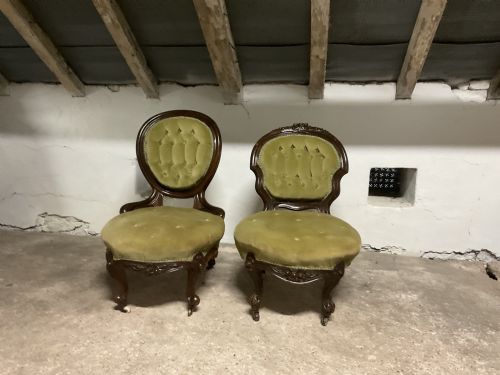
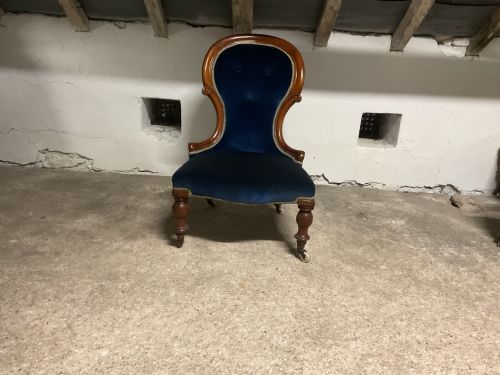
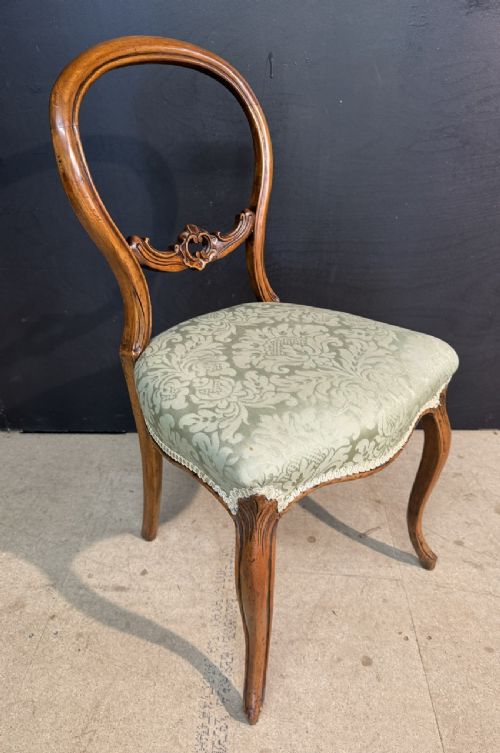
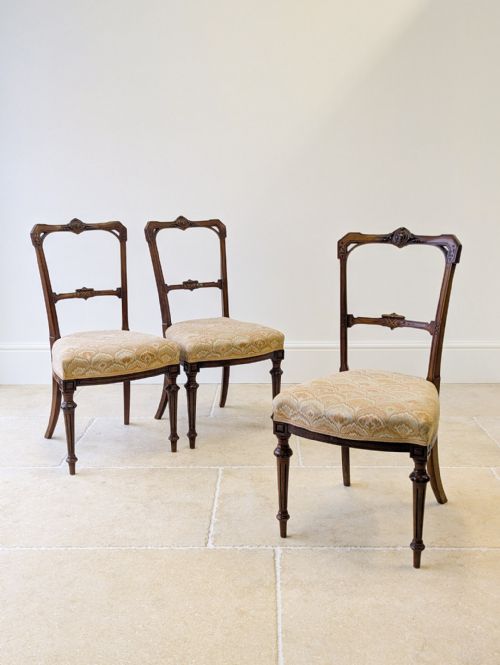
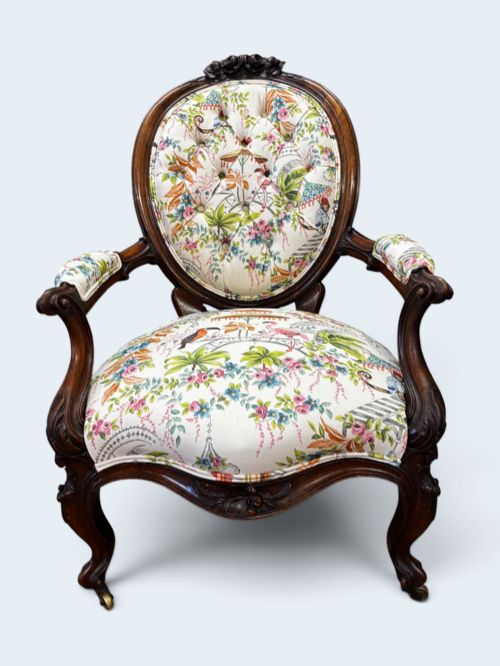
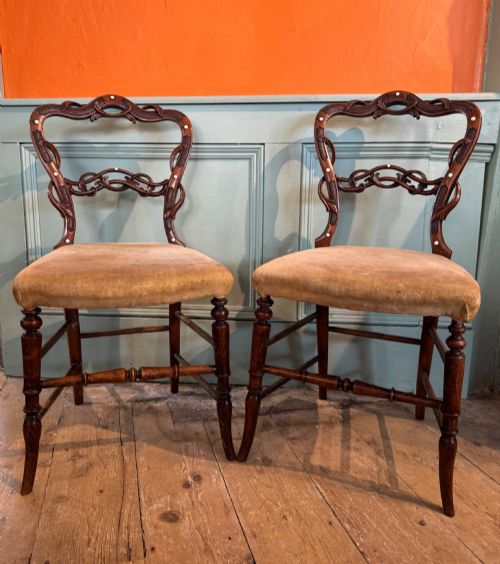
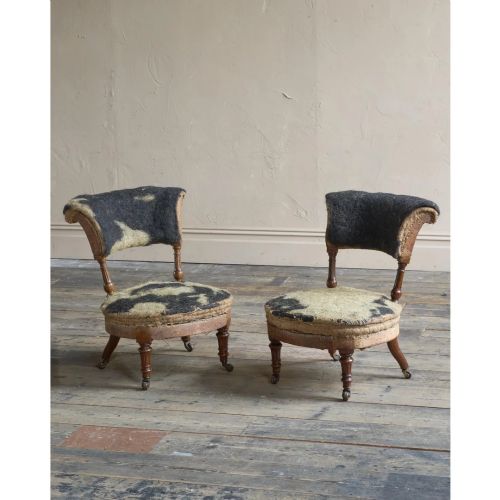
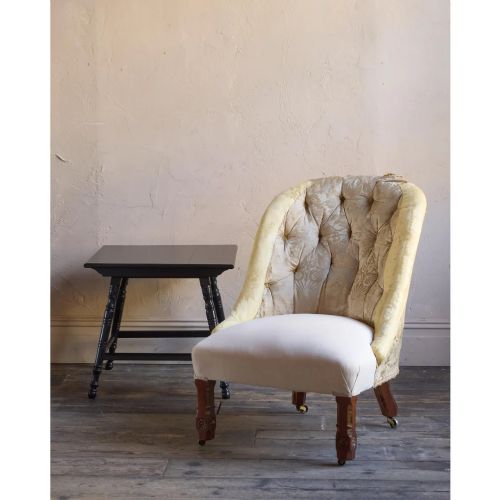
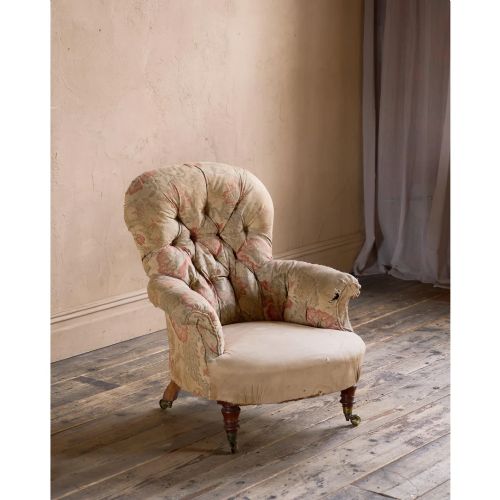
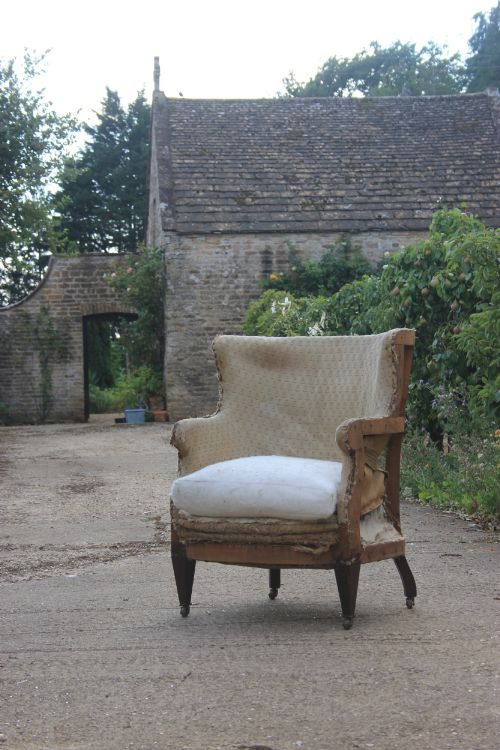
Mahogany Upholstered Bedroom Chair
A mahogany upholstered bedroom chair brings timber and soft textiles together into a compact seat designed for personal rooms.
Mahogany Upholstered Bedroom Chair
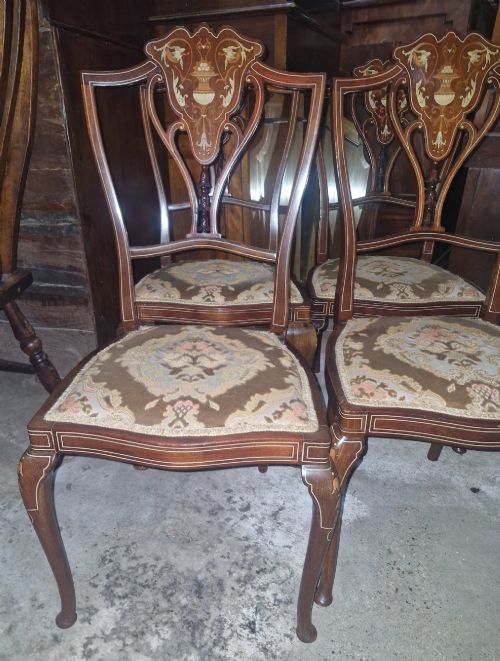
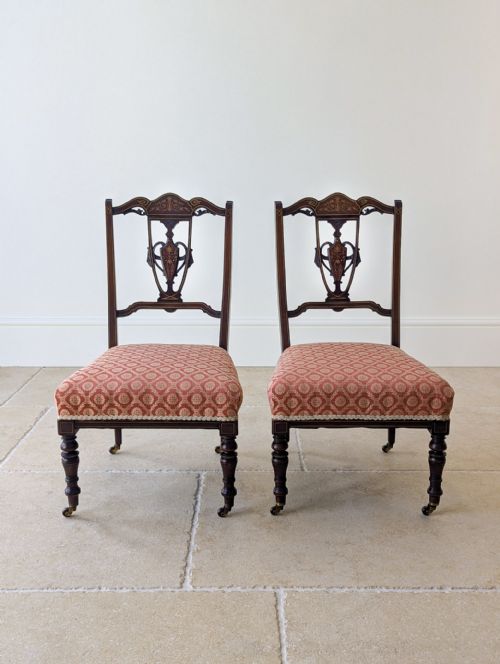
A mahogany upholstered bedroom chair gathers forms made for private chambers, dressing rooms and parlours, spanning the eighteenth, nineteenth and early twentieth centuries. These pieces appear as nursing chairs, slipper chairs, tub chairs, barrel backs and salon chairs in the records.
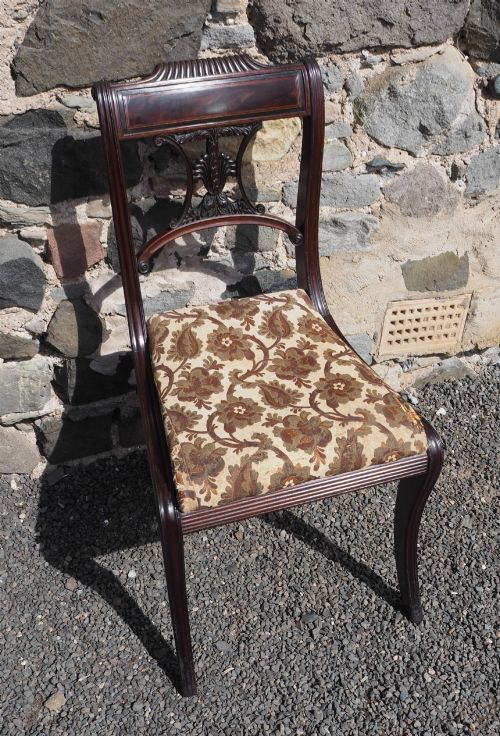
Victorian and Edwardian examples dominate the selection, often carrying low seats suited to dressing or quiet sitting. Pieces from the Georgian, Regency and William IV periods also emerge, showing cleaner lines or heavier scrolling woodwork.
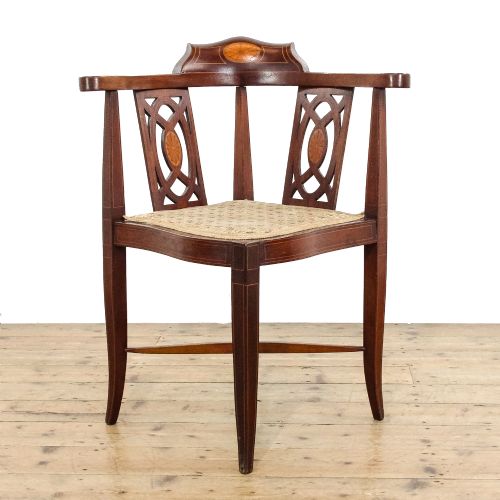
The timber framework relies on mahogany, sometimes inlaid with satinwood or enhanced with brass accents and ormolu mounts. Makers utilised various fabrics, velvets, cottons and tapestries for the upholstered components.
Materials and construction methods
Carpenters shaped the structural frames from solid mahogany or Cuban mahogany, occasionally employing walnut or other hardwoods. Joinery methods included traditional frame construction, reinforced by carved scrollwork, cabriole legs or delicate inlay.
Upholstery layers involved traditional stuffing secured over iron or wooden backs, finished with fabrics such as velvet, cotton and printed textiles. Decorative touches included button backs, hand-stitched tapestries and brass detailing.
Listings span multiple eras from the eighteenth century through to the Edwardian period, uniting mahogany timber with diverse fabric and velvet upholstery.
Assessing craftsmanship and condition
Quality rests in the crispness of the mahogany carving, the stability of the joinery and the integrity of the timber grain. Finer examples display meticulous inlay work, balanced proportions and substantial framing without excessive restoration.
The standard of upholstery and the retention of original fabrics or appropriate period textiles influence the character of each piece. Superior items maintain firm internal support and precise detailing on elements like scroll arms and turned legs.
Holland And Sons·Howard And Sons
The Mahogany Upholstered Bedroom Chair Glossary
- Mahogany
- A durable tropical hardwood prized for its reddish-brown colour and fine grain. It served as the primary timber for high-status furniture across the eighteenth and nineteenth centuries.
- Nursing chair
- A low-seated upholstered chair originally designed for feeding infants or general bedroom use. These pieces often feature sprung or padded seats and supportive low backs.
- Slipper chair
- An upholstered chair with short legs designed to sit low to the ground for dressing. Victorian examples frequently incorporate buttoned backs and velvet coverings.
- Sheraton Revival
- A late nineteenth and early twentieth-century style reviving the lighter neoclassical designs of the eighteenth century. Pieces in this style often display satinwood inlay and refined mahogany frames.
- Tub chair
- An armchair featuring a continuous curved back and arms that enclose the sitter in a rounded shape. These items appear across Victorian and Edwardian manufacturing periods.
Mahogany Upholstered Bedroom Chair: Frequently Asked Questions
What is a bedroom chair?
A bedroom chair is a compact seating piece designed for private chambers, dressing areas or boudoirs rather than formal reception rooms.
These chairs typically feature low seats and comfortable upholstery suited to dressing, reading or quiet relaxation.
How do I identify a Victorian chair?
Victorian chairs often display heavier proportions, scroll-carved backs, button upholstery and rich mahogany frames.
Stylistic markers range from ornate Rococo Revival curves to simpler buttoned tub designs and low nursing chair forms.
What is a slipper chair used for?
Slipper chairs provided a low seat for ladies' dressing rooms during the nineteenth century, making it easier to put on shoes or garments.
Today, they function well as accent seating in bedrooms or smaller living spaces due to their compact footprint.
How do Edwardian chairs differ from Victorian ones?
Edwardian chairs generally exhibit lighter frames, greater use of inlaid satinwood, and Sheraton Revival influences.
They move away from heavy Victorian padding towards more slender woodwork and brighter decorative elements.