
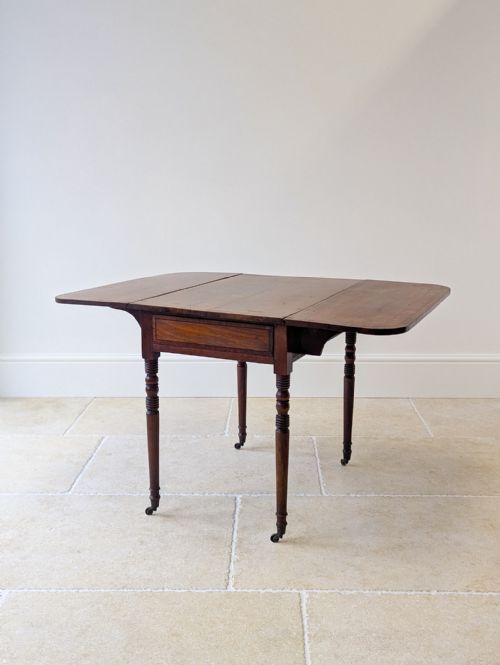
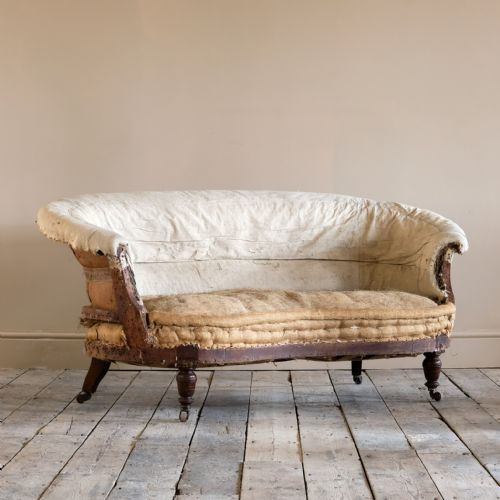


Mahogany Turned Leg Sofa
A mahogany turned leg sofa brings substantial timber framing and practical seating together, originating primarily in nineteenth century parlours and libraries.
Mahogany Turned Leg Sofa
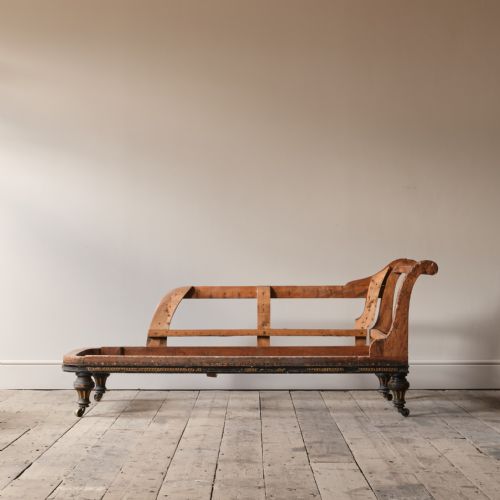
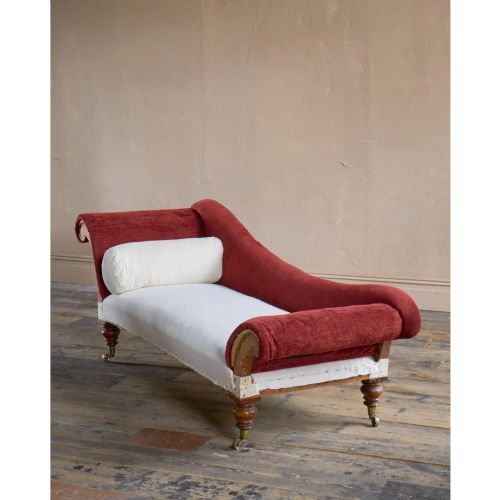
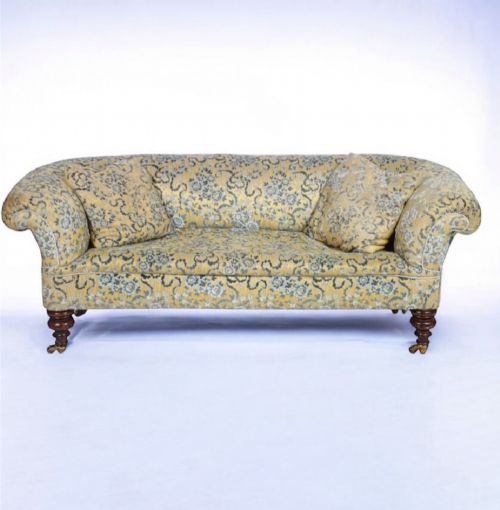
A mahogany turned leg sofa sits within nineteenth century seating traditions, spanning Regency, Victorian, and Edwardian periods. These pieces include deep buttoned chesterfields, country house settees, and chaise longues supported by distinct turned wooden legs.
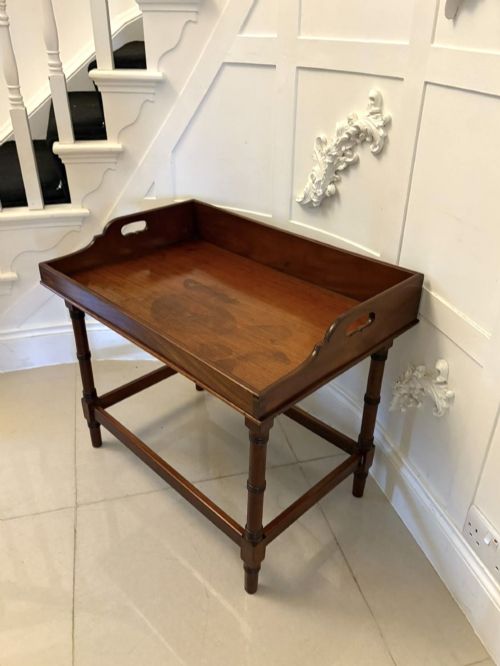
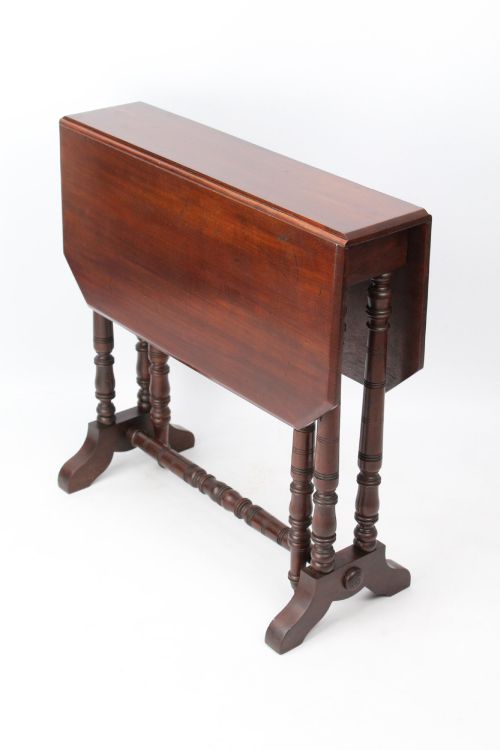
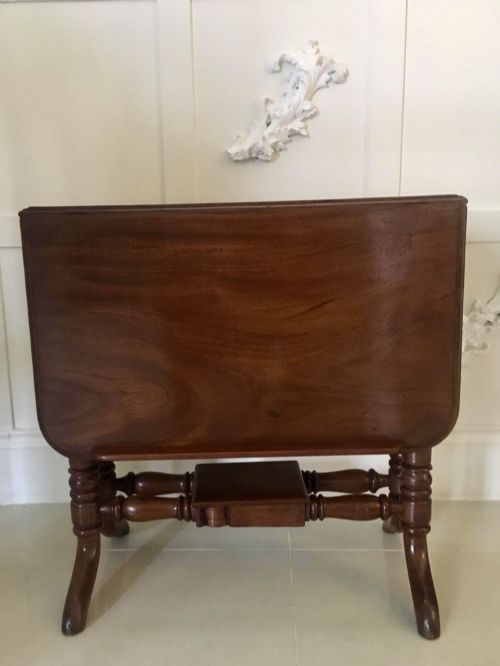
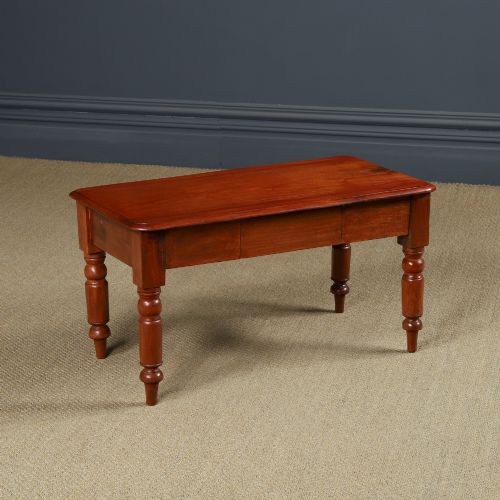
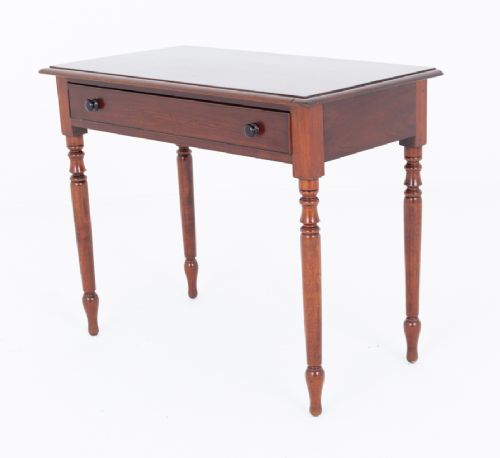
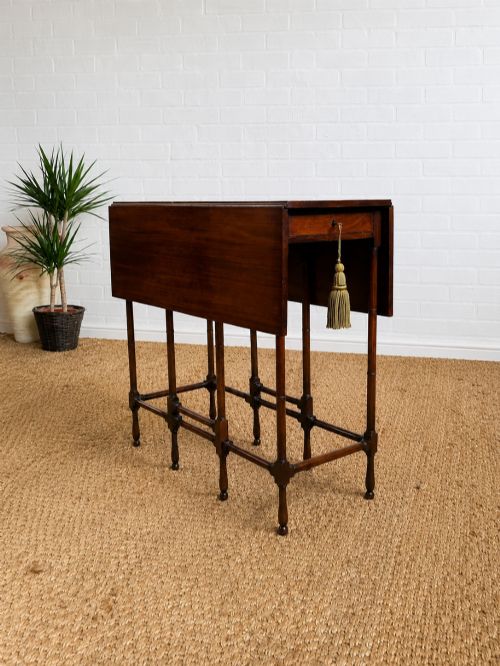
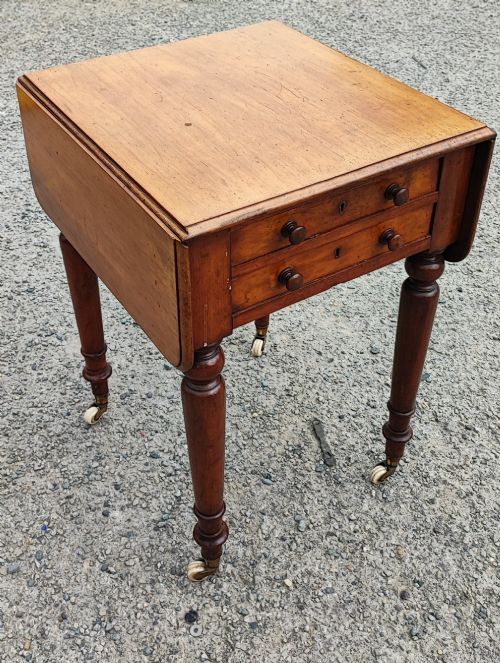
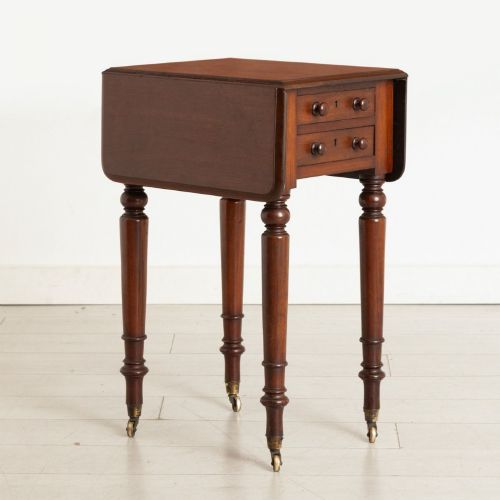
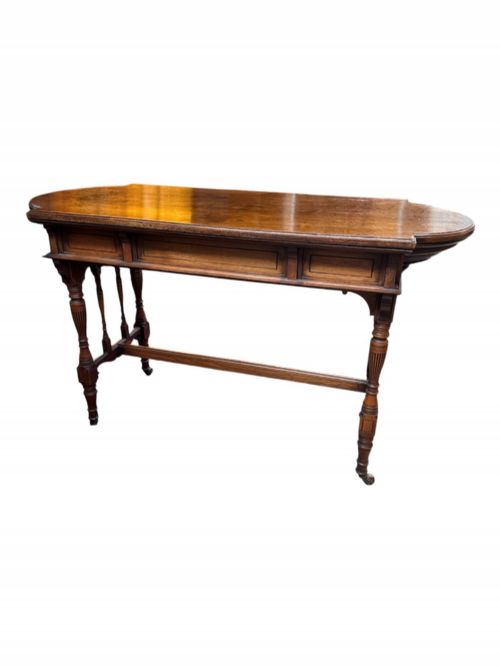
The evidence shows forms ranging from simple drop leaf and pembroke tables to substantial upholstered sofas resting on ring turned or fluted mahogany supports. Buyers frequently encounter nineteenth century examples featuring brass cappings, castors, and original fabric upholstery.
Materials and Construction
Makers utilised solid mahogany for structural frames and legs, frequently pairing the dense timber with brass castors, ceramic components, and ebony or satinwood inlay details. Upholstered sections relied on traditional stuffing methods, calico linings, and outer coverings of velvet, fabric, or brocade.
Legs were shaped on a lathe to create cylindrical, ring turned, or fluted profiles that provided stable support for heavy upholstered bodies. Drop leaf mechanisms and drawer construction involved precise joinery using secondary timbers alongside primary mahogany surfaces.
Some nineteenth century reading tables were cleverly disguised as standard pembroke tables until a bookrest popped up.
Judging the Standard
Quality rests upon the crispness of the timber turning and the structural integrity of the mahogany frame beneath the upholstery. Finer examples display balanced proportions, substantial timber weight, and carefully fitted brass or ceramic castors.
The refinement of secondary details, such as precise satinwood inlay or original brass hardware, elevates certain pieces above standard production items. Upholstered versions demonstrate superior manufacturing through resilient underlying stuffing and well preserved fabric integrity.
Holland and Sons·Hampton and Sons·Gillows
The Mahogany Turned Leg Sofa Glossary
- Mahogany
- A durable tropical hardwood valued for its deep reddish brown colour and stable grain structure. It served as the primary timber for high quality nineteenth century furniture framing.
- Ring Turned
- A decorative technique executed on a lathe to produce a series of rounded horizontal ridges along the length of a furniture leg. This adds tactile and visual texture to the support.
- Pembroke Table
- A small occasional table featuring hinged drop leaves on two opposing sides and a single drawer. These versatile pieces appeared frequently in formal sitting rooms.
- Chesterfield Sofa
- A deeply upholstered nineteenth century seating form characterised by rolled arms and button tufted backrests. They typically rest upon low turned wooden legs.
- Castor
- A small wheel attached to the base of a furniture leg to facilitate movement across floor coverings. Many period examples combine brass sockets with ceramic or metal wheels.
Mahogany Turned Leg Sofa: Frequently Asked Questions
How do I care for mahogany timber?
Mahogany requires minimal interference, benefiting mainly from dust removal using a dry cloth and occasional application of traditional beeswax. Direct sunlight and sudden temperature shifts must be avoided to prevent timber splitting.
Keeping the surface conditioned preserves the deep reddish brown tone and natural grain lustre built up over centuries.
Where were these sofas placed originally?
These seating pieces occupied principal reception rooms, libraries, and drawing rooms of nineteenth century residences. Their substantial frames and upholstered comfort suited formal entertaining and daily reading.
Smaller iterations functioned easily within parlour settings alongside matching pembroke and occasional tables.
How are Victorian pieces identified?
Victorian pieces display characteristic nineteenth century proportions, heavier frames, and darker mahogany finishes influenced by changing domestic fashions. Details like ceramic castors and heavy button tufting point directly to this era.
Construction methods also reveal the period through traditional hand cut joinery and dense secondary timbers hidden beneath upholstery.