


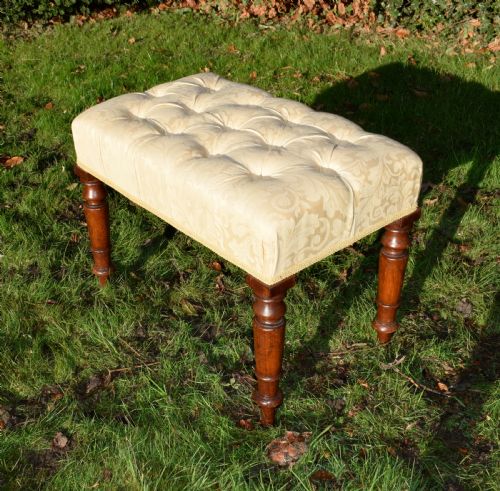


Mahogany Turned Leg Ottoman
These mahogany turned leg ottoman pieces are sturdy low seats built for comfort, and you want one for its rich timber frame and traditional upholstery.
Mahogany Turned Leg Ottoman
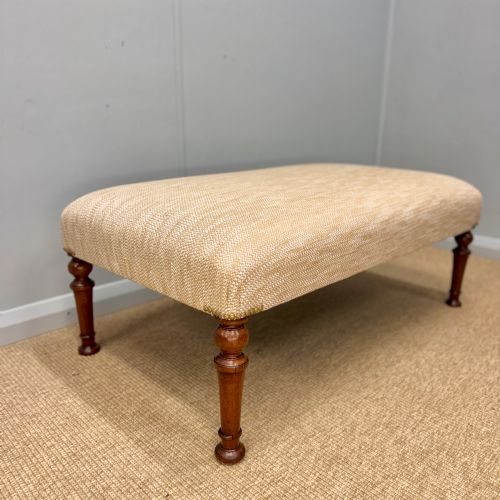
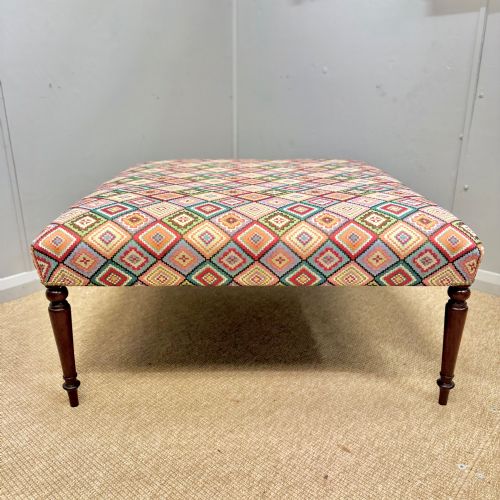
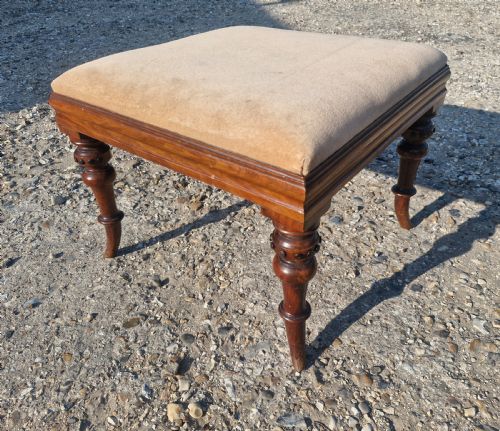
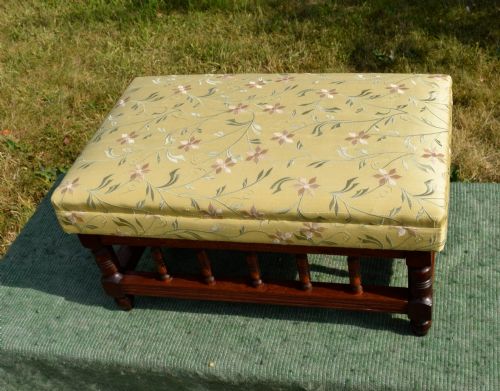
A mahogany turned leg ottoman is a low upholstered seat or footstool designed for domestic comfort, frequently appearing in Victorian and Edwardian forms. These pieces serve primarily as footrests or informal seating by the fireside, often taking a generous square or long rectangular proportion. You will find them constructed with solid mahogany frames supporting various textile or leather covers.
The selections available here span the nineteenth and early twentieth centuries, including Regency examples and English country house styles. Many retain their original or restored turned supports, sometimes raised on brass castors for ease of movement across carpets. The forms range from compact music stools to large buttoned leather pieces and caned top tables.
How they were made
Makers utilised dense mahogany for the structural frames, shaping the timber into turned legs that provide both strength and decorative character. The joinery relies on traditional carpentry methods to ensure the low frames can withstand daily pressure from resting feet or seated weight.
Upholstery forms the upper portion of these pieces, employing traditional stuffing materials secured beneath fabrics such as chenille, wool, leather, and tapestry. Brass castors are frequently fitted to the base of the legs, combining utilitarian mobility with metal detailing.
The furniture styles represented span Victorian, Edwardian, William IV, and Regency periods, encompassing both compact stools and large country house ottomans.
What varies in quality
The distinction between standard examples and finer pieces lies in the crispness of the timber turning and the weight of the mahogany used in the frame. Superior items display careful proportions and robust joinery that remains firm through generations of use.
The execution of the upholstery and the choice of covering material also define the grade of the piece, from simple woven textiles to deep buttoned leather. Integration of quality hardware like brass castors contributes to the overall integrity of the construction.
The Mahogany Turned Leg Ottoman Glossary
- Mahogany
- A durable tropical hardwood prized for its deep reddish brown colour and fine grain. It forms the solid structural frame of these stools.
- Turned leg
- A cylindrical wooden support shaped on a lathe to create decorative rings and curves. This technique defines the distinct profile of the legs.
- Chenille
- A fuzzy woven fabric frequently utilised for soft upholstery. Its piled texture provides a tactile surface for traditional footstools.
- Castor
- A small wheel fitted to the foot of a leg to allow smooth rolling across floors. Brass versions are common on nineteenth century examples.
- Buttoned
- An upholstery technique where indentations are formed by pulling stitches deep into the padding. This secures the filling and creates a patterned surface.
Mahogany Turned Leg Ottoman: Frequently Asked Questions
What is a mahogany turned leg ottoman used for?
These pieces function primarily as footstools or low seats placed in front of armchairs and sofas. Their sturdy frames also allow them to double as informal seats or impromptu surface tables in a living space.
Historically, larger versions served in drawing rooms and country house libraries where comfort and mobility on castors mattered. Today they integrate easily into modern rooms as versatile accent furniture.
How do I style an ottoman in my home?
Position your stool near a fireside armchair or at the foot of a bed to add warmth and texture to the room. The rich mahogany timber complements both traditional and contemporary interiors.
You can also place a large tray on top to convert the upholstered surface into a stable place for books or drinks. The low profile keeps sightlines open across the room.
How can I tell the period of a stool?
Examine the timber finish, the turning style of the legs, and the method of upholstery construction underneath. Regency and William IV pieces often display heavier proportions and distinct classical turning.
Victorian and Edwardian examples show variations in the depth of buttoning and the choice of covering fabrics like chenille or tapestry. Comparing these details helps place the piece within its historical decade.
Are these stools comfortable for daily use?
Most pieces feature padded tops designed specifically for resting feet or sitting comfortably for short periods. The solid mahogany frames provide a dependable structure underneath the cushioning.
Many examples have been reupholstered in durable materials like leather or woven fabric to withstand regular household activity. Their low height makes them convenient additions to seating areas.