



Upholstered Centre Stool
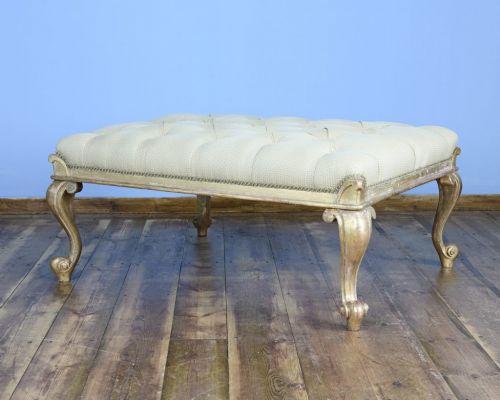
An upholstered centre stool anchors a room with generous proportions and tactile comfort, serving as a versatile seat or low table.
Upholstered Centre Stool
When you search for an upholstered centre stool, you are looking at substantial standalone seats designed to sit in the middle of a room rather than against a wall. The pieces appearing here span the nineteenth century, including Georgian and Victorian examples, alongside later revival pieces.
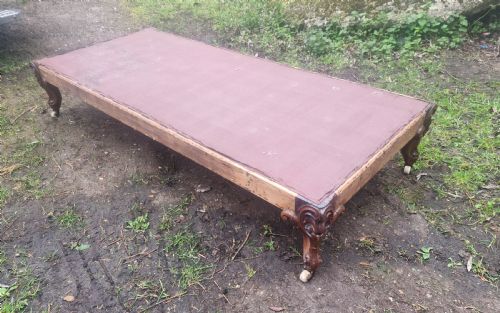
Forms range from grand rosewood and mahogany frames to carved giltwood and sturdy oak, often categorised in records alongside ottomans and duet stools. Many examples arrive ready for reupholstering or already fitted with fresh textiles.
These items function equally well as low tables or comfortable footrests, combining functional furniture with decorative presence.
What varies in quality
The distinction between standard examples and the finest items rests upon the timber selection, the depth and precision of the frame carving, and the overall scale. Well-proportioned mouldings and crisp decorative details indicate superior workshop execution.
Hardware additions such as maker-stamped brass castors enhance desirability and provide clues to the original date and workshop origin.
At least one past stool arrived ready for guests draped in peacocks.
The Upholstered Centre Stool Glossary
- Centre stool
- A freestanding seat designed to be viewed from all sides, placed in the middle of a room rather than against a perimeter wall.
- Parcel gilt
- A decoration method where selected carved details are partially covered in gold leaf while the underlying wood or paint remains visible.
- Castor
- A small wheel attached to the base of furniture legs to facilitate movement across floor coverings.
- Duet stool
- An elongated form of stool originally intended to accommodate two people seated together at a piano or in a parlour.
Upholstered Centre Stool: Frequently Asked Questions
How were centre stools originally used?
These large seats occupied the middle of grand reception rooms where guests gathered, serving as extra seating or flexible footrests.
They also functioned as low tables for books and decorative objects when topped with trays.
Can I use an antique centre stool as a coffee table?
Many buyers successfully adapt these sturdy frames to function as coffee tables by adding a solid tray or selecting firm upholstery.
Their generous dimensions provide a practical surface for daily living while retaining traditional character.
How do I identify a Victorian centre stool?
Victorian examples frequently feature dark woods such as walnut and rosewood, often displaying heavy carving or buttoned upholstery.
Look for robust proportions and turned or fluted legs fitted with brass castors.
What does reupholstering involve for these pieces?
Reupholstering allows you to strip back worn fabrics and replace interior webbing and stuffing to restore firm support.
Choosing a new velvet, leather, or patterned textile lets you match the stool to your existing interior scheme.