


Victorian Footstool Bench
A victorian footstool bench brings solid timber and traditional upholstery together to anchor a room.
Victorian Footstool Bench
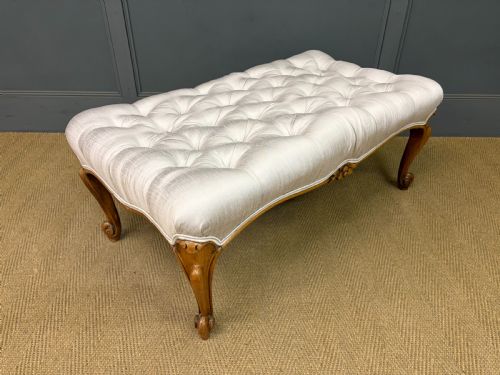
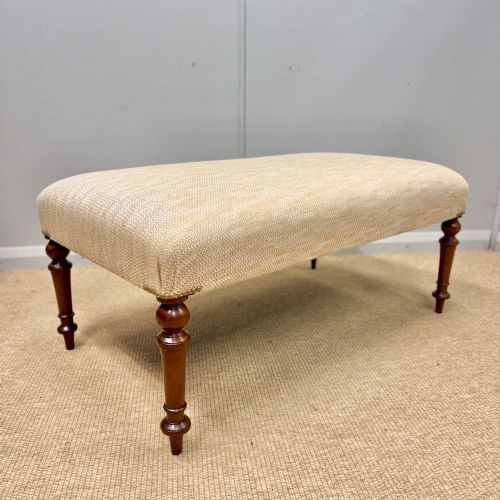
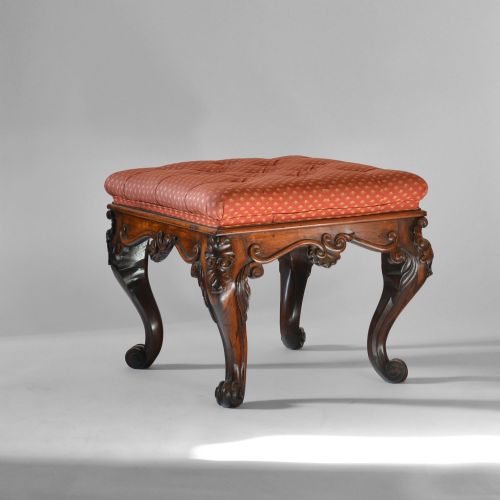
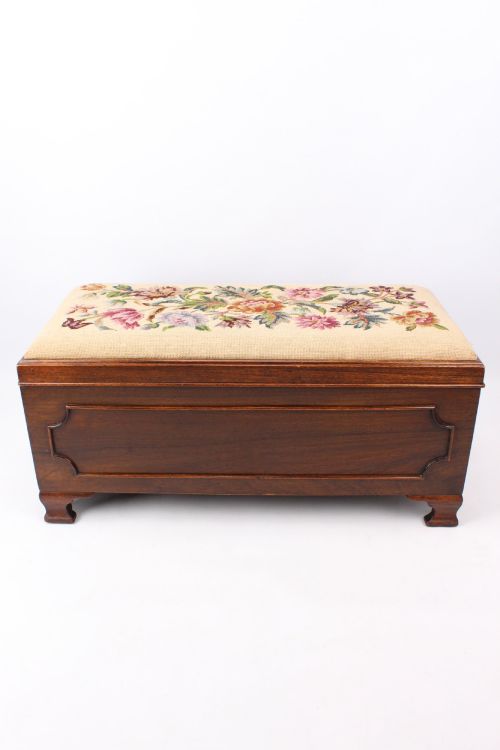
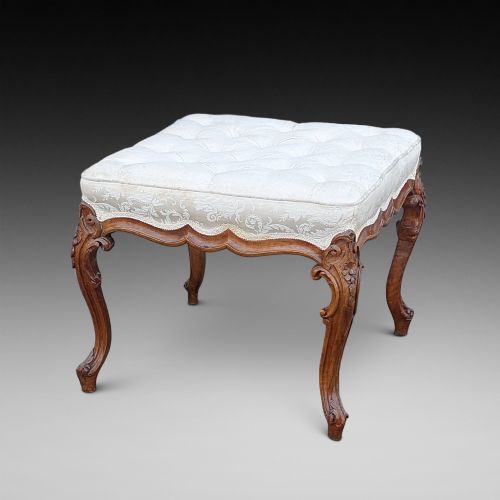
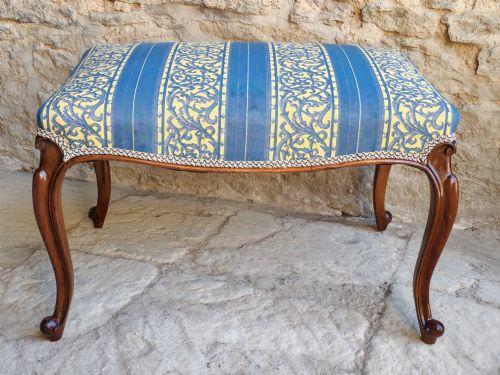
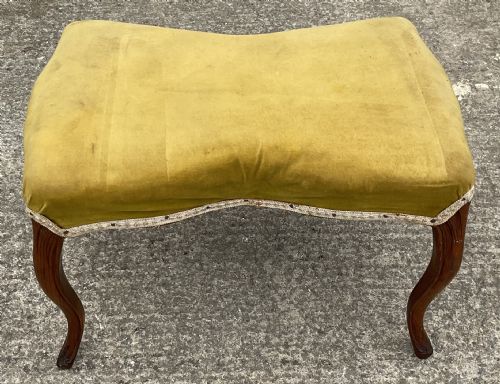
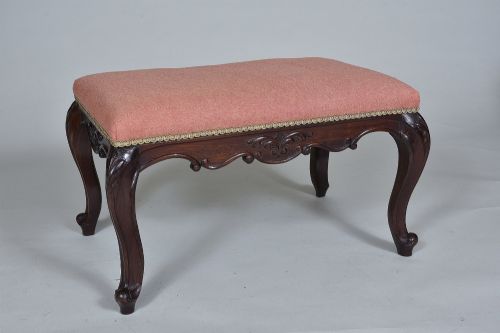
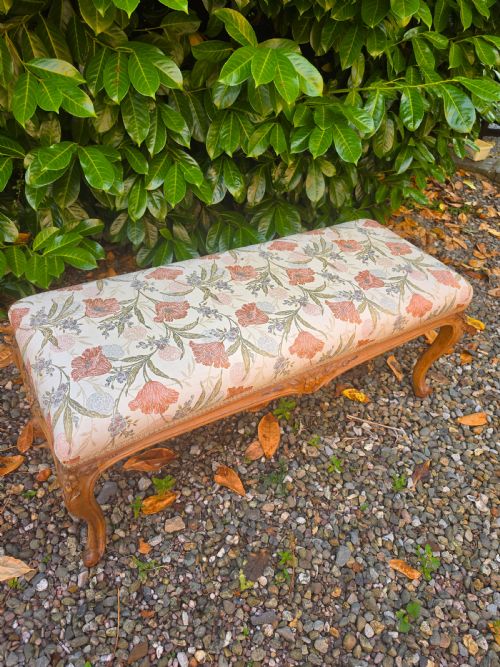
A victorian footstool bench comprises low seating furniture built during the nineteenth century, taking the form of footstools, dressing stools, ottomans, and window seats. You will frequently encounter walnut and mahogany frames resting on cabriole legs or brass castors.
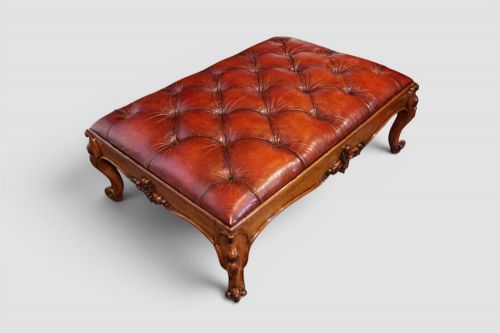
These pieces serve multiple functions around the home, operating as footrests, dressing table seats, or low coffee tables when topped with leather or fabric. The selection ranges from compact footstools to large country house ottomans.
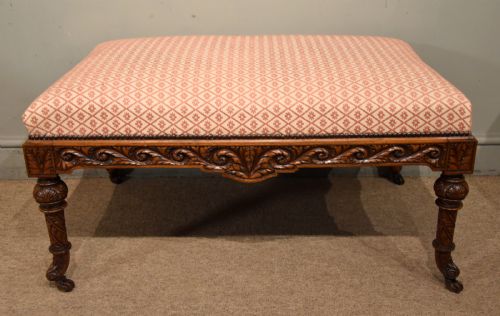
Examples often display regional or stylistic influences, including Anglo-Indian carvings, Rococo curves, and Gothic or Aesthetic details. Most survivors retain their structural wooden forms while often carrying later upholstery.
Materials and construction
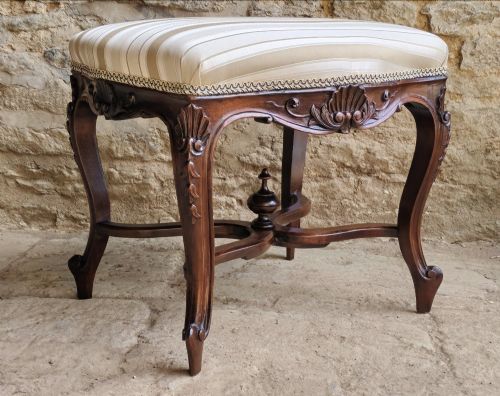
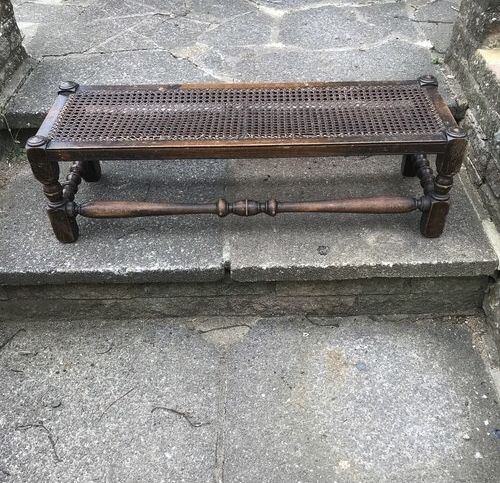
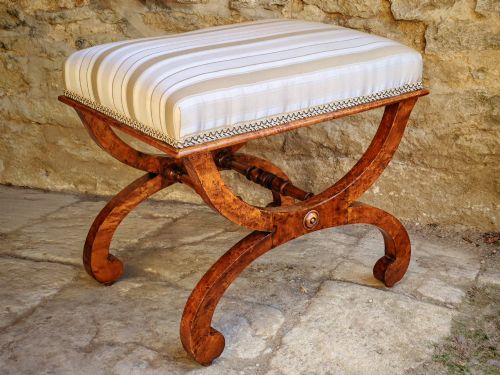
Cabinet makers utilised dense hardwoods such as walnut, mahogany, rosewood, and oak for the structural frames, often employing carved cabriole legs, turned supports, or x-frames. Brass castors frequently appear on the feet of larger stools for mobility.
Listings feature nineteenth-century furniture built from mahogany, walnut, rosewood, oak, and teak, incorporating leather, velvet, and cane.
Judging quality in these pieces
Quality rests primarily in the timber selection and the depth of frame carving, where dense rosewood or burr maple and crisp hand-carving distinguish superior pieces from plain utilitarian items. Substantial proportions on large country house ottomans also indicate higher original status.
The choice of upholstery materials, from standard fabric to hand-dyed leather, alters the character and finish of the piece. Frame integrity and the retention of original brass castors further separate standard examples from finer works.
Hallett & Sons
The Victorian Footstool Bench Glossary
- Cabriole leg
- A furniture leg that curves out and then in, resembling an animal's leg. This shape appears frequently on walnut and mahogany pieces from the period.
- Ottoman
- A low, upholstered seat or bench without arms or a back. Larger versions function as central tables or storage pieces.
- X-frame
- A structural base formed by intersecting curved or straight members shaped like the letter X. It provides sturdy support for dressing and piano stools.
- Giltwood
- Timber treated with gold leaf or gold paint to give a metallic surface finish. This treatment appears on decorative salon seating.
- Aesthetic Movement
- A late nineteenth-century design style focusing on visual beauty rather than narrative meaning. Pieces from this movement often feature ebonised finishes.
Victorian Footstool Bench: Frequently Asked Questions
How do I use a footstool bench?
These pieces function primarily as low seats or footrests in living spaces and bedrooms. Larger variants also serve effectively as coffee tables when paired with flat leather or wooden surfaces.
Position them before sofas, at the foot of a bed, or beneath dressing tables. Their low profile keeps sightlines open across a room.
Are these benches comfortable for sitting?
Most pieces provide firm support suited to short periods of sitting or resting the feet. Many survive with buttoned leather or padded textile tops.
Reupholstered examples often contain modern padding while retaining traditional frame structures. The height and width determine whether a piece suits a dressing table or a lounge.
How do I identify the wood type?
Examine the grain patterns and colour tones beneath the polish or wax. Walnut typically shows a rich brown with darker figuring, while mahogany runs deeper reddish-brown.
Rosewood displays distinct dark streaking, and oak reveals open pores with prominent medullary rays. Teak and burr maple present their own characteristic grain structures.
Can I place these on wooden floors?
Many examples feature brass castors or wooden feet that can mark delicate timber floors if dragged. Adding small protective pads prevents surface scratching.
Larger ottomans and heavy mahogany frames distribute weight evenly, but care remains necessary when repositioning pieces with metal castors.