



Mahogany Tripod Lectern
A mahogany tripod lectern brings the warmth of figured timber and adjustable height to a library or music room.
Mahogany Tripod Lectern
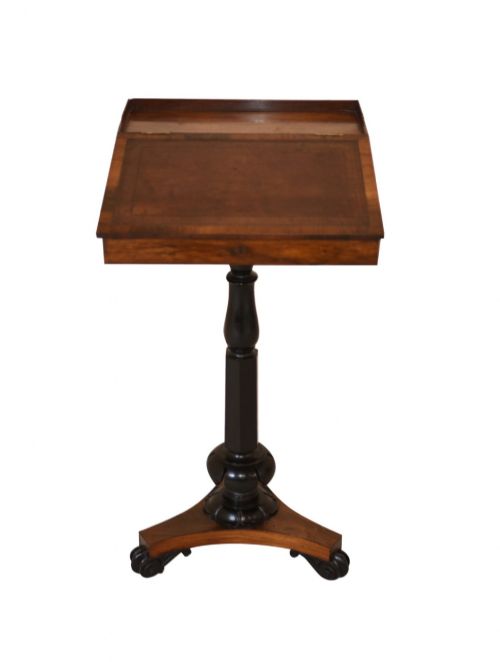
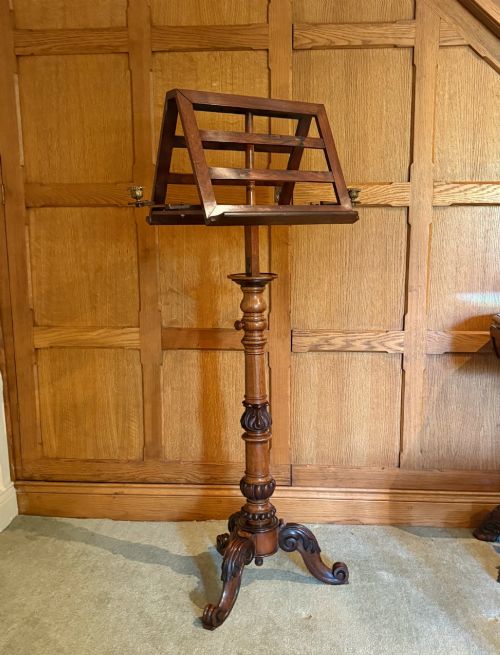
A mahogany tripod lectern serves as a practical stand for books, sheets of music, and papers, raised on three legs for stability on uneven floors. When buyers search for a mahogany tripod lectern, they encounter pieces designed to hold reading material at a comfortable angle and height.
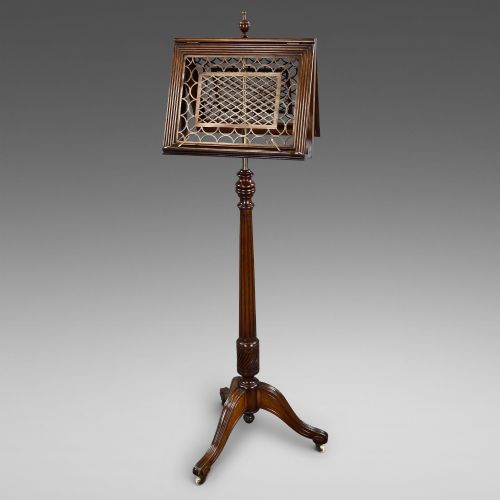
The selections available range from George III and Regency reading tables to Victorian and later music stands, including duet stands and lyre-shaped designs. Many examples combine reading surfaces with occasional table uses or adjustable mechanisms for standing and seated use.
Origins span the nineteenth century, encompassing Georgian, William IV, and Victorian periods. The forms vary from straightforward music stands to multifaceted reading tables with satinwood inlay and brass details.
How they were made
Makers constructed these stands primarily from solid and figured mahogany, sometimes incorporating rosewood and contrasting satinwood inlay to add decorative geometric borders or centre panels. Timber selection focused on rich grain patterns that caught the light in domestic interiors.
Metal components such as brass fittings provided functional adjustments for height and inclination without compromising the rigidity of the tripod base. Fine joinery connected the central column to splayed legs, ensuring the support remained balanced under the weight of heavy folios.
Mahogany Tripod Lectern Retail Price Guide 2026
Typical asking prices for mahogany tripod lectern among the pieces listed under this phrase on Sellingantiques today, from the lower quarter to the upper quarter. They describe what is for sale here now, not the wider market.
The listings span the Georgian, Regency, William IV, and Victorian periods, showcasing mahogany alongside rosewood and satinwood inlay.
What varies in quality
Quality rests in the crispness of the timber carving and the subtlety of figured mahogany grain, where superior examples display deeper chatoyancy and more carefully matched veneers. The integration of satinwood inlay reveals the hand of a more accomplished cabinet maker.
Mechanical refinement distinguishes better pieces, seen in how smoothly the adjustable reading desk operates and how securely the brass ratchets hold their position. The stability of the tripod joint and the elegance of the turned column dictate the overall presence of the piece.
GILLOWS
The Mahogany Tripod Lectern Glossary
- Duet stand
- A music stand wide enough to hold two open scores side by side. These often feature fretted wooden music desks.
- Lyre-shaped
- A central support shaped like an ancient musical instrument with curved sides. This motif appears frequently in Regency music stands.
- Reading table
- A piece of furniture incorporating a sloping or adjustable desk surface, frequently used for holding books or folios. Some examples function simultaneously as occasional tables.
- Satinwood inlay
- Contrasting light-coloured wood inserted into the darker mahogany surface in geometric patterns or banding. It provides a decorative border around the edges of the reading surface.
Mahogany Tripod Lectern: Frequently Asked Questions
What is a mahogany tripod lectern used for?
These stands support books, manuscripts, and sheet music at a readable angle in studies, libraries, and music rooms. The adjustable desk allows readers to position texts comfortably while standing or sitting.
Many examples double as occasional tables or reading tables when the desk surface is returned to a flat position. Their portable tripod design allowed them to be moved easily beside chairs or desks.
How do I identify a Regency music stand?
Regency stands often feature classical motifs such as lyre-shaped supports, reeded columns, and brass mounts reflecting neoclassical tastes. The timber tends to be dense mahogany with dark, rich figuring.
They frequently incorporate adjustable ratchet mechanisms hidden beneath the desk to alter the reading angle. The base generally consists of three splayed legs terminating in scroll or pad feet.
Are these lecterns adjustable?
Most pieces include mechanisms to alter either the height of the central column or the inclination of the reading desk. Brass ratchets and sliding pillars allowed users to customise the stand for specific books or instruments.
Checking the movement reveals whether the brass components are original to the period. Smooth adjustment indicates careful maintenance of the internal wooden or brass screws.
What is a duet stand?
A duet stand is an expanded music stand designed to hold two books or large sheets simultaneously. They often feature wider fretted wooden desks with decorative cut-outs to reduce weight.
These pieces typically date from the Victorian period or late nineteenth century. They provide a wider surface area while retaining the stable tripod base.