


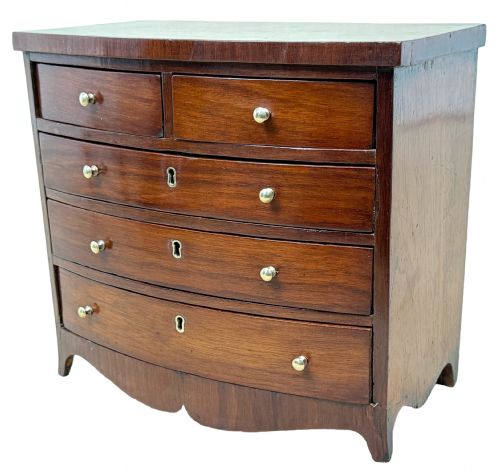

Mahogany Trinket Chest
A mahogany trinket chest provides a clever miniature repository for valuables, combining timber warmth with period cabinetmaking skill.
Mahogany Trinket Chest
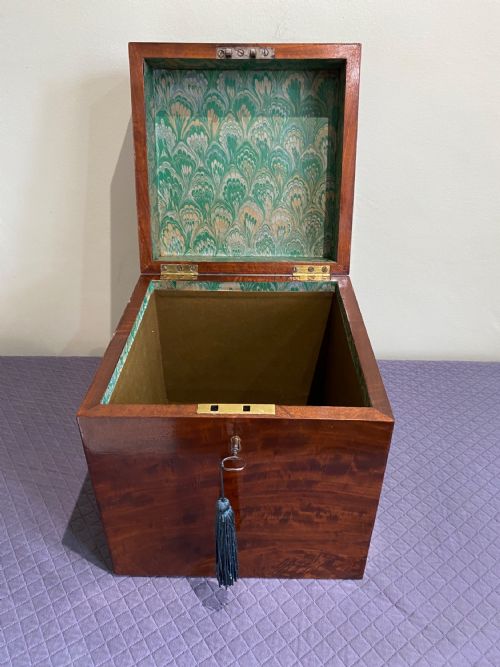
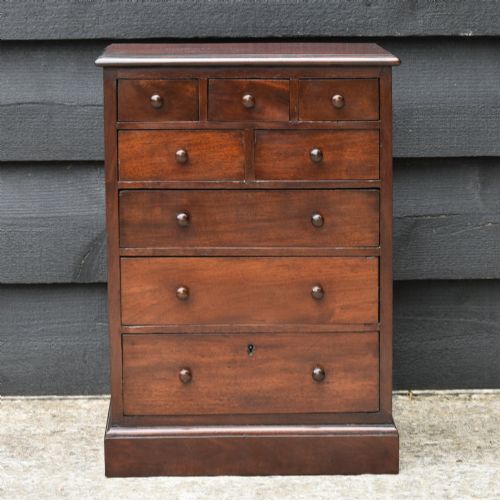
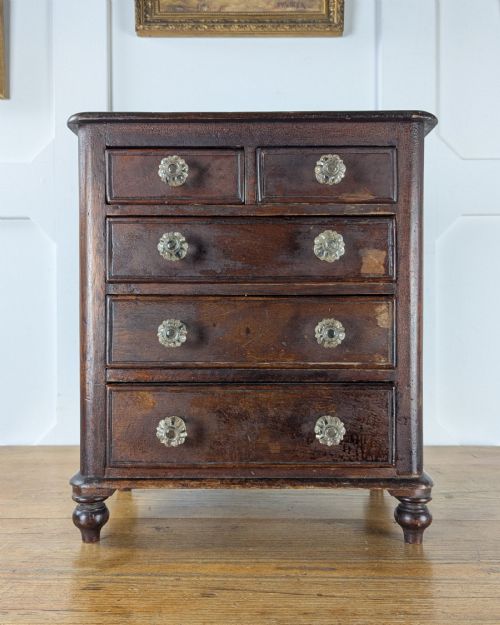
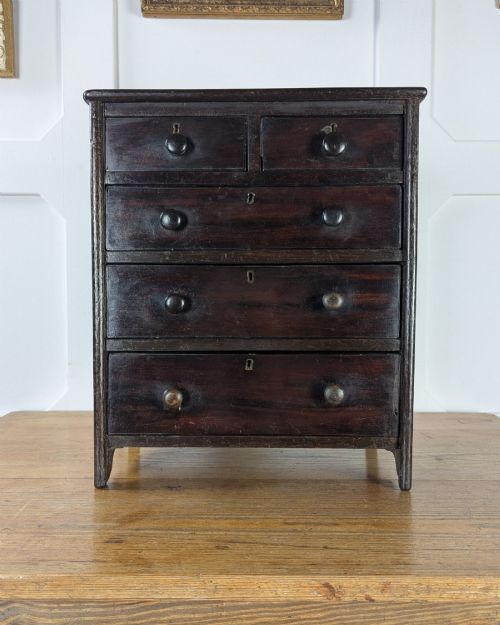
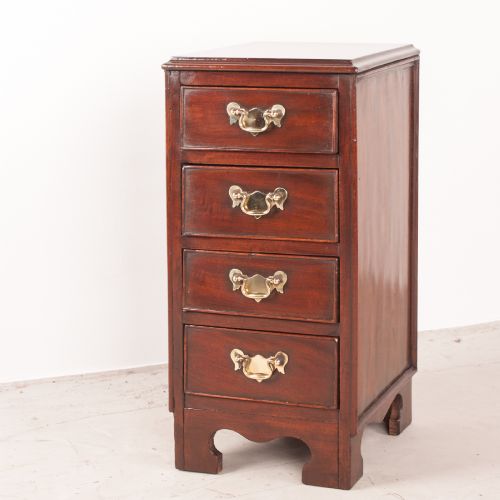
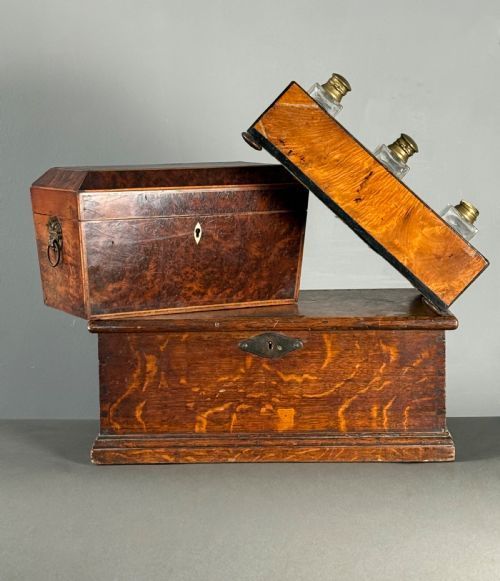
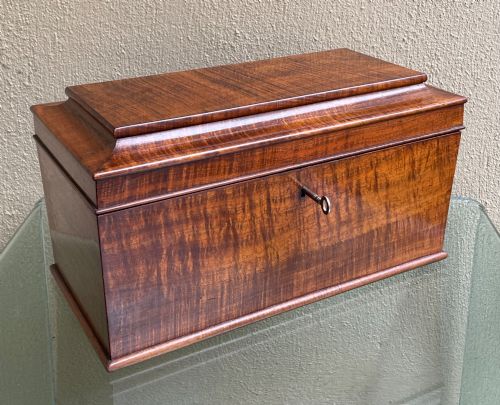
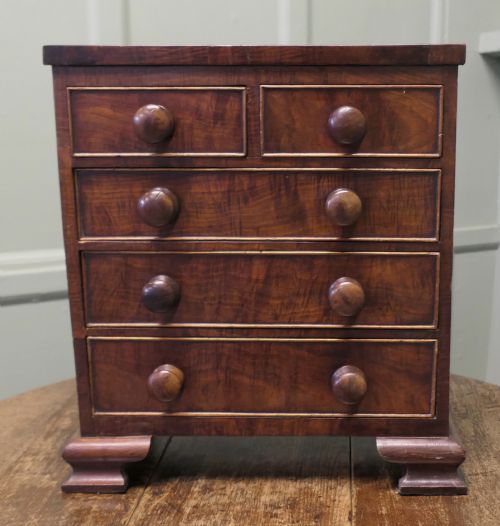
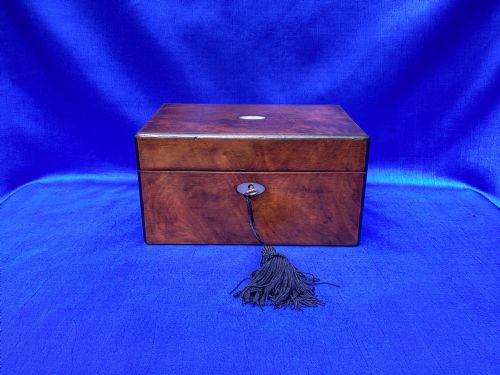
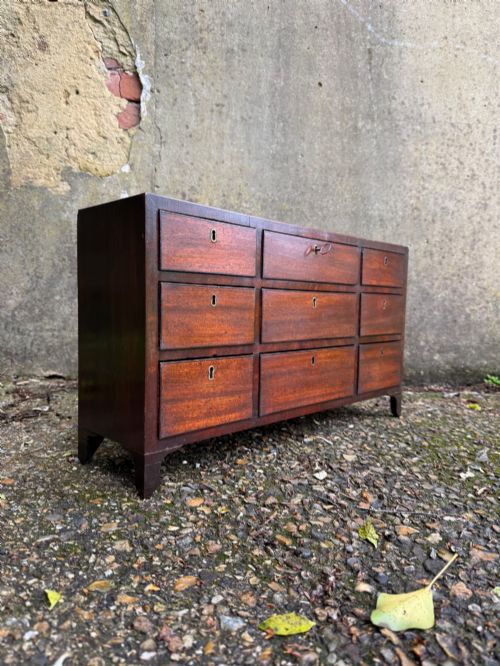
A mahogany trinket chest is typically encountered here as a miniature chest of drawers, tea caddy, or small decorative storage box dating from the Georgian, Victorian, and Edwardian eras. These diminutive pieces mirror the proportions of full-sized domestic furniture and storage vessels of their respective periods.
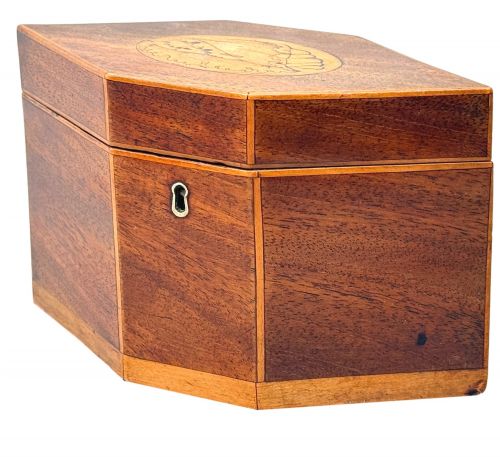
The selection ranges from bowfront miniature chests standing on turned feet to hexagonal tea caddies and inlaid boxes featuring specialised interior compartments. Originating mostly from the eighteenth and nineteenth centuries, these objects served various functions from personal jewellery storage to meticulous cabinetmaker demonstrations.
How they were made
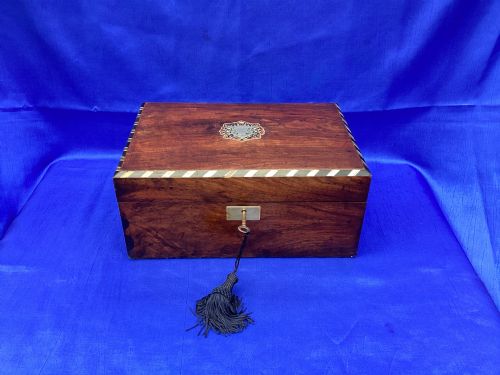
Makers utilised solid mahogany and select veneers over secondary timbers, often accentuating drawer fronts and lids with contrasting boxwood stringing. Selected pieces incorporate detailed shell inlay, mother-of-pearl, and bone elements to ornament plain wooden surfaces.
Structural integrity relied on precise joinery including dovetail construction for drawers and turned wooden feet or brass fittings for support. Surfaces received hand-rubbed finishes that developed a deep patina over centuries of handling.
Listings feature mahogany paired with brass, boxwood, glass, bone, oak, and mother-of-pearl across Georgian, Victorian, and Edwardian periods.
What varies in quality
Quality differentiates by the crispness of the miniature proportions and the complexity of the timber figure selected for the exterior surfaces. Finer examples display meticulous attention to drawer linings, original brass hardware, and subtle decorative stringing rather than heavy-handed restorations.
The depth of the natural patina and the preservation of original interior compartments distinguish standard utilitarian boxes from superior cabinetmaker demonstrations and exhibition pieces.
The Mahogany Trinket Chest Glossary
- Apprentice piece
- A demonstration item created by a craftsman to prove skill before gaining master status. These often took the form of miniature chests of drawers.
- Bowfront
- A curved front profile popular in Georgian and Victorian case furniture. It softens the linear angles of a small chest.
- Tea caddy
- A lidded container designed to store dry tea leaves securely. They frequently feature internal compartments and lockable lids.
- Stringing
- A thin inlay of contrasting timber used to outline panels and drawer edges. Boxwood is commonly utilised for this decorative banding.
Mahogany Trinket Chest: Frequently Asked Questions
What were miniature chests used for?
These small chests served to store personal valuables, trinkets, documents, or specialised items like sewing accessories on a dressing table. Their compact size kept precious items organised in domestic settings.
Cabinetmakers also produced them as demonstration pieces to exhibit technical skill to guild masters or prospective clients. This dual purpose means surviving examples vary in their internal layout and decorative finish.
How do I date a mahogany trinket chest?
Dating relies on observing structural characteristics such as timber choice, dovetailing technique, and the overall style of the feet and hardware. Georgian pieces often display restrained classical lines while Victorian examples introduce bolder proportions and varied veneers.
Secondary woods inside the drawers and the presence of hand-cut nails or brass screws offer further clues to the period of manufacture. Comparing the construction methods to dated reference pieces establishes the likely decade.
How should I care for antique mahogany?
Maintenance requires keeping the wood away from direct sunlight and sudden temperature shifts to prevent timber shrinkage and veneer lifting. Gentle dusting with a dry cloth preserves the historical surface.
Applying specialised wax sparingly helps maintain the natural sheen and nourishes the aged timber without building up heavy residues. Proper placement ensures the piece survives in sound condition.