
Mahogany Tilt Top Tea Table
A mahogany tilt top tea table combines ingenious pivoting mechanics with a stable tripod base designed to save space when tea service finished.
Mahogany Tilt Top Tea Table
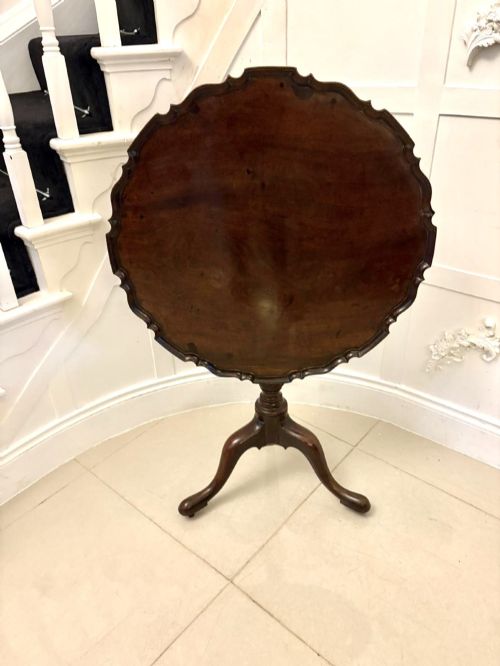
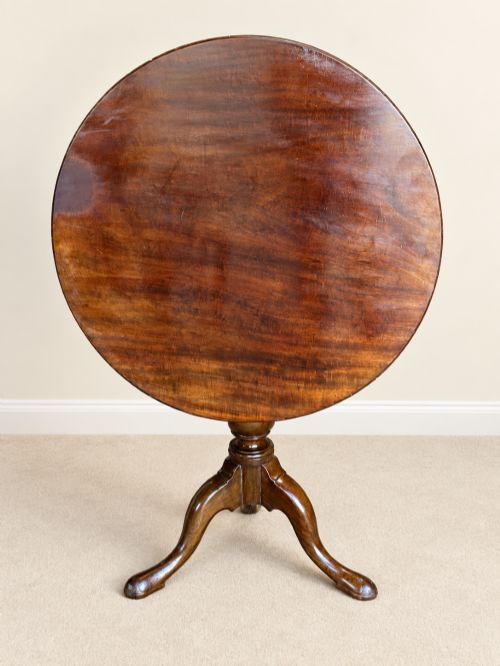
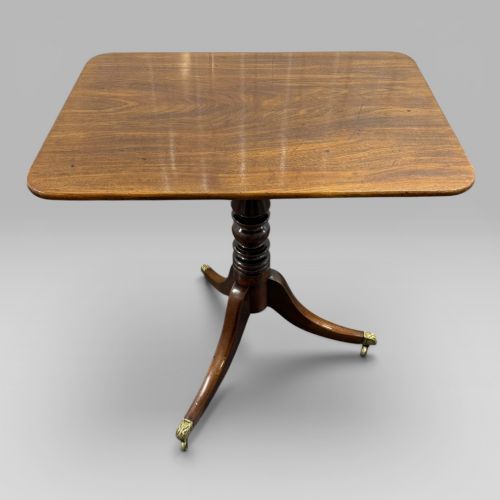
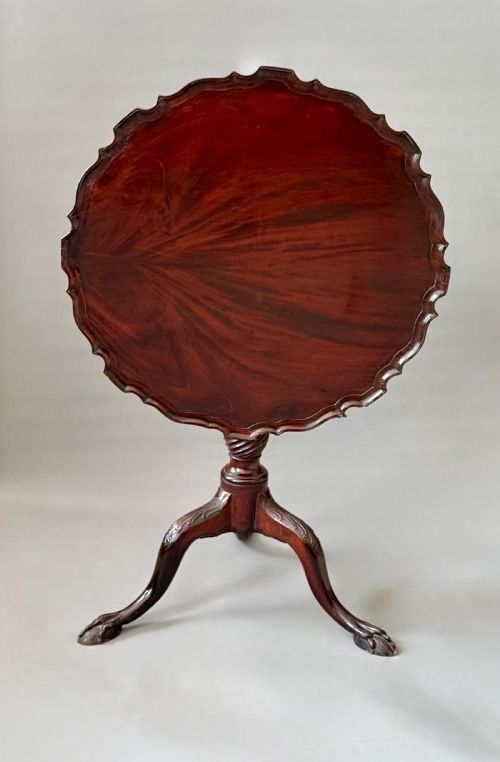
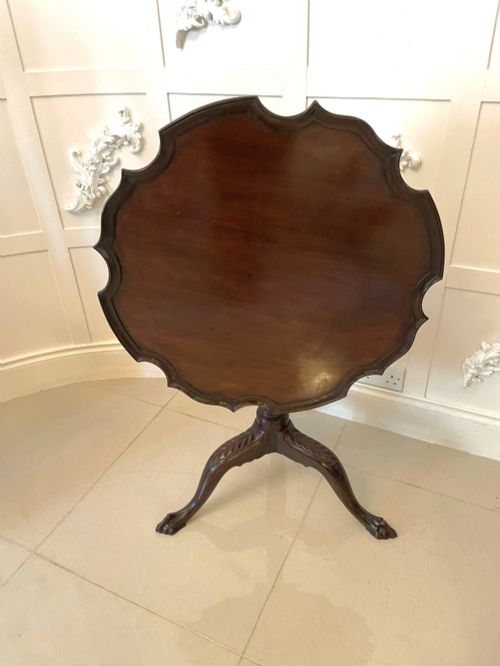
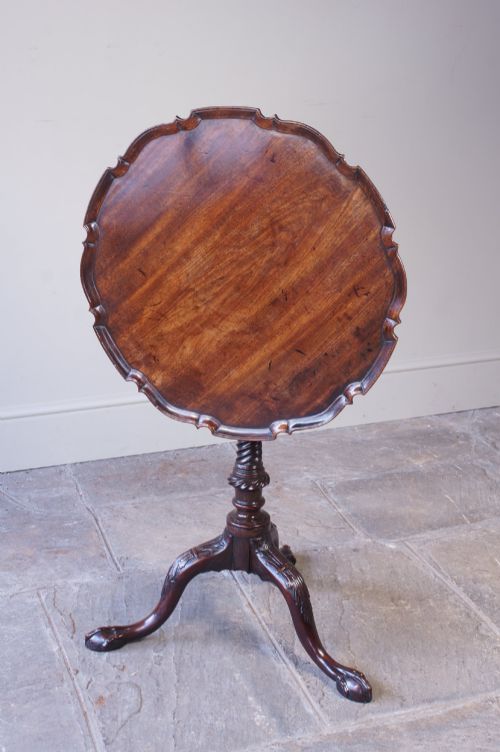
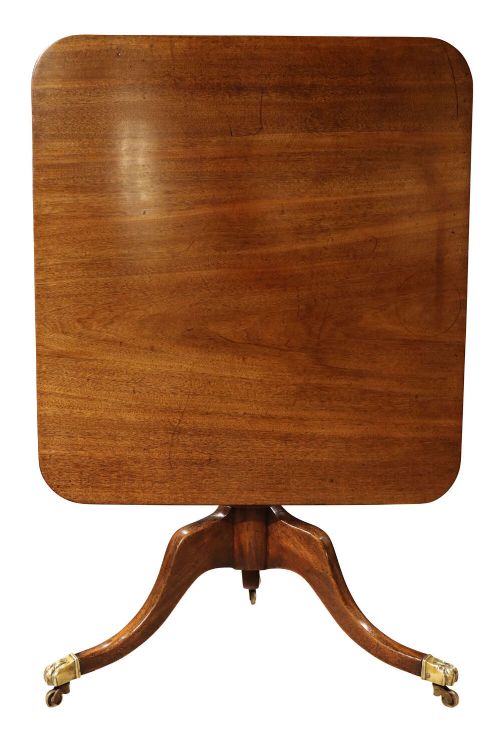
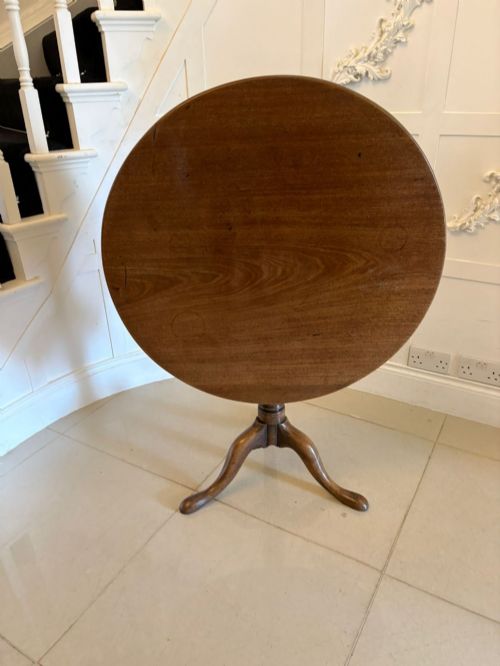
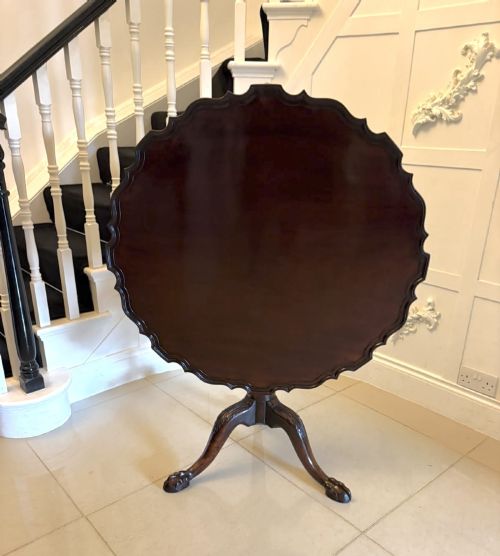
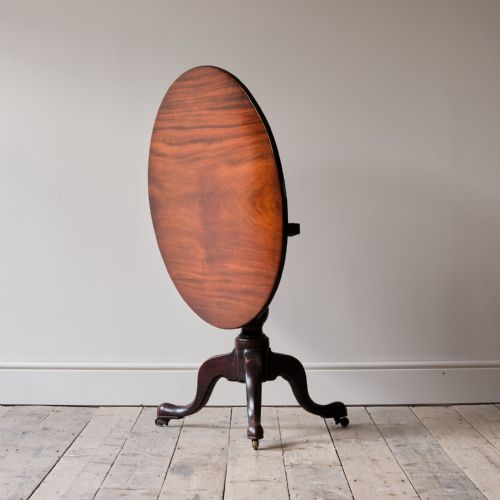
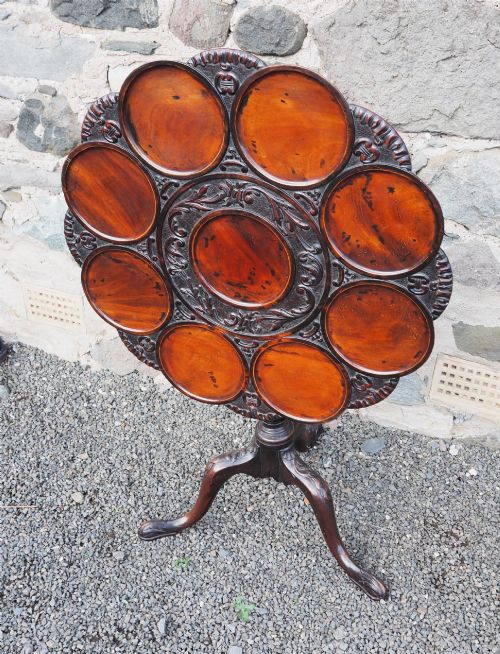
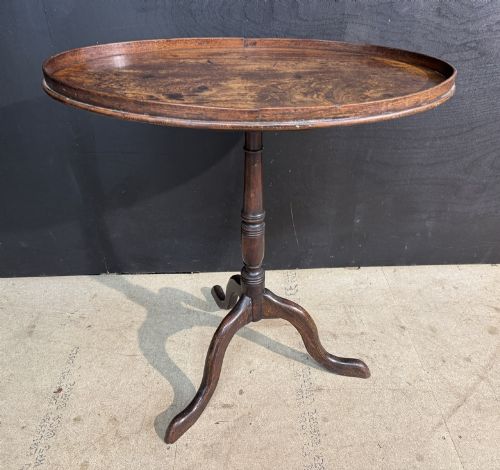
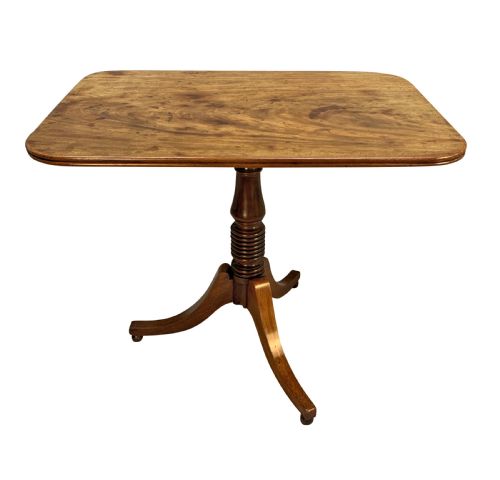
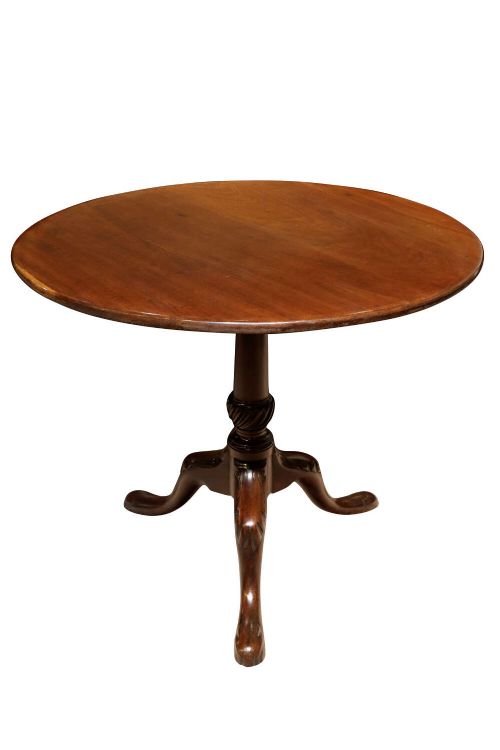
A mahogany tilt top tea table is primarily an 18th-century or 19th-century occasional piece designed to pivot flat against a pedestal column when not in use. You will most frequently encounter Georgian and George III examples resting on tripartite cabriole legs terminating in pad, claw, or snake feet.
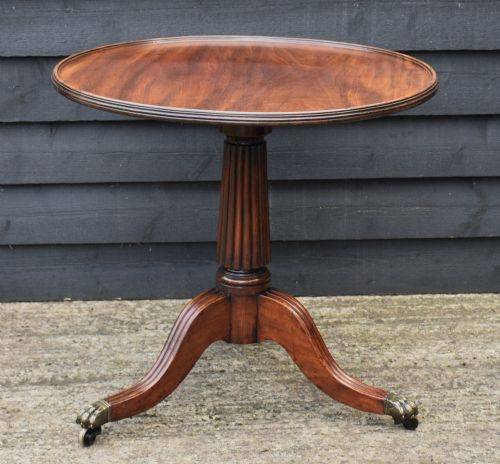
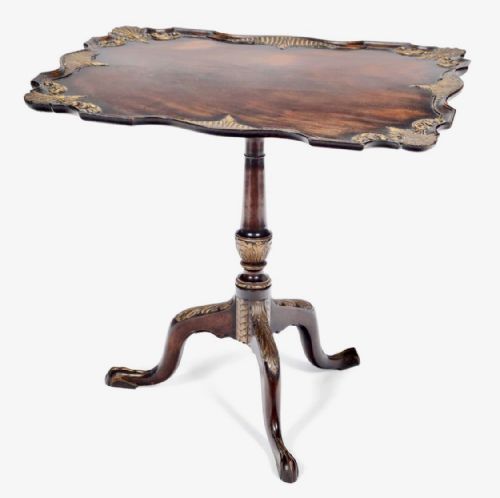
The surface forms vary from plain circular and oval boards to elaborate raised piecrust edges and tray tops. Many pieces incorporate a clever birdcage mechanism beneath the top, allowing the surface to both tilt and rotate independently for ease of access.
Beyond the standard tripod tea table, the evidence records occasional, side, wine, supper, and games variants. These tables served domestic interior roles ranging from serving social tea to holding lamps or displaying decorative objects.
Materials and Construction Methods
Makers relied heavily on solid timber and dense Cuban mahogany, valued for its rich grain patterns and ability to hold crisp carved details along the tripod legs and pedestal columns. Some pieces also integrate walnut, brass fittings, iron supports, or delicate wood inlay and parcel gilt accents.
The mechanical joints required precise joinery, particularly where the birdcage or block mechanism connects the tilting top to the central pillar. Turning the timber for the urn-shaped or fluted pedestals demanded expert lathe work to support the weight of the solid top safely.
Some tables survived centuries of enthusiastic tea pouring while remaining remarkably eager to tip over at a sudden touch.
Judging Quality and Execution
The distinction between standard and superior pieces rests on the crispness of the carving, especially on the knees of the tripod legs and the shaping of piecrust borders. Tables featuring figural Cuban mahogany grain and intricate birdcage box construction demand closer attention for their refined joinery.
Proportion and stability dictate the upper tier of the range, where the tripod stance firmly supports the tilting top without excessive wobble in the central pillar. Subtle details like retaining original patination and matching timber sections elevate an example far above standard utility items.
The Mahogany Tilt Top Tea Table Glossary
- Tilt-top
- A tabletop constructed to pivot vertically on a horizontal hinge pin. This allows the piece to stand flat against a wall when not in service.
- Birdcage
- A timber box frame situated beneath the tabletop containing four small columns. This mechanism allows the table surface to both rotate and tip.
- Pie crust
- A raised, scalloped edge carved directly from the solid timber of the tabletop. It provides a decorative border historically used to prevent cups from sliding.
- Tripod
- A three-legged base configuration standard to pedestal tables. It ensures stability on uneven domestic floors.
- Snap top
- An alternative mechanism utilising a spring catch to lock the pivoting tabletop firmly into the horizontal position. It prevents accidental tipping during use.
Mahogany Tilt Top Tea Table: Frequently Asked Questions
What is a tilt top tea table?
A tilt top tea table is a domestic pedestal table featuring a pivoting mechanism beneath the surface. This allows the top to fold flat into a vertical position for storage against a wall.
Originally built for the social ritual of serving tea, these pieces functioned as portable surfaces that could be cleared away quickly to reclaim floor space in parlours and drawing rooms.
How do I tell an 18th-century table apart from a later revival?
Eighteenth-century examples display natural timber shrinkage, hand-cut joinery marks, and authentic wear patterns around the pivot blocks and leg joints. The weight of the timber and the hand-carved detailing on the tripod knees offer strong visual clues to age.
Revival pieces from later periods often utilise machine-sawn components and standardised hardware that lack the subtle irregularities of period craftsmanship.
Where should I place a tilt top table at home?
These tables fit naturally beside seating areas as functional lamp or side surfaces where the tilting action can be appreciated as a decorative feature. Placing them in a corner or against a wall allows the folded top to display the wood grain as a piece of wall art.
Avoid positioning them in direct sunlight or near heat sources, as older mahogany and internal pivot pins respond poorly to extreme temperature fluctuations.