
Mahogany Tiered Whatnot
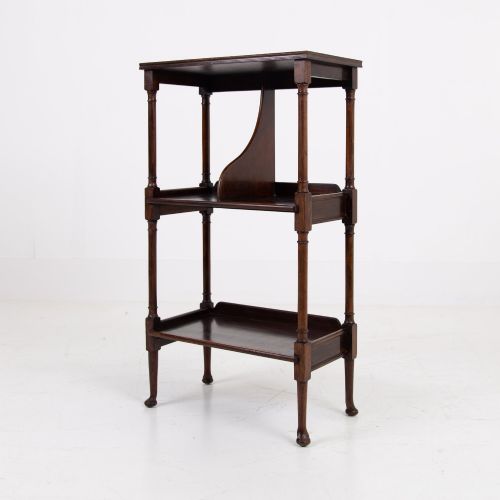
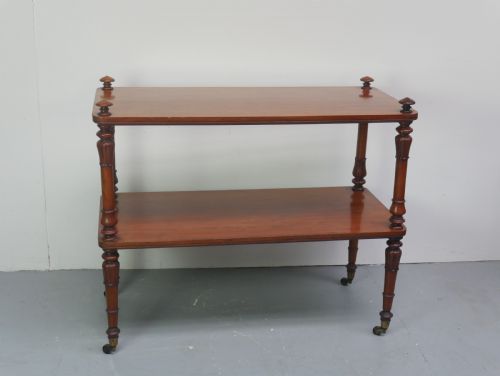
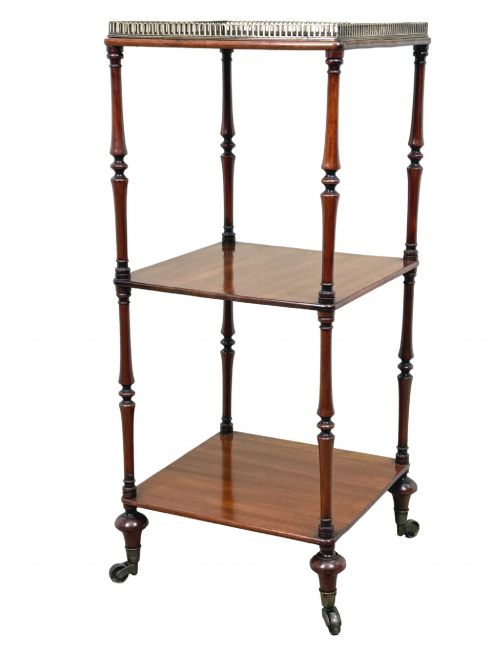
A mahogany tiered whatnot offers open display and practical storage, spanning the Georgian, Regency and Victorian periods.

Mahogany Tiered Whatnot
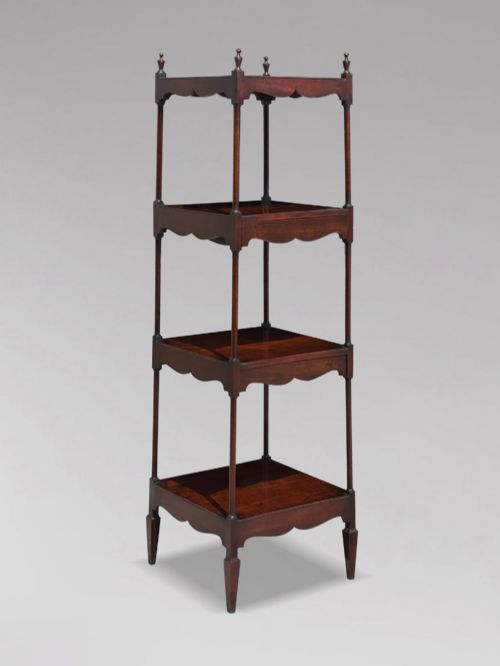
A mahogany tiered whatnot provides stacked open shelving for books, ceramics and decorative objects within domestic rooms. These pieces emerged in the late eighteenth century and remained popular through the Victorian era.
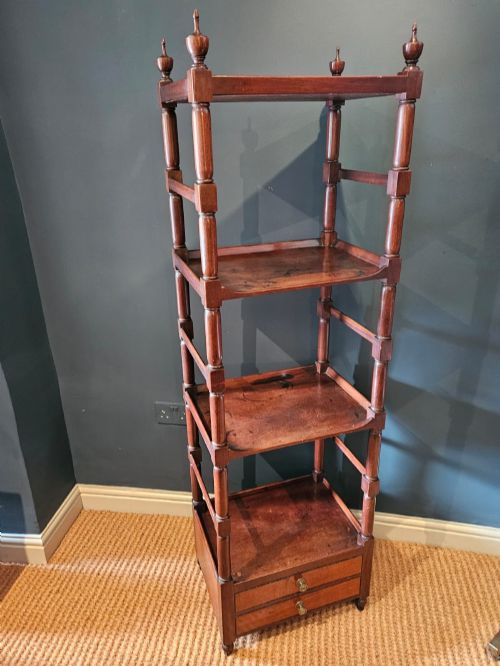
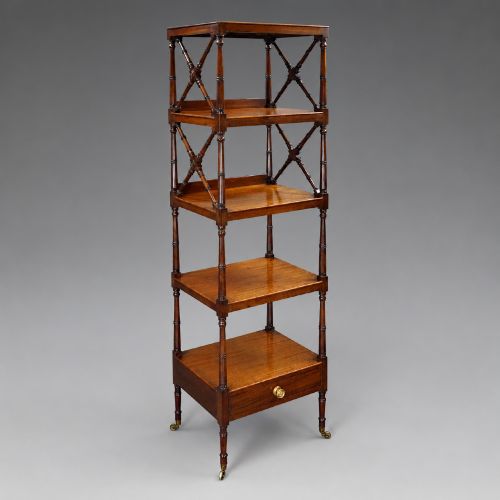
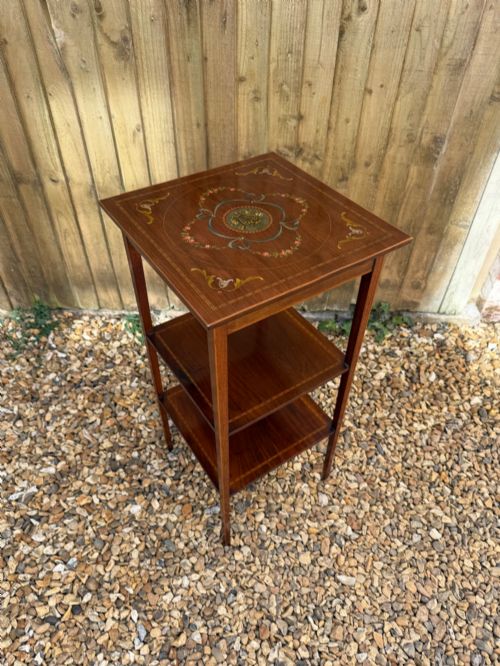
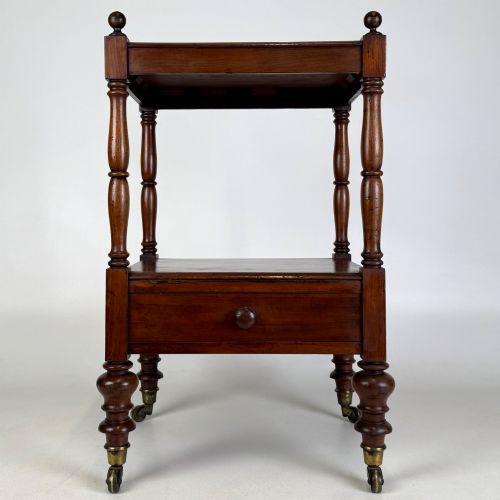
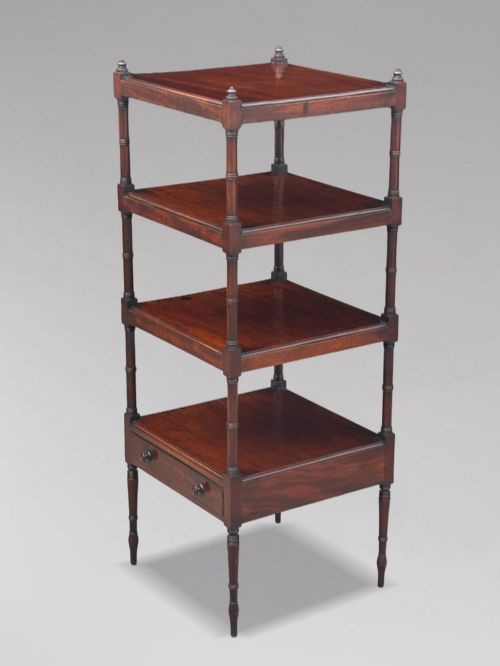
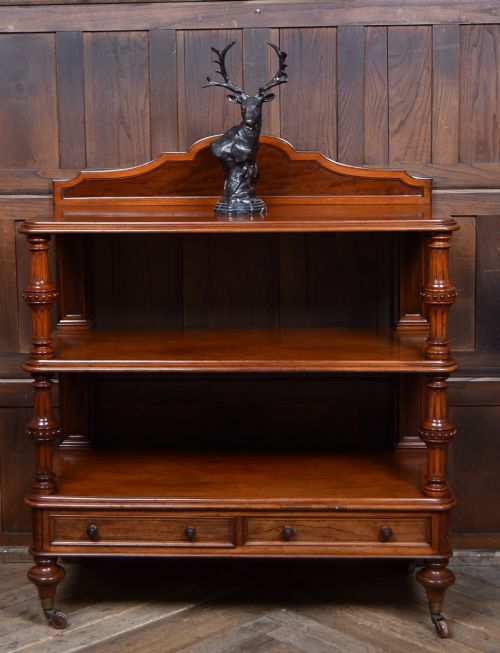
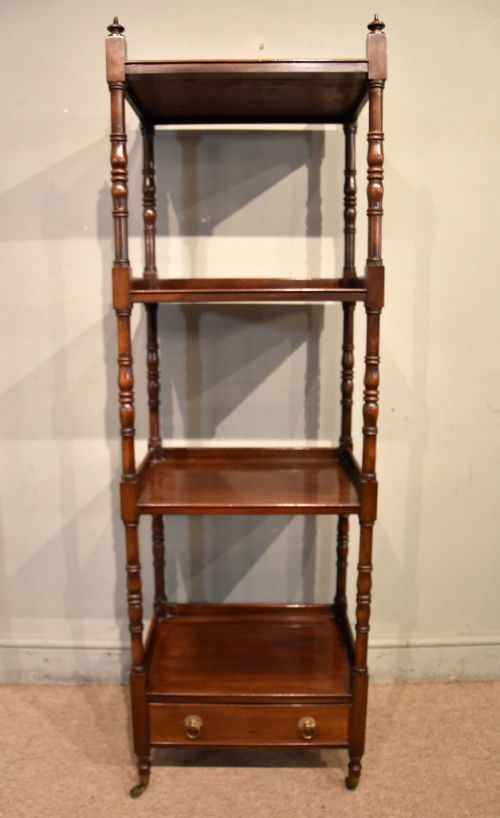
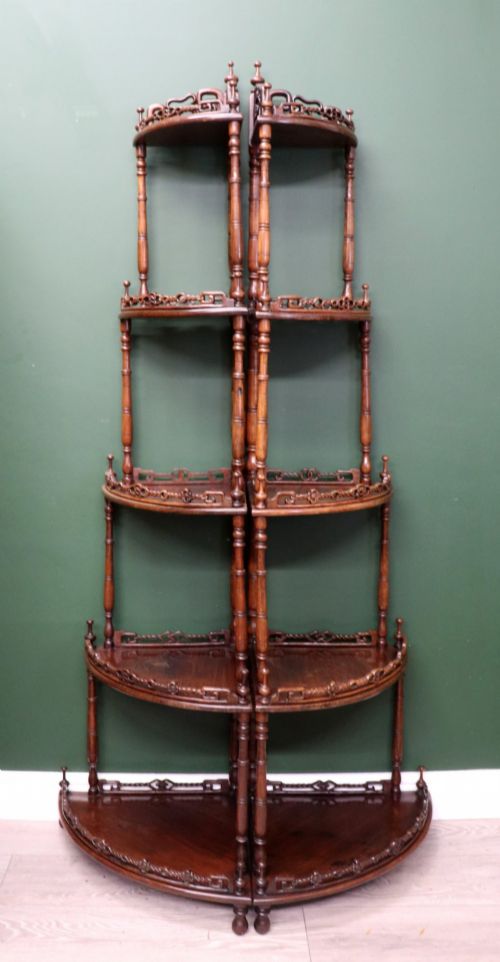
The version most commonly met on this page is the four-tier or three-tier open shelf unit constructed from mahogany, occasionally featuring a drawer or cupboard base. Examples range from tall corner models to compact bedside tables and music stands.
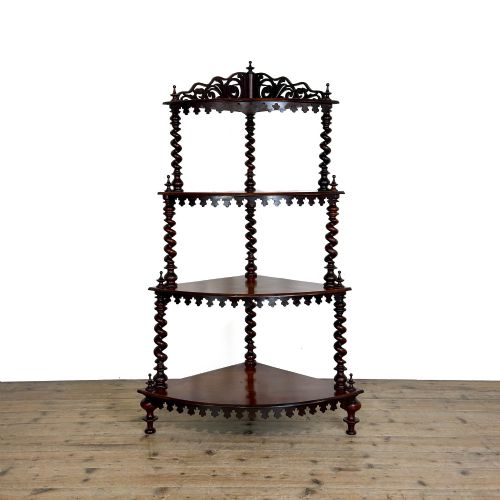
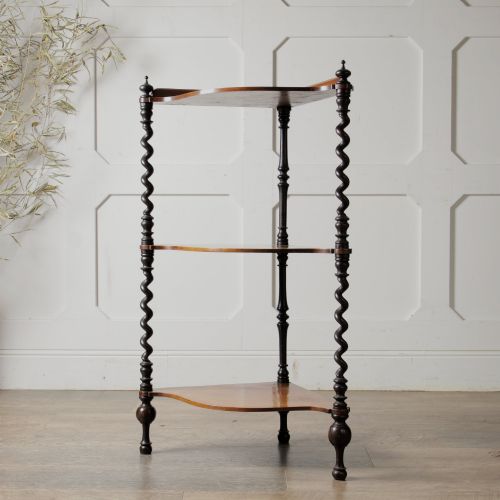
Makers of these tier structures utilised various forms, including tapering frames, barley twist uprights and freestanding etageres. Surviving pieces reflect the changing domestic requirements of Georgian, Regency, William IV and Victorian households.
Materials and construction
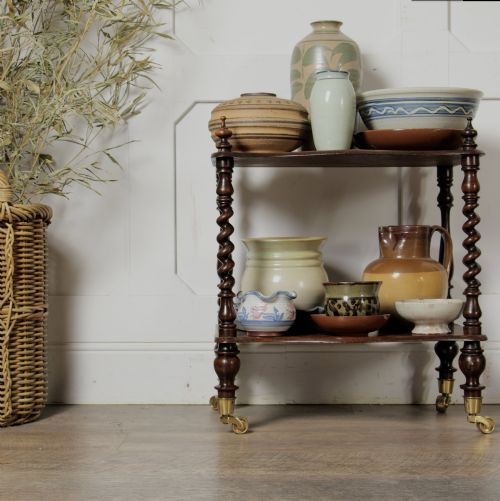
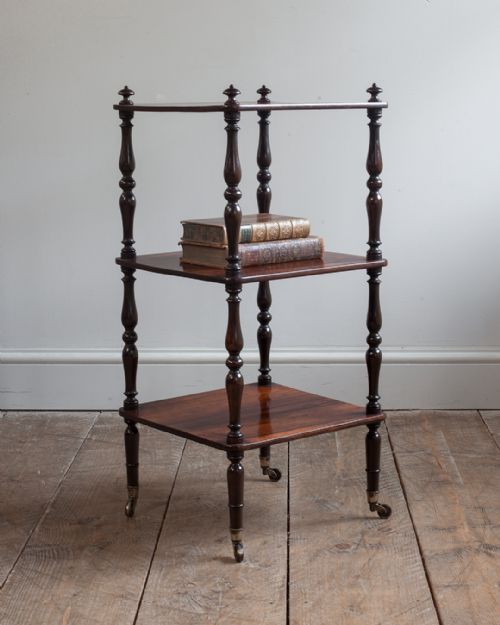
Makers built these pieces primarily from solid and veneered mahogany, sometimes incorporating rosewood, walnut and boxwood inlay for decorative contrast. Structural supports range from simple turned columns to barley twist uprights.
Secondary materials such as brass for castors, glass for display elements and cane for detailing appear across different regional workshops. Joinery methods matched the weight of the tiers, ensuring stability across multiple stacked shelves.
Object types include etageres, music stands, corner units, and bedside tables alongside standard tiered whatnots.
Distinctions in quality
Quality in a tiered whatnot rests upon the selection of timber grain, the crispness of turned supports and the integrity of the tier joints. Superior examples display thoughtful proportions and careful timber matching across each shelf.
Attribution to specific workshops, such as Gillows, separates standard production items from pieces with finer cabinet-making details. The integration of functional additions, like drawers, cellarettes or brass castors, marks the difference between basic utility and higher craftsmanship.
Gillows
The Mahogany Tiered Whatnot Glossary
- Whatnot
- A piece of furniture consisting of a set of open shelves for displaying small objects or books. They appeared in various heights and tier counts during the eighteenth and nineteenth centuries.
- Etagere
- A piece of furniture with a set of open shelves for displaying ornaments. The term is often used interchangeably with whatnot in listings.
- Cellarette
- A lockable container or cabinet compartment used for holding bottles. Some larger whatnot forms incorporate this feature within the lower section.
- Barley twist
- A type of turning shaped like a spiral or screw. This decorative technique frequently appears on the upright supports of Victorian models.
- Dumb waiter
- A tiered serving table used in dining rooms. Certain pieces combine this function with the open shelving structure of a whatnot.
Mahogany Tiered Whatnot: Frequently Asked Questions
What were whatnots used for?
These pieces served as multi-purpose display and storage units in drawing rooms, parlours and bedrooms. Households placed books, ornaments, and ceramics across the stacked shelves for easy access.
Some models included lower cupboards or drawers to hold smaller domestic items. Others functioned as music stands or plant stands depending on the room.
How do I date a whatnot?
Dating relies on observing the timber choice, leg style and turning details across the tiers. Georgian and Regency pieces often feature cleaner lines and tapering forms.
Victorian examples frequently introduce heavier turned supports, barley twists, mirrors or built-in drawers. Comparing the joinery methods and secondary woods also helps place the piece within a specific decade.
Where should I place a whatnot?
These units suit corners, alcoves or freestanding positions against living room walls. Corner models make effective use of unused angles in smaller spaces.
Their open shelving design allows them to hold collections without overwhelming the room visually. Placing them away from direct heat sources protects the mahogany veneer and polish.
Are corner whatnots stable?
Corner whatnots rely on wall contact and balanced weight distribution across the shelves to maintain stability. Their triangular footprint fits snugly into ninety-degree room angles.
Heavier items belong on the lowest tier to keep the centre of gravity low. Most surviving examples retain their original structural integrity when positioned correctly on level floors.