

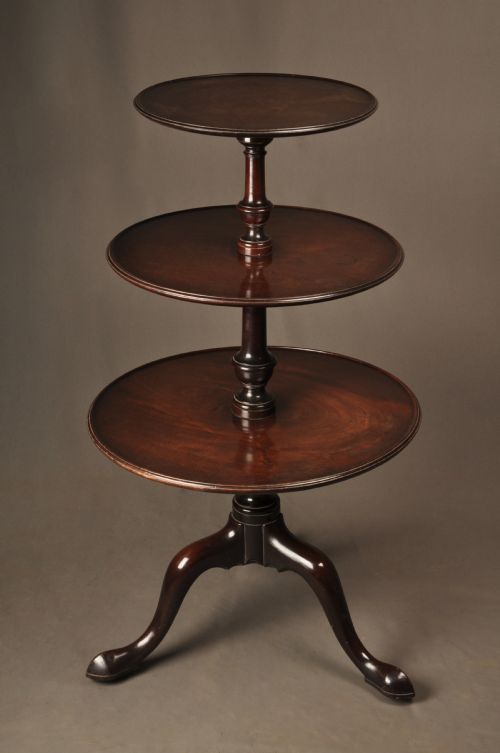

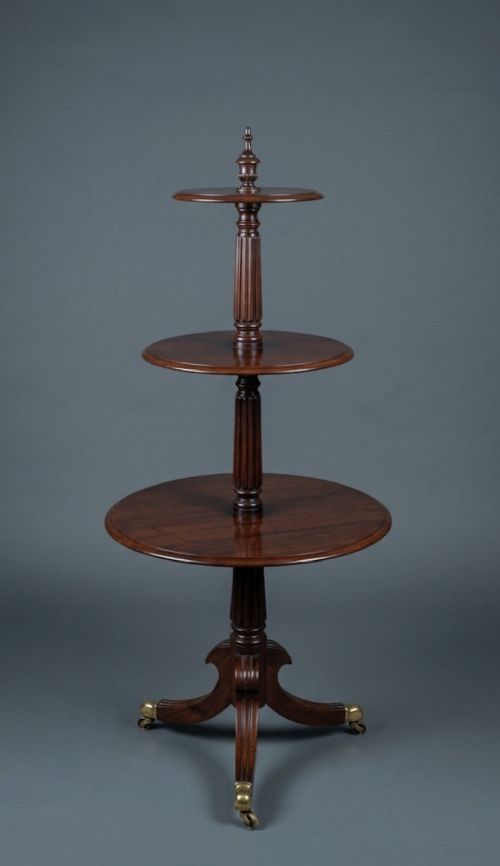
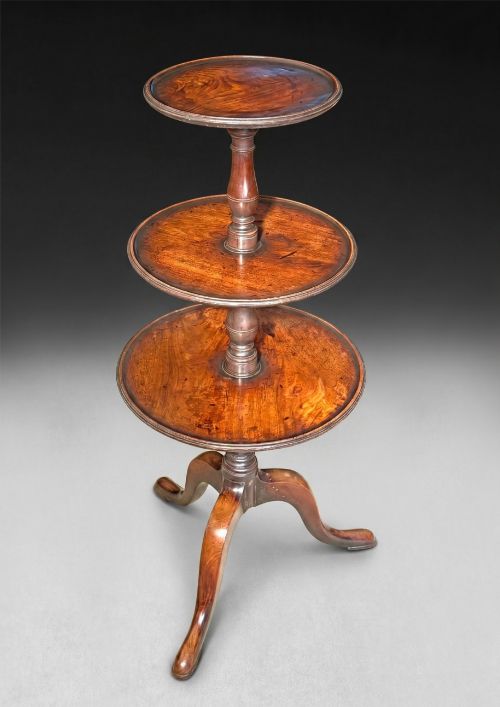
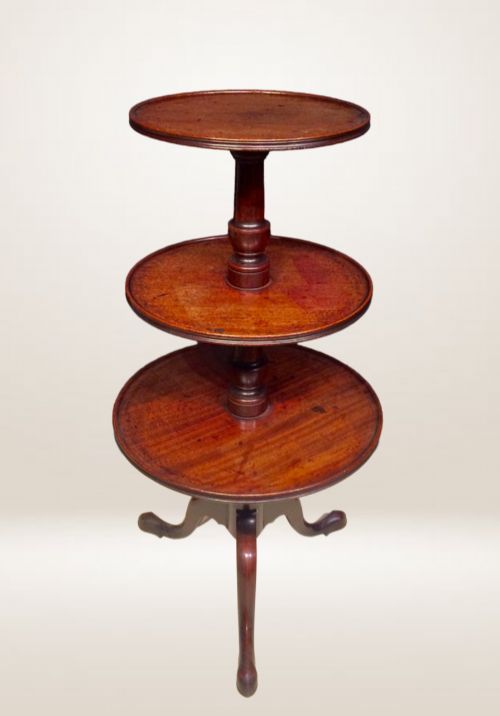


Mahogany Tier Dessert Stand
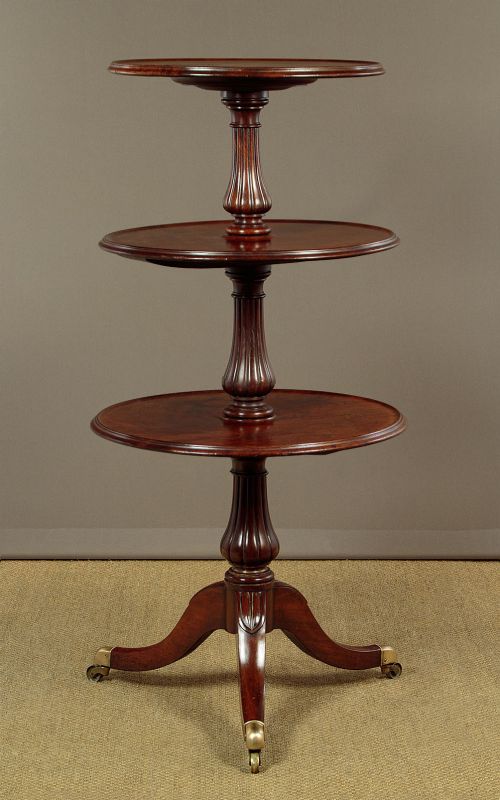
A mahogany tier dessert stand provides graduated tiers for serving, appearing here primarily as Georgian and Regency dumb waiters.
Mahogany Tier Dessert Stand
A mahogany tier dessert stand, often catalogued as a dumb waiter or tiered table, offers multiple graduating circular levels intended for dining and serving. These pieces appear frequently in Georgian, Regency, and Victorian styles, spanning the eighteenth and nineteenth centuries.
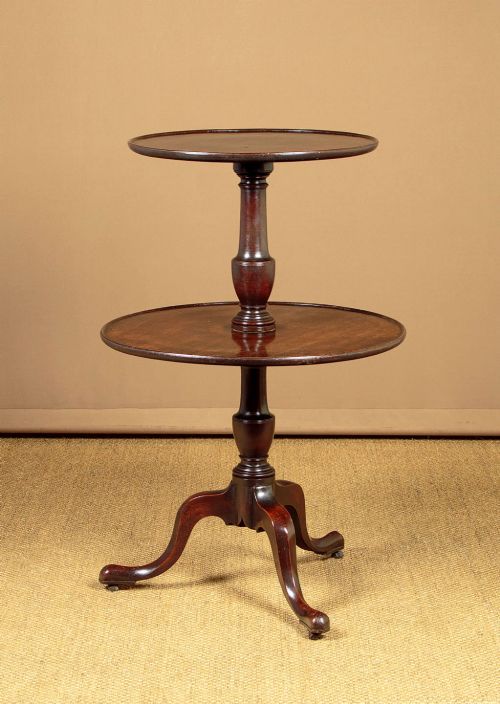
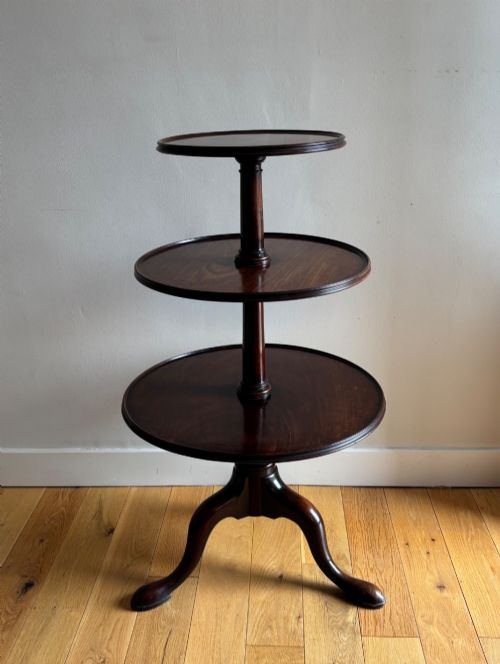
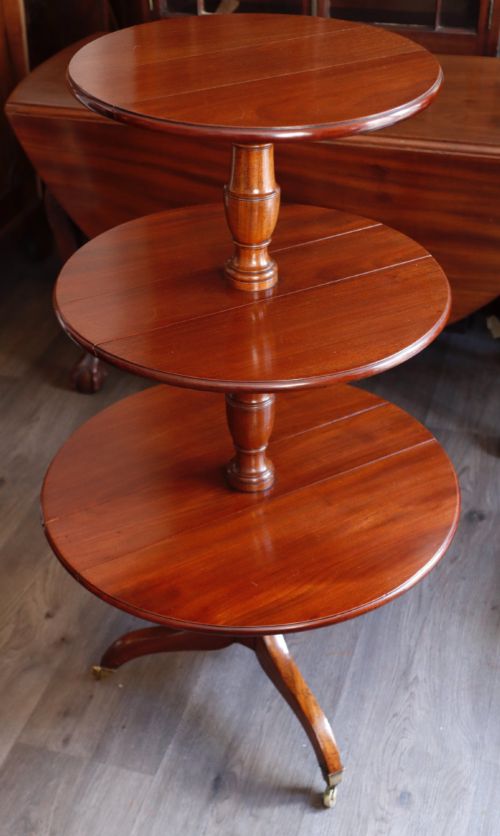
The most common form on this page is the three-tier circular dumb waiter, though two-tier variants and folding examples also appear. Makers designed these stands with revolving trays supported on central turned pillars and tripod legs.
Serving stands and occasional tables function as secondary furniture pieces historically used to hold dishes during meals without servants present. Buyers seek them for their practical tiered design and rich timber surfaces.
How they were made
Cabinet makers constructed these stands predominantly from solid and veneered mahogany, frequently combining brass for castors and subtle inlay details. Certain pieces incorporate rosewood elements alongside the primary timber.
The central columns feature detailed turning, while the graduated circular trays often display raised edges or galleried rims. Tripod base supports provide stability for the heavy tiered structure.
Mahogany Tier Dessert Stand Retail Price Guide 2026
Typical asking prices for mahogany tier dessert stand among the pieces listed under this phrase on Sellingantiques today, from the lower quarter to the upper quarter. They describe what is for sale here now, not the wider market.
Current listings feature mahogany dumb waiters and tiered serving stands predominantly from the Georgian, Regency, and Victorian periods, alongside brass and rosewood elements.
What varies in quality
The sophistication of the timber figure and the crispness of the column turning distinguish finer examples from simpler workshops. Richness in the mahogany grain and depth of colour elevate certain pieces.
The structural integration of the revolving mechanism and the elegance of the tripod legs define the upper tier of craftsmanship. Pieces associated with known makers display superior joinery and refined proportions.
Maple and Co·Gillows
The Mahogany Tier Dessert Stand Glossary
- Dumb waiter
- A freestanding tiered piece of dining room furniture designed to hold plates and dishes. These stands typically feature revolving circular trays.
- Tripod base
- A three-legged support structure commonly found beneath the central pillar of these stands. This configuration ensures stability on uneven dining room floors.
- Galleried edge
- A raised border encircling the perimeter of a serving tray. This feature prevents items from sliding off the tiered levels.
- Turned pillar
- The vertical central column shaped on a lathe to support the graduating tiers. Fine examples display ring-turnings and fluting.
- Revolving tray
- A circular platform mounted to allow rotation around the central axis. This mechanism enabled diners to access food without passing dishes.
Mahogany Tier Dessert Stand: Frequently Asked Questions
What is a dumb waiter used for?
These tiered stands served meals by holding extra plates, glasses, and food dishes near the dining table. They allowed diners to help themselves during courses when servants left the room.
Today, they function well as display surfaces or occasional tables in living spaces and dining rooms. Their graduating tiers provide practical vertical space for ornaments or books.
How do I date a mahogany tier stand?
Dating relies on stylistic clues such as leg profiles, turning details, and edge treatments. Georgian pieces often display simpler tripod bases, while Regency versions incorporate bolder pillar designs.
Timber characteristics and brass hardware also indicate the period of manufacture. Eighteenth-century examples generally feature dense, rich mahogany with patination accumulated over time.
Do the trays rotate?
Many traditional dumb waiters feature revolving trays mounted on the central column. This functional design allowed diners to spin each tier to reach specific dishes.
Not all tiered stands rotate, as some static serving tables and buffet stands were built with fixed levels. Checking the central pivot reveals whether the platforms were designed to turn.