





Georgian Tripod Tier Table
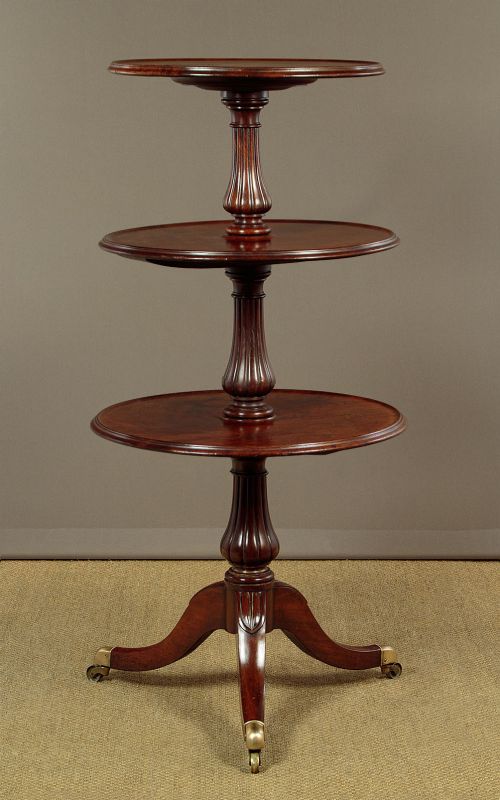
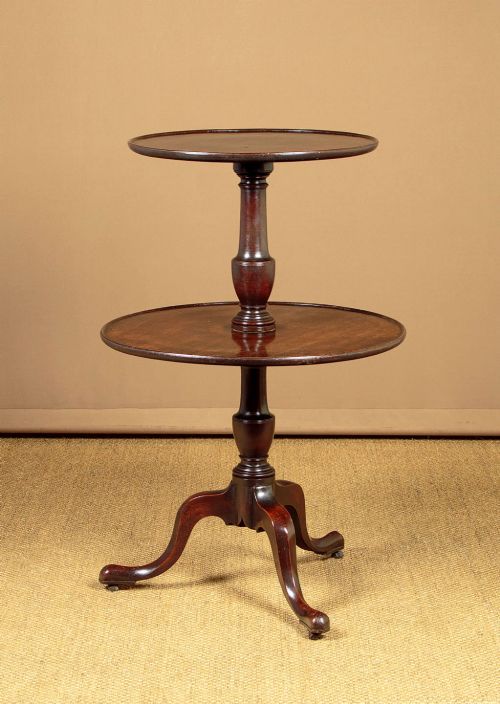
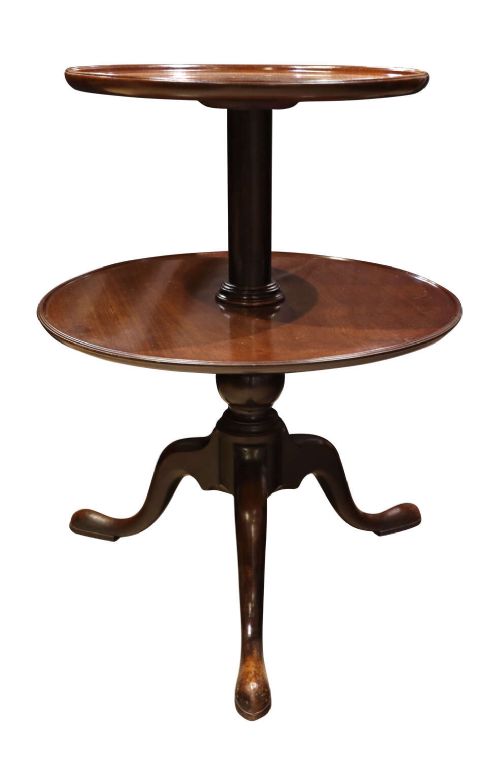
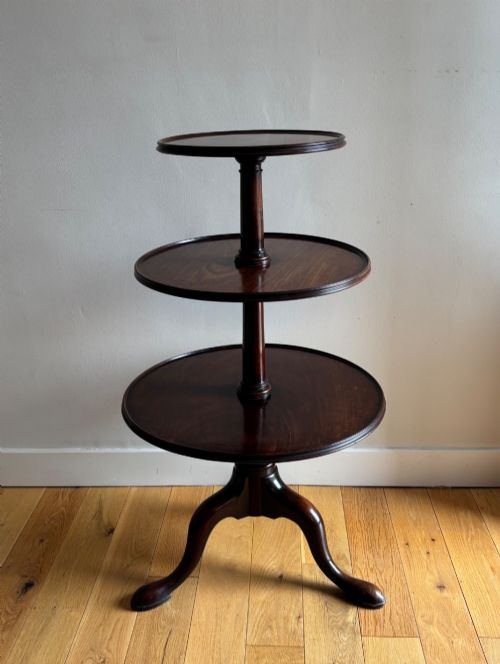
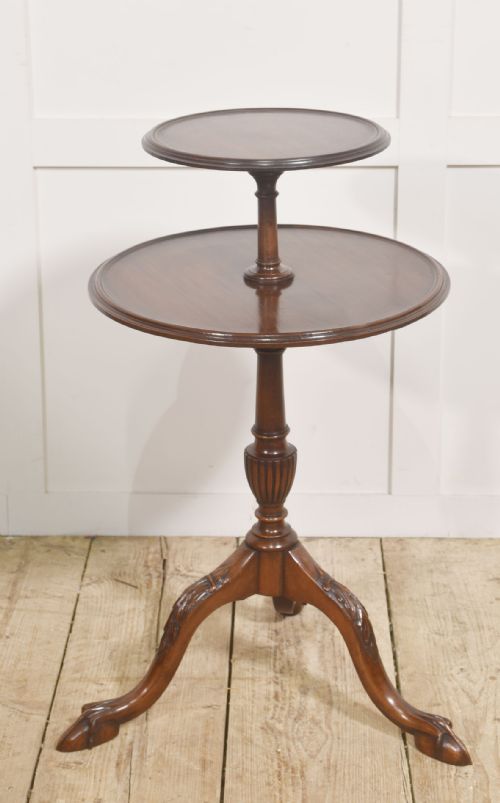
A georgian tripod tier table provides graduated circular tiers supported by a central pillar and three legs, serving dining rooms with practical elegance.
Georgian Tripod Tier Table
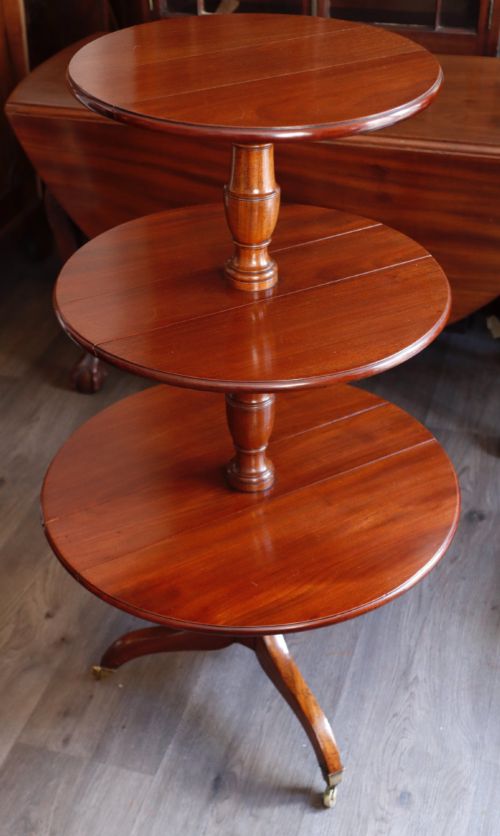
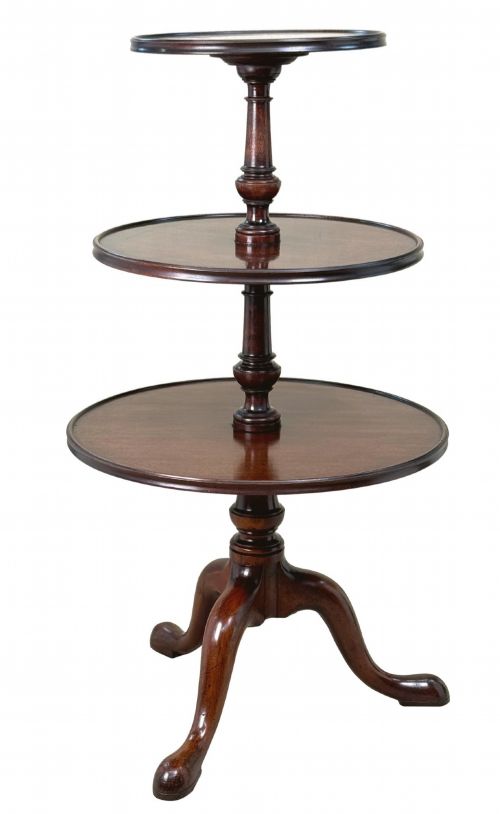
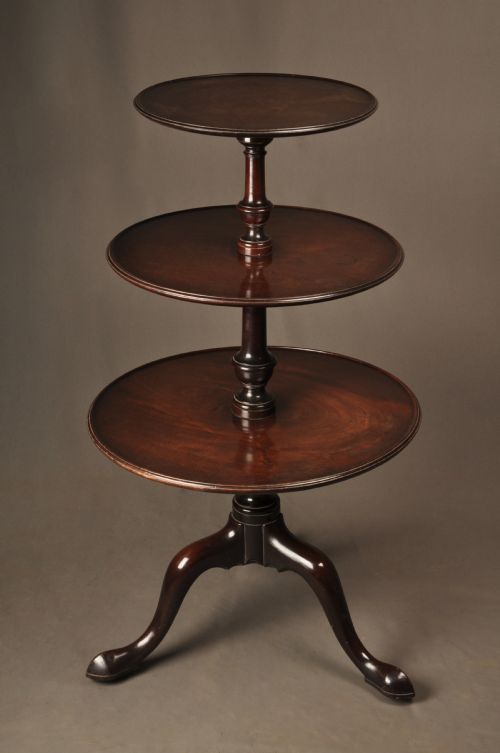
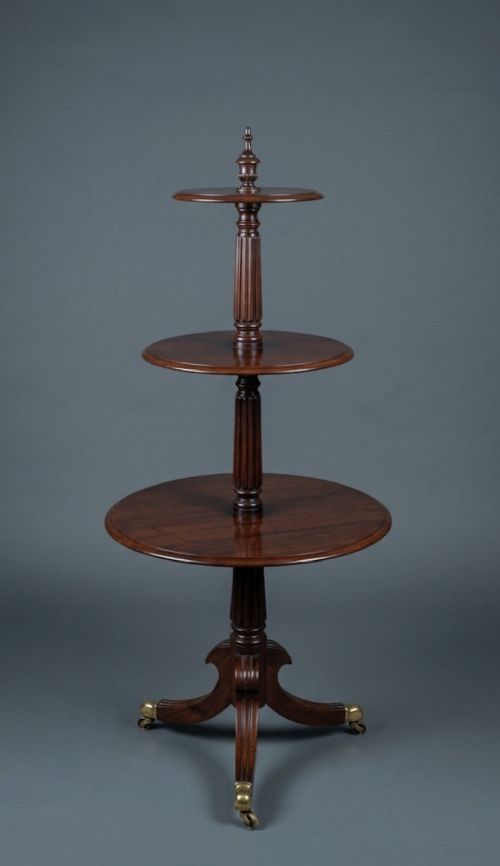
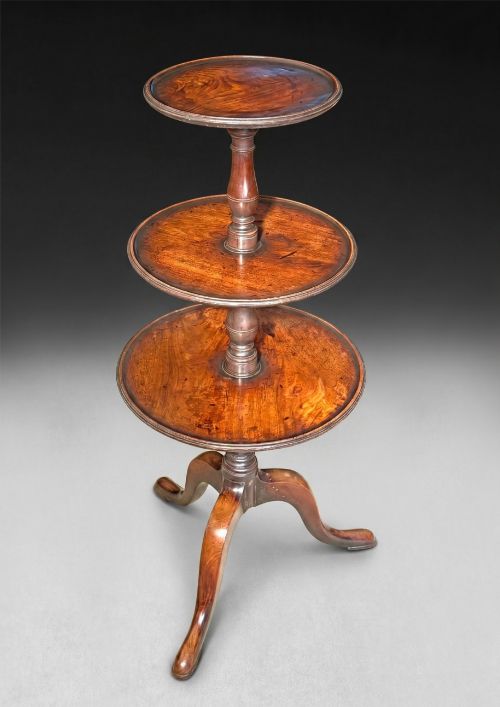
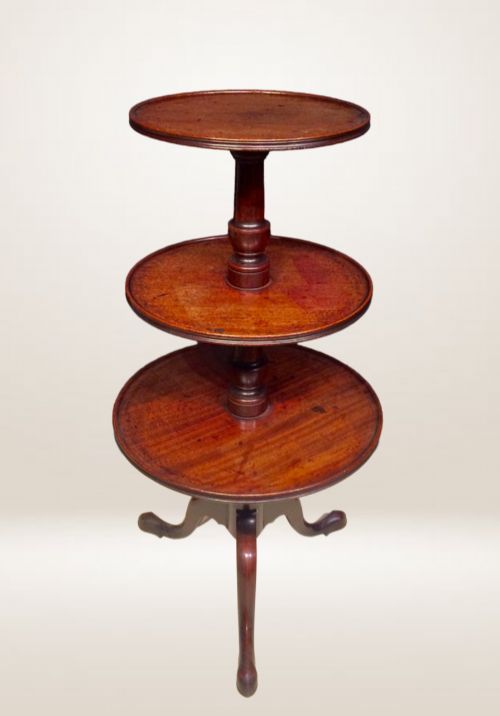
A georgian tripod tier table principally functions as a dumb waiter or tiered serving stand, designed to hold dishes or wine during meals. These pieces appear most frequently in mahogany, constructed with multiple graduated circular tiers rising on a central pedestal.
The form spans the eighteenth century and the Regency period, incorporating George III examples alongside later nineteenth-century interpretations. Makers structured these tables with folding drops or revolving mechanisms to assist servants in dining rooms.
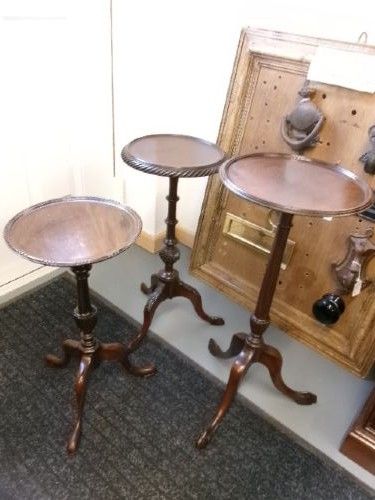
Examples on this page include two-tier and three-tier formats supported by tripartite leg bases, occasionally featuring brass fittings or inlay. The design prioritises vertical display and stability upon three curved legs.
Materials and construction methods
Cabinet makers utilised solid mahogany and Cuban mahogany for strength and rich grain patterns, frequently turning central pedestals on a lathe. Selected timbers were joined to sturdy tripod bases using traditional tenon joints and metal brackets.
Tiers were constructed as single circular boards or assembled with folding drop-leaves, sometimes incorporating revolving mechanisms atop the central column. Surfaces received hand-applied finishes to protect the wood while highlighting natural figure and depth.
Georgian Tripod Tier Table Retail Price Guide 2026
Typical asking prices for georgian tripod tier table among the pieces listed under this phrase on Sellingantiques today, from the lower quarter to the upper quarter. They describe what is for sale here now, not the wider market.
Listings feature mahogany across eighteenth-century and nineteenth-century periods, including George III and Regency variations.
Judging the standard of execution
Quality depends upon the choice of timber and the precision of the turning on the central pedestal and leg profiles. Superior pieces display dense mahogany figures and crisp edge mouldings on every tier.
Mechanisms governing revolving or folding tiers dictate mechanical excellence, where smoother operation and tight joints denote higher craftsmanship. The proportions between the graduated tiers and the spread of the tripod base determine overall visual balance.
Gillows
The Georgian Tripod Tier Table Glossary
- Dumb waiter
- A tiered serving table used in dining rooms to hold food and utensils without the presence of servants. These tables feature multiple revolving or stationary shelves.
- Tripod base
- A support structure consisting of three curved legs radiating from a central column. This arrangement ensures stability on uneven floors.
- Cuban mahogany
- A dense, dark timber imported from the Caribbean during the eighteenth century. Cabinet makers prized it for its deep colour and durability.
- Tier
- A circular platform or shelf arranged vertically above another on a shared central pillar. Graduated tiers diminish in diameter from bottom to top.
- Bird cage
- A pivoting mechanism beneath a tabletop that allows the surface to tilt and rotate. This construction aids storage and positioning.
Georgian Tripod Tier Table: Frequently Asked Questions
What was a georgian tripod tier table used for?
These tables stood beside dining tables to hold extra dishes, wine bottles, and tableware during lengthy meals. They allowed diners to help themselves without constant servant attendance.
Later adaptations also served as afternoon tea stands or plant holders in drawing rooms. Their tiered construction maximised surface area while occupying minimal floor space.
How do I identify a genuine georgian piece?
Examine the timber species, construction joints, and wear patterns beneath the tiers and along the central pillar. Eighteenth-century examples typically feature heavy mahogany and hand-turned components.
Look for pegged joints and subtle signs of age in the wood grain rather than uniform machine finishing. Hardware such as brass castors or pivot pins should match the period style.
Where should I place a tiered table at home?
These tables fit well beside seating areas as occasional surfaces or in dining rooms as traditional serving stands. Their compact footprint suits corners and empty wall spaces.
Ensure the tripod base rests on stable flooring so the upper tiers remain balanced. Revolving models require clearance around the tiers to turn freely.
What is the difference between two and three tiers?
Two-tier models offer a lower main surface with a smaller upper shelf, creating a balanced silhouette for smaller rooms. Three-tier versions provide greater vertical display capacity with diminishing shelf diameters.
Both variants utilise the same central pillar and tripod leg configuration for support. Selection depends on the available vertical space and display requirements.