





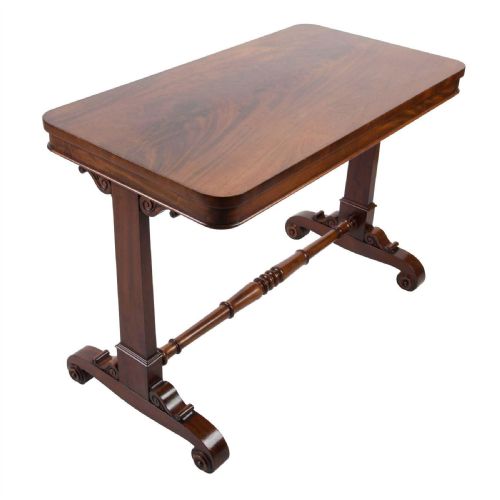


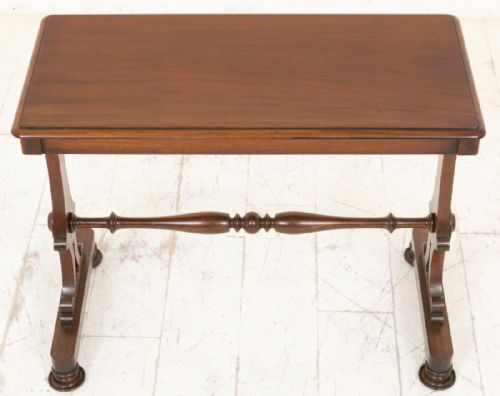

Mahogany Stretcher Centre Table
A mahogany stretcher centre table stands ready to anchor a room, offering rich timber surfaces and sturdy underframe bracing designed for central placement.
Mahogany Stretcher Centre Table
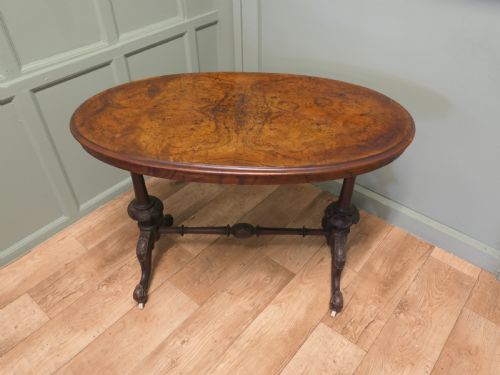
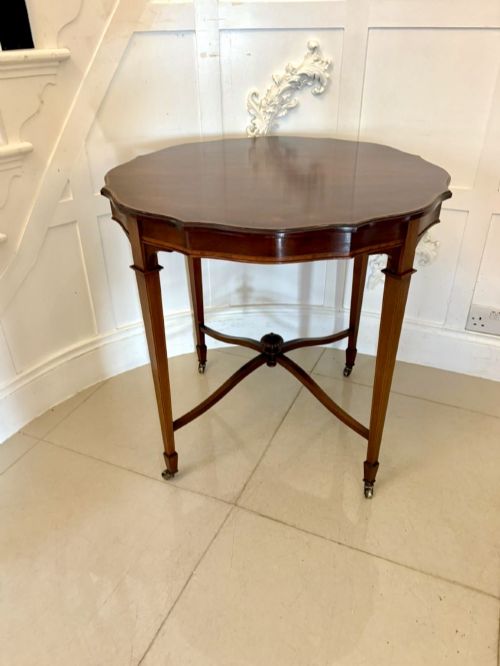
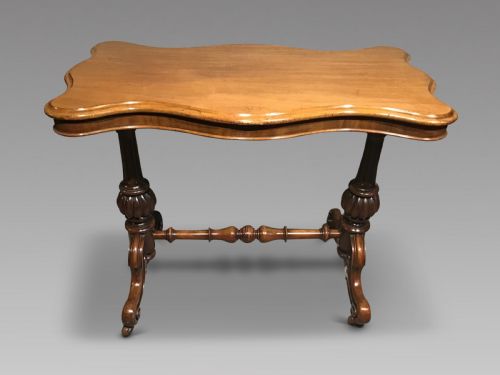
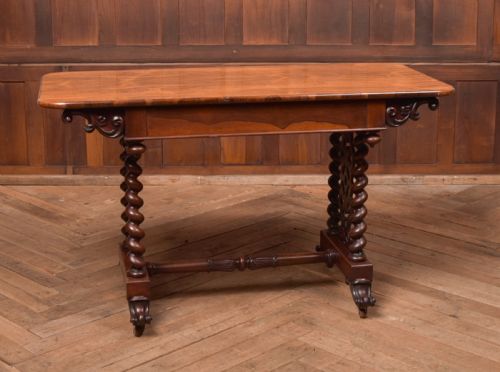
When you search for a mahogany stretcher centre table, you are looking at freestanding tables built to sit in the middle of a room rather than against a wall. The pieces appearing here span the nineteenth century and the Edwardian era, taking forms such as side tables, library tables, and occasional tables. You will most frequently meet Victorian examples alongside Edwardian and Regency revival pieces.
These tables serve practical domestic roles while displaying polished timber grains and characteristic cross-bracing beneath the top. Variations range from plain circular and oval shapes to carved and inlaid surfaces influenced by Regency and George III styles. Each piece relies on its central positioning to show off finished work on all sides.
Materials and construction methods
Cabinetmakers built these tables primarily using solid mahogany and mahogany veneers, sometimes incorporating contrasting satinwood inlay or walnut. Brass fittings and castors frequently appear on the feet of nineteenth-century examples to aid movement across carpets. Timber selection focused on rich colour and distinct grain patterns suited to polished finishes.
Structural integrity comes from the stretcher base, which connects the legs beneath the top to prevent wobble during daily use. Joinery techniques of the period included secure mortise and tenon joints, whilst finer pieces featured detailed hand-carved elements on the legs and stretchers. Some historical examples also show later reconfigurements reflecting changing domestic needs.
Listings span the nineteenth century and the Edwardian era, featuring mahogany, satinwood, walnut, and brass.
Judging quality and craftsmanship
The standard of a mahogany stretcher centre table depends upon the selection of timber and the crispness of its construction. Superior pieces display well-figured mahogany veneers or solid boards with deep natural warmth, matched by cleanly executed carving and precise inlay work. Lesser examples rely on plain timber stock and simpler, less refined joinery.
Proportion and stability under the stretcher base further distinguish finer pieces from standard production. Tables that retain their original brass fittings and undisturbed surface patination offer a more complete historical character. Alterations and later reconfigurements alter the original integrity of the piece.
The Mahogany Stretcher Centre Table Glossary
- Centre table
- A freestanding table finished on all sides, designed to stand in the middle of a room rather than against a wall. These pieces function as display or gathering surfaces.
- Satinwood
- A durable, yellowish exotic timber used frequently for decorative stringing and contrasting inlay work on nineteenth-century furniture. It highlights the borders of table tops.
- Veneer
- A thin layer of figured mahogany or walnut applied to a secondary timber foundation to create a decorative surface. This technique allows cabinetmakers to utilise striking grain patterns.
Mahogany Stretcher Centre Table: Frequently Asked Questions
What is a centre table?
A centre table is a freestanding piece of furniture finished on all four sides so it can stand independently in the middle of a room. These tables historically served as focal points for lamps, books, or decorative objects.
Unlike standard side tables meant for placement against a wall, centre tables invite movement around them and often incorporate structural stretchers for added strength.
How do you date these tables?
Dating relies upon examining the timber types, construction methods, and stylistic details present in the design. Victorian and Edwardian pieces show characteristic turnings, edge profiles, and timber finishes.
Reference to periods such as Regency revival or George III styles also provides clues regarding the era of manufacture, alongside any surviving hardware like brass castors.
Where should I place one?
These tables suit placement in the middle of a living room, library, or large hallway where they can be viewed from all angles. Their finished backs and stretcher bases make them ideal room anchors.
Ensure there is sufficient clearance to walk around the piece comfortably, as they are designed to function as freestanding island surfaces.
What are stretchers used for?
Stretchers connect the legs of a table underneath the top to prevent the legs from spreading under heavy loads. They impart mechanical stability to freestanding tables.
On these pieces, the stretcher often incorporates decorative turnings or carved details that contribute to the overall aesthetic of the underframe.