

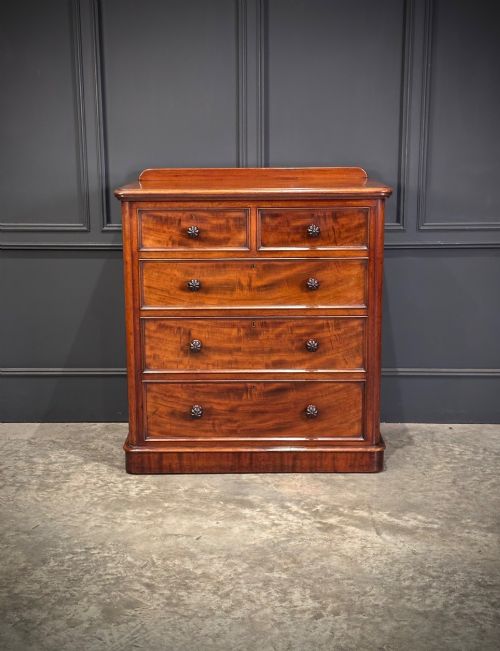
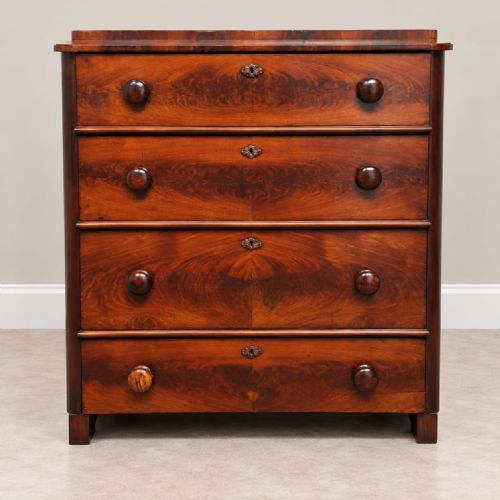
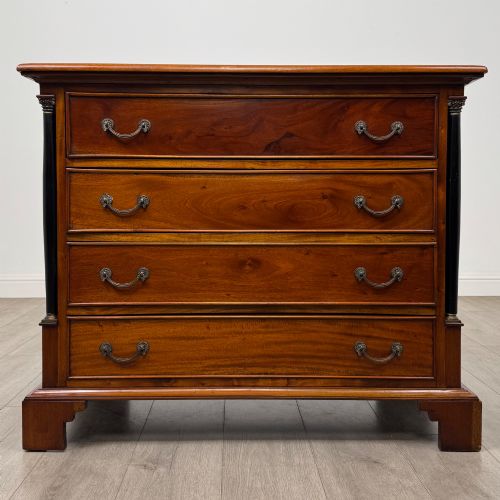
Mahogany Storage Bureau
These mahogany storage bureau pieces offer classic utility and timeless proportion, bringing enduring timber and practical drawer space into a room.
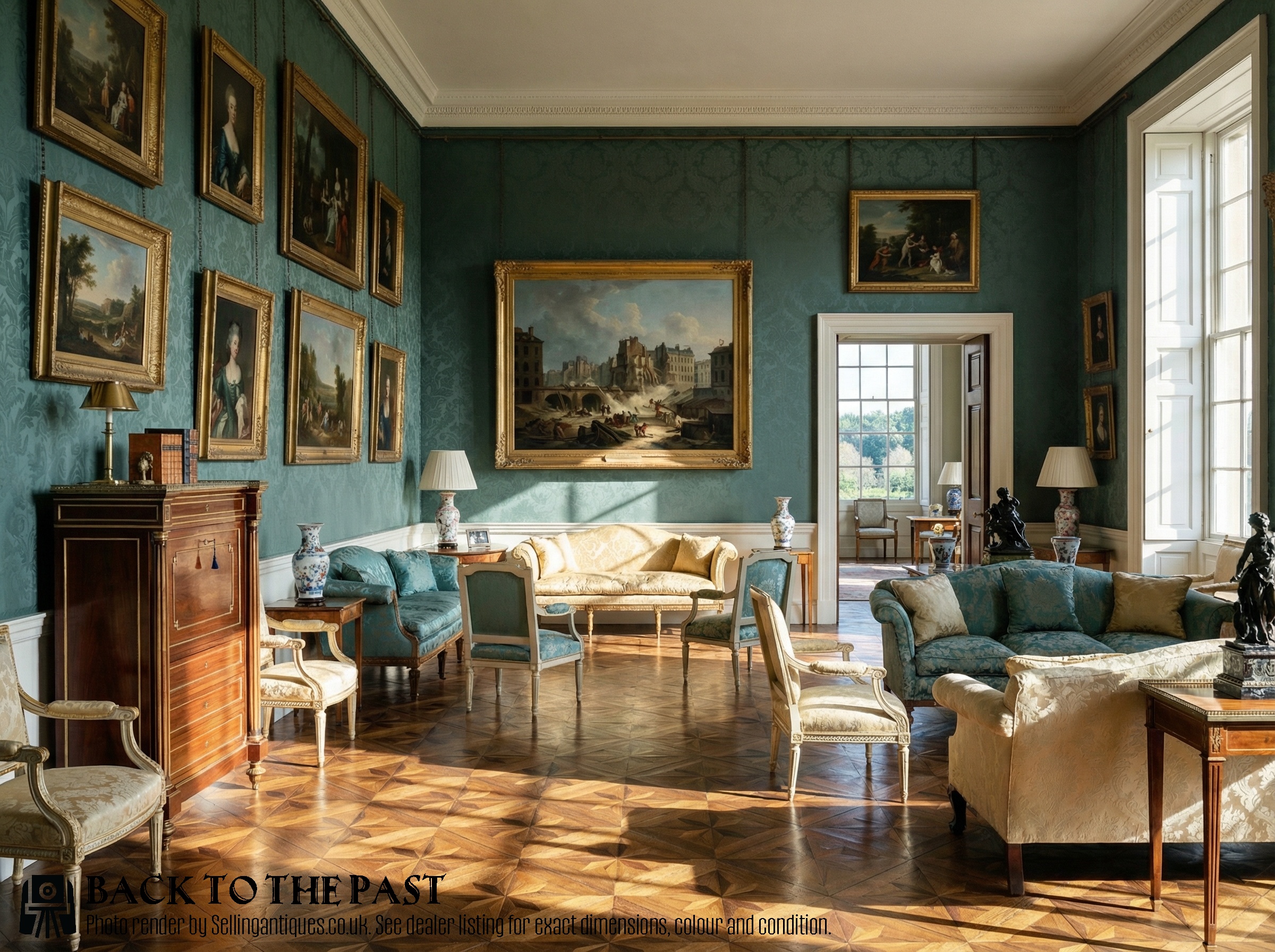
Mahogany Storage Bureau
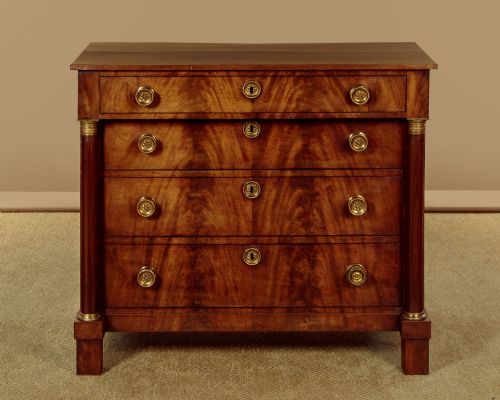
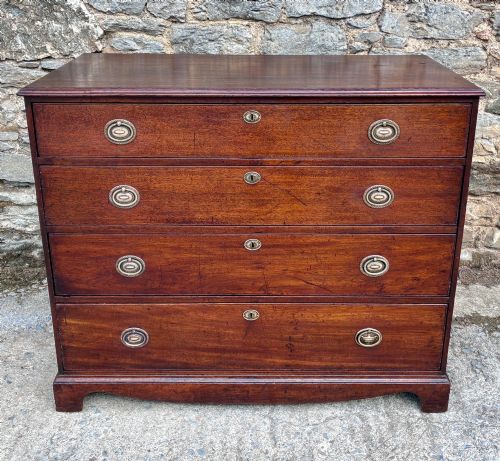
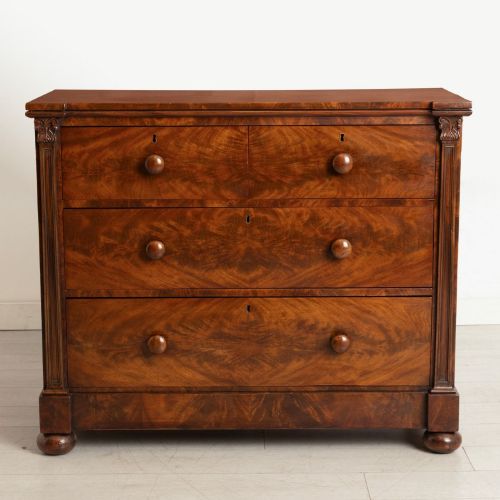
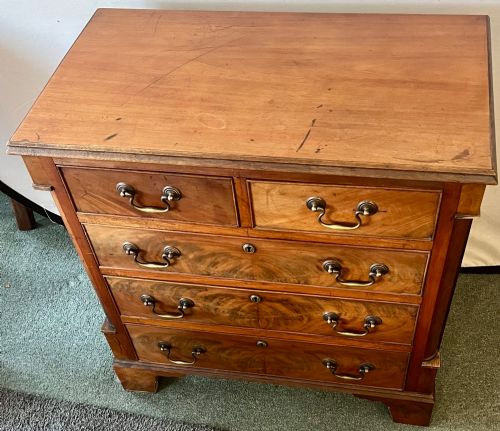
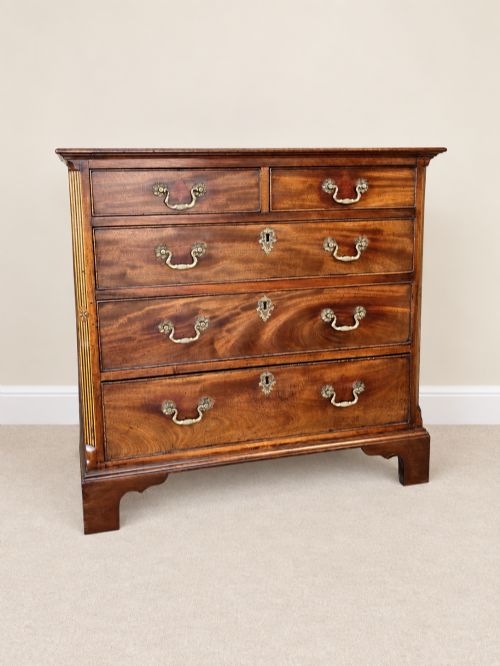
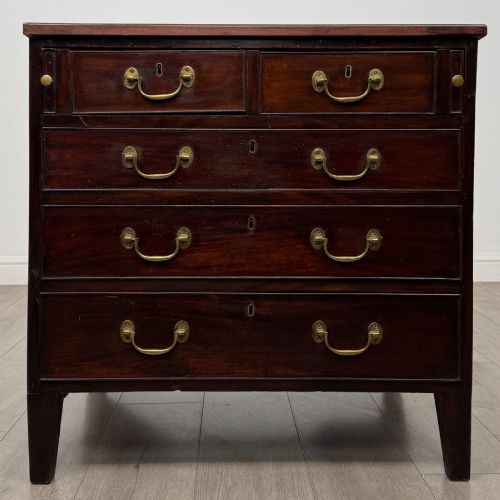
A mahogany storage bureau primarily takes the form of a chest of drawers, serving as a functional unit for domestic organisation across several historical periods. Buyers seeking this phrase encounter pieces dating from the eighteenth century through to the Edwardian era, including Georgian, Regency, and Victorian iterations.
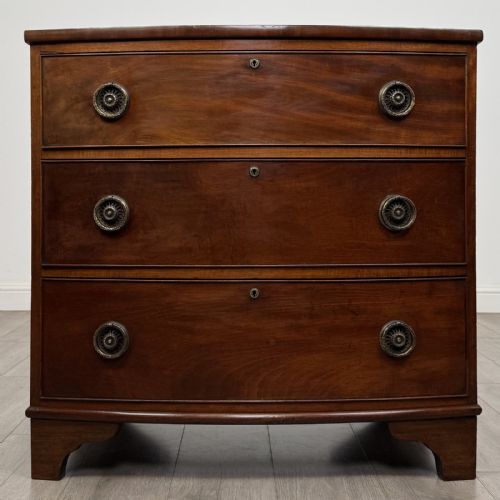
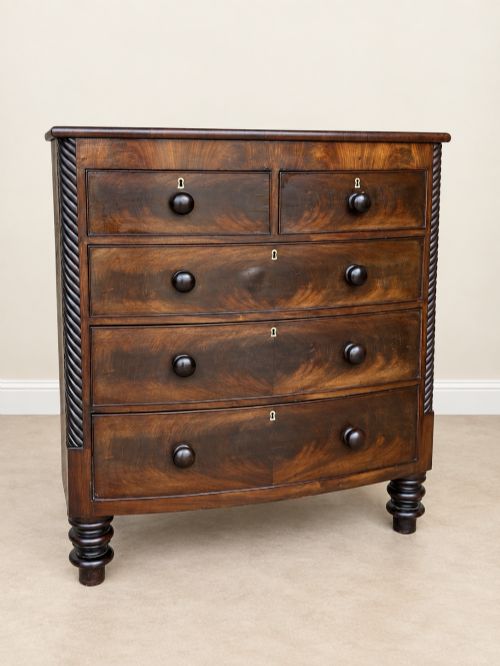
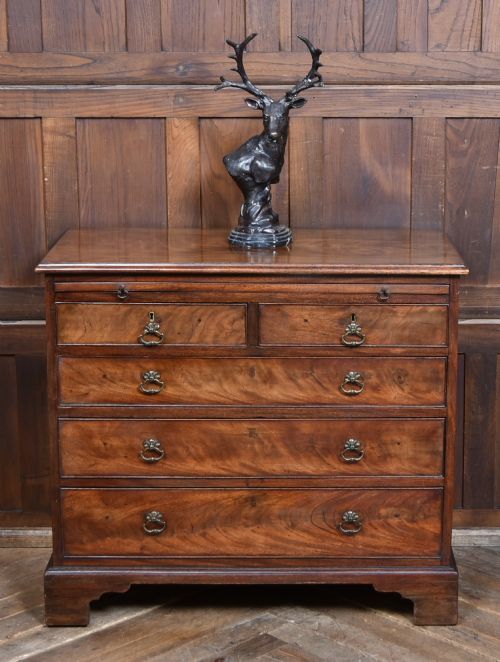
The most common formats on this page are standard chests of drawers and bow front chests of drawers, often constructed with varying drawer counts such as two over three arrangements. These items originate from periods spanning the 18th century, 19th century, and early 20th century, reflecting diverse regional British and international cabinet-making traditions.
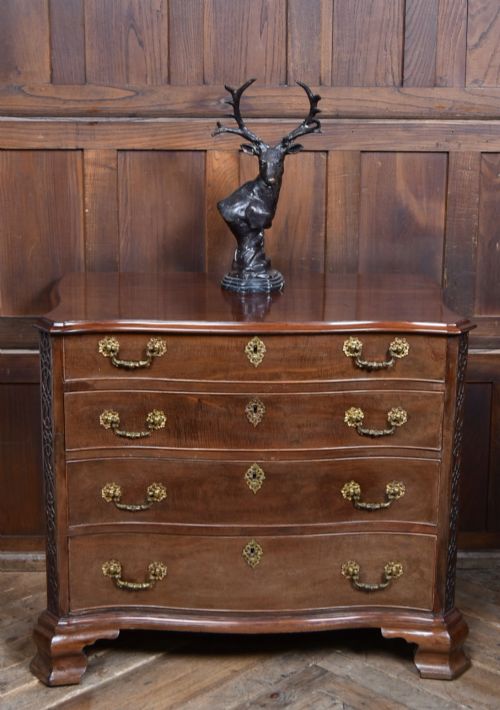
Makers and workshops constructed these storage pieces to suit formal parlours and private bedchambers alike, utilising substantial timber frames to ensure daily durability. Surviving examples demonstrate how domestic storage evolved from simple panelled carcases to refined serpentine and bow front silhouettes.
Materials and Construction Methods
Cabinet-makers relied heavily upon solid mahogany and flame mahogany veneer laid over secondary woods like oak and pine to build sturdy carcases. Workshops integrated brass for handles and escutcheons, alongside bone and boxwood stringing for decorative inlay.
Construction techniques involved traditional drawer lining in oak and pine, with precise joinery securing the timber framework of each chest. The selection of figured flame mahogany veneer provided decorative grain patterns across drawer fronts, particularly on Regency and Georgian pieces.
Listings include mahogany storage pieces spanning the Georgian, Regency, and Victorian periods, alongside Edwardian interpretations.
Assessing Craftsmanship and Material Selection
The choice of primary timber significantly distinguishes individual items, with highly figured flame mahogany veneer and carefully selected solid mahogany representing superior cabinet-making. Grain alignment across drawer facades and the precision of inlaid boxwood or bone stringing indicate the original maker's skill level.
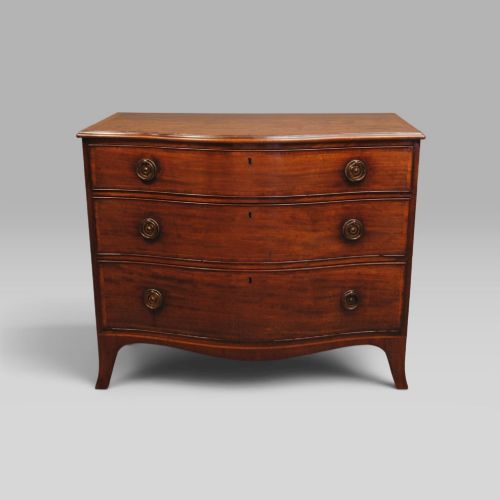
Structural integrity depends upon the quality of internal secondary woods like oak versus pine, alongside the original survival of period brass hardware. Proportion and silhouette, such as a well-executed serpentine or bow front profile, separate standard utilitarian storage from finer stylistic examples.
The Mahogany Storage Bureau Glossary
- Bow front
- A convex curved front facade popular on chests of drawers during the Georgian and Regency periods. This curved shape softens the profile of large storage units.
- Flame mahogany veneer
- A thin slice of mahogany timber exhibiting a distinctive flame-like grain pattern. Cabinet-makers applied this decorative veneer to prominent surfaces like drawer fronts.
- Serpentine
- A gently undulating front outline featuring a convex centre flanked by concave curves. This complex shape requires advanced woodworking skill.
- Secondary wood
- The internal timber used for drawer linings, carcase backs, and framing, such as oak or pine. These woods support the primary exterior mahogany structure.
- Stringing
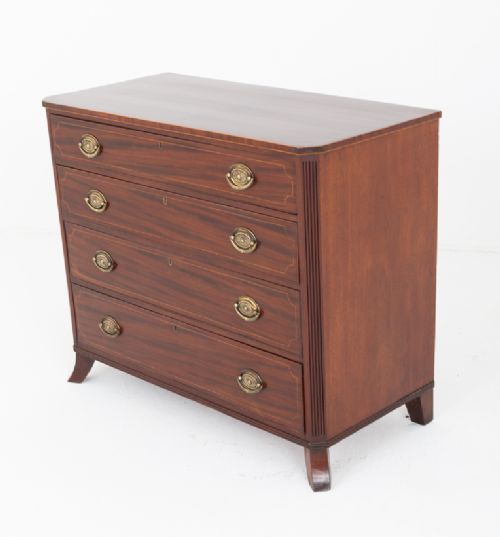
- Thin inlay lines of contrasting materials such as boxwood or bone set into the primary wood surface. It provides delicate linear decoration along drawer edges.
Mahogany Storage Bureau: Frequently Asked Questions
How do I date a mahogany chest?
Dating relies upon examining construction methods, timber selection, and hardware styles across periods like the Georgian and Victorian eras. Secondary woods inside the drawers and the presence of flame mahogany veneer often provide key chronological clues.
Changes in handle design, such as early brasses compared to later Victorian pulls, help narrow down the decade of manufacture. Specific silhouettes like the serpentine front also point toward distinct design phases.
Where were these pieces used?
These storage units served primarily in domestic bedchambers and dressing rooms for organising clothing and personal linens. Their robust construction made them central items of furniture in British homes.
Larger configurations offered substantial capacity for household storage, while smaller bow front examples fit easily into parlour spaces. Their combination of drawers and flat top surfaces also provided display utility.
What is flame mahogany?
Flame mahogany is a highly figured wood grain obtained from specific cuts of timber, displaying a shimmering pattern resembling flickering fire. Cabinet-makers prized this veneer for its decorative impact on furniture facades.
It appears frequently on Regency and Georgian drawer fronts to catch the light and add visual texture. This technique elevated standard storage chests into decorative focal points.
How do I care for mahogany?
Maintaining mahogany requires placing the furniture away from direct heat sources and strong sunlight to protect the timber and veneer. Regular dusting with a soft, dry cloth preserves the finish without damaging the wood.
Applying occasional appropriate wax polish helps nourish the historic surface and maintain its natural lustre. Avoiding excess moisture protects both the exterior mahogany and internal secondary woods.