


French Mahogany Escritoire
A french mahogany escritoire brings elegance to any room, offering a concealed writing surface and refined storage tailored for correspondence.
French Mahogany Escritoire
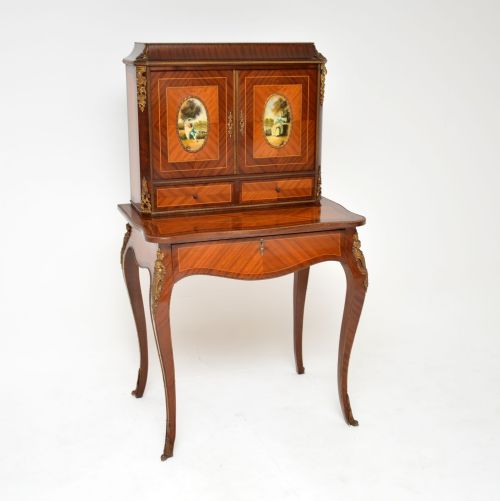
A french mahogany escritoire is a sophisticated writing cabinet designed for personal letters and private document storage, featuring a drop-down flap or cylinder front that conceals fitted interior compartments. These pieces primarily date from the eighteenth century through the twentieth century, encompassing Victorian interpretations alongside continental French designs.
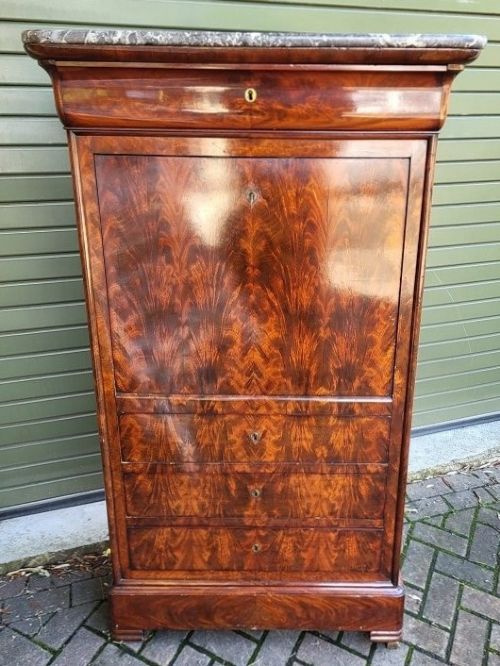
The selections commonly include the classic secretaire à abattant alongside cylinder escritoires and bonheur du jour variations. Mahogany forms the foundational timber, frequently accompanied by distinct figuration such as flame mahogany.
Origins span recognised French stylistic traditions including Louis XV, Louis XVI, and Empire aesthetics. Buyers encounter narrow proportions suited for modern rooms alongside grander nineteenth-century iterations.
How they were made
Cabinetmakers constructed these writing cabinets using solid mahogany and rich veneers laid over sturdy secondary timbers, often accentuating the grain with flame mahogany panels. Fine brass handles, hinges, and locks secure the structure and operate the interior drawers.
Decorative metalwork plays a prominent role, with cast or chased ormolu and bronze mounts applied to frame the mahogany surfaces. Certain examples integrate contrasting elements such as marble tops and painted porcelain plaques within the overarching wooden frame.
Many writing cabinets conceal secret compartments behind miniature pilasters, rewarding the curious owner with hidden miniature drawers.
What varies in quality
The caliber of a french mahogany escritoire rests on the selection and matching of timber veneers, where continuous flame figures indicate superior cabinetmaking. Finely chased ormolu mounts with crisp detail distinguish finer pieces from simpler cast metal ornamentation.
Interior architecture dictates distinction, with fitted pigeonholes, small drawers, and secret compartments demonstrating exceptional joinery. The precision of the drop-down writing surface mechanism and the integration of marble tops complete the assessment of execution.
The French Mahogany Escritoire Glossary
- Escritoire
- A writing cabinet with a fall-front flap enclosing compartments for stationery and letters. This term shares origins with older bureau forms.
- Secretaire à abattant
- An upright writing cabinet featuring a vertical drop-front panel that lowers to serve as a writing surface. It typically conceals a series of small internal drawers and pigeonholes.
- Ormolu
- Gilded bronze mounts applied for decorative effect on furniture frames. The technique involves mercury gilding on bronze bases.
- Flame mahogany
- Timber veneer cut from the branch junction of the mahogany tree, displaying a characteristic flickering flame pattern. Cabinetmakers reserved this striking grain for primary visible surfaces.
- Bonheur du jour
- A light lady's writing desk featuring a tiered superstructure with shelves and small drawers above the main work surface. This form appeared during the mid-eighteenth century in France.
French Mahogany Escritoire: Frequently Asked Questions
What is an escritoire used for?
An escritoire serves primarily as a private writing desk and cabinet for correspondence. The drop-front panel opens to reveal small drawers and compartments designed for stationery and letters.
Closed, the cabinet presents a neat aesthetic suitable for principal rooms. The interior often includes hidden compartments for secure document storage.
How do I identify a French escritoire?
French examples typically display distinct stylistic markers such as Louis XV or Empire proportions and decorative ormolu mounts. The presence of a secretaire à abattant form with polished mahogany distinguishes these pieces.
Fitted interiors often feature architectural arrangements of small drawers surrounding a central cupboard or niche. Marble tops also frequently accompany continental versions.
Where should I place an escritoire?
These narrow cabinets suit studies, drawing rooms, or bedrooms where floor space is limited. Their vertical orientation provides substantial storage without occupying a large footprint.
Position the cabinet away from direct sunlight and heat sources to protect the mahogany veneer and polished finish. Adequate clearance must be allowed in front for the drop-down flap to open fully.
How do I care for mahogany furniture?
Maintain mahogany surfaces by dusting regularly with a soft, dry cloth. Avoid silicone-based polishes which can build up and attract dirt over time.
Apply traditional beeswax periodically to nourish the wood and preserve the lustre of the finish. Keep relative humidity stable in the room to prevent timber movement.