
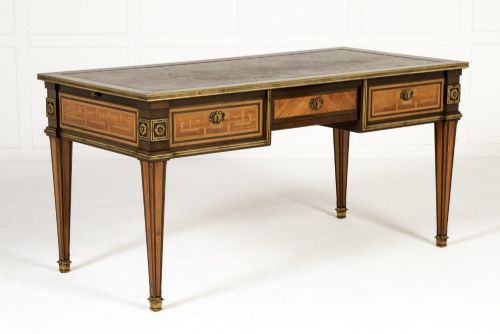


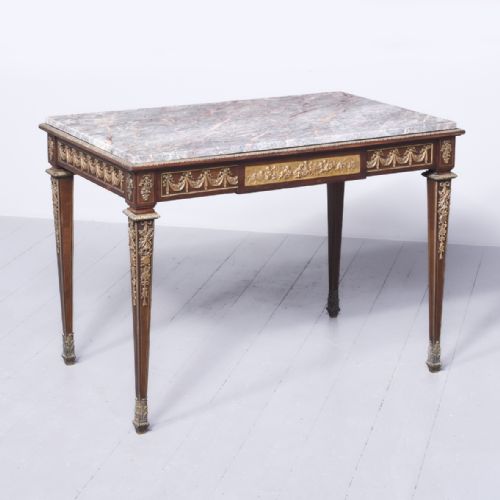


French Neoclassical Bureau
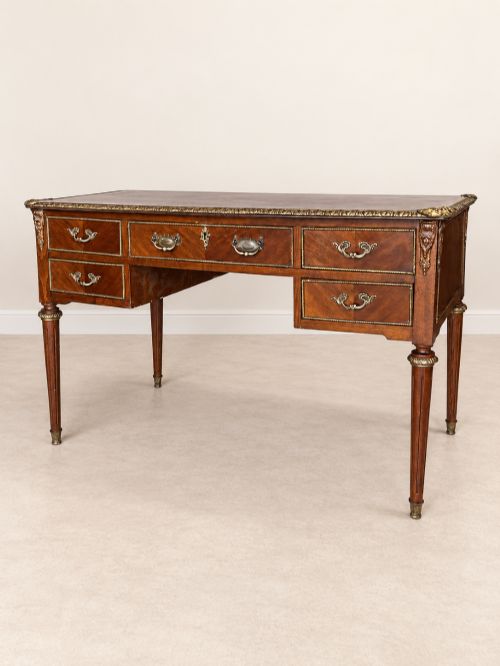
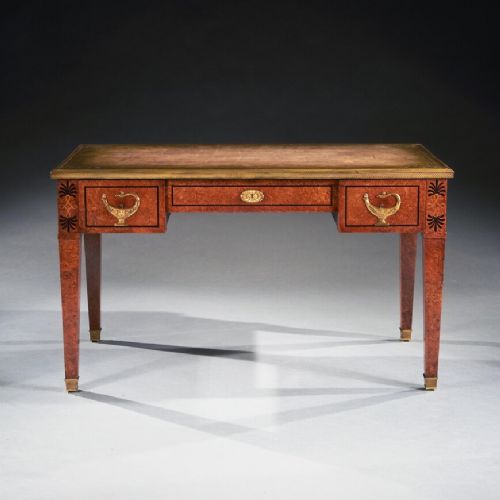
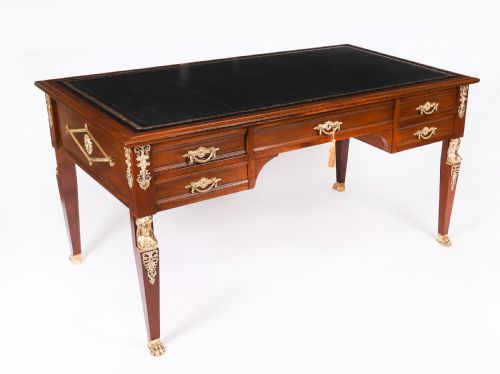
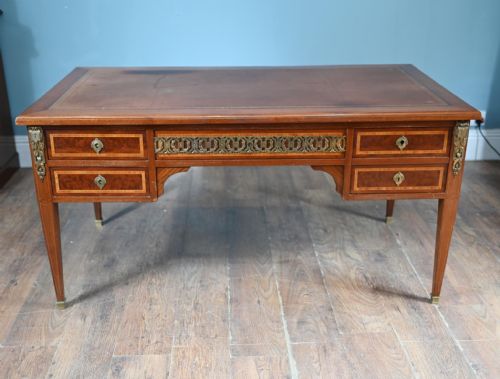
These french neoclassical bureau pieces combine mahogany and kingwood with ormolu mounts, offering refined writing spaces shaped by Louis XVI and Empire styles.
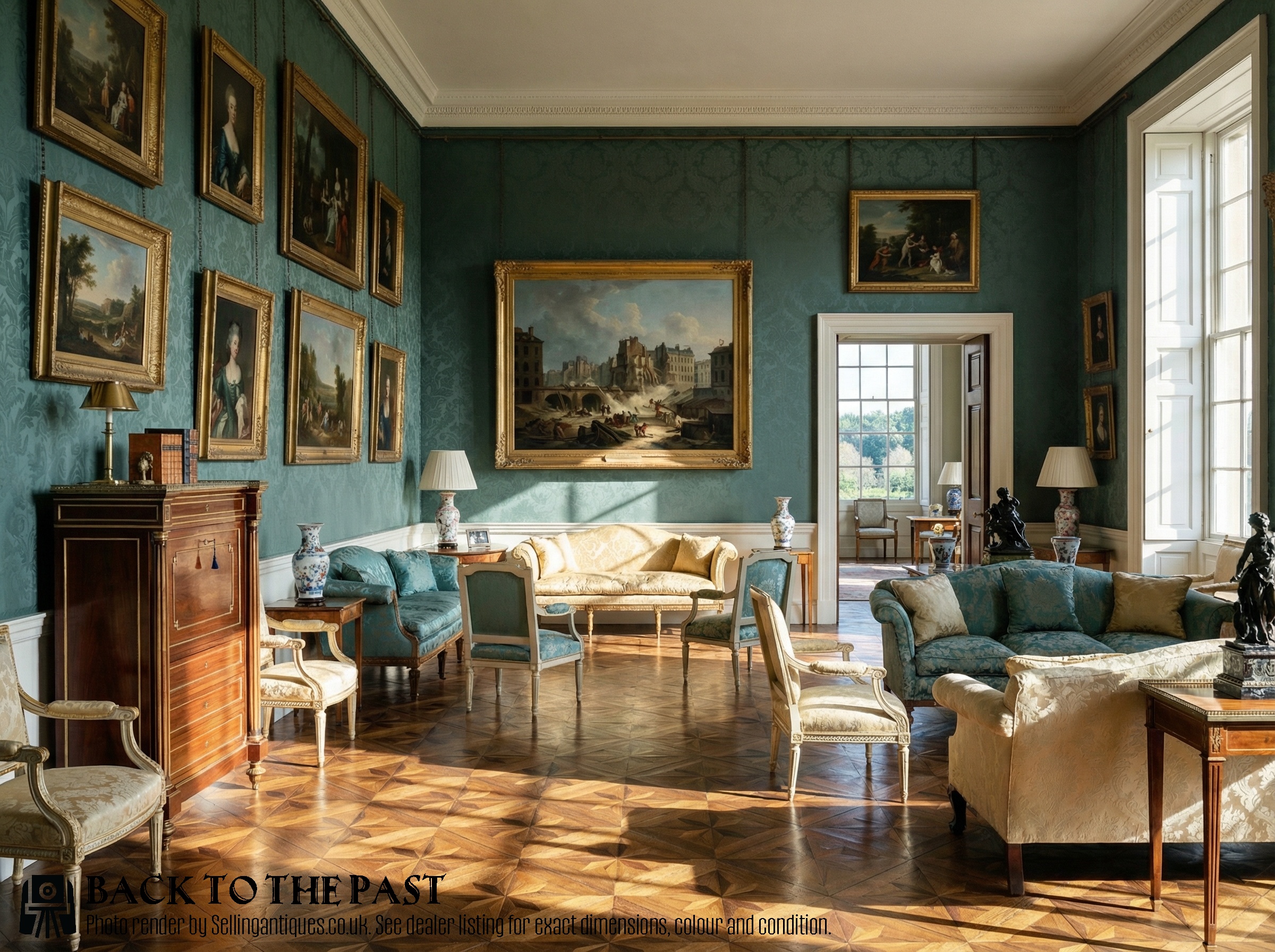
French Neoclassical Bureau
The aesthetic draws heavily on Louis XVI, Directoire, and French Empire vocabularies, showcasing restrained geometry alongside classical mounts. Pieces range from freestanding library writing tables to smaller cabinet desks designed for domestic writing rooms.
Materials and construction methods
Construction relies upon dense hardwoods such as mahogany, kingwood, and walnut, frequently accented with amboyna or ebonised surfaces. Leather inserts often line the primary writing areas, providing a durable and traditional working surface.
Metalwork forms an integral part of the structure, utilising cast ormolu and gilt bronze mounts to highlight structural corners and friezes. Brass details further define the edges and key escutcheons across desks and writing cabinets.
Listings feature mahogany, kingwood, and walnut timbers, paired with ormolu mounts and leather writing surfaces across the nineteenth century.
Judging quality in these desks
Structural integrity shows in the clean movement of drawers and the precise fit of cylinder mechanisms. Pieces associated with documented makers or workshops generally display superior bronze work and timber selection compared to anonymous commercial equivalents.
Henry Dasson·Francoise Linke·Jean Werner·Diehl Paris·Paul Sormani
The French Neoclassical Bureau Glossary
- Bureau plat
- A freestanding writing table fitted with drawers across the frieze, designed to sit away from the wall. This form serves as a central desk in a study.
- Ormolu
- Gilded bronze used for decorative mounts and sabots on fine furniture. The technique involves applying a gold amalgam to bronze before heating.
- Bonheur du jour
- A small, light ladies writing desk featuring a tiered superstructure with small drawers and shelves above the main writing surface. It originated in mid-eighteenth-century France.
- Escritoire
- A writing cabinet or desk equipped with a sloping or drop-front lid that conceals internal compartments. These pieces provide compact storage for correspondence.
- Directoire style
- The neoclassical style bridging Louis XVI and Empire periods, characterised by austere classical lines and archaeological motifs. It reflects the political transition in France during the late eighteenth century.
French Neoclassical Bureau: Frequently Asked Questions
What is a bureau plat used for?
A bureau plat functions as a large writing table placed in the centre of a room rather than against a wall. It provides a broad leather-lined surface and frieze drawers for daily correspondence.
Historically, these tables served statesmen and scholars who required ample workspace for documents and writing implements. Today, they often function as executive desks in studies and libraries.
How do I distinguish Louis XVI style from Empire style?
Louis XVI style pieces display slender, straight fluted legs and restrained neoclassical ornamentation based on ancient Roman geometry. The proportions remain lighter and more delicate.
Empire style desks introduce heavier, more monumental forms inspired by military campaigns, often featuring ebonised surfaces and prominent ormolu winged figures or classical military trophies.
What distinguishes a bonheur du jour?
A bonheur du jour is characterised by its compact scale and upper cabinet section containing small drawers and pigeonholes above the writing flap. It was designed primarily for domestic writing and correspondence in private sitting rooms.
These pieces typically stand on slender legs and incorporate delicate wood veneers like kingwood or mahogany, often enhanced with gilt bronze mounts.
Where should I place a freestanding desk?
Freestanding desks like the bureau plat are finished on all four sides, allowing them to anchor the middle of a room. Positioning them away from walls showcases the polished mahogany or kingwood back and ormolu mounts.
Ensure adequate clearance around the desk for a matching armchair, such as a fauteuil de bureau, to allow comfortable movement when working.