
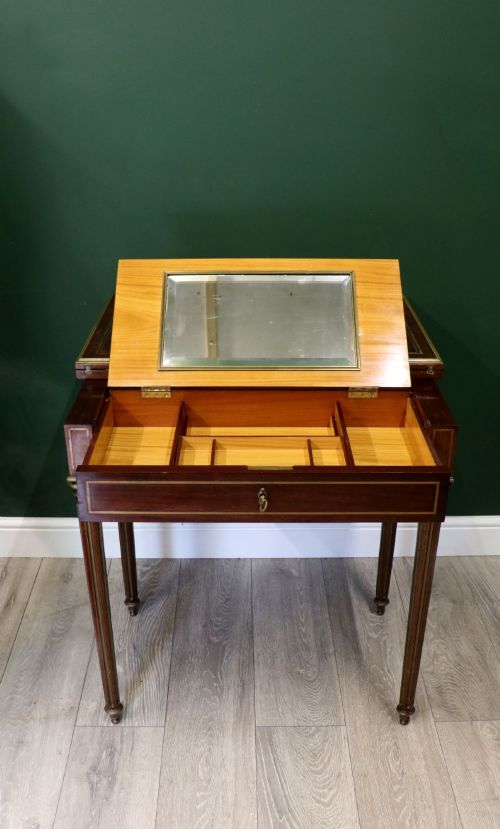
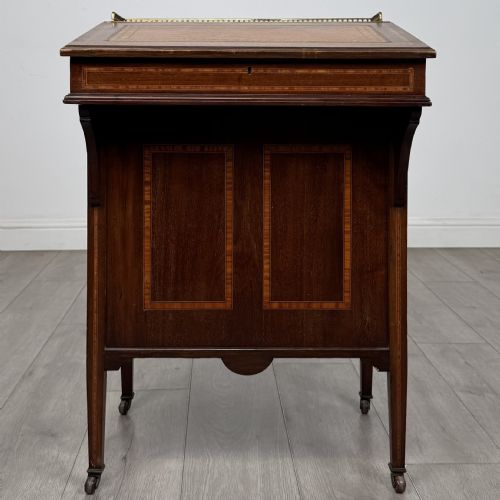
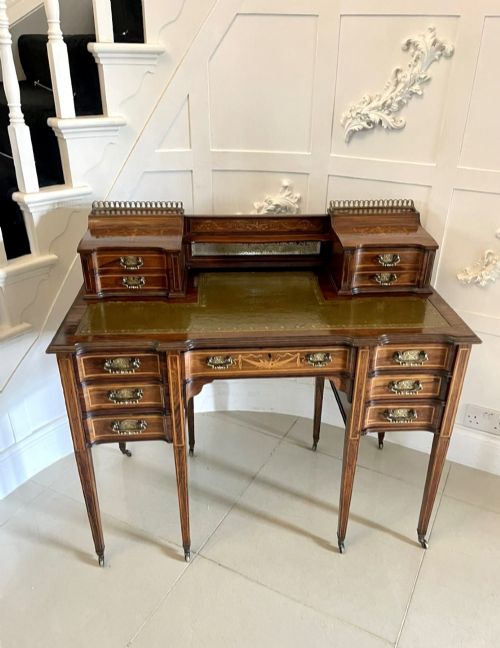
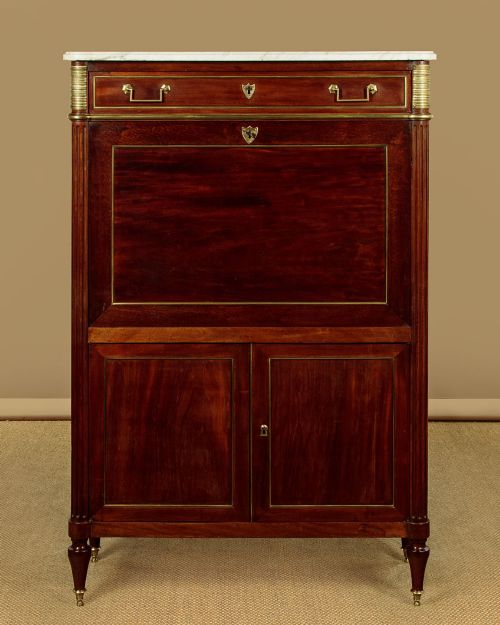
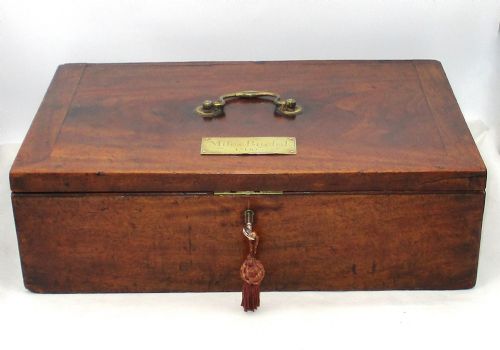
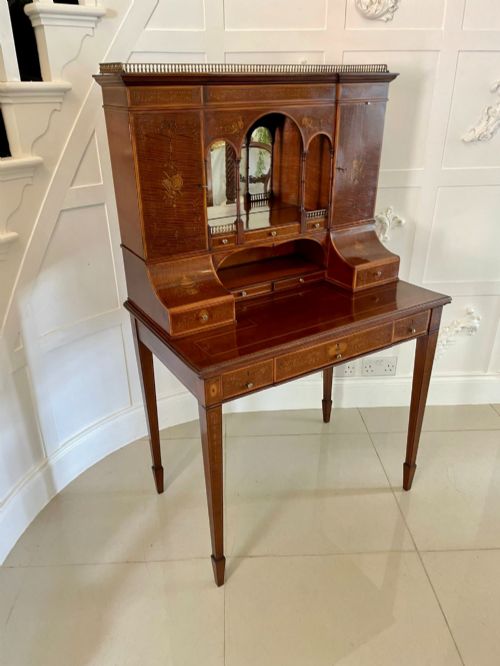
Brass Inlay Mahogany Desk
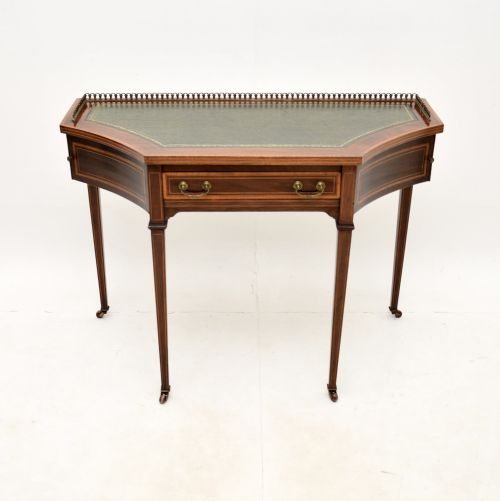
A brass inlay mahogany desk brings together warm timber and gleaming metalwork in a practical writing space.
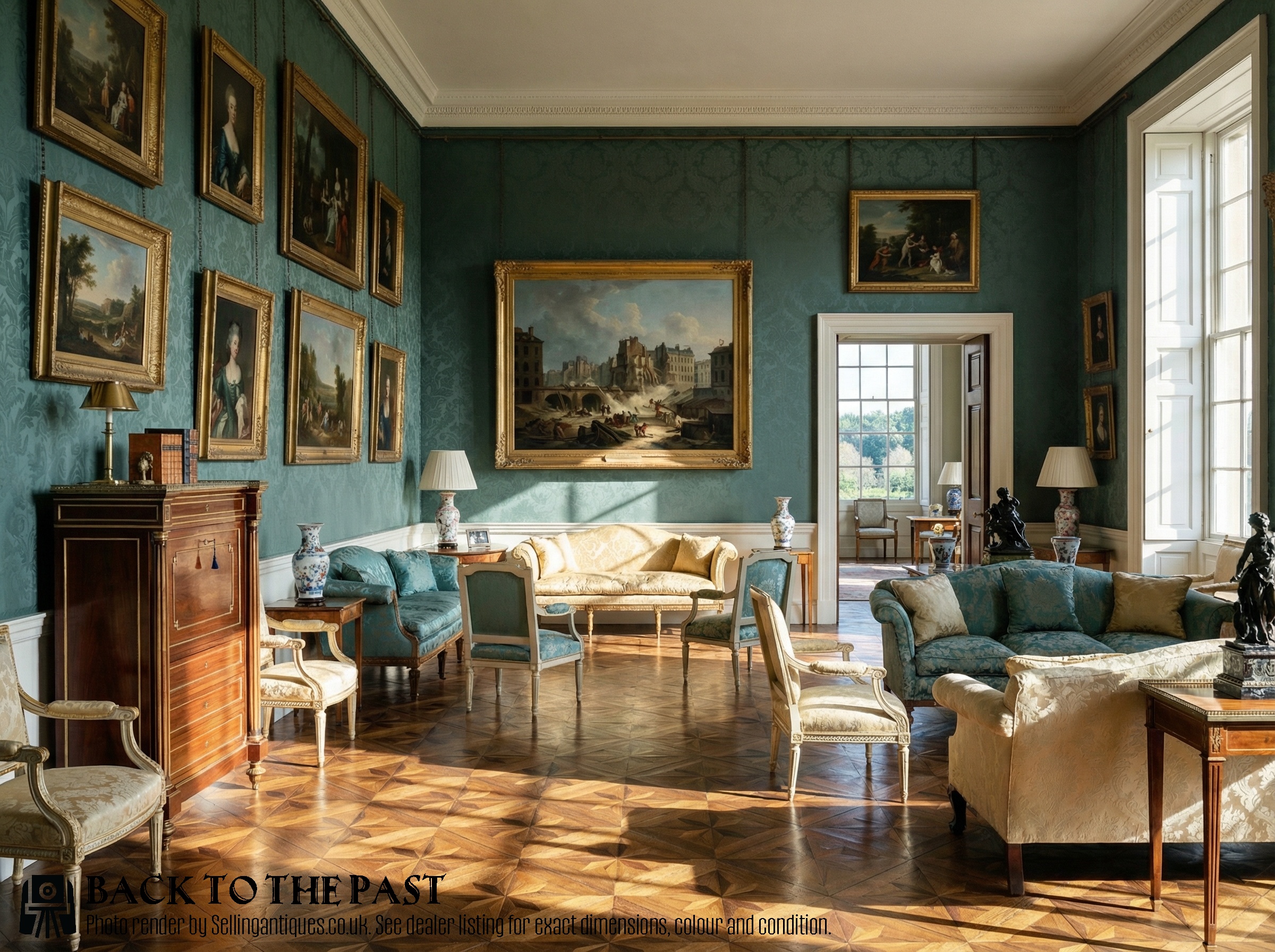
Brass Inlay Mahogany Desk
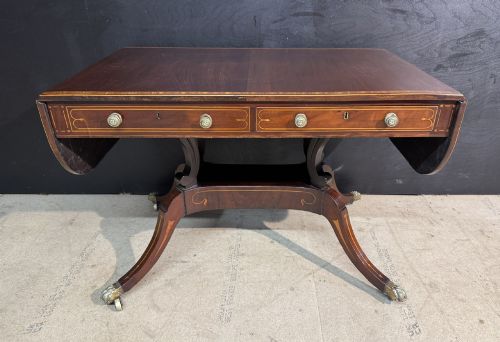
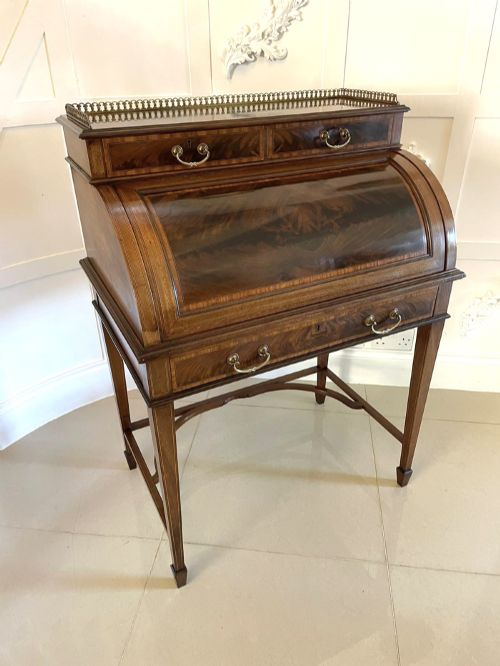
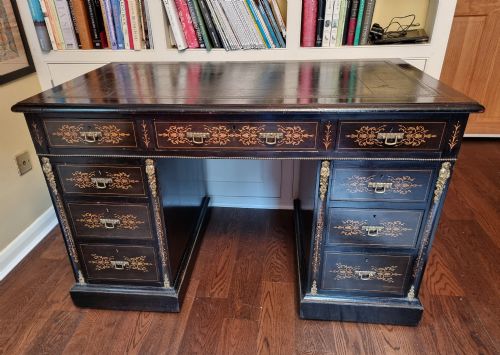
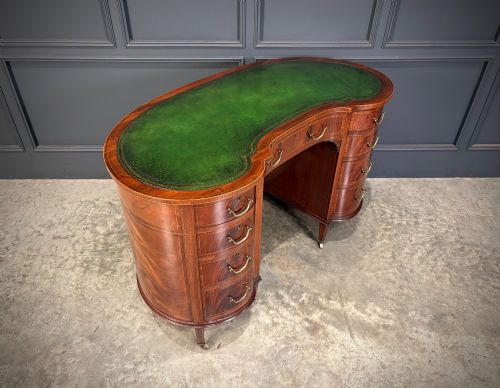
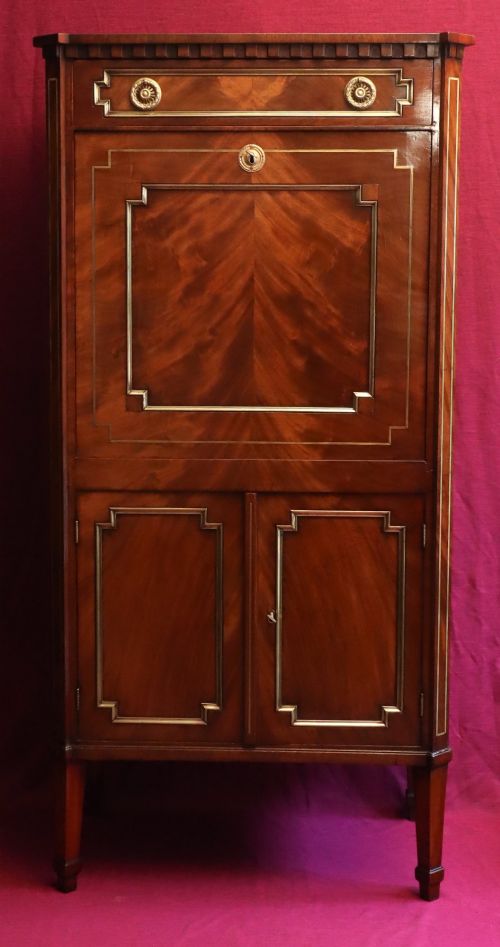
A brass inlay mahogany desk spans periods from the Georgian era through the Victorian and Edwardian decades, capturing the evolution of home and library writing furniture. Buyers seeking this phrase encounter various forms, including pedestal desks, writing tables, cylinder desks, and compact writing slopes.
The materials paired with these pieces regularly include satinwood, rosewood, leather, and glass, whilst styles range from simple Georgian proportions to ornate Victorian Sheraton Revival designs.
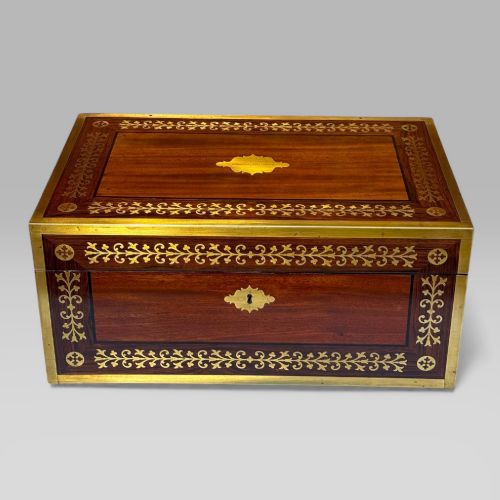
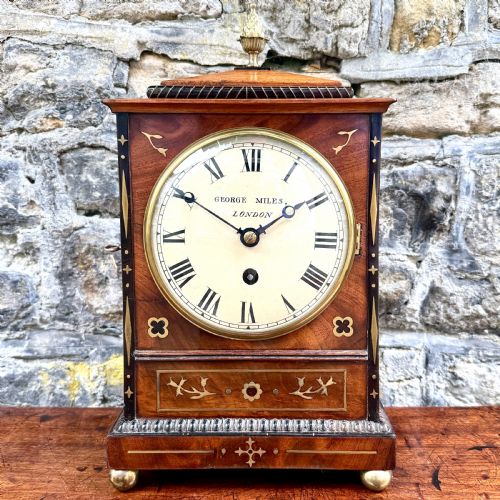
Pieces originating from the nineteenth century often display precise brass banding or stringing set into deep brown mahogany surfaces, showing the meticulous hand of the cabinet maker.
Materials and construction
The foundation of these desks relies upon dense mahogany timbers, selected for grain pattern and depth of colour, often enriched with satinwood or rosewood crossbanding.
Brass elements take the form of fine inlay lines, escutcheons, ring handles, or banding, channelled directly into the wood surface by hand.
Leather inserts, frequently tooled with gilt borders, provide traditional writing surfaces integrated directly into the mahogany framework.
Secret compartments hidden within nineteenth-century cylinder desks often reveal tiny velvet-lined wells meant for spare keys and folded love letters.
Assessing craftsmanship
Quality rests upon the precision of the brass inlay work and how flush the metal sits within the surrounding mahogany grain.
The crispness of carved details, the figure of the timber veneer, and the integration of secondary woods inside the drawers distinguish superior cabinet work from standard production.
Maple & Co.·Edwards & Roberts
The Brass Inlay Mahogany Desk Glossary
- Mahogany
- A durable tropical hardwood prized for its rich reddish-brown colour and stable grain, forming the primary structural material for these desks.
- Brass inlay
- Ornamental metalwork set flush into channels carved within the timber surface to create geometric or floral patterns.
- Cylinder desk
- A writing desk featuring a rolling curved wooden shutter that conceals pigeonholes, drawers, and the pull-out writing slide.
- Pedestal desk
- A large freestanding writing table supported by two banks of small drawers reaching down to the floor.
- Escritoire
- A tall writing cabinet containing a fall-front flap that opens to reveal internal compartments and a writing surface.
Brass Inlay Mahogany Desk: Frequently Asked Questions
How do I clean the brass inlay?
Maintenance requires soft cloths and gentle dry cleaning to remove dust from the edges where metal meets wood. Aggressive liquid polishes should stay far away from the surrounding mahogany surface to prevent staining.
Regular careful dusting keeps the brass bright without wearing down the fine timber grain or lifting the delicate metal stringing from its channel.
Are these desks suitable for daily use?
These pieces function well for modern writing tasks when treated with appropriate care for antique timber and leather surfaces. Placing a protective blotter on the writing surface preserves historical leather inserts.
Positioning the furniture away from direct sunlight and strong heat sources protects the mahogany finish and prevents the wood from drying out.
How do I date a mahogany desk?
Dating relies upon examining construction methods, drawer linings, hardware types, and the overall stylistic vocabulary of the period. Georgian pieces generally show simpler, linear proportions, while Victorian and Edwardian examples often incorporate revival styles and more complex machinery.
Secondary timbers used inside the drawers and the style of the brass handles offer further clues regarding the decade of manufacture.