


Mahogany Standing Corner Cabinet
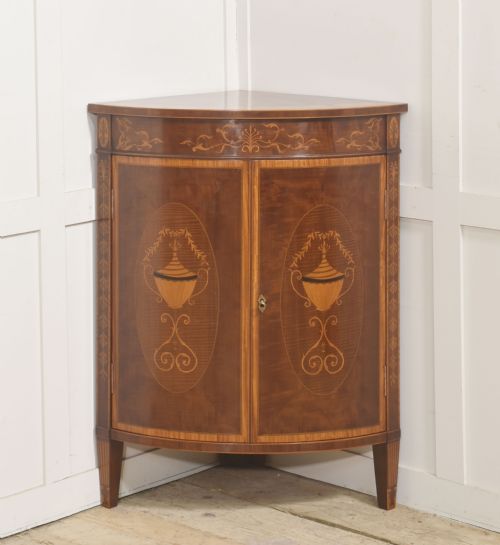
A mahogany standing corner cabinet turns awkward room angles into focal points while keeping interior storage neat and contained.
Mahogany Standing Corner Cabinet
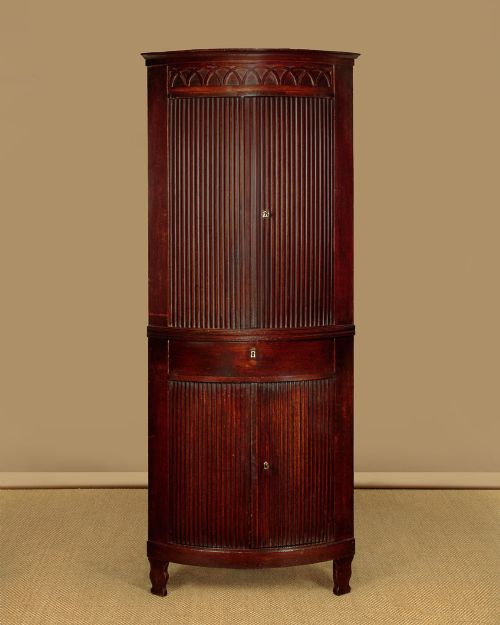
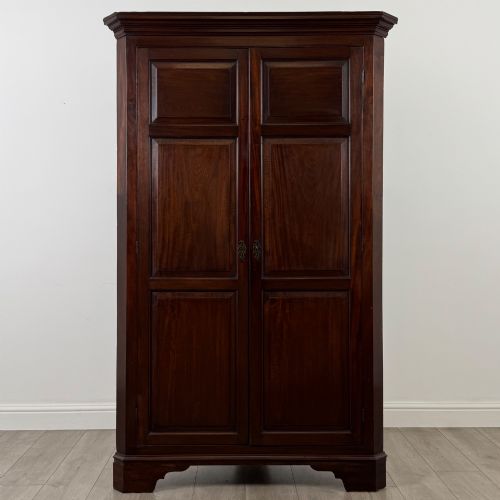
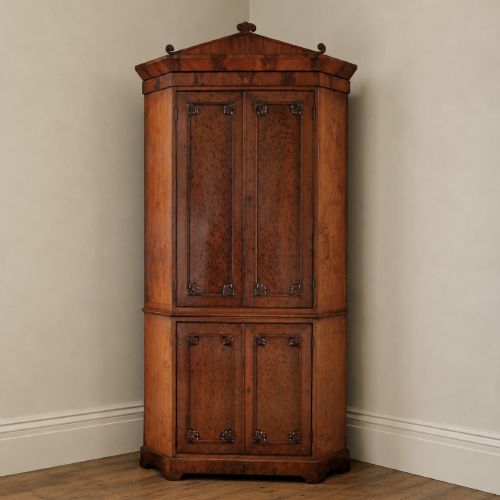
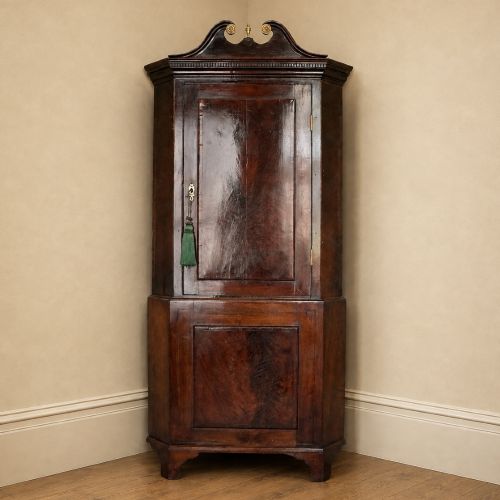
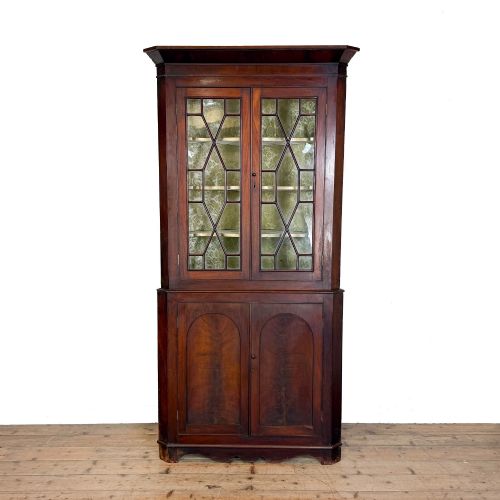
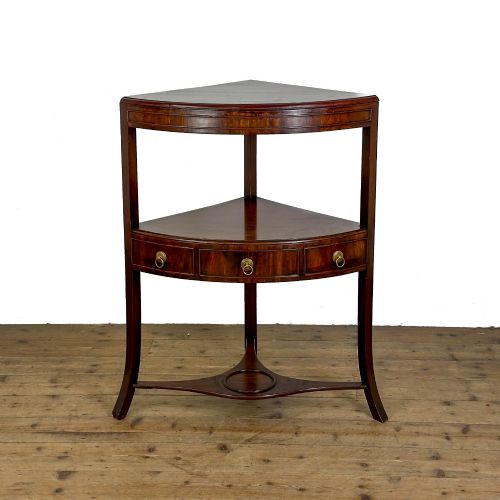
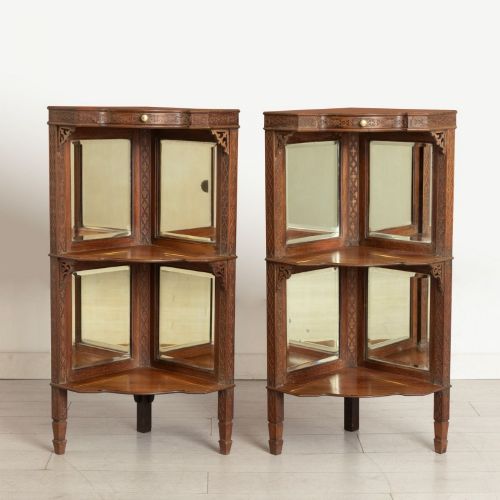
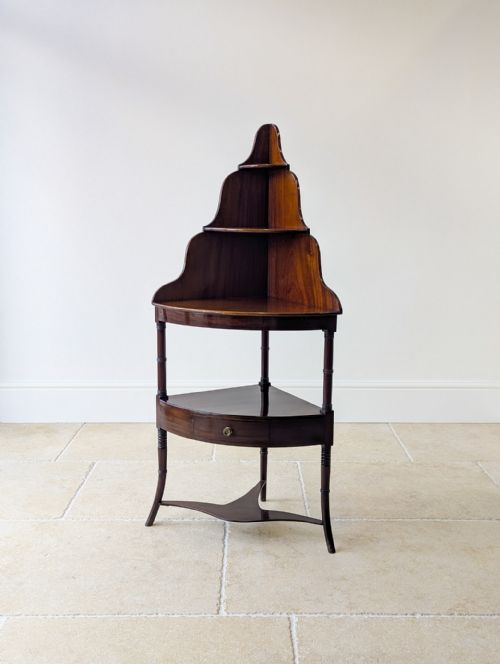
A mahogany standing corner cabinet is a floor-dwelling storage piece built specifically to fit into the ninety-degree angle of a room. The items on this page span several distinct eras, with eighteenth-century Georgian originals sitting alongside nineteenth-century pieces and later Edwardian Sheraton Revival interpretations.
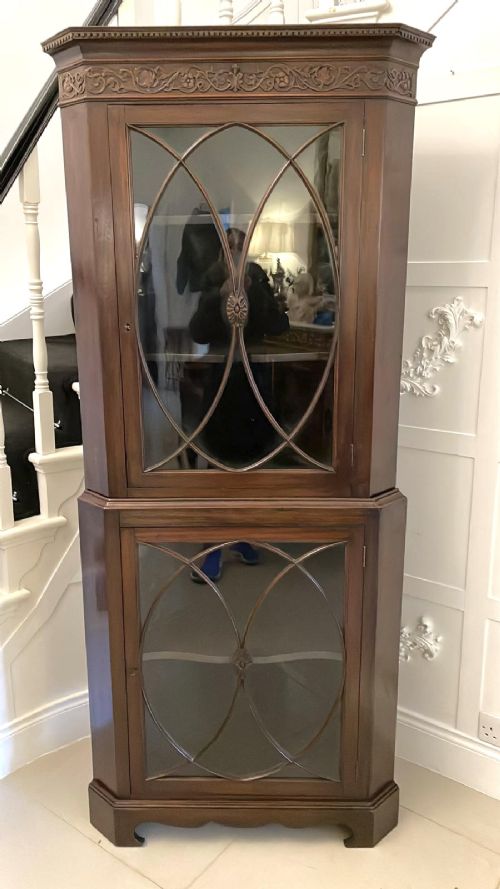
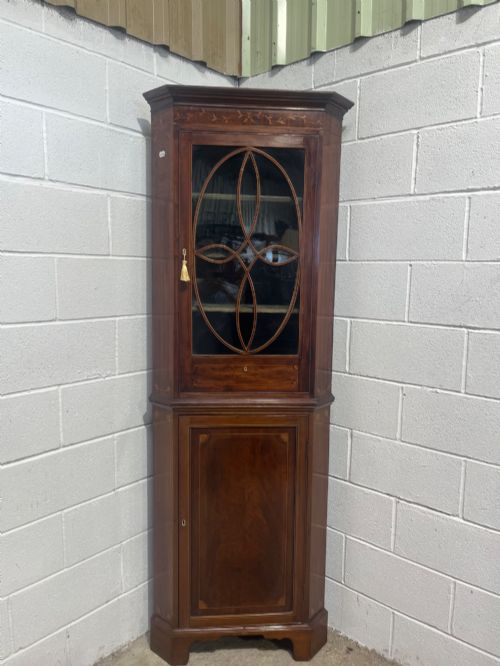
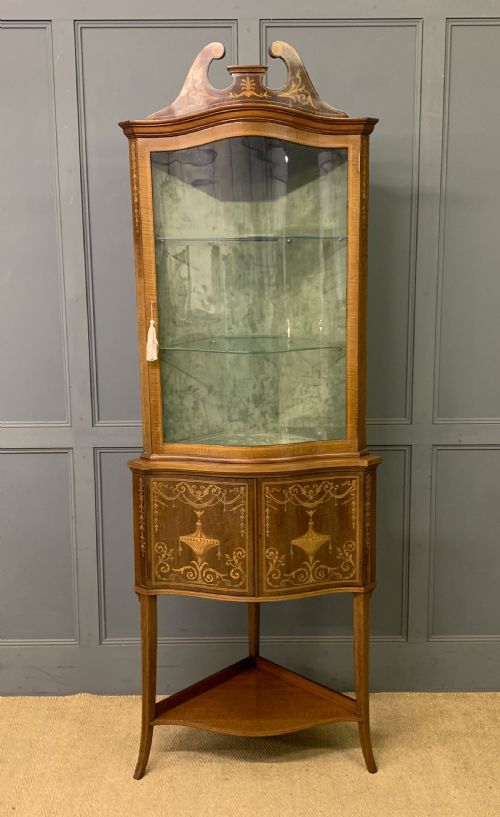
Makers shaped these pieces to maximise unused space while introducing rich timber grain and decorative glazing to room corners. Buyers searching for a mahogany standing corner cabinet will find single-door floor-standing cupboards, taller glazed display versions, and occasional double-height variations.
How they were made
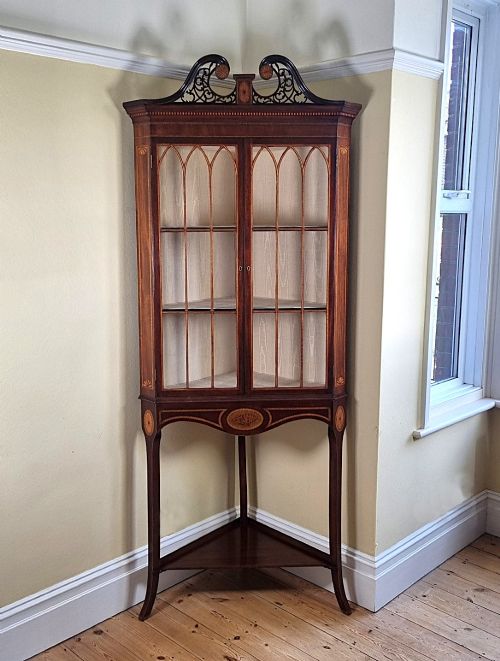
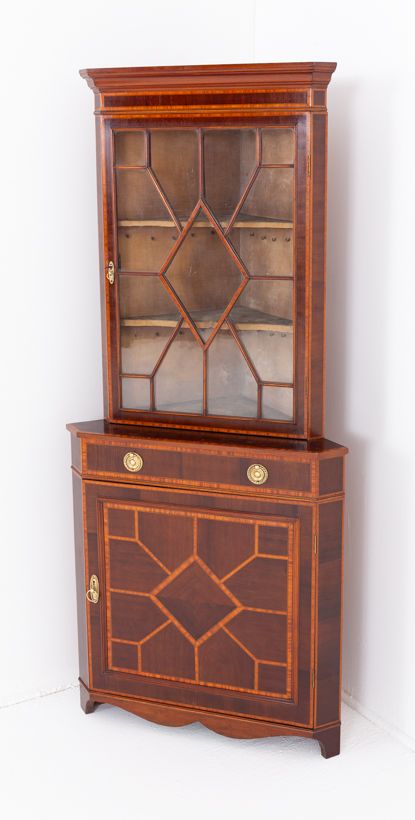
Cabinet makers relied primarily on solid mahogany and flame mahogany veneers, often enhanced with contrasting boxwood and satinwood inlay to define the door panels and cornices. Structural carcass work frequently incorporated secondary timbers, whilst brass hardware such as key escutcheons and hinges provided functional detail.
Glazing techniques ranged from simple rectangular panes to intricate astragal bars forming geometric or Gothic-inspired patterns across the upper doors. Surface finishes were built up using traditional polishing methods to bring out the natural depth and reddish-brown tone of the timber.
Listings feature mahogany, satinwood inlay, glass, and brass across Georgian, Victorian, and Edwardian periods.
What varies in quality
The choice of timber grain sets individual pieces apart, with highly figured Cuban mahogany or rich flame veneers representing the more ambitious end of production. Finer examples display meticulous marquetry inlay, delicate astragal glazing bars, and well-proportioned architectural cornices.
Construction methods also dictate grade, where solid backboards, original brasses, and well-fitted two-part joints distinguish workshop standards. Lesser pieces rely on simpler panel construction and plain timber surfaces with minimal decorative detailing.
Edwards & Roberts
The Mahogany Standing Corner Cabinet Glossary
- Astragal
- A small moulding profile, often used to divide panes of glass in a cabinet door into a lattice pattern.
- Marquetry
- Decorative veneer work arranged in pictorial or geometric patterns using various coloured woods.
- Cushion cornice
- A rounded or swelling architectural moulding situated at the very top of a tall cabinet.
- Serpentine
- A gently undulating curved front line found on more elaborate cabinet designs.
- Bracket foot
- A simple structural foot supporting a case piece, shaped like a bracket at the base corner.
Mahogany Standing Corner Cabinet: Frequently Asked Questions
How do I fit a corner cabinet into a modern room?
These cabinets are built with a ninety-degree triangular footprint designed to slide directly into room corners that normally sit empty. Their vertical height makes use of neglected space without encroaching on floor areas.
Positioning them away from direct sunlight and strong heat sources protects the polished mahogany surfaces and prevents the timber from drying out over time.
What is the difference between single and double height cabinets?
Single height versions consist of one continuous floor-standing unit with one or two doors enclosing the interior shelves. They sit lower in the room and often feature a panelled lower section.
Double height pieces are constructed in two separate sections placed one on top of the other, providing an upper glazed display area combined with a lower enclosed cupboard.
How can I tell a Georgian piece from a later revival?
Eighteenth-century pieces typically exhibit heavier construction timbers, hand-cut dovetails, and simpler internal arrangements dictated by the period's cabinet-making practices. Their proportions and timber patination reflect eighteenth-century workshop traditions.
Revival pieces from around nineteen hundred often incorporate brighter satinwood inlay, machine-cut elements, and distinct Edwardian interpretations of earlier Sheraton designs.
What is astragal glazing?
Astragal glazing refers to wooden framework strips that hold individual glass panes within a door. These fine bars create intricate geometric, intersecting, or oval patterns across the front of the cabinet.
This technique allows a clear view of the shelved interior while adding decorative structure to the glass panels.